Weather emergencies can develop quickly. A quiet afternoon can turn into a severe thunderstorm, a heatwave can strain the electrical grid, or a wildfire can force residents to evacuate with little notice. Floods, hurricanes, tornadoes, extreme cold, and winter storms can also disrupt transportation, utilities, communication, and access to essential services.
Preparing ahead of time can make these situations much easier to handle. You do not need an elaborate emergency shelter or expensive equipment. A practical emergency plan, basic supplies, reliable ways to receive alerts, and an understanding of your local risks can make a significant difference.
The goal is not to prepare for every possible scenario. It is to make sure you can meet your basic needs and make informed decisions when normal routines are disrupted.
Here is how to prepare your household before severe weather strikes.
Understand the Weather Risks in Your Area
Start by identifying the emergencies most likely to happen where you live. Weather risks vary considerably depending on geography and climate.
Common weather-related emergencies include:
- Severe thunderstorms
- Flash floods and river flooding
- Tornadoes
- Hurricanes and tropical storms
- Wildfires
- Extreme heat
- Extreme cold
- Snow and ice storms
- High winds
Someone living near the Gulf Coast may need to focus heavily on hurricanes and flooding, while a household in the Midwest may place greater emphasis on tornado preparation. People living in dry parts of the western United States may need wildfire and extreme-heat plans.
Your local emergency management agency is a good place to learn about evacuation zones, emergency shelters, local warning systems, and the hazards that affect your community.
Knowing your risks also helps you avoid buying supplies you are unlikely to need while overlooking preparations that could actually protect you.
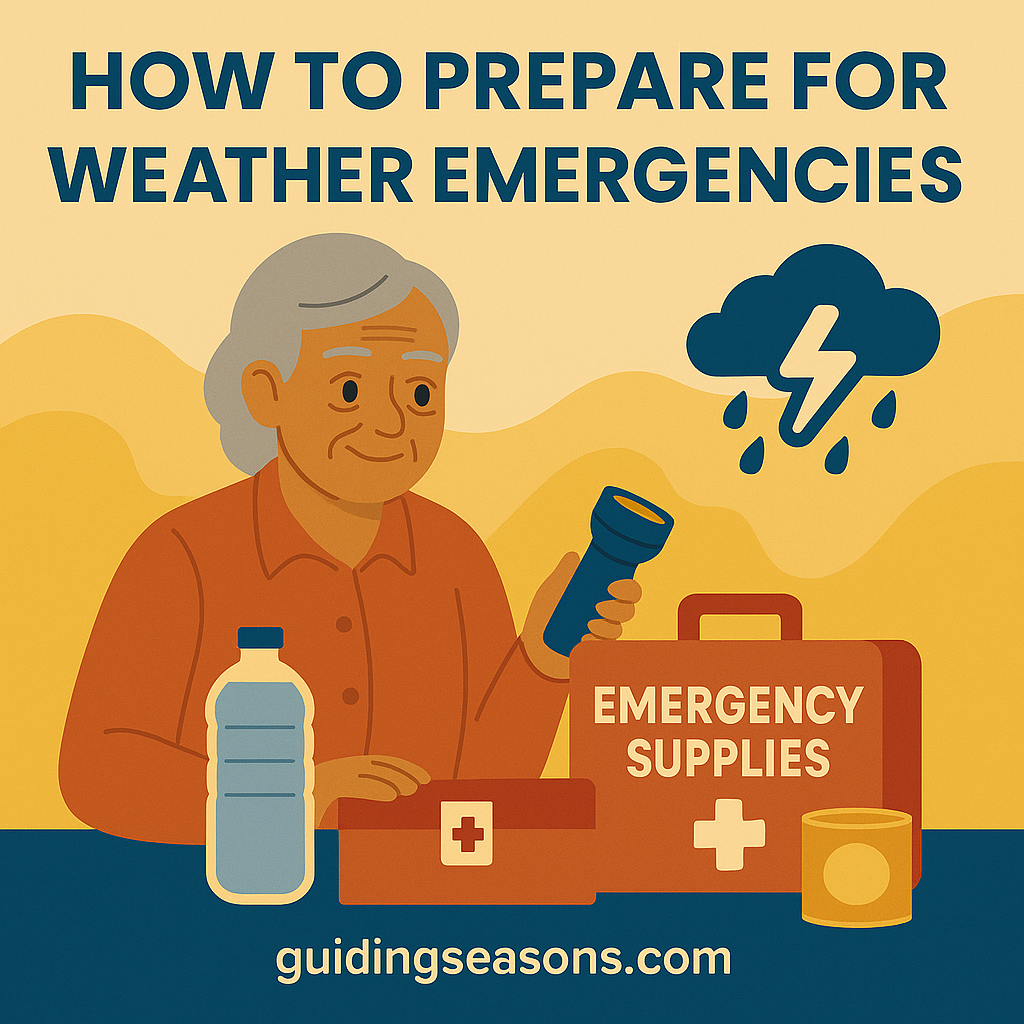
Create an Emergency Supply Kit
An emergency kit should contain enough basic supplies to help your household manage if electricity, water, transportation, or other services are temporarily unavailable.
Your kit should include essentials such as:
- Drinking water
- Non-perishable food
- Manual can opener
- Flashlights
- Extra batteries
- Battery-powered or hand-crank radio
- First-aid supplies
- Prescription medications
- Personal hygiene products
- Copies of important documents
- Cell phone chargers and power banks
- Blankets or warm clothing
- Extra eyeglasses or contact-lens supplies
- Local maps
- Pet supplies, if needed
Water deserves particular attention. The Centers for Disease Control and Prevention recommends storing at least one gallon of water per person per day for three days and suggests trying to store a two-week supply when possible. Additional water may be necessary for pets, people who are sick, pregnant individuals, or households in hot climates.
That means a household of two should have at least six gallons of emergency water for three days. A family of four would need at least 12 gallons for the same period.
Store supplies somewhere accessible and make sure everyone in the household knows where the kit is located.
Build a Go Bag for Quick Evacuations
Your main emergency kit is designed primarily for your home. A go bag serves a different purpose: it contains the essentials you would want if you suddenly had to leave.
A practical go bag might contain:
- Identification
- Copies of insurance information
- Medication list and basic medical information
- Prescription medications
- Water
- Non-perishable snacks
- Change of clothing
- Small first-aid kit
- Flashlight
- Phone charging cable
- Portable power bank
- Basic toiletries
- Emergency contact information
- Some cash
Keep the bag somewhere you can reach quickly, such as a hall closet near your main exit.
If an evacuation order comes during a wildfire, hurricane, or flood, you do not want to spend valuable time searching through drawers for medications, identification, and chargers.
Review your bag periodically because medications expire, contact information changes, batteries lose their charge, and clothing needs may change with the seasons.
Make a Household Emergency Plan
Supplies are important, but knowing what to do is equally important.
Your emergency plan should answer a few basic questions:
- How will you receive emergency alerts?
- Where will you go if you have to evacuate?
- How will household members contact one another?
- Where will you meet if you become separated?
- Who could help if you need transportation or assistance?
- How will you care for pets?
- What will you do if cellular service is disrupted?
Choose both a nearby meeting location and another location outside your immediate neighborhood.
For example, your household might agree to meet at a nearby community center if your home must be evacuated. You could also designate a relative who lives outside the area as the person everyone contacts if local communication becomes difficult.
Write important phone numbers down instead of relying entirely on your phone’s contact list.
Sign Up for Emergency and Weather Alerts
Early warnings give you more time to make safe decisions.
Depending on where you live, you may be able to receive information through:
- Wireless Emergency Alerts
- Local government emergency notifications
- NOAA Weather Radio
- Weather applications
- Local television and radio
- County or city text-alert systems
Do not depend on only one source.
A smartphone is extremely useful, but power failures or network problems can make it less reliable. A battery-powered or hand-crank radio provides another way to receive information when electricity or internet service is unavailable.
Make sure emergency alerts are enabled on your phone and learn what different watches and warnings mean before an emergency occurs.
Prepare Your Home Before Severe Weather
Many emergency preparations are simply routine home-maintenance tasks that reduce hazards.
Before storm season, consider:
- Cleaning gutters and drains
- Removing dead or damaged tree branches
- Securing outdoor furniture and decorations
- Checking your roof for obvious damage
- Testing smoke alarms
- Testing carbon monoxide detectors
- Checking flashlights and batteries
- Learning how utilities are shut off
- Keeping important supplies accessible
If you live in a hurricane-prone region, you may also need storm shutters or other approved window-protection systems.
Wildfire-prone areas require different preparation, such as removing combustible debris near the home and following local recommendations for defensible space.
Preparation should match the hazard rather than using the same checklist for every emergency.
Keep Important Documents Protected
Weather emergencies can damage homes as well as personal records.
Consider keeping copies of essential documents in a waterproof and fire-resistant container.
These may include:
- Driver’s license or other identification
- Insurance policies
- Medication lists
- Emergency contacts
- Property records
- Vehicle information
- Basic financial information
- Home inventory
Secure digital copies can provide another layer of protection.
A home inventory can be particularly helpful after property damage. Take photographs or video of valuable belongings and major rooms in your home. Keep receipts or serial numbers for expensive items when practical.
This information may make an insurance claim easier to document later.
Prepare for Power Outages
Power outages are common during severe weather and may last anywhere from minutes to several days.
Before a storm arrives:
- Charge phones and tablets
- Fully charge portable power banks
- Keep flashlights in easy-to-find locations
- Have spare batteries available
- Keep foods that require little or no cooking
- Know how to manually open your garage door
- Keep refrigerator and freezer thermometers available
Avoid relying on candles for emergency lighting because they introduce an unnecessary fire hazard.
Portable generators can be useful, but they must be operated safely. Never run a generator inside a home or garage, even if doors and windows are open, because dangerous carbon monoxide can accumulate. The CDC recommends operating generators outdoors, more than 20 feet from windows, doors, and vents.
Plan for Medical and Accessibility Needs
Emergency preparation becomes especially important when someone relies on medication, medical equipment, mobility devices, or regular treatments.
Think about what would happen if electricity disappeared for several hours or you could not reach your usual pharmacy.
Your plan may need to include:
- Backup batteries for medical equipment
- Prescription medication supplies
- Copies of prescriptions
- Medical identification
- Written medication schedules
- Mobility equipment
- Special dietary foods
- Emergency contact information
- Transportation assistance
Ready.gov’s disaster preparedness guidance for older adults also recommends considering medications, medical supplies, insurance information, a list of medications, doctors’ phone numbers, and backup power for cell phones as part of emergency preparation.
Talk with your healthcare provider or medical-equipment supplier about what you should do during extended power outages or evacuations.
Do not wait until a storm is approaching to solve these problems.
Include Pets and Service Animals
Pets need emergency supplies too.
Prepare enough basic items to care for them if you have to remain home or evacuate.
Your pet emergency supplies may include:
- Food
- Drinking water
- Bowls
- Leash or harness
- Carrier
- Medications
- Veterinary records
- Waste bags or litter
- Identification information
- Comfort item
Keep recent photographs of your pets in case you become separated.
It is also helpful to identify pet-friendly hotels, shelters, boarding facilities, or relatives who could temporarily accommodate your animals.
Never assume that every emergency shelter will accept household pets. Check local arrangements before an emergency occurs.
Prepare Your Vehicle
Your vehicle may become an important part of your emergency plan, particularly if evacuation is possible.
Keep the vehicle maintained and avoid letting the fuel level become extremely low when severe weather is approaching.
A small vehicle emergency kit can contain:
- Drinking water
- Non-perishable snacks
- Flashlight
- First-aid kit
- Phone charger
- Blanket
- Jumper cables
- Basic tools
- Local map
In colder regions, consider adding warm clothing, gloves, an ice scraper, and other winter emergency supplies.
If officials recommend evacuating, leaving earlier may help you avoid worsening weather, traffic congestion, road closures, and fuel shortages.
Know When to Shelter and When to Evacuate
Different weather emergencies require different responses.
During some emergencies, staying indoors may be safest. During others, remaining home can become dangerous.
You may be instructed to shelter in place when:
- Officials specifically recommend it
- Roads are temporarily unsafe
- Severe weather is passing through your area
- Leaving would expose you to greater danger
You should be prepared to evacuate when:
- Local authorities issue an evacuation order
- Wildfire threatens your area
- Floodwater is expected to reach your location
- Your home becomes structurally unsafe
- Another immediate hazard makes remaining home dangerous
Flooding deserves particular caution. The CDC advises people not to ignore evacuation orders during floods and recommends preparing emergency supplies and water in advance when a flood watch or warning is issued.
Follow official instructions rather than trying to determine on your own whether conditions are safe.
Check Your Emergency Supplies Regularly
Building an emergency kit once and forgetting about it is not enough.
Review your supplies about twice a year.
Check:
- Food expiration dates
- Medication expiration dates
- Flashlight batteries
- Power-bank charge levels
- Stored water
- Contact information
- Insurance documents
- Clothing
- Pet supplies
One easy approach is to check your emergency supplies when clocks change or at the beginning of spring and fall.
The entire review may take less than an hour, but it helps ensure that your supplies will actually work when you need them.
Stay Connected With People Around You
Emergency preparedness is not only about supplies.
Neighbors, relatives, friends, and caregivers can become an important support network during severe weather.
Exchange contact information with someone nearby whom you trust. If you live alone, arrange for someone to check on you during extreme heat, winter storms, wildfires, or prolonged power outages.
You can do the same for others.
A simple phone call or text can help identify problems early, especially for someone who has mobility limitations or relies on electrically powered medical equipment.
Final Thoughts
Preparing for weather emergencies does not require living in constant fear of the next storm. It means taking practical steps while conditions are normal so you have fewer decisions to make when something unexpected happens.
Start with the basics: understand the hazards in your area, create an emergency kit, store enough water and food, make an evacuation plan, protect important documents, and establish reliable ways to receive emergency information.
Then consider the individual needs of your household, including medications, mobility, pets, transportation, and backup power.
You do not have to complete everything in one day. You might start this weekend by storing three days of water and food. Next week, prepare your documents and emergency contacts. After that, assemble a go bag.
Small preparations add up.
When severe weather does arrive, having supplies ready and knowing what you will do can help you respond more quickly, protect the people you care about, and maintain greater safety and independence during an uncertain situation.