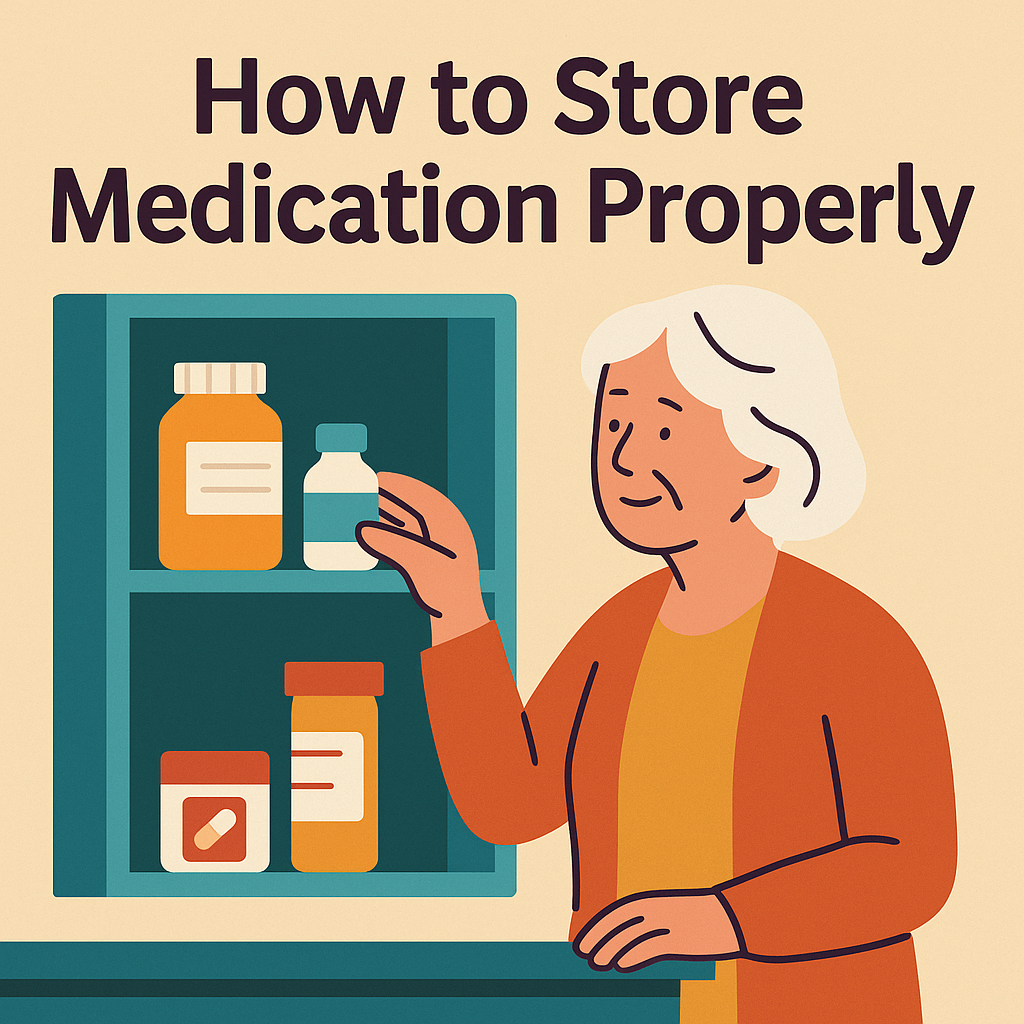
Storing medication the right way is one of the simplest—and most important—steps you can take to protect your health. As we age, many of us take more prescriptions, over-the-counter medicines, and supplements than before, making proper storage essential for safety, effectiveness, and peace of mind.
When medication is kept in the wrong environment or poorly organized, heat, moisture, or storage mistakes can affect its quality or increase the risk of taking the wrong medicine.
This guide explains easy, senior-friendly ways to store medication safely, stay organized, and avoid common risks at home.
Why Proper Medication Storage Matters
Correct storage helps keep medications:
- Effective – Some medicines can be affected by excessive heat, moisture, or sunlight.
- Safe – Good organization can help prevent mix-ups, double doses, and accidental use of expired medication.
- Secure – Proper storage reduces the risk of pets, visitors, or grandchildren accessing medications.
- Organized – Keeping medicines in a designated location makes it easier to follow a regular routine.
A few simple steps can make medication routines easier and more reliable every day.
Choose the Right Location for Storing Medication
Many people automatically store medicine in a bathroom cabinet, but heat and humidity from showers can make the bathroom unsuitable for medications that need a cool, dry environment.
Best places to store medication
Depending on the medication’s instructions, suitable locations may include:
- A cool, dry drawer
- A bedroom dresser
- A designated shelf away from direct sunlight
- A secure cabinet away from heat and moisture
Choose an accessible location if bending or reaching is difficult, while still keeping medications safely away from children and pets.
Avoid these places
Unless the medication’s instructions specifically say otherwise, avoid storing it in:
- Humid bathrooms
- Cars with large temperature changes
- Direct sunlight
- Damp areas
- Near ovens, heaters, or other heat sources
Always follow the storage directions provided on the medication label or packaging.
Keep Medications in Their Original Containers
Keeping medications in their original containers can make identification easier and preserve important information.
Why this matters:
- Clear labels help prevent mix-ups
- Dosage and usage instructions remain available
- Prescription and pharmacy information stays with the medication
- Some medications require their original packaging for protection from light or moisture
If you use a pill organizer, consider keeping the original prescription containers available for reference.
Use a Pill Organizer to Stay on Schedule
Pill organizers can simplify daily routines, particularly when managing several medications.
Benefits of pill organizers:
- Make it easier to see whether a scheduled dose has been taken
- Simplify daily or weekly routines
- Help caregivers assist with medication management
- Reduce confusion between different dosing times
Look for an organizer with:
- Large compartments
- Clear morning, afternoon, evening, or bedtime labels
- Easy-open lids
- High-contrast, easy-to-read text
Before transferring medications into an organizer, ask your pharmacist whether they can safely be removed from their original packaging. Certain medications have special storage requirements.
Separate Medications by Type
Organizing medications into clearly identified groups can help reduce mix-ups.
Consider simple groups such as:
- Daily medications
- As-needed medications
- Vitamins and supplements
- Specialty medications, such as inhalers or injectables
Small labeled bins or trays can make these categories easier to identify while keeping everything organized.
Store Temperature-Sensitive Medications Correctly
Some medications require refrigeration or have specific temperature requirements.
If a medicine needs refrigeration:
- Follow the temperature instructions on the label
- Keep it protected from food spills
- Avoid freezing it unless the instructions specifically require freezing
- Store it in the recommended area of the refrigerator
Don’t assume that every medication should be refrigerated. If the label is unclear, ask your pharmacist how it should be stored.
Protect Medications From Pets and Visiting Children
Even small amounts of certain medications can be dangerous if accidentally swallowed by a child or pet.
Safety tips:
- Use a secure shelf, cabinet, or drawer
- Use child-resistant containers when appropriate
- Consider locked storage when children frequently visit the home
- Avoid leaving loose pills on counters, nightstands, or tables
A designated, secure storage location can greatly reduce the chance of accidental exposure.
Keep Track of Expiration Dates
Checking medication expiration dates periodically is another useful safety habit. Once a medication has expired, its effectiveness or safety can no longer be assured according to the manufacturer’s labeled expiration date.
Do a quick check every few months:
- Look at expiration dates on prescription and over-the-counter medications
- Check packaging for damage
- Set aside medications you no longer use
- Ask your pharmacist about anything that looks unusual
How to dispose of old medication:
Drug take-back locations and programs are generally a preferred option for disposing of unused or expired medications. The AARP guide to safely disposing of medications provides additional information about take-back programs and safe disposal.
If a take-back option isn’t readily available, follow the disposal instructions on the medication label or guidance from your pharmacist. Some medicines have special disposal requirements, so don’t automatically flush medication down the toilet or sink.
Always Store Medications Away From Moisture and Heat
Heat and moisture can affect certain medications, which is why following their individual storage instructions is important.
In general, keep medications away from:
- Humid environments
- Direct sunlight
- Heating vents
- Stovetops
- Vehicles exposed to extreme temperatures
Many medications are intended to be kept under controlled room-temperature conditions, but the exact requirements vary. Always check the package or prescription label.
Keep a Medication List in a Central Place
An up-to-date medication list can be useful during doctor visits, pharmacy consultations, and emergencies.
Include:
- Medication names
- Dosages
- When each medication is taken
- Why you take each medication
- Prescribing doctor or healthcare professional
- Pharmacy contact information
- Vitamins, supplements, and over-the-counter medicines you regularly use
For example, someone taking five prescriptions, two supplements, and one over-the-counter medication is managing eight separate products. Putting all eight on one current list gives healthcare professionals a much clearer picture than trying to remember them during an appointment.
Keep a printed copy somewhere accessible and consider carrying a copy or keeping an updated version on your phone. The AARP medication record is another useful tool for organizing medication information.
Check With Your Pharmacist About Special Instructions
Some medications require special handling, so don’t rely on general storage advice when the medication comes with specific instructions.
Your pharmacist can explain:
- Whether a medication needs refrigeration
- Whether it should be protected from light
- Whether it needs to remain in its original container
- Whether heat or humidity could affect it
- Whether it can safely be placed in a pill organizer
Pharmacists can be an especially valuable resource when you start a new medication or aren’t sure how an existing prescription should be stored.
Use Technology to Help You Stay Organized
Simple technology can also support medication routines.
Options include:
- Medication reminder apps
- Electronic or smart pill dispensers
- Phone alarms
- Voice-assistant reminders
Digital reminders can be helpful, but they should complement—not replace—the instructions provided by your doctor, pharmacist, or medication label.
Final Thoughts
Proper medication storage is an important part of staying organized, avoiding preventable mistakes, and keeping your home safe. Simple habits—such as choosing an appropriate storage location, keeping medications clearly labeled, maintaining an updated medication list, and regularly checking expiration dates—can make daily medication management easier.
Most importantly, remember that medications can have different storage requirements. Always follow the instructions on the label, and when you’re unsure, ask your pharmacist or healthcare provider.
Good medication storage supports clearer routines, safer medication use, and greater confidence when managing your health at home.