Gratitude can be a powerful way to enrich everyday life, especially as we grow older. Later life often brings a unique combination of experiences: more memories to appreciate, relationships that have developed over decades, greater perspective, and perhaps more time to notice life’s quieter pleasures.
At the same time, aging can bring real challenges. Retirement may change your sense of identity and daily routine. Friends or family members may move away or pass on. Health concerns can affect independence. Financial circumstances may change, and familiar roles within a family can shift.
Practicing gratitude doesn’t mean ignoring these difficulties or forcing yourself to feel positive when life is genuinely hard. Instead, gratitude involves intentionally noticing what remains meaningful, comforting, beautiful, or supportive alongside life’s challenges.
Research suggests that gratitude and well-being can remain closely connected throughout adulthood. One large study involving more than 31,000 people across three samples found that gratitude was actually higher among older adults than among younger and middle-aged adults. The researchers also found that the relationship between gratitude and subjective well-being remained relatively consistent across adulthood.
The encouraging part is that gratitude doesn’t require major lifestyle changes. It can begin with a few minutes, a conversation, a familiar memory, or simply paying closer attention to something you usually take for granted.
Here are practical ways to make gratitude a more natural part of your life.
Understand What Gratitude Really Means
Gratitude is often associated with saying “thank you,” but it goes deeper than good manners.
It is the ability to recognize and appreciate something valuable in your life. That might be another person’s kindness, a comfortable home, a favorite meal, a beautiful afternoon, an old friendship, or simply waking up and having another day to experience.
Gratitude can also coexist with disappointment.
You can be frustrated about a health limitation while feeling grateful for a family member who helps you. You can miss your former career while appreciating the freedom retirement provides. You can grieve someone you’ve lost while being thankful for the years you shared.
This distinction matters because gratitude should never become pressure to pretend that everything is wonderful.
Think of gratitude as adding another perspective rather than replacing your existing feelings.
Start With Three Specific Things
One of the easiest ways to practice gratitude is to write down three things you appreciate.
The key is to be specific.
Instead of repeatedly writing:
“I’m grateful for my family.”
Try:
“I’m grateful that my daughter called me this afternoon and made me laugh.”
Instead of:
“I’m grateful for my home.”
Try:
“I’m grateful for the comfortable chair beside the window where I can read in the morning.”
Specificity encourages you to pay closer attention to your actual experiences.
Try this exercise for seven days. Write down three specific things each day. By the end of the week, you’ll have recorded 21 moments of gratitude.
They don’t need to be extraordinary.
Your list might include fresh coffee, a helpful neighbor, a good night’s sleep, a phone call from a friend, hearing a favorite song, seeing flowers blooming, finishing a household task, or enjoying a quiet afternoon.
The purpose isn’t to create an impressive list. It’s to train yourself to notice moments you might otherwise overlook.
Keep a Simple Gratitude Journal
Once you’ve experimented with writing down a few things you’re thankful for, consider keeping a small gratitude journal.
It doesn’t have to become another obligation.
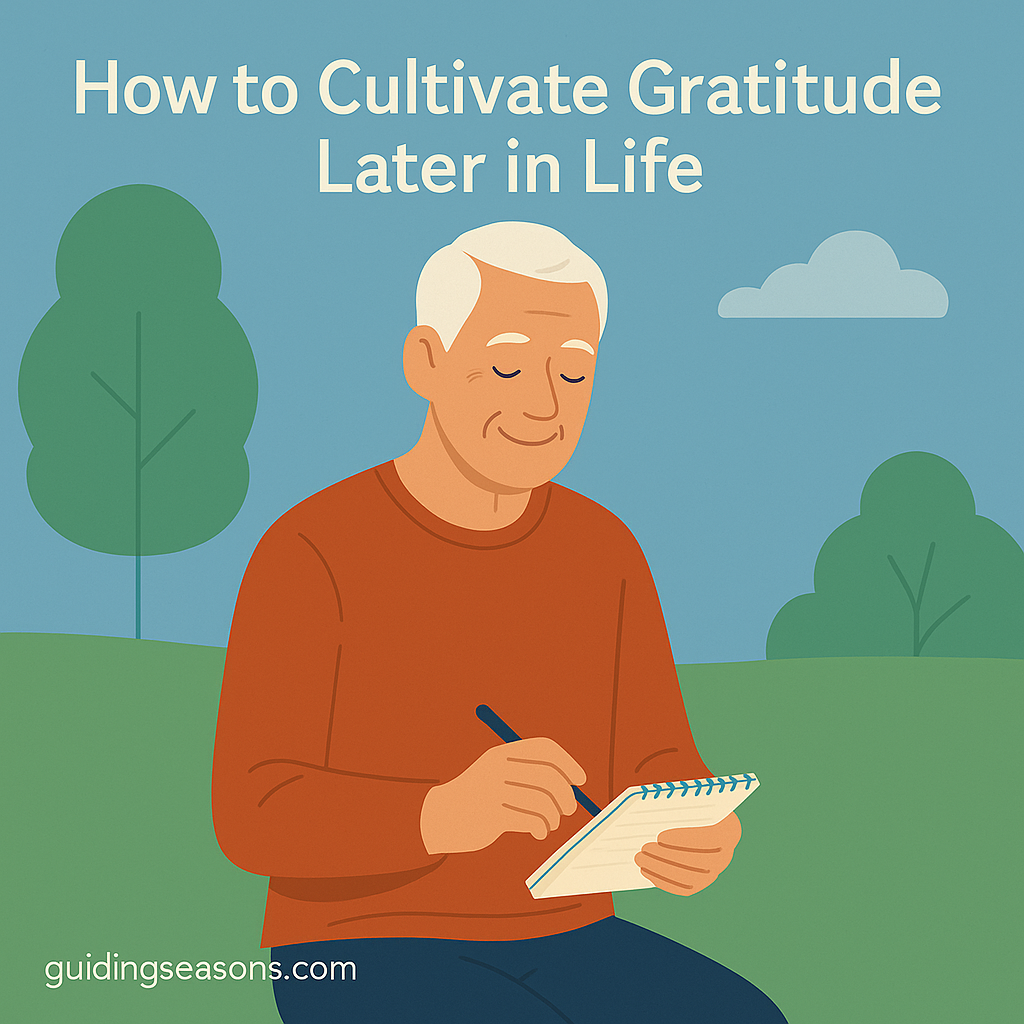
Keep a notebook beside your bed or favorite chair and spend a few minutes recording something meaningful.
You might write about:
- Something that went well today
- Someone who made your day easier
- A memory that made you smile
- Something beautiful you noticed
- A small accomplishment
- Something you’re looking forward to
- A comfort you sometimes take for granted
There is research specifically involving older adults that supports the potential value of this kind of exercise.
In one study of a daily gratitude writing exercise, older adults participated over a three-week period. Researchers found evidence suggesting that the gratitude exercise strengthened the relationship between daily gratitude, loneliness, and health-related measures. The researchers described the findings as initial evidence that a simple gratitude exercise may benefit older adults.
You don’t need to write every day forever to benefit from becoming more attentive to positive experiences. Experiment with the practice and find a frequency that feels natural.
Express Your Gratitude to Other People
Gratitude can become especially meaningful when it moves beyond private reflection and becomes something you share.
Think about someone who has positively affected your life.
It might be:
- A spouse or partner
- An adult child
- A longtime friend
- A sibling
- A former coworker
- A neighbor
- A caregiver
- A teacher from years ago
- Someone in your community
Tell them what you appreciate.
You might say, “I don’t think I tell you this enough, but I really appreciate how often you check on me.”
Or send a handwritten note describing a specific memory and why it mattered.
These conversations don’t need to be dramatic. A sincere sentence can sometimes mean more than an elaborate gesture.
Gratitude expressed directly also gives the other person something valuable: the knowledge that their actions mattered.
Slow Down Enough to Notice Ordinary Pleasures
Many enjoyable parts of life become invisible simply because they’re familiar.
The first sip of coffee in the morning.
Warm sunlight coming through the window.
A dog greeting you at the door.
Birds outside.
A comfortable bed.
A favorite television program.
A conversation with someone you love.
These moments are easy to overlook because nothing dramatic is happening.
Mindfulness can help.
During a walk, for example, resist the urge to spend the entire time thinking about tomorrow’s responsibilities. Notice the temperature, trees, sounds, clouds, houses, gardens, or people around you.
When you’re eating something you enjoy, slow down enough to actually taste it.
When someone visits, put the phone aside and give the conversation your attention.
Gratitude often begins with simply noticing what is already there.
Revisit Meaningful Memories
Later life comes with something younger generations haven’t yet accumulated: decades of experiences.
Those memories can become a rich source of gratitude.
Pull out an old photo album occasionally. Look at pictures from family vacations, holidays, weddings, birthdays, former homes, childhood, or earlier stages of your career.
Don’t simply look at the photograph. Ask yourself:
What do I remember about that day?
Who was there?
What was happening in my life at the time?
What did that experience teach me?
What would I tell my younger self now?
You might even write some of these stories down.
Doing so can transform gratitude into something you pass along. A grandchild may someday value the story behind a photograph far more than the photograph itself.
Appreciate What Your Life Has Taught You
Gratitude doesn’t have to focus exclusively on pleasant experiences.
You may also find value in recognizing what difficult periods taught you.
Perhaps financial hardship taught you resourcefulness.
Maybe raising children taught you patience.
A career setback may have led you toward an opportunity you hadn’t considered.
A difficult move might have introduced you to people who became lifelong friends.
This doesn’t mean you need to be grateful that something painful happened.
Instead, you can appreciate the strength, knowledge, relationships, or perspective you developed while moving through it.
Consider asking yourself:
“What do I know now that I didn’t know 20 years ago?”
Your answers may reveal how much you’ve learned.
Create Small Gratitude Rituals
Habits are easier to maintain when they’re connected to routines that already exist.
Instead of deciding that you’ll “be more grateful,” attach gratitude to a specific moment.
For example:
When you drink your morning coffee, think of one thing you’re looking forward to.
When you eat dinner, identify one good thing that happened during the day.
Before bed, think about someone who helped you recently.
When taking a walk, deliberately notice one beautiful thing.
If faith is important to you, gratitude may naturally become part of prayer or spiritual reflection.
The ritual itself can be extremely small. Consistency matters more than complexity.
Spend Time With People Who Help You Appreciate Life
Our outlook is influenced by the people around us.
You don’t need to avoid everyone who complains or pretend problems don’t exist. But it can help to spend more time with people who are capable of enjoying ordinary life.
Look for relationships that involve:
- Laughter
- Encouragement
- Curiosity
- Mutual support
- Meaningful conversation
- Shared interests
You might also create opportunities for gratitude within existing relationships.
At dinner with family, ask everyone to share something good that happened that week.
During a phone call with a longtime friend, reminisce about something funny you experienced together.
Instead of making every conversation about problems, intentionally leave some space for what is going well.
Use Gratitude When Life Feels Uncertain
Gratitude can be particularly valuable during periods of transition.
Suppose you’ve recently retired after working for 35 years.
You miss your coworkers and aren’t sure what to do with your mornings. Telling yourself, “I should just be grateful I’m retired,” probably won’t help.
A healthier approach might sound like this:
“I miss having somewhere to go every morning, and that’s difficult. But I’m grateful that I now have time to take a morning walk, call my brother more often, and finally work on my garden.”
Both realities remain true.
Gratitude isn’t denying what you’ve lost.
It’s noticing what still exists—and what might be beginning.
Give Back in Ways That Feel Meaningful
Helping another person can provide a powerful reminder that you still have something valuable to contribute.
You might:
- Volunteer a few hours each month
- Help a neighbor with errands
- Mentor someone younger
- Teach a skill you’ve developed
- Donate useful belongings
- Cook a meal for someone
- Participate in a community organization
- Call someone who may be lonely
Your contribution doesn’t have to involve money.
Time, experience, attention, knowledge, and companionship can be equally valuable.
Later life can provide opportunities to share decades of accumulated experience with people who are just beginning to encounter challenges you’ve already navigated.
Don’t Turn Gratitude Into Another Standard You Have to Meet
There will be days when gratitude comes easily.
There will also be days when it doesn’t.
You may be sick, worried, lonely, frustrated, grieving, or simply tired.
That’s normal.
You don’t need to search desperately for something positive or feel guilty because you’re having a difficult day.
You might simply acknowledge:
“Today was hard. I’m grateful that tomorrow is another day.”
Sometimes that’s enough.
Gratitude works best when it feels genuine rather than compulsory.
Try a Seven-Day Gratitude Experiment
If you’d like to make gratitude more intentional, try a simple one-week experiment.
Each morning, identify one thing you’re looking forward to.
During the day, notice one pleasant moment.
Each evening, write down three specific things you appreciated.
Once during the week, tell another person why you’re grateful for them.
At the end of seven days, look back through what you recorded.
Don’t ask whether gratitude magically changed your life.
Ask something simpler:
“Did I notice things this week that I normally would have missed?”
If the answer is yes, the exercise accomplished something valuable.
Final Thoughts
Cultivating gratitude later in life isn’t about convincing yourself that everything is perfect.
Life can contain joy and loss, independence and limitation, excitement and uncertainty at the same time.
Gratitude simply makes sure the good isn’t overlooked.
It can be found in a familiar voice on the telephone, a quiet morning, an old photograph, a comfortable home, a meal shared with family, a friendship that has lasted decades, or the realization that you’ve made it through challenges you once thought would overwhelm you.
Start small.
Notice one thing.
Write it down.
Tell someone you appreciate them.
Pause long enough to enjoy something ordinary.
Then do it again another day.
Over time, these small moments of attention can create a richer awareness of what remains meaningful in your life. And perhaps that is one of the greatest benefits of gratitude later in life: not that it changes everything around you, but that it helps you more fully recognize the value of what is already there.