
Financial Security: How to Build Stability and Peace of Mind at Any Stage of Life

Flat illustration of a senior couple reviewing finances with charts, savings plans, and budgeting tools representing financial security and long-term stability.
Flat illustration showing financial planning, budgeting, and saving strategies for building long-term security and peace of mind. guidingseasons.com

Financial security isn’t simply about how much money you have. It’s about having confidence, control, and resilience in your financial life.

When your finances are reasonably stable, everyday decisions become easier. An unexpected repair is less frightening. Monthly bills feel more manageable. Planning for retirement, healthcare, housing, or family needs becomes less overwhelming.

Financial security can look different depending on your stage of life. Someone in their 40s may be focused on reducing debt and increasing retirement savings, while someone who has already retired may care more about controlling expenses, protecting savings, and making a fixed income last.

The goal is not to achieve financial perfection. It is to build a practical system that helps you remain prepared, independent, and confident even when circumstances change.

This guide covers the major areas of financial security, from budgeting and emergency savings to retirement income, insurance, debt, fraud protection, estate planning, and organizing your financial life.

Continue reading “Financial Security: How to Build Stability and Peace of Mind at Any Stage of Life”


How to Avoid Common Money Mistakes in Retirement

Flat illustration of a senior couple reviewing financial notes together, with the woman holding a checklist and a “no dollar sign” icon in the corner, featuring warm colors and a small guidingseasons.com watermark in the bottom left.
Senior couple reviewing finances to avoid common retirement money mistakes.

Retirement is a time to enjoy the rewards of your hard work—not to feel stressed about financial missteps. Still, retirees can run into avoidable money challenges because retirement finances work differently from the working years. Income sources change, expenses can shift unexpectedly, and long-term planning becomes more important than ever.

The good news? With awareness and a few smart habits, you can avoid many common money mistakes and feel more confident about your financial future.

Here’s how to protect your savings, make informed decisions, and keep your retirement finances on solid ground.

Continue reading “How to Avoid Common Money Mistakes in Retirement”

How to Build Long-Term Financial Confidence

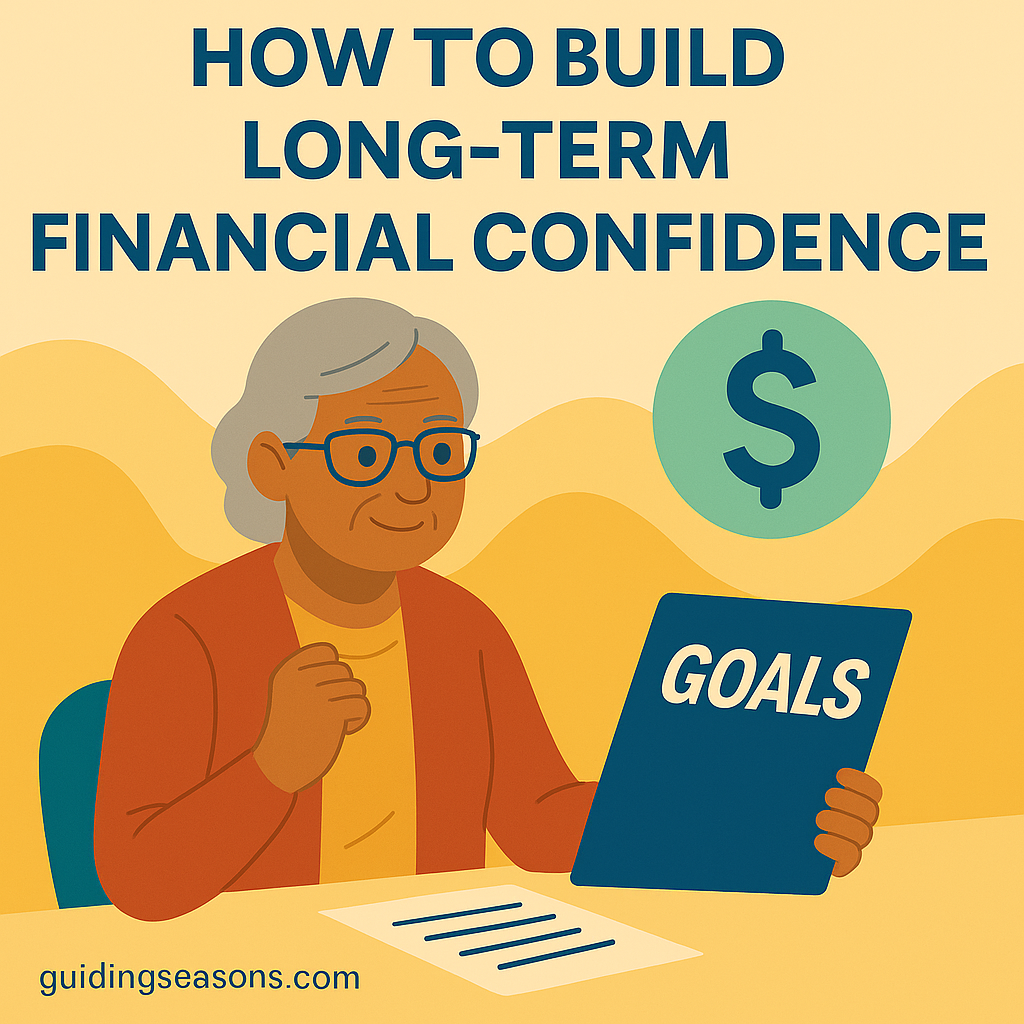
Flat illustration of a senior woman holding a blue folder labeled “GOALS,” with a dollar sign icon above her and a small guidingseasons.com watermark in the bottom left.
Senior woman reviewing her financial goals with a calm, confident expression.

Financial confidence doesn’t come from having a perfect budget or being an expert with numbers—it comes from feeling informed, prepared, and in control of your financial future. In retirement or the later seasons of life, achieving long-term financial confidence means knowing your money is supporting your needs, your goals, and your peace of mind.

Whether you’re recovering from past financial stress, adjusting to a fixed income, or simply wanting to feel more stable, building financial confidence is possible. With the right habits and greater clarity, you can move forward with more assurance and less uncertainty.

Here’s how to strengthen your long-term financial confidence, one step at a time.

Continue reading “How to Build Long-Term Financial Confidence”

How to Make Smart Purchases on a Fixed Income

Flat illustration of an older woman holding cash and a shopping bag, with a debit card icon above her and a small guidingseasons.com watermark in the bottom left.
Senior woman making smart, mindful purchases on a fixed income.

Living on a fixed income doesn’t mean you have to give up comfort or enjoyment—it simply means making thoughtful choices that help your money stretch further. With a little planning and a few smart strategies, you can better manage your expenses while still enjoying the things that matter most.

Here’s a helpful guide to making confident, mindful purchases on a fixed income.

Continue reading “How to Make Smart Purchases on a Fixed Income”

How to Compare Insurance Plans Easily

Flat illustration of an older man comparing insurance documents with a shield checkmark icon above him, set against warm yellow background, with guidingseasons.com watermark on the bottom left.
Senior reviewing insurance plans with a shield checkmark icon.

Comparing insurance plans can feel confusing, especially when companies use different terms, prices, and coverage options. But understanding your choices is one of the most important steps toward protecting your health, finances, and peace of mind—especially later in life.

The good news? You don’t need to be an insurance expert to make an informed decision. With a simple process and the right questions, you can more confidently choose a plan that fits your needs and budget.

Continue reading “How to Compare Insurance Plans Easily”

How to Protect Your Identity From Theft

Illustration of a senior woman holding a tablet with a security lock icon beside her, created for the article “How to Protect Your Identity From Theft,” with guidingseasons.com displayed at the bottom left.
Senior woman reviewing security information on her tablet with a lock icon beside her.

Identity theft can cause serious financial and personal problems, and older adults may be targeted by scammers using phone calls, emails, text messages, and other deceptive tactics. Scammers often try to create fear or urgency to pressure people into revealing personal information or sending money.

The good news? A few simple habits can significantly reduce your risk. This guide walks you through senior-friendly ways to protect your identity, your financial accounts, and your peace of mind.

Continue reading “How to Protect Your Identity From Theft”

How to Track Spending Easily as a Senior

Illustration of a senior man tracking his spending using a calculator and a paper worksheet, with a guidingseasons.com watermark at the bottom left.
Senior man tracking his monthly spending using a calculator and worksheet.

Managing your money in retirement doesn’t have to be complicated. In fact, tracking your spending is one of the simplest ways to stay financially confident, avoid stress, and make sure your budget supports the life you want. Whether you’re living on Social Security, a pension, savings, or a mix of income sources, keeping track of where your money goes helps you stretch your funds further and avoid surprises.

This guide walks you through easy, senior-friendly methods to track your spending—without complicated apps or confusing tools.

Continue reading “How to Track Spending Easily as a Senior”

How to Understand Senior Mortgage Options

Illustration of a senior man thinking while looking at a clipboard labeled “Senior Mortgage Options,” created for an article about understanding mortgage choices in retirement.
Senior man reviewing different mortgage options for retirement.

As you move through retirement, your housing needs may change. Some seniors want to downsize to a more manageable home. Others want to access home equity to support retirement income, pay for repairs, or create more financial flexibility. And some simply want to lower their monthly housing costs.

Whatever your goals, understanding the mortgage options available to older adults can help you make more confident and informed decisions.

This guide breaks down common mortgage choices for retirees in clear, simple terms so you can better understand which options may fit your financial situation and long-term plans.

Continue reading “How to Understand Senior Mortgage Options”

How to Find Legitimate Financial Advice

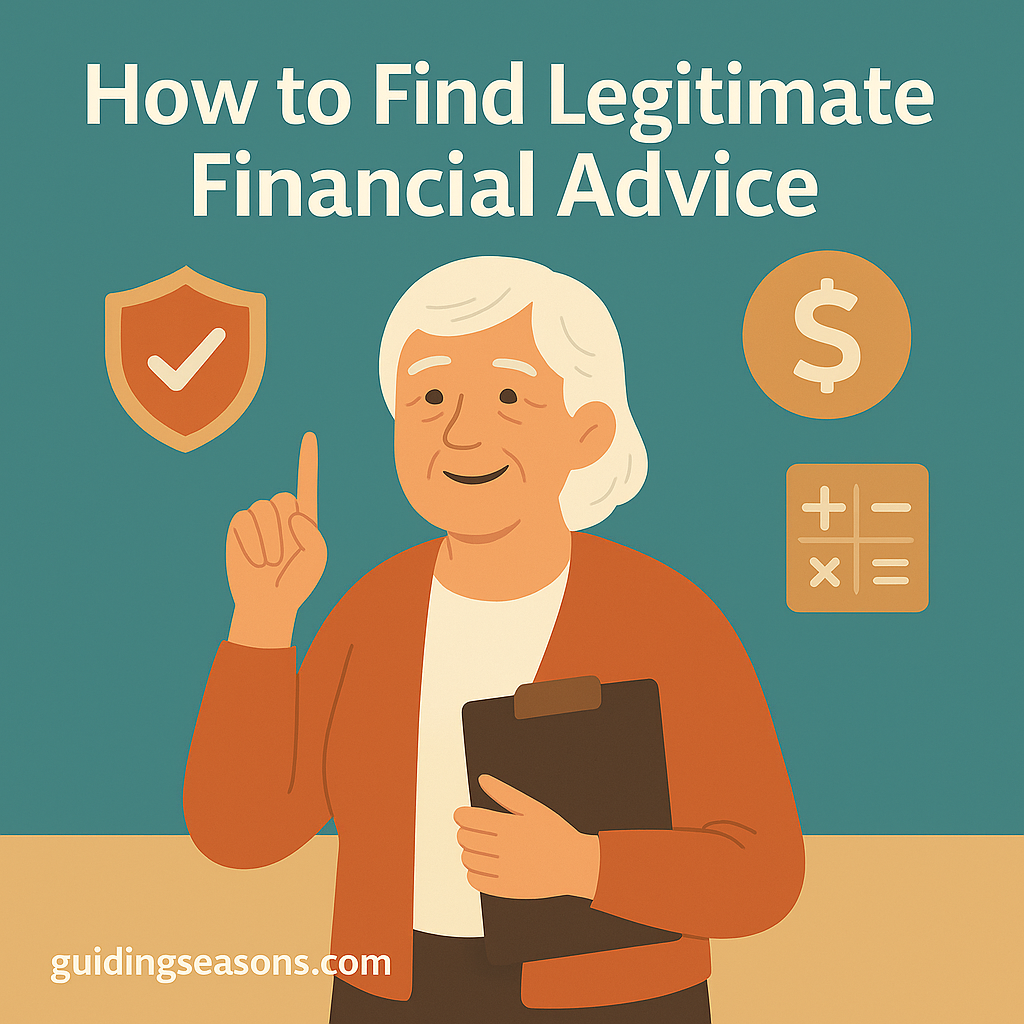
Older woman holding a clipboard and pointing upward with financial icons like a shield, dollar sign, and calculator surrounding her.
Older woman giving financial guidance with safety and budgeting icons around her.

Managing money during retirement can become more complicated than many people expect.

Instead of simply earning a paycheck and contributing to retirement accounts, you may now be deciding how much to withdraw from savings, how to invest money you still have, when to claim Social Security, how to manage taxes, how to prepare for healthcare expenses, and whether your savings will last for the rest of your life.

There is certainly no shortage of people offering advice.

Financial planners, investment advisers, brokers, insurance agents, accountants, television personalities, YouTube channels, social media personalities, newsletters, and online financial websites may all provide recommendations.

The challenge is determining which advice deserves your trust.

A professional-looking website or impressive job title doesn’t necessarily mean someone is qualified to provide the type of financial advice you need. Likewise, a legitimate financial professional may still have fees, conflicts of interest, or areas outside their expertise.

Finding trustworthy financial guidance therefore requires more than choosing the first person who calls themselves a “financial adviser.”

Here are practical steps you can use to evaluate financial professionals and find advice that fits your retirement needs.

Continue reading “How to Find Legitimate Financial Advice”

How to Avoid Predatory Financial Offers

Older man with a concerned expression surrounded by financial safety icons such as a shield, warning triangle, and verified document.
Illustration of a senior man with icons representing protection and caution to highlight avoiding predatory financial offers.

Retirement should be a time when the money you’ve worked hard to save provides greater security and independence. Unfortunately, retirees and older adults can also encounter financial offers designed to take advantage of their savings, home equity, retirement income, or trust.

Some are outright scams. Others involve real financial products presented with misleading claims, excessive fees, unfavorable terms, or aggressive sales tactics.

What makes these offers dangerous is that they don’t always look suspicious.

A fraudulent investment opportunity might have a professional-looking website. Someone claiming to represent your bank may know your name. A salesperson may describe a complicated financial product as completely safe. A caller might even know details about your family or finances.

The Federal Trade Commission reported that consumers said they lost about $16 billion to scams in 2025, up from $12.8 billion the previous year. The FTC also notes that actual losses are likely higher because not every scam is reported.

Protecting yourself doesn’t require becoming a financial expert. It starts with slowing down, verifying claims independently, understanding what you’re agreeing to, and recognizing common warning signs.

Here are practical ways to protect your savings and avoid predatory financial offers.

Continue reading “How to Avoid Predatory Financial Offers”