
How to Manage Money as a Widowed Senior

Older woman reviewing financial papers with a calculator on the table, surrounded by icons representing organization and emotional support.
Older woman managing finances with supportive icons symbolizing organization and care.

Losing a spouse can bring profound emotional change, but it can also create an immediate shift in your financial life.

You may suddenly be responsible for bills your spouse used to manage, financial accounts you rarely reviewed, insurance decisions, retirement income, Social Security, taxes, property, and estate paperwork. Even someone who has always been comfortable with money can feel overwhelmed when these responsibilities arrive during a period of grief.

The Consumer Financial Protection Bureau recognizes that losing a spouse or partner can be one of life’s most stressful events and provides specific financial resources for surviving spouses to help them address the most urgent tasks first.

The key is not to solve everything immediately.

Instead, focus on the most important financial matters first, then gradually build a clear picture of your income, expenses, assets, accounts, and future needs.

Here is a practical step-by-step approach to managing money after the loss of a spouse.

Continue reading “How to Manage Money as a Widowed Senior”

How to Build a Minimalist Financial Lifestyle

Older man sitting peacefully on the floor holding a book, surrounded by minimalist financial icons like a dollar sign, piggy bank, shopping bag, and heart.
Older man enjoying a calm minimalist lifestyle with simple financial icons around him.

A minimalist financial lifestyle is not about denying yourself comfort, avoiding everything enjoyable, or trying to spend as little money as possible. Instead, it is about simplifying your financial life so your money supports the things that genuinely matter to you.

For retirees and older adults, financial minimalism can be particularly valuable. Retirement often changes the way money flows through a household. A paycheck may be replaced by Social Security, pensions, retirement account withdrawals, investment income, or a combination of several sources. At the same time, priorities may shift toward healthcare, family, travel, hobbies, housing, and maintaining financial security.

Having fewer unnecessary expenses, accounts, subscriptions, possessions, and financial obligations can make managing all of this easier.

The Consumer Financial Protection Bureau (CFPB) notes that retirement can last 20 years or longer, making ongoing financial decision-making an important part of retirement planning. Simplifying those decisions can help make your finances easier to understand and maintain.

Here is how to begin building a minimalist financial lifestyle without sacrificing the things you enjoy.

Continue reading “How to Build a Minimalist Financial Lifestyle”

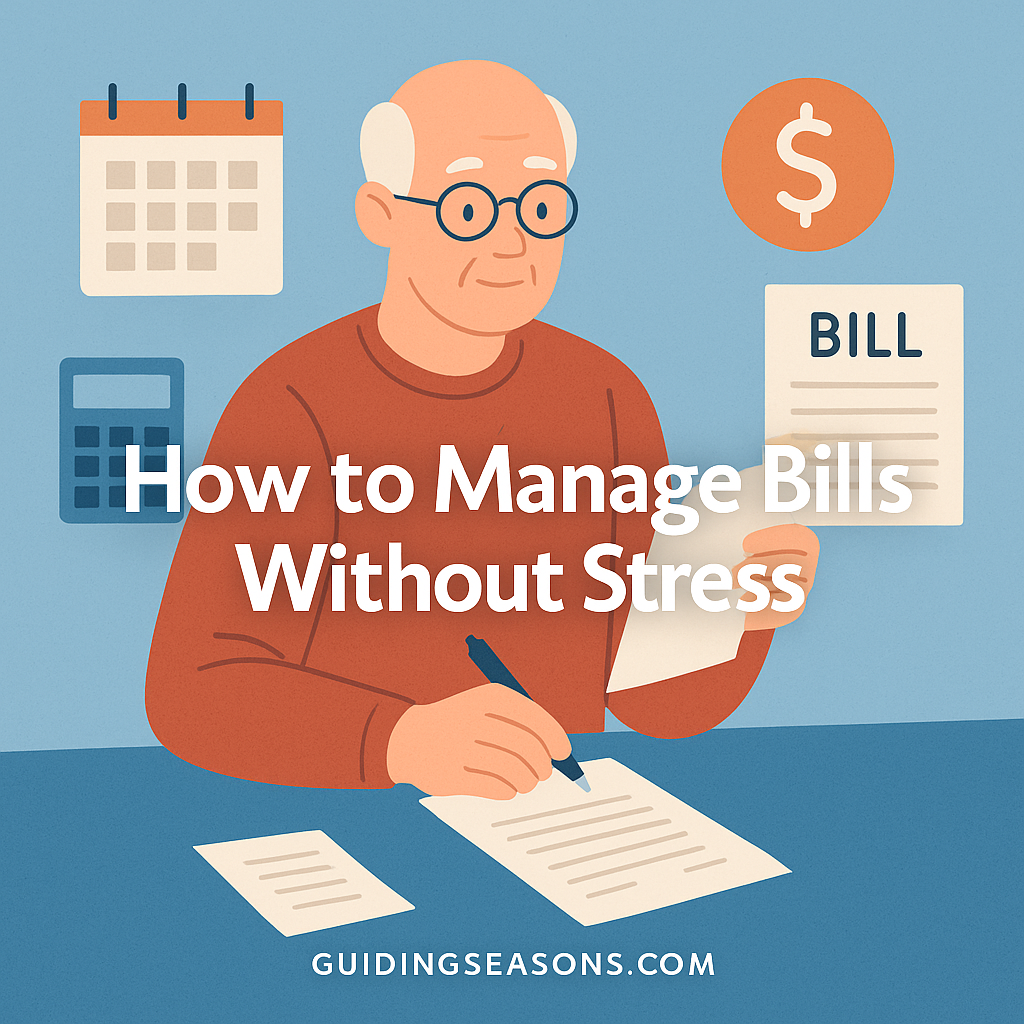
How to Manage Bills Without Stress

Older man reviewing bills and writing on paperwork with financial icons like a calculator, calendar, and dollar symbol around him.
Older man calmly organizing and managing his monthly bills.

Managing household bills can sometimes feel like a job of its own. There are utility bills, insurance premiums, credit cards, medical expenses, subscriptions, phone bills, housing costs, and other payments that all seem to arrive at different times.

During retirement, staying organized can become even more important because income is often more predictable. Instead of receiving regular employment paychecks, you may rely on Social Security, pension payments, retirement account withdrawals, or other fixed sources of income.

The good news is that managing bills doesn’t have to be complicated.

A simple system can help you know what is due, when it needs to be paid, and how much money should remain in your account. Once that system becomes part of your routine, paying bills can require much less thought and create far less stress.

Here are practical ways to create a calmer and more predictable bill-paying routine.

Continue reading “How to Manage Bills Without Stress”

How to Prepare for Financial Emergencies

Older woman reviewing a bill and counting cash while preparing for financial emergencies.
Older woman reviewing bills and organizing money to prepare for financial emergencies.

Financial emergencies can happen at any stage of life, but they can feel especially disruptive during retirement or when you depend primarily on a fixed income. An unexpected home repair, medical expense, vehicle problem, insurance deductible, or family emergency can suddenly require hundreds or even thousands of dollars.

The challenge is that emergencies rarely arrive at a convenient time.

You may have carefully planned your monthly retirement expenses only to discover that your air conditioner needs replacing or your vehicle needs an expensive repair. Without money specifically available for unexpected expenses, you may have to use a credit card, withdraw additional money from a retirement account, sell investments, or make difficult cuts elsewhere.

Preparing ahead of time can reduce that pressure.

The Consumer Financial Protection Bureau (CFPB) describes an emergency fund as a cash reserve specifically set aside for unexpected expenses such as medical bills, home or vehicle repairs, and interruptions to income. The agency also points out that even relatively small financial shocks can lead to lasting debt when there are insufficient savings available to absorb them.

Financial preparedness does not mean predicting every problem. It means creating enough flexibility that an unexpected expense does not automatically become a financial crisis.

Here are practical ways to strengthen your financial emergency plan.

Continue reading “How to Prepare for Financial Emergencies”

Understanding Life Insurance for Seniors

Senior man reviewing a life insurance document with the title Understanding Life Insurance for Seniors.
Senior man reviewing a life insurance document as part of planning for the future.

Life insurance isn’t just a financial product—it can provide peace of mind. For many seniors, life insurance helps protect loved ones from unexpected costs, leave a financial legacy, or make sure final expenses don’t become a burden.

But with different policy types, age limits, health requirements, and pricing structures, knowing what type of coverage to choose can feel overwhelming.

This guide breaks down life insurance in simple, senior-friendly language so you can better understand your options and make a confident, informed decision.

Continue reading “Understanding Life Insurance for Seniors”

How to Increase Financial Stability After Retiring

Older man calculating expenses at a table with bills, a notebook, a laptop, and a calculator, with the title “How to Increase Financial Stability After Retiring” displayed above
An older man reviews bills and writes in a notebook while budgeting, illustrating practical ways to increase financial stability after retiring.

Retirement can bring more freedom, more control over your schedule, and opportunities to enjoy the things you may not have had time for while working. But retirement also changes the way you manage money.

Instead of receiving a regular paycheck, your income may come from Social Security, a pension, retirement accounts, investments, annuities, or part-time work. At the same time, expenses such as healthcare, housing, insurance, food, and utilities continue — and some may increase over time.

That makes financial stability especially important during retirement.

Financial stability doesn’t necessarily mean having a huge retirement portfolio. It means having enough dependable income and financial flexibility to cover your needs, handle unexpected expenses, and enjoy retirement without constantly worrying about money.

Even after you’ve retired, there are practical steps you can take to strengthen your financial position.

Continue reading “How to Increase Financial Stability After Retiring”

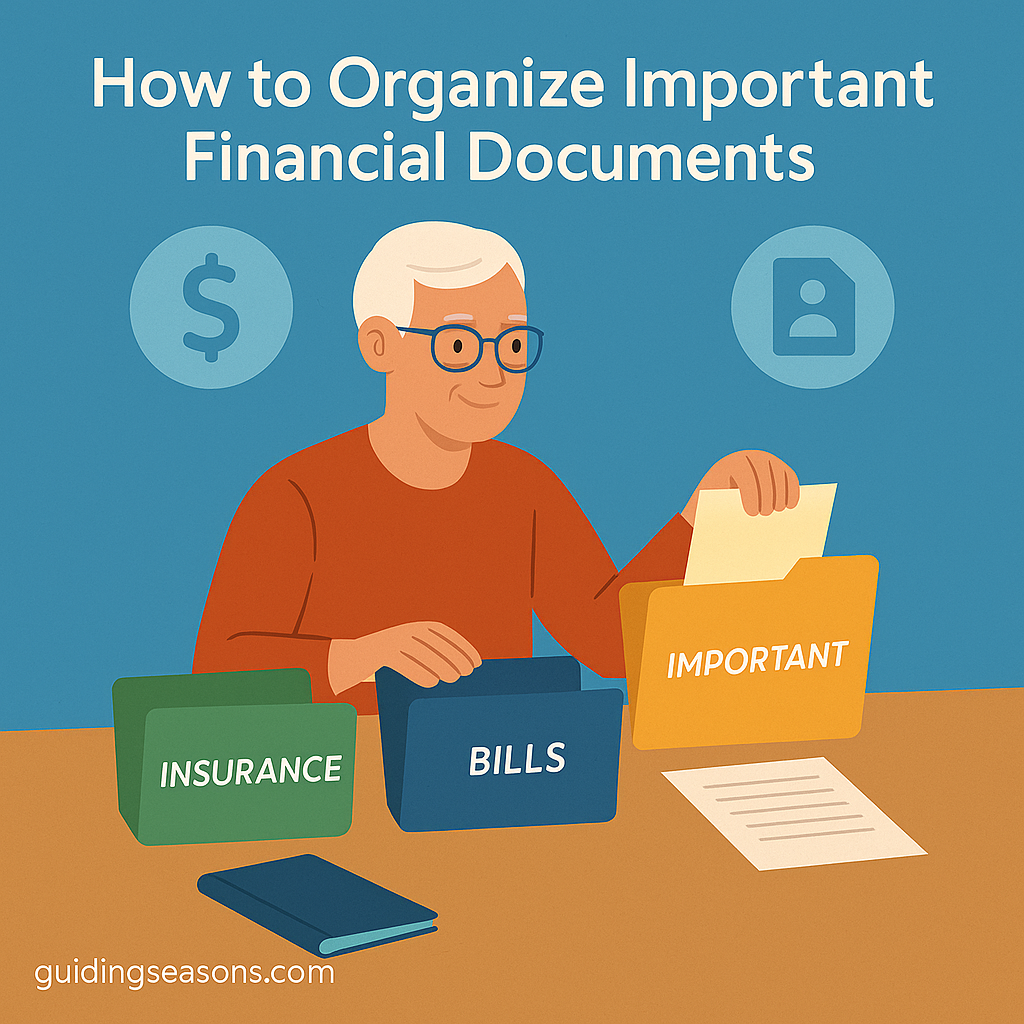
How to Organize Important Financial Documents

Older woman organizing financial papers into labeled folders for bills, insurance, and important documents, with the title “How to Organize Important Financial Documents” above
An older woman sorts bills, insurance papers, and important documents, illustrating simple steps for organizing essential financial records.

Keeping your financial documents organized is one of the simplest ways to protect your finances and make life easier for yourself and your loved ones. Bank records, insurance policies, tax documents, retirement statements, property records, and legal paperwork can quickly accumulate over the years. Without a system, finding one important document when you need it can become surprisingly difficult.

Good organization becomes especially important as you approach or enter retirement. You may have Social Security records, Medicare and insurance information, retirement accounts, pensions, investments, property documents, and estate planning paperwork that someone may eventually need to locate.

Fortunately, you do not need an elaborate filing system. A few clearly labeled folders, secure storage, digital backups, and a simple master list can make your financial life much easier to manage.

Here is a practical way to organize your important financial documents.

Continue reading “How to Organize Important Financial Documents”

Estate Planning Basics Seniors Should Know

Older man reviewing estate planning documents, including a will and trust papers, with a shield icon and the title “Estate Planning Basics Seniors Should Know” displayed above.
An older man reviews will and trust documents, illustrating essential estate planning basics seniors should know.

Estate planning is one of the most important steps you can take to protect your wishes, your family, and the assets you have spent a lifetime building. Yet many people put it off because they assume estate planning is only necessary for wealthy families or people with complicated finances.

In reality, an estate plan can be valuable even if you own a modest home, have a retirement account, maintain a few bank accounts, and want to make sure someone you trust can handle your affairs if you become unable to do so yourself.

Estate planning also involves much more than deciding who receives your property after you die. A complete plan can address financial decisions during your lifetime, medical care if you become incapacitated, beneficiary designations, important documents, and instructions for the people who may eventually need to manage your affairs.

The exact documents and legal requirements vary by state, but understanding these basic estate planning concepts can help you determine what needs attention.

Continue reading “Estate Planning Basics Seniors Should Know”

How to Build a Safety Net on a Fixed Income

Older woman sitting at a table budgeting with a calculator, paper, and piggy bank, with the title “How to Build a Safety Net on a Fixed Income” displayed above her.
An older woman reviews her finances at home, illustrating practical ways to build a safety net on a fixed income.

Living on a fixed income can provide a certain amount of predictability. You may know roughly how much money will arrive each month from Social Security, a pension, retirement withdrawals, or other dependable sources. The challenge is that your expenses are not always as predictable.

A car may suddenly need repairs. A utility bill can rise. An appliance can stop working. Prescription costs may change. Even relatively small unexpected expenses can put pressure on a budget when there isn’t much extra income available each month.

That is why building a financial safety net is so important. A safety net doesn’t necessarily mean having tens of thousands of dollars sitting in a bank account. It means creating several layers of protection that can help you handle unexpected expenses without immediately turning to high-interest credit cards, loans, or retirement withdrawals.

Even when your budget is tight, small and consistent steps can gradually improve your financial security.

Continue reading “How to Build a Safety Net on a Fixed Income”

Understanding Medicare Supplement Plans

Older man reading a Medicare Supplement Plans brochure at a table with healthcare icons in the background, illustrating how Medicare Supplement (Medigap) plans work.
An older man reviews a Medicare Supplement Plans brochure, representing key information seniors need to understand Medigap coverage.

Medicare provides important health coverage for millions of older Americans, but Original Medicare does not pay for every healthcare expense. Deductibles, coinsurance, copayments, and other costs can still leave retirees responsible for a meaningful portion of their medical bills.

That is where Medicare Supplement Insurance, commonly called Medigap, can help.

Medigap policies are sold by private insurance companies and are designed to work alongside Original Medicare. Depending on the plan you select, a Medigap policy can pay some or most of the out-of-pocket costs that remain after Medicare pays its share.

For retirees who value predictable healthcare expenses and the freedom to visit providers that accept Medicare, Medigap can be an important part of retirement planning.

Here is what you should know about Medicare Supplement Plans, including how they work, what they cover, what they cost, and how to compare your options.

Continue reading “Understanding Medicare Supplement Plans”