Relationships and Family: How to Build Strong, Supportive, and Meaningful Connections

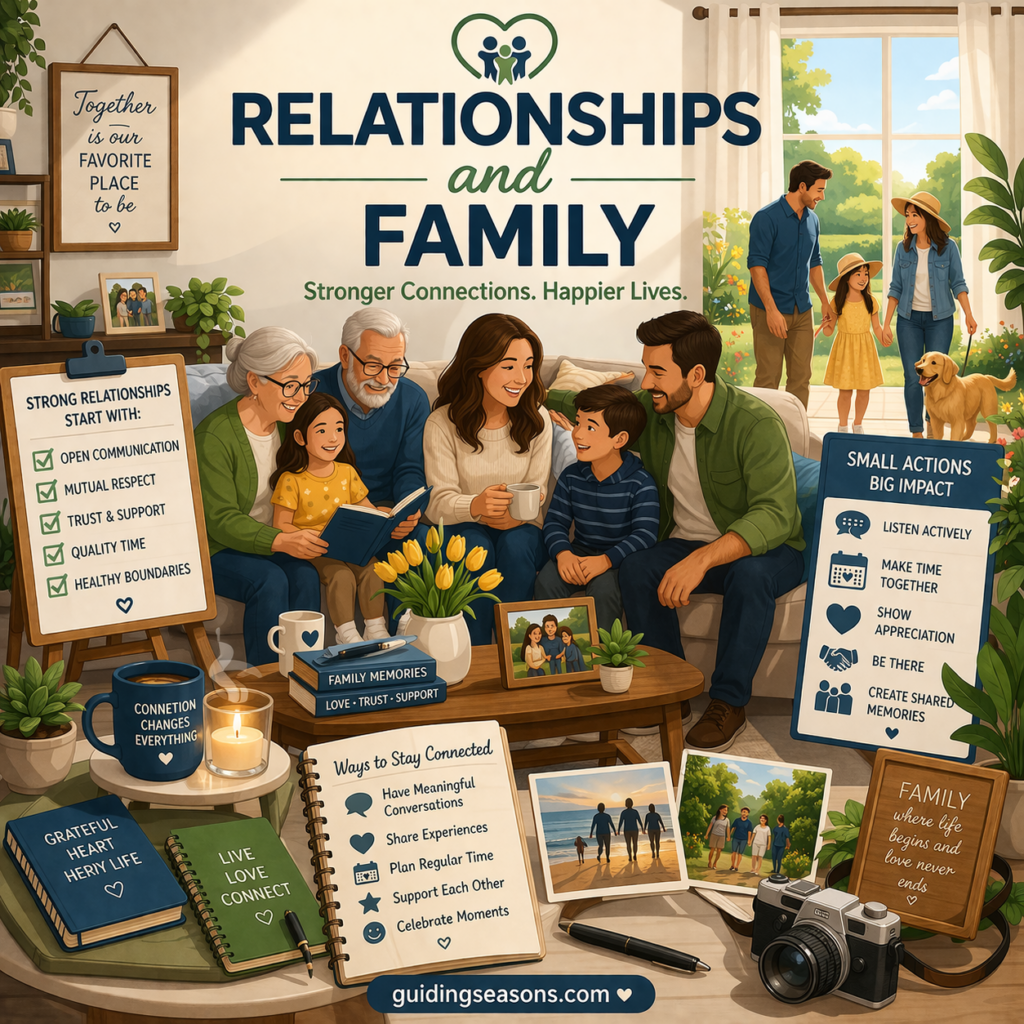
Flat illustration of a multigenerational family spending quality time together, representing strong relationships, communication, and emotional connection.
Flat illustration showing family bonding, communication, and meaningful connections for a strong and supportive home life. guidingseasons.com

Relationships are one of the most important parts of a fulfilling life. The people around us can provide companionship, encouragement, practical help, laughter, perspective, and a sense of belonging.

As we move through different stages of life, however, relationships rarely stay exactly the same. Children grow up and build lives of their own. Friendships change. Couples may spend more time together after retirement. Family members may move away. Health challenges can alter responsibilities, and new relationships may become increasingly important.

These changes don’t necessarily weaken relationships. In many cases, they create opportunities to build deeper and more meaningful connections.

Strong relationships are usually not the result of one dramatic gesture. They develop through communication, trust, patience, shared experiences, healthy boundaries, and the willingness to continue showing up for one another.

This guide explores practical ways to strengthen family relationships, marriages, friendships, and other important connections throughout later life.

Continue reading “Relationships and Family: How to Build Strong, Supportive, and Meaningful Connections”
How to Keep Family Traditions Alive

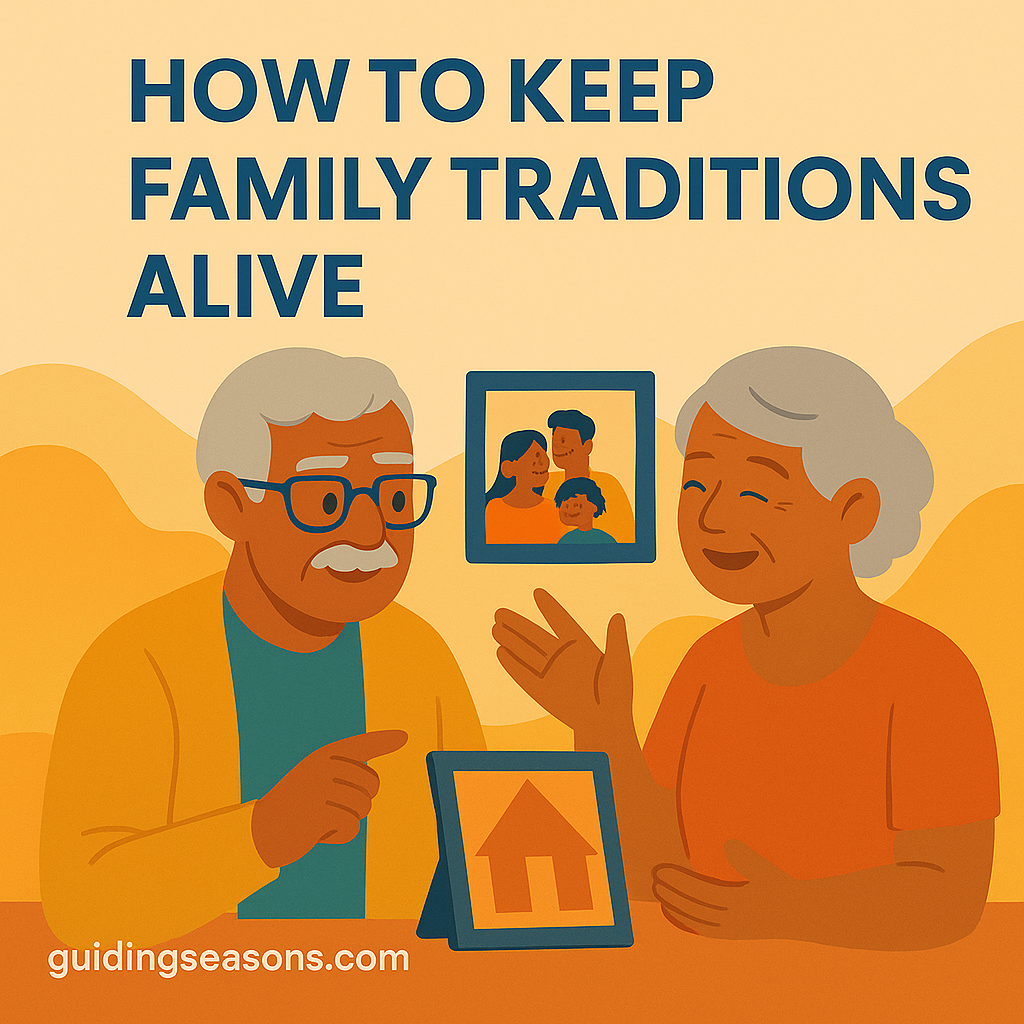
Flat illustration of an elderly couple sharing family memories using photos and a tablet, with warm and cool colors and a small guidingseasons.com watermark in the bottom left.
Senior couple sharing and preserving family memories through photos and stories.

Family traditions are more than routines. They are the stories, values, foods, celebrations, and ordinary moments that connect one generation to the next. Whether it’s a holiday recipe, an annual family gathering, a Sunday dinner, or something as simple as making pancakes with the grandchildren, traditions give families a sense of continuity and belonging.

Retirement can be a particularly meaningful time to think about these traditions. You may have more opportunities to gather photographs, write down recipes, share stories, or teach younger family members customs that were once passed down informally.

At the same time, families rarely stay exactly the same. Children grow up, grandchildren develop their own interests, relatives move to different cities, and new spouses or partners join the family. Health, finances, and schedules may change too.

Keeping traditions alive doesn’t mean trying to freeze family life in the past. The strongest traditions are often the ones that can evolve while preserving the meaning behind them.

Here’s how to protect the traditions you value while making room for new memories and new generations.

Continue reading “How to Keep Family Traditions Alive”

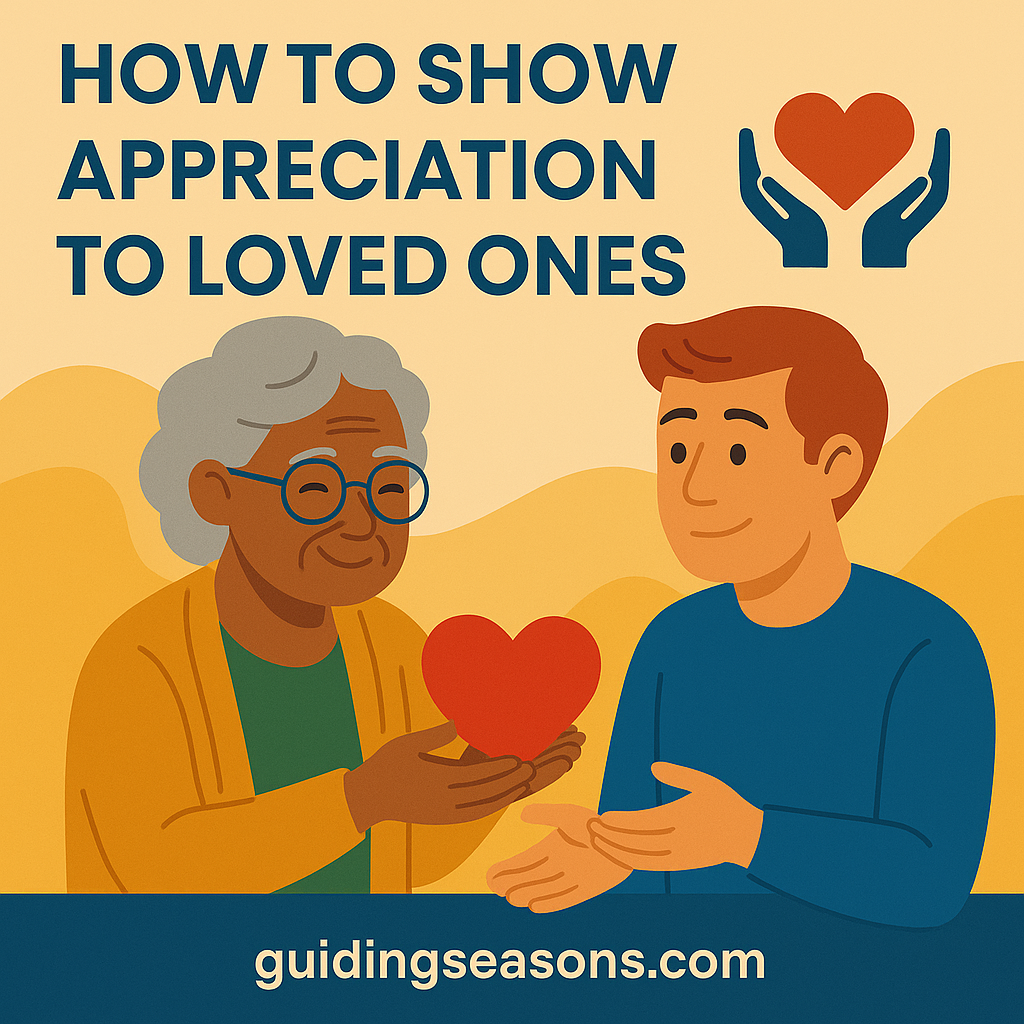
How to Show Appreciation to Loved Ones

Flat illustration of a senior woman handing a red heart to a younger man, with colorful warm background tones and a small guidingseasons.com watermark in the bottom left.
Senior woman expressing appreciation by offering a heart to a loved one.

Showing appreciation is one of the simplest yet most powerful ways to strengthen relationships. Whether it’s family, close friends, caregivers, or neighbors, expressing gratitude can deepen bonds, create moments of joy, and remind the people in your life how much they matter.

In retirement and the later seasons of life, these meaningful connections can become even more valuable. You may have more time to reflect on the people who have supported you over the years, from a spouse who has shared decades of life with you to an adult child who regularly checks in or a neighbor who is always willing to lend a hand.

Appreciation doesn’t have to involve expensive gifts or elaborate gestures. Often, a sincere “thank you,” a thoughtful note, or a few uninterrupted minutes together can have far greater meaning.

The key is making your appreciation personal, specific, and genuine.

Here are simple, heartfelt ways to show gratitude to the people you care about most.

Continue reading “How to Show Appreciation to Loved Ones”

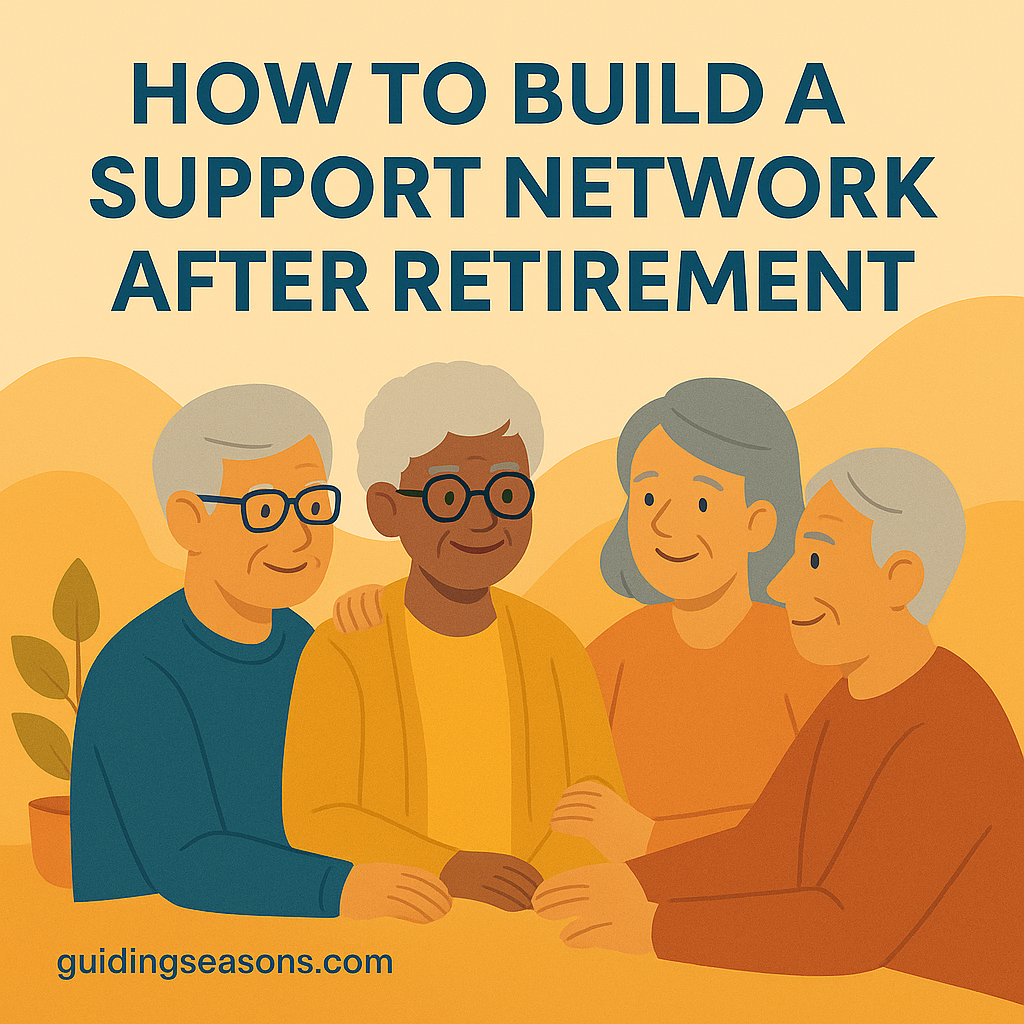
How to Build a Support Network After Retirement

Flat illustration of four seniors sitting together and smiling, symbolizing community and connection, with warm colors in the background and a small guidingseasons.com watermark in the bottom left.
Group of seniors building community and connection in a warm, supportive setting.

Retirement is a major life transition. While it brings new freedom and flexibility, it also changes your daily routines and the way you connect with others. Without the built-in social structure of work, some retirees may find themselves feeling more isolated than they expected.

The good news is that building a strong support network in retirement is absolutely possible. With a little intention and consistency, you can create meaningful connections that bring companionship, belonging, and emotional support into your daily life.

Here’s how to build a support network that truly supports you during this new chapter.

Continue reading “How to Build a Support Network After Retirement”

How to Participate in Community Programs

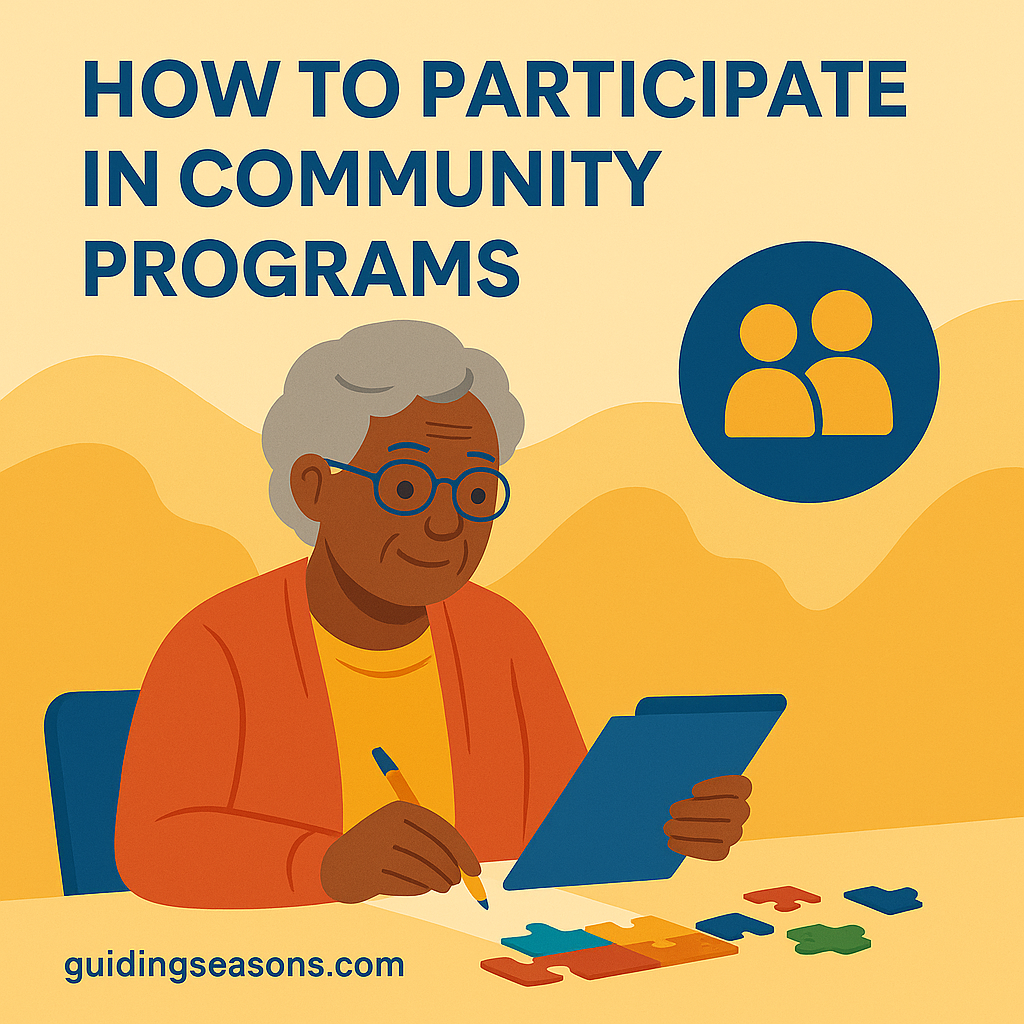
Illustration of a senior woman writing on a clipboard with puzzle pieces nearby and a community icon, created for the article “How to Participate in Community Programs,” with a small guidingseasons.com watermark in the bottom left.
Senior woman writing on a clipboard with a community icon symbolizing local programs.

Community programs can provide valuable opportunities to meet people, learn new skills, stay active, and develop a stronger sense of belonging. This can become especially important later in life, when retirement, relocation, family changes, or the loss of familiar routines may reduce the amount of regular social interaction you once had.

But joining a community group is not always easy.

Walking into a room where you don’t know anyone can feel uncomfortable at any age. You may wonder whether you’ll fit in, whether everyone else already knows one another, or whether you’ll be expected to participate more than you want.

The important thing to remember is that community involvement does not require instant confidence.

You don’t have to become the most social person in the room, volunteer for every activity, or commit to attending every week. Participation can begin with something as simple as attending one event, listening to a presentation, taking a class, or introducing yourself to one person.

The goal is to find opportunities that fit your interests, abilities, personality, and comfort level.

Over time, those small steps can lead to familiar faces, friendships, new routines, and a greater feeling of connection to the community around you.

Continue reading “How to Participate in Community Programs”

How to Maintain Independence While Staying Connected

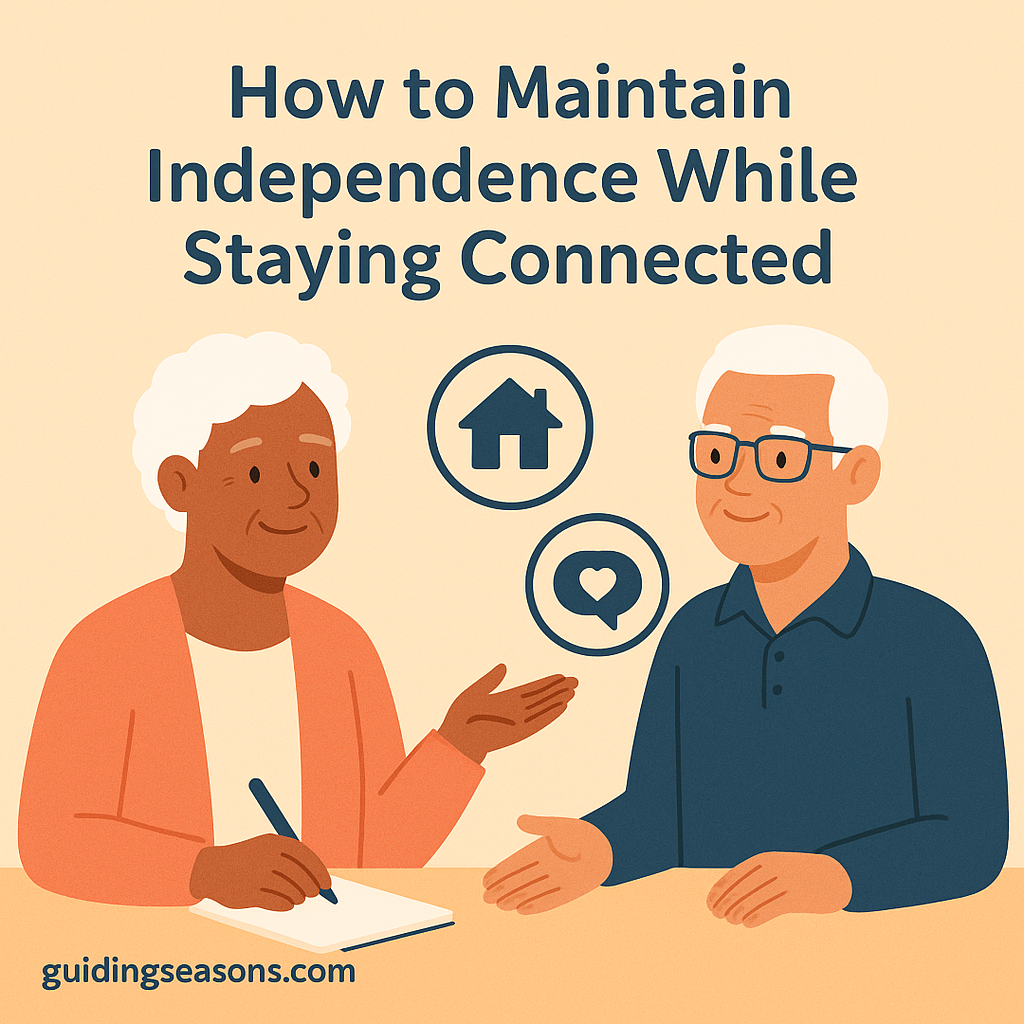
Illustration of two seniors having a warm, positive conversation with icons representing home and connection, created for the article “How to Maintain Independence While Staying Connected,” with guidingseasons.com displayed at the bottom.
Two seniors discussing how to stay independent while maintaining meaningful connections.

As you move through retirement, independence can become more important than ever. You want to make your own choices, stay active, manage your daily life, and continue feeling capable and confident. At the same time, staying connected with family, friends, neighbors, and your community can provide companionship, practical support, and a sense of belonging.

Both independence and connection matter, and you don’t have to choose between them. In fact, the right relationships can help you remain independent by providing support when you actually need it.

This guide shares practical ways to stay connected without giving up control over how you live your life.

Continue reading “How to Maintain Independence While Staying Connected”

How to Support Loved Ones With Grace

Illustration of a senior couple sharing a warm, supportive moment, with the man holding the woman’s hand while they sit together beneath the title “How to Support Loved Ones With Grace.”
Senior couple sharing a warm and supportive moment together.

Supporting the people you care about—children, grandchildren, siblings, friends, or a partner—is one of the most meaningful parts of life. As you move through retirement, you may find that loved ones rely on you in new ways. They may turn to you for emotional support, guidance, encouragement, practical help, or simply a listening ear.

At the same time, supporting someone doesn’t mean taking responsibility for every problem they face. Healthy support respects the other person’s independence while protecting your own time, energy, finances, and well-being.

Offering support with grace means finding that balance. It means showing up with patience and compassion while recognizing that sometimes the most helpful thing you can do is listen, encourage, or allow someone to make their own decision.

Here are practical ways to support the people you love while maintaining healthy, respectful relationships.

Continue reading “How to Support Loved Ones With Grace”

How to Rebuild Family Connections

Illustration of a senior couple smiling and high-fiving at a table with a heart-stamped envelope, representing rebuilding family connections.
Senior couple smiling and high-fiving while reconnecting over a heartfelt message.

Family relationships can gradually drift apart for many reasons—busy schedules, misunderstandings, physical distance, changing priorities, or simply the passage of time. The desire to reconnect may grow stronger in retirement, when life slows down and priorities often shift toward relationships and experiences that feel meaningful.

Rebuilding a family connection may be possible even after a long period of distance, although every relationship is different and reconciliation can’t always be rushed or guaranteed.

This guide offers gentle, practical ways to reopen communication, address past difficulties when appropriate, and create opportunities for stronger relationships with the people you love.

Continue reading “How to Rebuild Family Connections”

How to Strengthen Your Marriage in Retirement

Illustration of a senior couple sitting together on a couch, smiling and sharing a warm moment beneath the title “How to Strengthen Your Marriage in Retirement.”
Senior couple sitting together and sharing a warm moment at home.

Retirement offers couples something they may not have had in decades: time. More quiet mornings, shared meals, relaxed schedules, and the freedom to rediscover life together. But while this new chapter can bring closeness and joy, it also comes with adjustments.

Spending more time together, redefining household roles, managing finances, and deciding how to use newfound free time can create stress if these changes aren’t handled intentionally.

The good news is that with communication, patience, and new shared habits, retirement can become one of the most rewarding stages of marriage. Here’s how to strengthen your relationship and build a meaningful partnership in this next chapter.

Continue reading “How to Strengthen Your Marriage in Retirement”

How to Navigate Conflict With Loved Ones

Illustration of an older couple having a tense conversation, with a heart icon between them symbolizing efforts to navigate conflict with loved ones.
Older couple in a moment of disagreement with a heart icon representing conflict resolution with loved ones.

Conflict with family members or close friends can be especially difficult because the relationship matters. A disagreement with a stranger may be easy to leave behind, but tension with a spouse, adult child, sibling, close friend, or other loved one can stay on your mind for days.

You may replay the conversation, wonder what you should have said differently, or worry that the relationship has changed.

The good news is that conflict does not automatically mean a relationship is unhealthy. In fact, disagreement is a normal part of close relationships. People have different personalities, expectations, values, communication styles, and life experiences. Even people who love each other deeply will sometimes misunderstand one another or want different things.

What matters most is how the conflict is handled.

When disagreements are approached with patience, respect, and a willingness to understand, they can lead to stronger boundaries, better communication, and a deeper understanding of one another.

The goal is not to eliminate conflict completely. It is to learn how to move through it without causing unnecessary damage.

Continue reading “How to Navigate Conflict With Loved Ones”