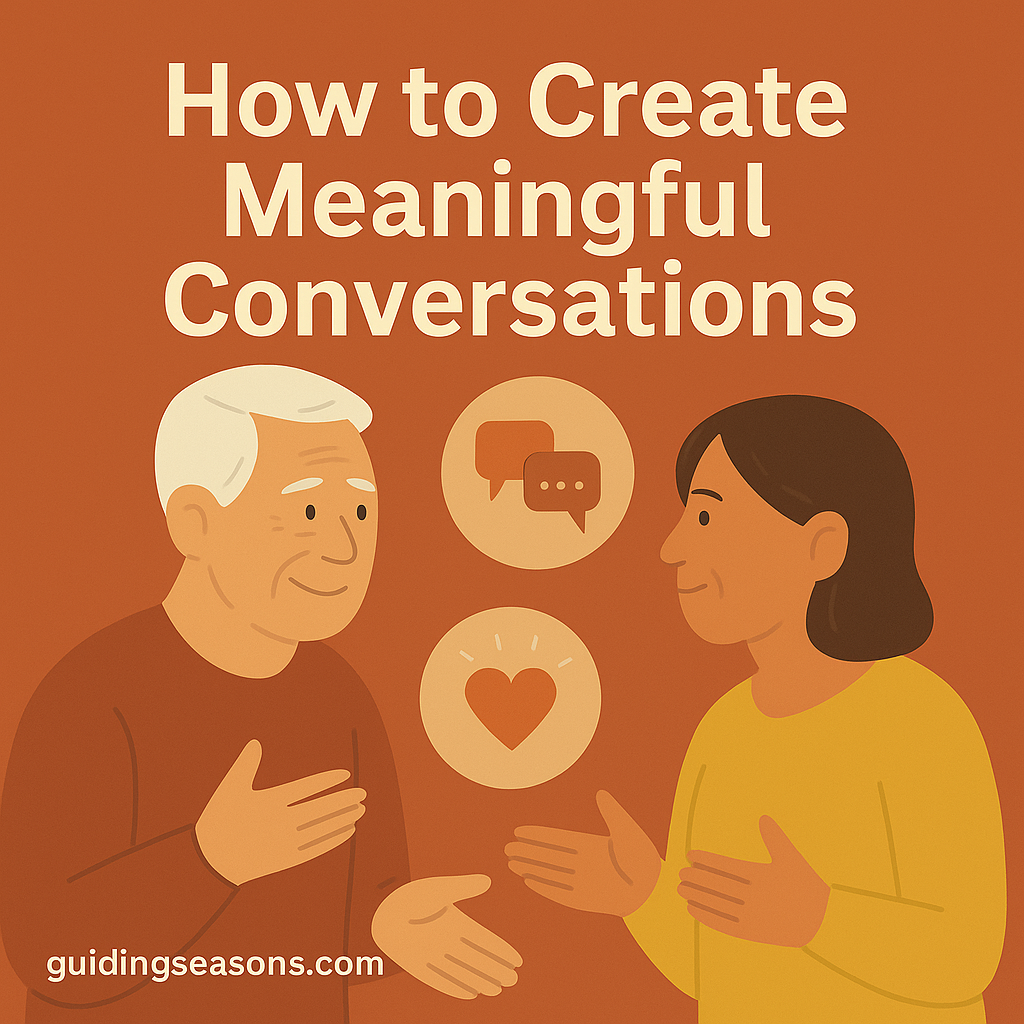
How to Create Meaningful Conversations

Older man and woman having a friendly conversation with icons of speech bubbles and a heart above them.
Older man and woman engaging in a warm conversation with symbolic icons representing meaningful communication.

Meaningful conversations can turn ordinary moments into opportunities for genuine connection. A phone call with an adult child, coffee with an old friend, dinner with a spouse, or a conversation with someone you’ve just met can become much more than casual small talk when both people feel heard and understood.

As we get older, these conversations can become especially valuable. Retirement may change how often we interact with coworkers. Children and grandchildren may have busy lives of their own. Friends may move away, and social circles can change over time. Being able to create deeper connections can help maintain important relationships while also making it easier to develop new ones.

Meaningful conversation doesn’t require being naturally outgoing, having fascinating stories, or knowing exactly what to say. In fact, some of the best conversations begin with a very simple question followed by genuine listening.

The goal isn’t to turn every interaction into a serious discussion. Small talk has an important purpose too. It helps people become comfortable with each other. But when the opportunity arises, curiosity, attention, empathy, and thoughtful questions can take a conversation somewhere more meaningful.

Continue reading “How to Create Meaningful Conversations”
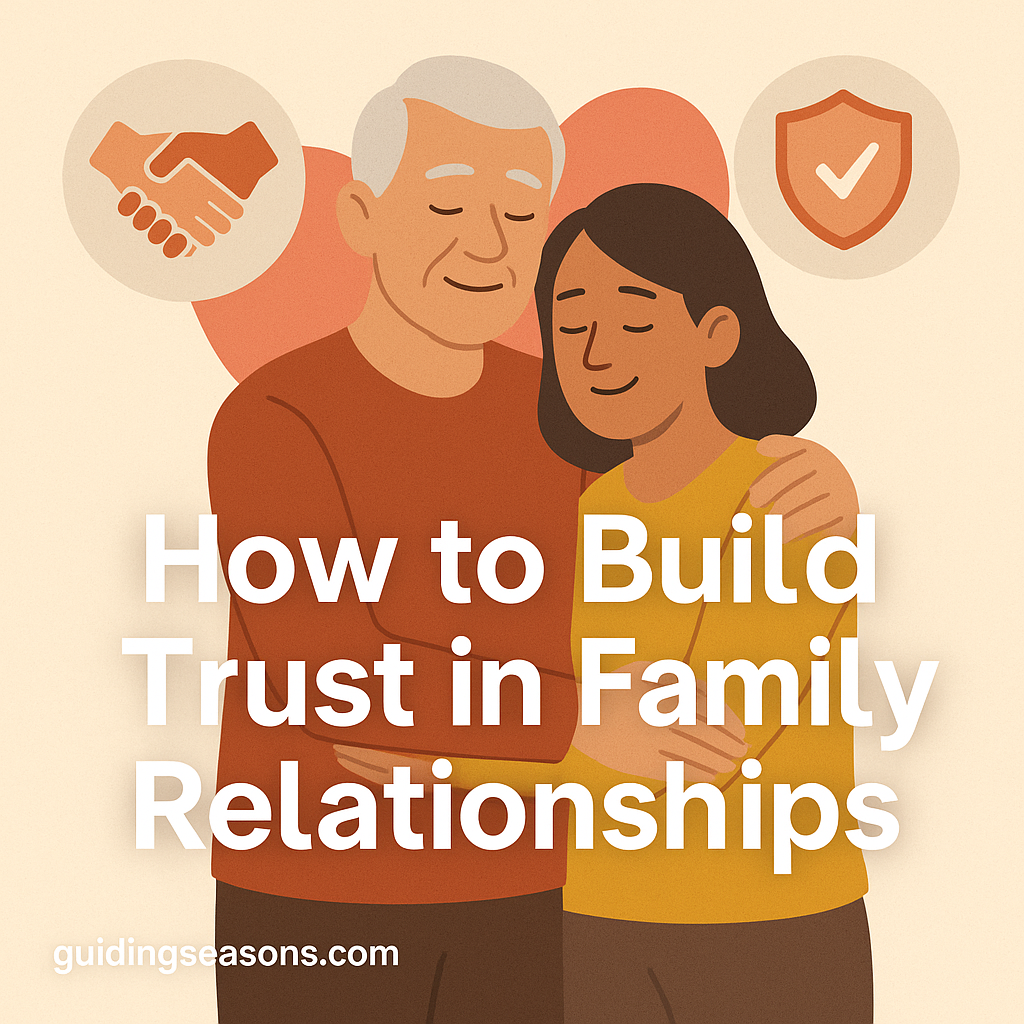
How to Build Trust in Family Relationships

Older man hugging a younger family member with trust-related icons like a handshake and shield in the background.
Older man embracing a younger family member with symbols representing trust and safety.

Trust is one of the foundations of a strong family relationship. It allows people to speak honestly, ask for help, share concerns, and feel confident that the people closest to them will treat them with respect.

But trust is rarely created through one big gesture.

It develops through hundreds of smaller experiences over time: keeping a promise, listening without judgment, respecting someone’s privacy, apologizing after making a mistake, or simply showing up when you said you would.

Later in life, trust within families can become especially important. Relationships with adult children may change as everyone becomes more independent. Grandchildren grow older and develop their own opinions and lives. Siblings may find themselves making decisions about aging parents, inheritances, caregiving, or family property. Retirement and health changes can also alter long-established family roles.

Some families become closer during these transitions. Others discover old misunderstandings or unresolved tensions.

Fortunately, trust is not something that can only be established when a relationship is new. It can continue growing — and in many situations, it can be rebuilt — throughout life.

Continue reading “How to Build Trust in Family Relationships”

How to Connect With Grandchildren

Grandfather and young granddaughter building a colorful block tower together while smiling.
Grandfather bonding with his granddaughter by building a block tower together.

Building a close relationship with your grandchildren can be one of the most rewarding parts of later life. Grandparents have a unique opportunity to provide love, encouragement, family history, and a perspective that younger generations may not receive anywhere else.

But strong relationships between grandparents and grandchildren don’t always happen automatically.

Children grow quickly. Their personalities develop, their interests change, and as they become teenagers and young adults, friends, school, work, sports, and other responsibilities begin competing for their time. Some grandparents also live hundreds or even thousands of miles from their grandchildren, making regular visits difficult.

The key is to allow the relationship to grow along with the child.

Connecting with a 5-year-old may involve reading stories and building with blocks. Connecting with a 15-year-old might mean listening to their favorite music or asking about their plans for the future. Connecting with a 25-year-old grandchild may look more like an adult friendship built around conversation, shared interests, and mutual respect.

You don’t need elaborate trips, expensive gifts, or constant contact to build a meaningful relationship. Consistent attention, genuine curiosity, shared experiences, and respect can have a much greater impact.

Continue reading “How to Connect With Grandchildren”

How to Improve Listening Skills as a Senior

Three older adults sitting together in conversation, practicing listening skills with speech bubbles above them.
Older adults practicing better listening skills through calm and engaged conversation.

Good listening is one of the most valuable skills you can bring to a relationship. Whether you’re talking with a spouse, adult child, grandchild, friend, neighbor, doctor, or caregiver, listening carefully helps you understand what another person is saying while also communicating something important: their thoughts matter to you.

Listening can become more challenging with age for several reasons. Changes in hearing may make certain voices or sounds harder to understand. Restaurants and family gatherings can be noisy. Modern conversations sometimes move quickly, and smartphones, televisions, and other distractions compete for attention.

None of this means you have to become disconnected from conversations.

Listening involves much more than simply hearing words. It includes paying attention, watching facial expressions and body language, asking questions, remembering important details, and confirming that you understood correctly.

These are skills that can be practiced.

By making a few changes to your environment and communication habits, you can become a more attentive listener and enjoy clearer, more meaningful conversations.

Continue reading “How to Improve Listening Skills as a Senior”

How to Maintain Healthy Boundaries With Family

Older woman and younger man having a calm conversation in a living room.
Older woman discussing healthy boundaries with a family member.

Family relationships can be warm, supportive, and deeply meaningful—but they can also become stressful when expectations aren’t clear. As life changes through retirement, health shifts, caregiving responsibilities, and evolving family roles, you may discover that boundaries that worked years ago no longer fit your life today.

Perhaps adult children assume you’re always available because you’re retired. Grandchildren may bring tremendous joy while also requiring time and energy. A sibling might rely heavily on you for emotional support. Family members may have opinions about your finances, healthcare, travel plans, or how you spend your time.

Helping the people you love can be rewarding, but retirement doesn’t mean your time automatically belongs to everyone else.

Healthy boundaries aren’t about shutting people out. They’re about creating clear expectations so relationships have room for respect, independence, and genuine connection.

Here’s how to establish and maintain family boundaries with confidence and compassion.

Continue reading “How to Maintain Healthy Boundaries With Family”

How to Support a Spouse Through Health Changes

Older couple sitting together on a couch, gently holding hands and talking, with the title “How to Support a Spouse Through Health Changes” displayed above
An older couple sits together holding hands on a cozy couch, illustrating the compassion and connection needed to support a spouse through health changes.

When your spouse begins experiencing health changes—whether sudden or gradual—it can affect both of you emotionally, physically, and practically. A new diagnosis, reduced mobility, memory concerns, chronic pain, or recovery from an illness may introduce uncertainty and change routines that once felt familiar.

These transitions can be difficult for the person experiencing the health problem, but they can also be challenging for the spouse who is trying to provide support.

You may suddenly find yourself attending more medical appointments, taking over household responsibilities, managing transportation, or helping with everyday activities. At the same time, you’re still a husband, wife, or partner—not simply a caregiver.

Finding that balance is important.

Supporting your spouse doesn’t mean doing everything for them or ignoring your own needs. It means working together, adapting when necessary, and preserving as much independence, dignity, companionship, and normalcy as possible.

Here are practical ways to support a spouse through changing health needs while continuing to care for your relationship and yourself.

Continue reading “How to Support a Spouse Through Health Changes”

How to Navigate Changing Family Dynamics

Grandfather sitting with his two young grandchildren, smiling and interacting warmly, with the title “How to Navigate Changing Family Dynamics” above
A grandfather enjoys a warm moment with his grandchildren, illustrating how families can navigate changing family dynamics with connection and understanding.

Families rarely stay exactly the same. As the years pass, children become adults, parents grow older, grandchildren arrive, careers change, and new responsibilities emerge. Retirement, relocation, health concerns, caregiving, marriage, divorce, and the loss of loved ones can all change the way family members interact with one another.

These transitions can be rewarding, but they can also create uncertainty. A parent who was once deeply involved in a child’s daily decisions may need to adjust to a more supportive role. Adult children may suddenly find themselves helping aging parents. Grandparents may want to be involved while also respecting the parenting choices of their children. Siblings who once had few shared responsibilities may need to work together to care for a parent.

The good news is that changing family dynamics do not automatically weaken relationships. With communication, flexibility, realistic expectations, and respect for one another’s independence, families can adapt while maintaining strong connections.

Continue reading “How to Navigate Changing Family Dynamics”

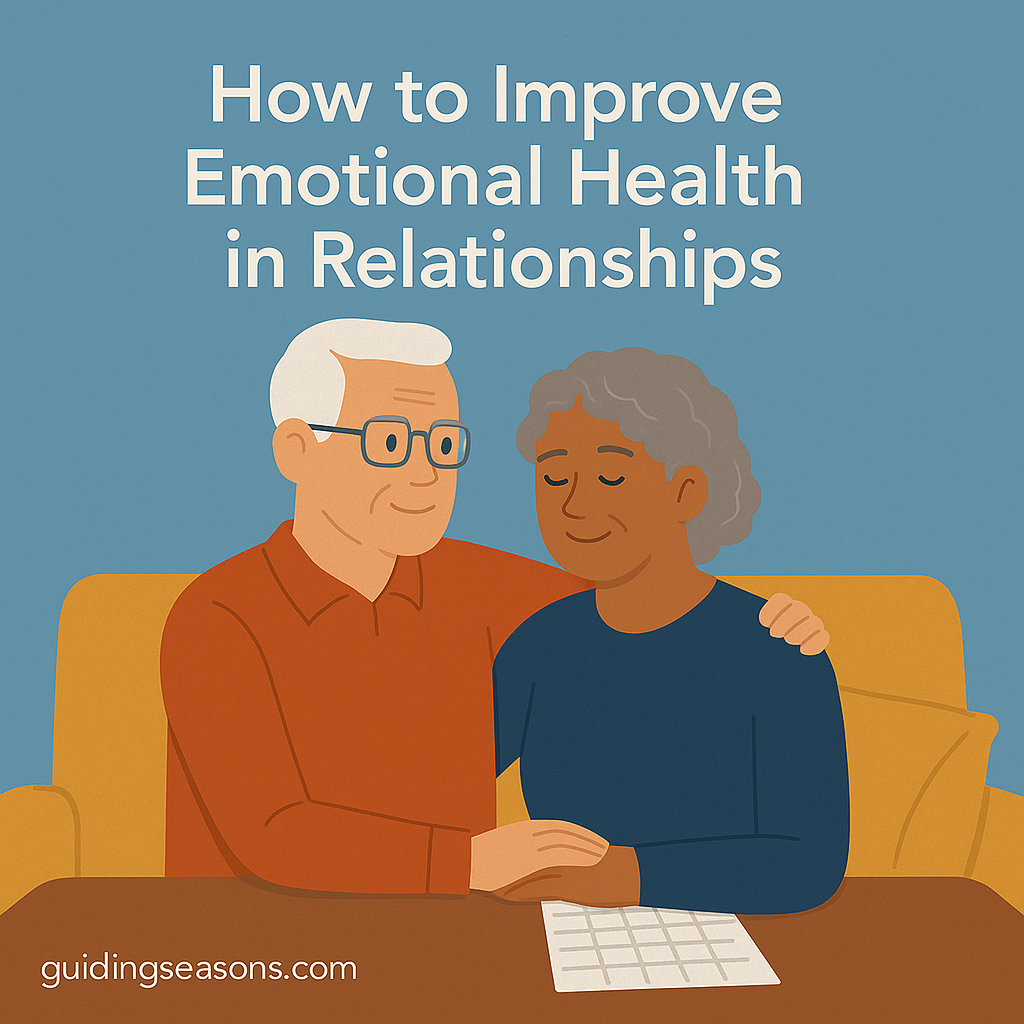
How to Improve Emotional Health in Relationships

Older couple sitting closely together on a yellow couch, holding hands and smiling warmly, with the title “How to Improve Emotional Health in Relationships” displayed above them.
An older couple shares a warm moment together, illustrating practical ways to improve emotional health in relationships.

Healthy relationships can have a powerful influence on emotional well-being at every stage of life. Whether the relationship is with a spouse, partner, adult child, sibling, longtime friend, or another person you care about, feeling respected, understood, and supported can make everyday life more fulfilling.

Relationships, however, do not stay healthy automatically.

People change. Retirement can alter routines. Health challenges can create stress. Adult children may become busier with careers and families of their own. Friendships can shift after relocation or the loss of mutual friends. Couples who have spent decades together may suddenly find themselves spending much more time together after retirement.

These transitions can strengthen relationships, but they can also expose communication problems, unresolved resentments, or differences that were easier to overlook earlier in life.

Improving emotional health in relationships does not require perfection. It usually comes from smaller habits practiced consistently: listening carefully, expressing feelings honestly, respecting boundaries, showing appreciation, resolving conflicts constructively, and remaining willing to grow.

The goal is not to eliminate every disagreement or difficult emotion. Healthy relationships still experience frustration, sadness, disappointment, and conflict. Emotional health means learning how to handle those experiences while preserving respect and connection.

Continue reading “How to Improve Emotional Health in Relationships”

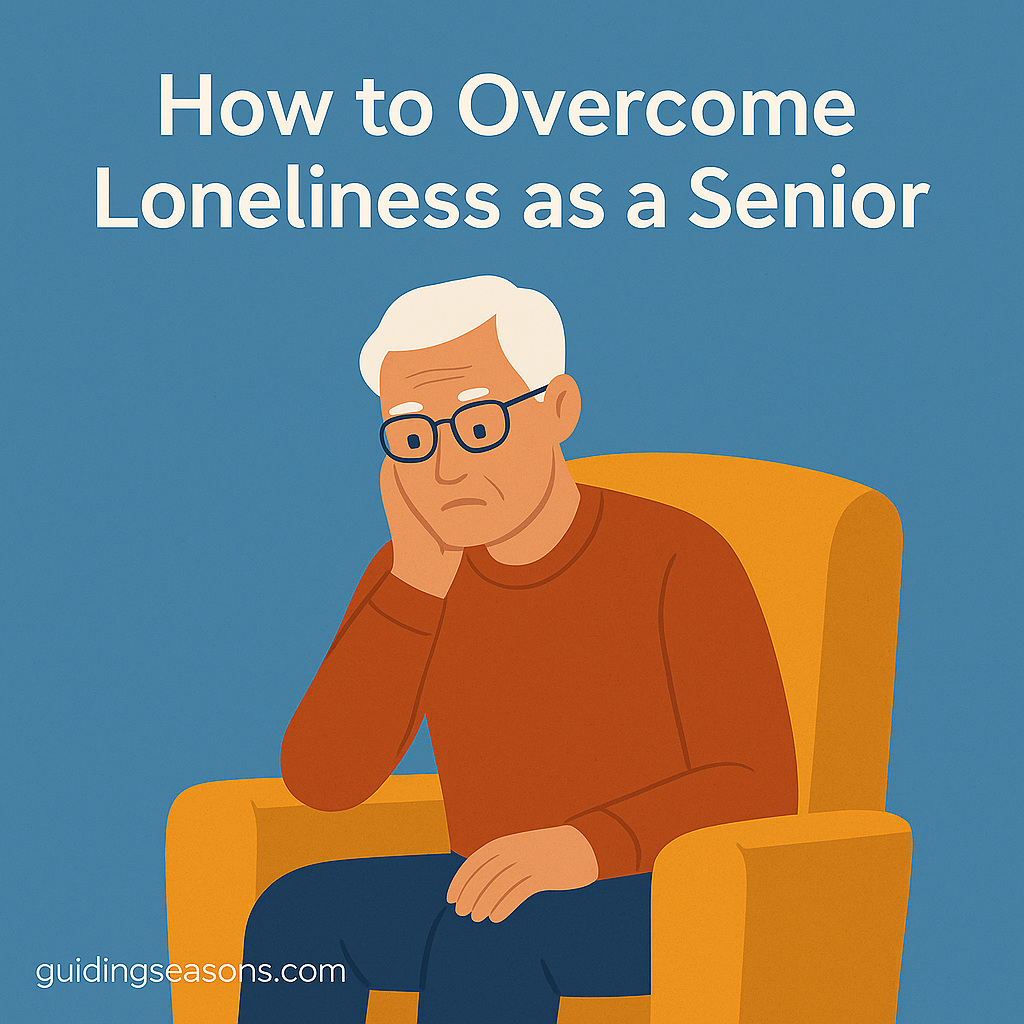
How to Overcome Loneliness as a Senior

Older man sitting in an armchair with a sad, thoughtful expression and the title “How to Overcome Loneliness as a Senior” displayed above him.
An older man reflects on feelings of loneliness, paired with an overlay title to illustrate how seniors can overcome loneliness.

Loneliness can affect people at any age, but older adulthood can bring circumstances that make maintaining social connections more difficult. Retirement may remove the daily interaction that once came from the workplace. Adult children may live far away or have busy families of their own. Friends may relocate, health or mobility problems can make getting out more difficult, and the loss of a spouse, partner, sibling, or longtime friend can leave an enormous gap in everyday life.

Feeling lonely occasionally is a normal human experience. However, when loneliness becomes persistent, it is worth paying attention to rather than simply accepting it as an unavoidable part of getting older.

The encouraging news is that social connection can be rebuilt. You don’t necessarily need a large circle of friends or a packed social calendar. A few dependable relationships, meaningful activities, and regular opportunities to interact with other people can make everyday life feel considerably more connected.

Overcoming loneliness often happens gradually. Small actions — making a phone call, attending a weekly class, walking with a neighbor, volunteering a few hours, or reconnecting with an old friend — can begin creating momentum.

Continue reading “How to Overcome Loneliness as a Senior”

How to Build Strong Friendships Later in Life

Two older adults smiling and talking together, illustrating how to build strong friendships later in life.
Two older friends enjoy a warm conversation, representing simple ways to build strong friendships later in life.

Friendship remains important throughout every stage of life. Good friends provide companionship, encouragement, laughter, emotional support, and a sense that we belong somewhere. Yet making and maintaining friendships can become more challenging as we get older.

Retirement may eliminate the daily contact you once had with coworkers. Longtime friends may move away, experience health problems, or develop different routines. Adult children may have busy families and careers of their own. Some older adults relocate after retirement and suddenly find themselves building a social life in an unfamiliar community.

These changes can make a social circle smaller, but they do not mean that opportunities for friendship have disappeared.

Meaningful friendships can develop at virtually any stage of adulthood. The process may look different than it did in school or during the early years of a career, but the basic ingredients remain surprisingly similar: repeated contact, shared experiences, curiosity, trust, and a willingness to make an effort.

The goal doesn’t need to be having dozens of friends. A few dependable relationships can provide tremendous value. By putting yourself in situations where connection can develop and giving those relationships time to grow, you can build a fulfilling social life later in life.

Continue reading “How to Build Strong Friendships Later in Life”