
How to Connect With Adult Children

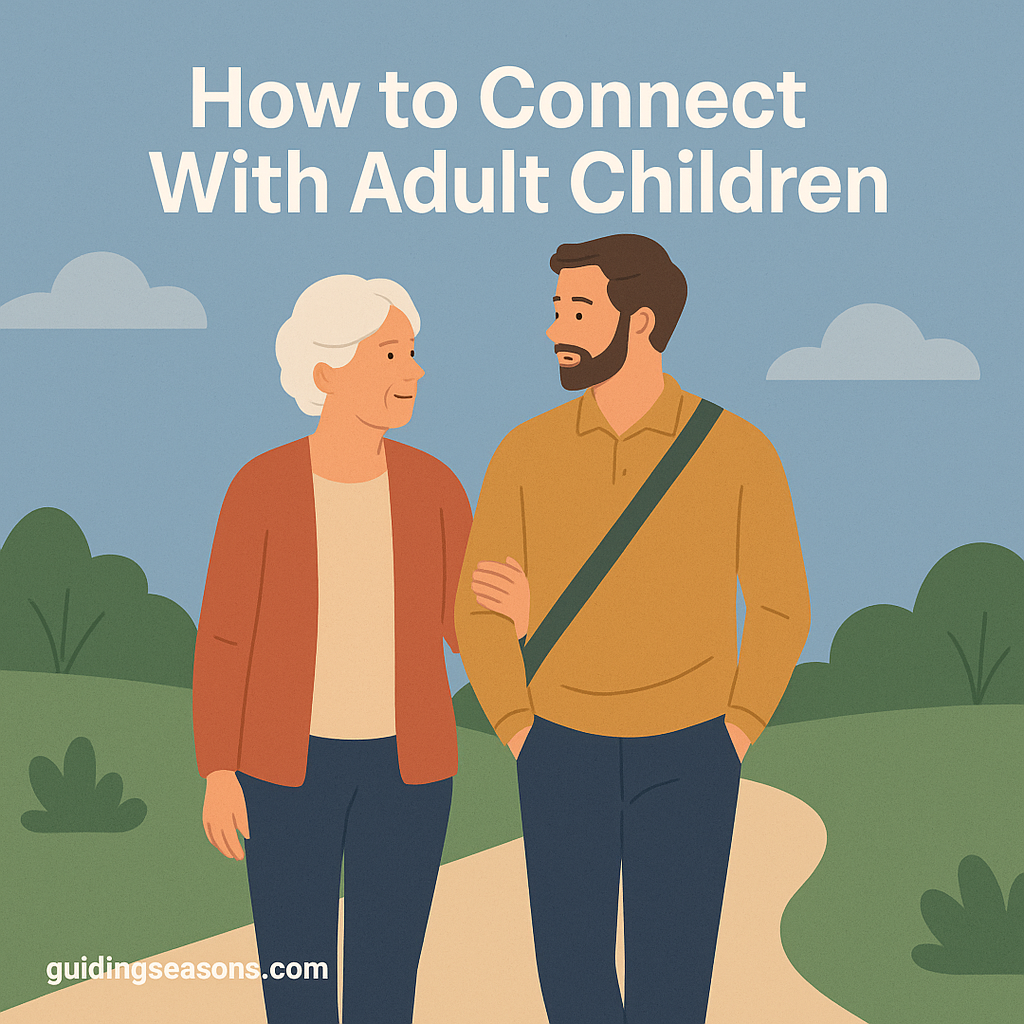
Older mother walking outdoors with her adult son on a park path, representing how to connect with adult children.
An older mother and her adult son enjoy a walk together, symbolizing healthy connection and communication.

Staying close with your adult children can be one of the most rewarding parts of later life, but the relationship often requires a different approach than it did when they were younger.

As children become adults, they build careers, relationships, friendships, households, and daily routines of their own. Some may become parents themselves. Others may move across the country, pursue demanding careers, or create lifestyles that are very different from the ones you imagined for them.

These changes don’t necessarily mean you’re becoming less important in their lives. Instead, the parent-child relationship is entering a new stage—one that can gradually become a relationship between independent adults.

The transition isn’t always easy. Parents may want more contact than their adult children have time for. Advice offered with good intentions may feel like criticism. Adult children may want independence while still turning to their parents for support during difficult periods.

Learning how to navigate these changes can help you maintain a relationship built on affection, respect, and genuine interest rather than obligation.

Here are practical ways to stay connected with your adult children as your relationship continues to evolve.

Continue reading “How to Connect With Adult Children”
Healthy Communication Tips for Seniors

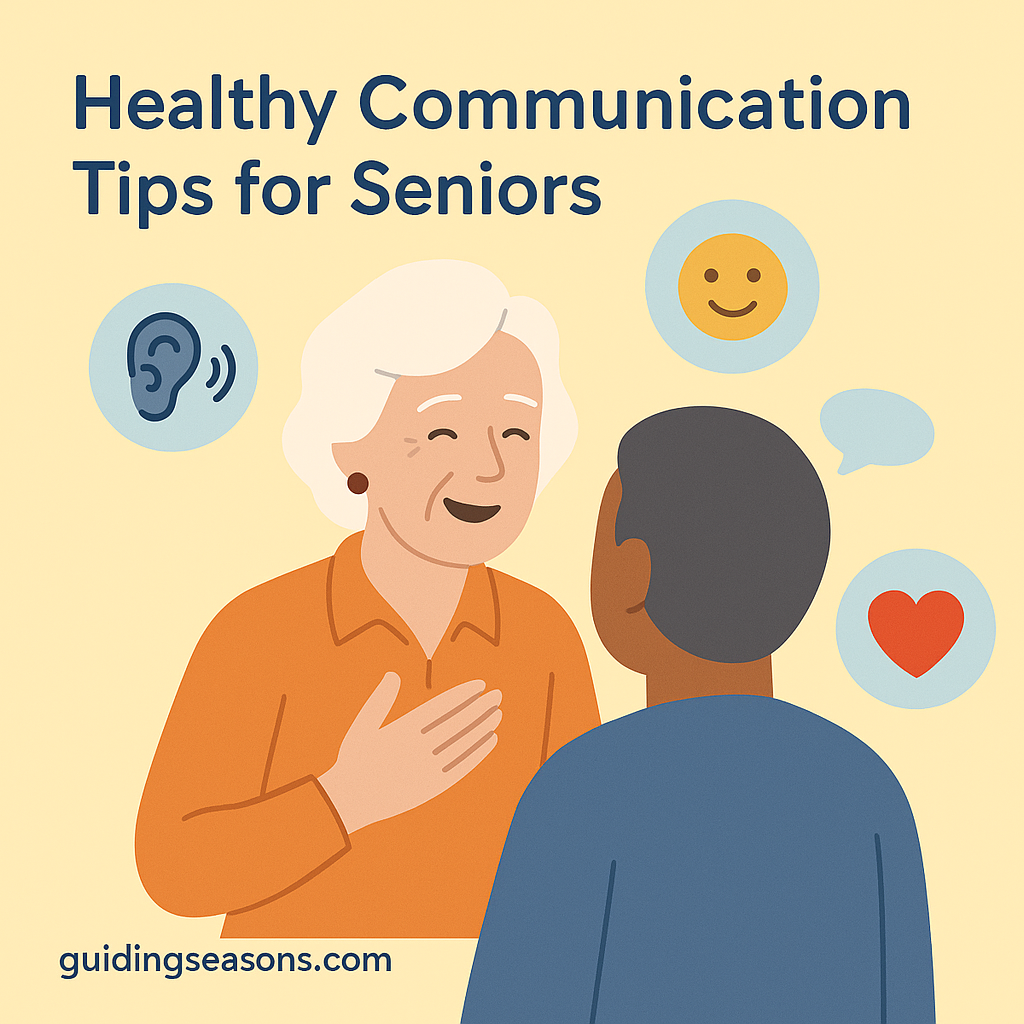
Illustration of a senior woman communicating warmly with another person, surrounded by icons representing listening, positivity, speech, and care, beneath the title “Healthy Communication Tips for Seniors.”
A senior practicing healthy communication habits for stronger relationships.

Good communication is an essential part of maintaining strong relationships, especially as we grow older. Whether you’re connecting with family, friends, caregivers, or your community, the way you communicate can shape the quality of your relationships and your overall well-being.

In retirement and beyond, communication becomes more than just daily conversation—it becomes a powerful tool for expressing needs, building trust, maintaining independence, and staying emotionally connected.

Healthy communication doesn’t require a perfect memory or flawless speech. What matters most is intention, understanding, patience, and a willingness to stay engaged.

Continue reading “Healthy Communication Tips for Seniors”

How to Strengthen Family Bonds in Retirement

Illustration of seniors and adult family members sharing a warm moment together while holding a family photo, shown below a title about strengthening family bonds in retirement.
A family sharing a meaningful moment while celebrating strong bonds in retirement.

Retirement can change much more than your daily schedule. After decades of working, raising children, managing a household, and balancing countless responsibilities, retirement often creates something that may have been in short supply for years: time.

That additional time can provide an opportunity to reconnect with the people who matter most. Adult children may now have families of their own. Grandchildren may be entering different stages of life. Siblings and extended relatives may be experiencing retirement, health changes, or other transitions themselves. Relationships that once revolved around busy schedules can begin to take on new meaning.

Strong family relationships rarely develop simply because everyone has more free time, however. They require attention, communication, flexibility, and respect. Retirement can provide the opportunity, but strengthening those relationships usually comes from the small choices you make consistently.

Whether your family lives nearby or across the country, there are many practical ways to remain connected while respecting everyone’s independence.

Continue reading “How to Strengthen Family Bonds in Retirement”