Reliable transportation plays an important role in maintaining independence as you age. Being able to get to a medical appointment, buy groceries, visit family and friends, attend religious services, or participate in community activities can make everyday life easier and more enjoyable.
But transportation needs often change over time. Some older adults decide to stop driving completely, while others continue driving but prefer alternatives at night, in heavy traffic, during bad weather, or when traveling somewhere unfamiliar. Mobility limitations can also make getting into a standard vehicle or walking to a bus stop more difficult.
Fortunately, giving up some or all driving doesn’t necessarily mean giving up independence.
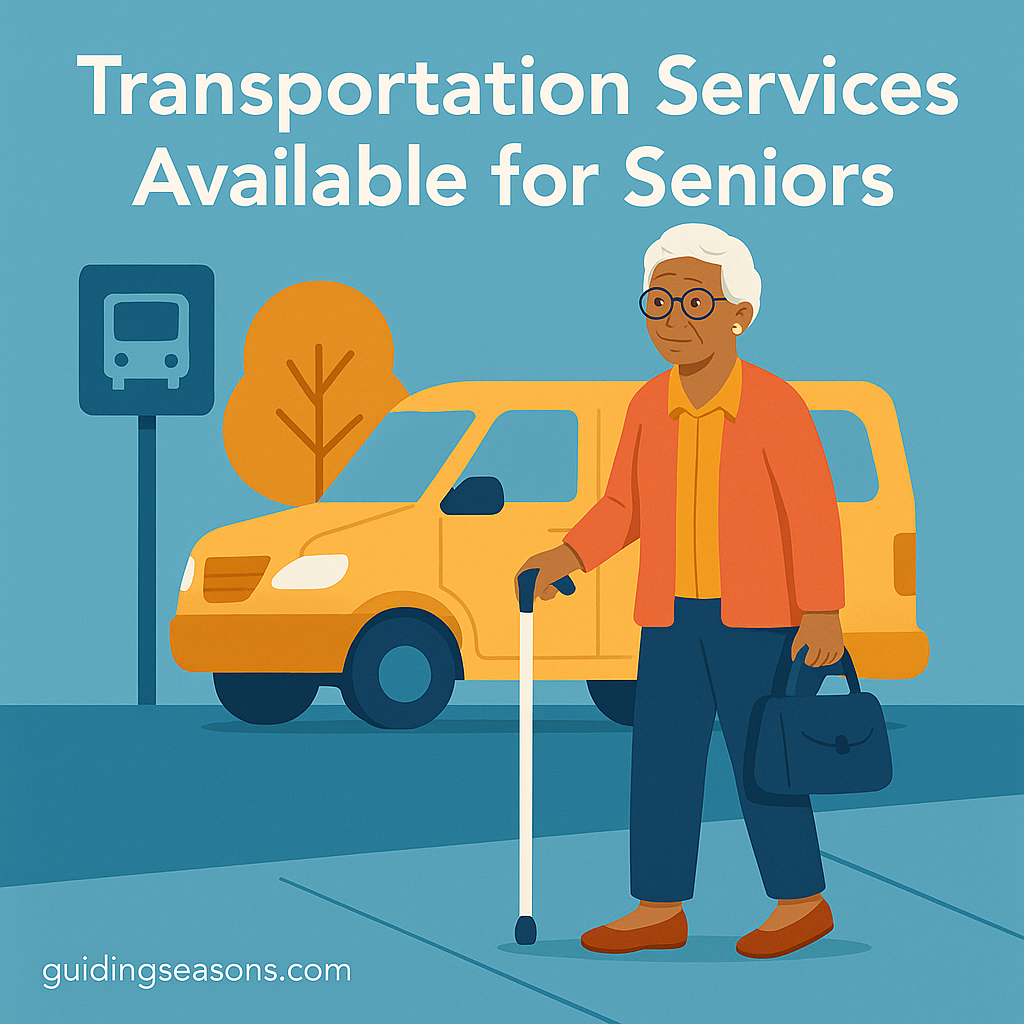
Depending on where you live and your eligibility, transportation options may include public buses and trains, senior shuttles, ADA paratransit, volunteer driver programs, taxis, ride-hailing services, non-emergency medical transportation, and transportation provided by senior living communities.
The best solution is often not a single service but a combination of several options.
Why Transportation Matters for Healthy Aging
Transportation affects much more than getting from one place to another.
Reliable transportation can make it easier to maintain medical appointments, shop for healthy food, participate in exercise or recreation programs, volunteer, visit friends, and remain involved in the community.
That’s why planning ahead can be helpful—even if you still drive.
Instead of waiting until driving becomes difficult, learn about transportation alternatives available in your community. Knowing how the local bus system works, registering for an eligible transportation program, or learning how to arrange a ride can give you more choices later.
Consider a 76-year-old who still drives comfortably during the day but doesn’t like driving after dark. Instead of stopping evening activities, he might drive himself to daytime errands, use a senior shuttle for certain medical appointments, and take a taxi or ride-hailing service to an occasional evening event.
Having three transportation options instead of one provides flexibility without requiring him to give up driving entirely.
Senior Shuttle and Community Transportation Programs
Many cities, counties, senior centers, and community organizations operate transportation programs specifically for older adults.
Depending on the program, transportation may be available for:
- Medical appointments
- Grocery shopping
- Pharmacy visits
- Senior center activities
- Community events
- Social outings
- Essential errands
Some services use small buses or accessible vans, while others rely on volunteer drivers.
These programs may be free, donation-based, or available for a relatively small fare. Eligibility rules vary considerably. Some programs establish a minimum age, while others are available to people with disabilities or residents of a particular service area.
Reservations may also need to be made several days in advance.
Contact your local senior center, Area Agency on Aging, city transportation department, or community services office to learn what’s available.
Public Transportation and Senior Discounts
Regular public transportation can be one of the most affordable ways to get around, particularly for seniors living in urban or suburban areas with established transit networks.
Buses, light rail, subways, commuter trains, and other public transit systems may offer reduced fares and accessibility features.
In fact, the Federal Transit Administration explains that federally subsidized transit providers generally cannot charge seniors, people with disabilities, and Medicare cardholders more than half the peak fare for fixed-route transit during off-peak hours, although the exact programs and eligibility procedures vary by transit system.
Public transit may also provide features such as priority seating, low-floor buses, ramps, lifts, audio announcements, and accessible stations.
If you haven’t ridden public transportation in years, don’t assume you won’t be able to use it. Today’s transit system may be considerably different from the one you remember.
Some agencies provide travel training to help new riders learn the system.
ADA Paratransit Services
Paratransit is often discussed as a transportation option for seniors, but there’s an important distinction to understand:
Age alone does not automatically qualify someone for ADA complementary paratransit.
Eligibility generally depends on whether a disability prevents an individual from independently using the regular fixed-route transportation system under particular circumstances.
The Federal Transit Administration explains that public entities operating fixed-route transit systems must provide complementary paratransit for eligible people with disabilities. Eligibility is based on a person’s functional ability to use fixed-route transportation rather than simply having a particular medical diagnosis.
Depending on the transit system and the rider’s circumstances, paratransit can provide origin-to-destination transportation using accessible vehicles.
Another useful specific number is the three-fourths-of-a-mile rule. For bus systems, required ADA complementary paratransit generally covers origins and destinations within corridors extending three-fourths of a mile on each side of a fixed bus route.
Local transit agencies establish application and eligibility procedures, so contact your transit provider before assuming you qualify.
How Paratransit Reservations Work
Paratransit usually requires more planning than calling a taxi.
Eligible riders typically arrange trips in advance. Under federal ADA requirements, complementary paratransit must provide next-day service, although transit agencies may permit reservations farther in advance.
There can also be a pickup window rather than an exact pickup minute because several passengers may share a vehicle.
This makes planning particularly important for medical appointments. When making a reservation, provide enough time to reach your destination, enter the building, and check in.
Also ask how return trips work. If you don’t know exactly when a medical appointment will finish, the transportation provider may have specific procedures for scheduling the ride home.
Ride-Hailing Services
Ride-hailing services have created another transportation option for older adults, particularly in communities where taxis or public transit are limited.
Services such as Uber and Lyft can allow riders to request transportation through a smartphone, schedule certain rides in advance, and pay electronically.
For seniors comfortable using smartphones, this can be convenient for occasional trips.
Family members may also be able to help arrange transportation, depending on the service and program being used.
However, ride-hailing isn’t appropriate for every situation.
A standard rideshare driver generally isn’t a medical transportation professional or personal care attendant. Someone who needs substantial assistance transferring into a vehicle, traveling with specialized equipment, or receiving medical supervision should look for a service designed for those needs.
Costs can also fluctuate based on location, distance, demand, and time of day.
Before relying on rideshare transportation regularly, compare its typical cost with local taxis, senior transportation programs, and public transit.
Taxi Services
Traditional taxis remain a useful transportation option, especially for seniors who don’t want to use smartphone apps.
Taxi companies may allow customers to arrange rides over the phone and pay with cash or a credit card, depending on the provider.
Some companies also operate wheelchair-accessible vehicles, although these may need to be requested in advance.
A local taxi can be especially helpful as a backup option.
Keep the phone number of one or two reputable companies somewhere easy to find. If your regular ride falls through, you’ll have an alternative without needing to search for transportation at the last minute.
Nonprofit and Volunteer Driver Programs
Community organizations often provide transportation that fills gaps left by traditional public transit.
Programs may be operated by nonprofit organizations, senior organizations, religious communities, volunteer networks, or neighborhood groups.
Depending on the organization, volunteers might drive seniors to medical appointments, grocery stores, pharmacies, community programs, or other essential destinations.
Some programs are free, while others request a donation or charge a small fee.
Volunteer transportation can also offer something that a bus or taxi cannot: familiar human interaction.
A regular volunteer driver may become a friendly and reassuring part of someone’s weekly routine.
Availability varies considerably by community, however, so these programs shouldn’t automatically be treated as an on-demand service. Ask about eligibility, scheduling requirements, service boundaries, wheelchair accommodations, and whether someone can accompany you.
Non-Emergency Medical Transportation
Some older adults need transportation specifically for health care.
Non-emergency medical transportation, commonly called NEMT, is intended for situations where transportation is needed for medical care but an emergency ambulance isn’t necessary.
Services can vary from basic transportation to vehicles equipped to accommodate wheelchairs or other mobility needs.
Medicaid can be particularly important here. The Centers for Medicare & Medicaid Services states that Medicaid programs must assure necessary transportation for beneficiaries to and from health care providers, with states establishing methods for providing that transportation.
Coverage and procedures vary by state and individual circumstances, so Medicaid beneficiaries should check their specific plan or state Medicaid program before scheduling transportation.
Don’t assume Medicare and Medicaid transportation benefits are identical. They are different programs with different eligibility and coverage rules.
Transportation Services for Veterans
Older veterans may have additional transportation resources available through the Department of Veterans Affairs or organizations serving veterans.
Depending on eligibility and location, possibilities may include VA transportation programs, shuttle services, beneficiary travel benefits, or volunteer transportation to VA medical facilities.
Because eligibility and services vary, veterans should contact their local VA medical center or appropriate VA transportation office to determine which programs are available.
Veterans may also qualify for local senior or disability transportation programs independent of their veteran status.
Transportation Through Senior Living Communities
Transportation is frequently included among the services provided by independent living, assisted living, and other senior communities.
A community might provide scheduled transportation for grocery shopping, medical appointments, shopping centers, restaurants, recreational activities, and group outings.
This can eliminate much of the planning involved in arranging individual rides.
If you’re considering moving into a senior living community, transportation deserves more attention than it sometimes receives during the decision-making process.
Ask where transportation goes, how often it operates, whether medical appointments receive priority, how far the service travels, whether weekend transportation is available, and whether there are additional fees.
These details can have a significant effect on everyday independence.
Travel Training Programs
Public transportation can feel intimidating if you’ve spent decades driving.
Which bus should you take? Where do you transfer? How do you pay? What happens if you use a walker?
Travel training programs are designed to answer these questions.
Depending on the transit agency or community organization, training may cover reading schedules, planning routes, safely boarding and exiting vehicles, using accessibility equipment, transferring between routes, paying fares, and recognizing the correct stop.
Some programs provide individualized instruction and may accompany riders while they practice a route.
Learning one useful route—such as the route from home to a nearby shopping center—can be a manageable starting point.
Transportation for Wheelchair and Mobility Device Users
Anyone who regularly uses a wheelchair, scooter, or walker should ask specific accessibility questions before booking transportation.
Don’t assume that “accessible” means the same thing across every provider.
Ask whether the vehicle can accommodate your particular mobility device and whether a ramp or lift is available.
You may also want to ask whether the driver provides assistance, where pickups occur, whether companions can travel with you, and whether reservations need to specify that you’ll be using a wheelchair or other mobility device.
Confirming these details beforehand can prevent problems on the day of your trip.
How to Choose the Right Transportation Service
Start by thinking about the trips you make most often.
Someone who needs transportation primarily for a weekly grocery trip has very different needs from someone traveling to medical appointments three times a week.
Consider:
- Your mobility and accessibility needs
- How often you travel
- Typical travel distance
- Cost and monthly transportation budget
- Whether advance reservations are required
- Whether you need wheelchair accessibility
- Whether you need assistance getting into or out of a vehicle
- Your comfort using smartphones
- Evening and weekend availability
- Reliability for time-sensitive appointments
It’s also helpful to distinguish between transportation you prefer and transportation you need.
You might prefer an inexpensive senior shuttle for shopping but need a more reliable scheduled service for an important medical appointment.
Create a Personal Transportation Plan
Rather than relying on one service, consider creating a simple transportation plan.
Choose a primary option, secondary option, and emergency backup.
For example, a senior might use public transportation for ordinary daytime trips, a community shuttle for grocery shopping, and a taxi or rideshare service when another option isn’t available.
Keep important transportation phone numbers written down as well as stored in your phone.
If a service requires advance registration—especially ADA paratransit—complete the process before you urgently need transportation.
Planning ahead gives you more choices.
Questions to Ask Before Booking a Ride
Before using a transportation provider for the first time, ask about fares, cancellation policies, reservation requirements, pickup windows, service boundaries, accessibility, and assistance.
Also ask what happens if the driver is late or you miss your scheduled pickup.
For medical appointments, find out how return trips are handled when the exact end time isn’t known.
A few questions beforehand can prevent confusion later.
Finding Senior Transportation Near You
Transportation programs vary greatly by location, so local research is essential.
Start with your Area Agency on Aging, senior center, local transit authority, city or county aging services department, health care provider, or community center.
You can also ask family members, neighbors, social workers, and senior living professionals about transportation programs they know and trust.
When contacting an organization, don’t simply ask, “Do you provide transportation?”
Explain what you need.
For example:
“I’m 74 and need transportation twice a month to medical appointments about eight miles from my home. I use a walker but can get into a regular vehicle. Do you have a program that could help?”
Providing specific information makes it easier for someone to direct you to the right service.
Final Thoughts
Giving up driving—or simply driving less—doesn’t have to mean giving up independence.
Today’s transportation options for older adults can include senior shuttles, public transportation, ADA paratransit for eligible riders, taxis, ride-hailing services, volunteer driver programs, medical transportation, veterans’ programs, and transportation offered through senior living communities.
The strongest approach is often to have more than one option.
Learn what’s available before you urgently need it. Register for programs that require advance eligibility, practice using public transportation if it’s appropriate for you, and keep a backup transportation provider available.
Transportation is ultimately about more than reaching a destination. It’s what makes it possible to keep attending appointments, seeing friends, buying groceries, participating in community life, and doing the things that make everyday life meaningful.
With a little planning and the right combination of services, seniors can continue moving through their communities safely, confidently, and independently.