Choosing a care home for yourself, a parent, spouse, or another loved one can be a difficult decision. You aren’t simply choosing a building or comparing monthly prices. You’re choosing the place responsible for someone’s safety, daily care, comfort, dignity, and quality of life.
Many care homes provide attentive and compassionate care. However, quality can vary considerably from one facility to another, which is why it’s important to know what to look for before making a decision.
Some problems are obvious, such as dirty rooms or broken equipment. Others are more subtle. Staff members who constantly appear rushed, residents who rarely interact with anyone, unanswered call buttons, vague explanations about fees, or repeated changes in personnel can all deserve closer attention.
One warning sign alone doesn’t necessarily mean a facility provides poor care. Instead, look for patterns and consider how management responds when you ask questions.
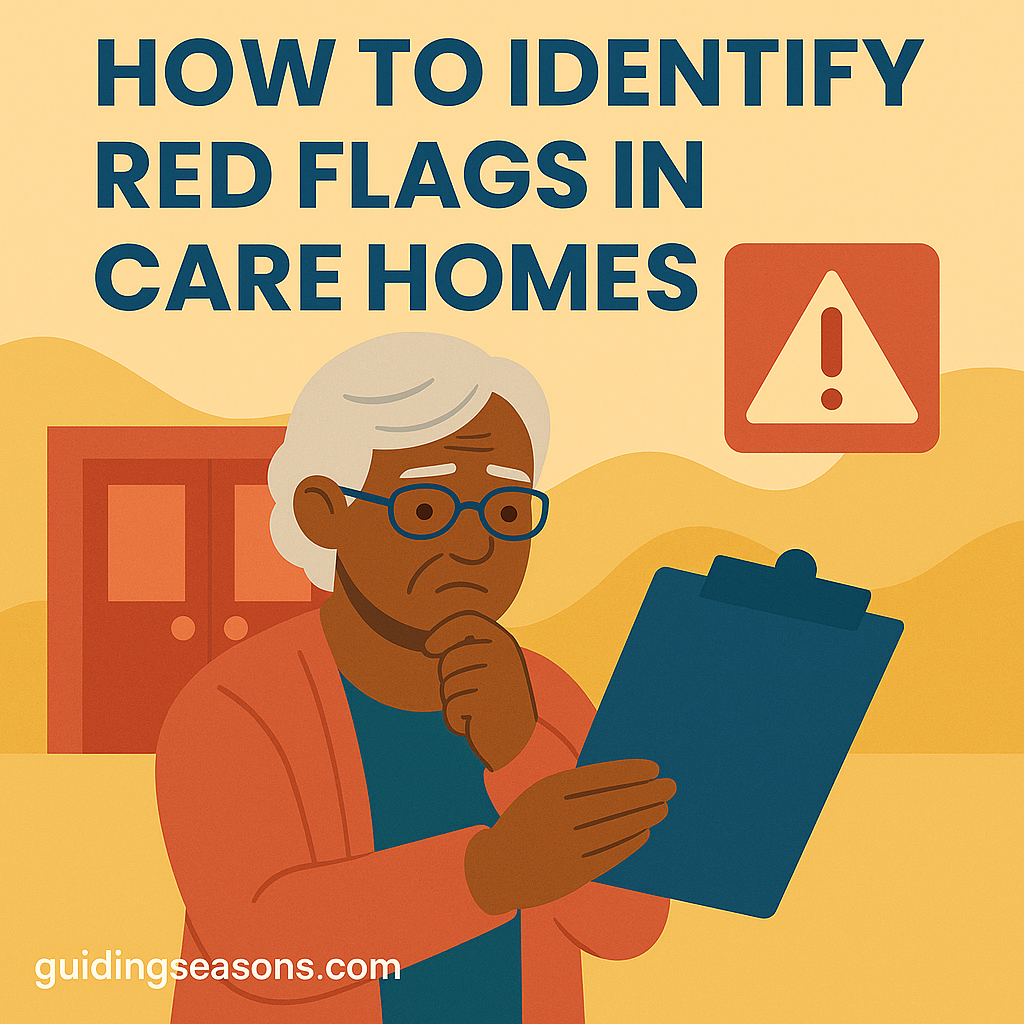
Here are some of the most important red flags to watch for when evaluating a care home.
Poor Cleanliness and Maintenance
Your first impression can tell you a lot.
A care home doesn’t need to resemble a luxury hotel, but it should be reasonably clean, organized, comfortable, and properly maintained.
During your visit, look beyond the reception area. Common areas near the entrance may receive extra attention because they’re the first places prospective residents see.
If possible, observe hallways, resident rooms, bathrooms, dining areas, activity spaces, and outdoor areas.
Warning signs can include:
- Persistent urine or fecal odors
- Strong mildew or mold smells
- Dirty bathrooms
- Sticky or visibly dirty floors
- Overflowing trash
- Stained bedding
- Soiled furniture
- Cluttered walkways
- Broken fixtures
- Damaged walls or flooring
- Poorly maintained outdoor spaces
An occasional unpleasant odor doesn’t automatically indicate poor care. Accidents happen, particularly in facilities serving residents who need significant assistance.
What matters is whether problems appear persistent and whether staff address them promptly.
For example, encountering one recently spilled drink in a dining room isn’t particularly concerning. Finding spills, overflowing trash, strong odors, and dirty bathrooms in several areas during the same 45-minute tour suggests a broader pattern worth questioning.
Staff Members Seem Constantly Rushed or Overwhelmed
Staffing is one of the most important things to observe.
Rather than focusing only on how employees interact with you, watch how they interact with residents when they aren’t giving a formal presentation.
Do staff members greet residents by name?
Do they stop when someone asks for help?
Do they speak respectfully?
Or does everyone seem to be rushing from one problem to another?
Potential warning signs include:
- Residents repeatedly waiting for assistance
- Call lights remaining unanswered
- Staff appearing visibly stressed
- Employees speaking impatiently to residents
- Residents being ignored
- Staff members arguing in front of residents
- Care appearing hurried or impersonal
Ask how staffing works during the day, overnight, on weekends, and during holidays.
A facility may appear well staffed at 11 a.m. on a weekday but operate differently overnight or on weekends.
Don’t rely solely on a single staffing number. Residents’ needs vary considerably, and different types of facilities operate under different requirements. Ask how staffing is adjusted when residents need additional assistance.
Residents Appear Uncomfortable, Fearful, or Neglected
Pay attention to the residents themselves.
Not every resident will be outgoing or cheerful. People living in care facilities may be dealing with dementia, chronic illness, grief, depression, pain, or other challenges.
However, patterns can provide valuable clues.
Watch for:
- Residents repeatedly asking for help
- Poor personal hygiene
- Obviously soiled clothing
- Residents appearing frightened around particular staff members
- People left in uncomfortable positions for extended periods
- Residents appearing unusually thirsty or hungry
- Repeated unexplained injuries
- Little interaction between residents and staff
A quiet resident isn’t automatically a neglected resident.
Instead, observe whether residents generally appear clean, comfortable, appropriately dressed, and treated with dignity.
Notice how staff speak to people who require more assistance. Those interactions can reveal far more about the culture of a facility than a prepared sales presentation.
Poor Communication With Families
Communication problems before admission can sometimes provide clues about what communication may be like afterward.
Be cautious if:
- Phone calls repeatedly go unanswered
- Emails aren’t returned
- Different employees give conflicting answers
- Fees are difficult to understand
- Staff avoid direct questions
- Policies aren’t provided in writing
- You’re discouraged from speaking with appropriate care staff
- Important details seem to change during conversations
Ask how families are notified when something significant happens.
For example:
Who calls if a resident falls?
How quickly are families informed about changes in health?
Who should you contact with a care concern?
What happens if that person is unavailable?
Good facilities should have understandable procedures for communicating with residents and their representatives.
Staff Turnover Appears Very High
Caregiving relationships take time to develop.
When employees remain at a facility, they can become familiar with residents’ routines, personalities, preferences, and typical behavior.
Constant turnover can make that continuity harder.
Ask questions such as:
- How long has the administrator been here?
- How long have key nursing or care staff worked here?
- Does the facility rely heavily on temporary staff?
- Who supervises employees during nights and weekends?
- How are new employees trained?
Turnover by itself doesn’t prove that a facility provides poor care. Healthcare and long-term care organizations can experience staffing challenges for many reasons.
But frequent changes among administrators, nurses, caregivers, and other key personnel are worth investigating.
Activities Exist on Paper but Not in Practice
A colorful activity calendar isn’t particularly useful if activities rarely happen or residents aren’t meaningfully involved.
Look for opportunities that accommodate different abilities and interests.
These might include:
- Music
- Arts and crafts
- Exercise
- Gardening
- Games
- Religious services
- Outdoor activities
- Social events
- Reading groups
- Movie nights
- Educational programs
- Memory-care activities
Ask whether residents actually participate and how activities are adapted for people with mobility limitations, hearing or vision difficulties, or cognitive impairment.
During your tour, compare the posted activity schedule with what is actually happening.
If the calendar says a group activity should be taking place at 2 p.m. but residents are sitting unattended in front of a television, ask about it.
One canceled activity isn’t a major concern. A consistent gap between advertised activities and daily reality can be.
Food and Hydration Raise Concerns
Meals aren’t just about enjoyment. Adequate nutrition and hydration are important parts of resident health and well-being.
If possible, schedule at least one visit around a meal.
Observe:
- How the food looks and smells
- Whether meals arrive at an appropriate temperature
- Whether residents receive the correct meals
- Whether assistance is available for residents who need help eating
- Whether water and other beverages are readily available
- Whether dietary needs appear to be accommodated
- Whether residents seem rushed during meals
Ask how the facility handles special dietary requirements and what happens if a resident doesn’t like the scheduled meal.
You can also ask whether prospective residents or family members can sample a meal.
Safety Problems Are Visible
A care environment should account for residents who may have limited mobility, poor balance, vision problems, dementia, or other conditions that increase safety risks.
Look carefully at the physical environment.
Potential red flags include:
- Poor lighting
- Loose rugs
- Cluttered hallways
- Broken handrails
- Wet floors without warning signs
- Damaged wheelchairs or walkers
- Unsecured hazardous materials
- Accessible medications left unattended
- Unsafe stairs
- Emergency exits that appear obstructed
- Broken locks or doors
- Call systems that don’t appear to work
Ask staff what happens during emergencies such as fires, power outages, severe weather, or medical emergencies.
Employees should know basic emergency procedures rather than appearing confused by the question.
Visiting Policies Feel Unnecessarily Restrictive
Family involvement can be an important part of long-term care.
Some restrictions may occasionally be necessary because of health emergencies, security concerns, resident preferences, or other legitimate reasons. However, unexplained barriers to reasonable visits deserve questions.
Be cautious if staff repeatedly:
- Discourage visits
- Make reasonable visits unnecessarily difficult
- Refuse to explain visiting policies
- Prevent you from seeing appropriate resident areas without explanation
- Insist that visits occur only under unusually restrictive circumstances
For Medicare- and Medicaid-certified nursing homes, federal resident-rights protections include rights related to visitors, subject to certain restrictions and the resident’s preferences. Medicare recommends asking about visiting hours and reviewing resident-rights information when comparing nursing homes. (medicare.gov)
Always consider the type of facility you’re evaluating because regulations can differ between nursing homes, assisted living communities, memory-care facilities, and other residential settings.
Pricing and Contracts Are Difficult to Understand
Long-term care can involve substantial costs, so financial transparency matters.
Ask for written information explaining:
- Basic monthly charges
- Services included
- Services charged separately
- Medication-management fees
- Transportation costs
- Personal-care charges
- Laundry services
- Additional levels of care
- Move-in or community fees
- Deposit and refund policies
- Rate-increase policies
Be cautious about high-pressure sales tactics.
You should have an opportunity to understand the agreement before signing it.
If a contract contains language you don’t understand, consider having an elder law attorney or another qualified professional review it before making a major financial commitment.
Inspection Reports Reveal Repeated Problems
Don’t rely solely on tours and online reviews.
For nursing homes that participate in Medicare or Medicaid, Medicare’s Care Compare tools provide information that can help consumers compare facilities, including health inspections, staffing, and quality measures. (medicare.gov)
State regulatory agencies may provide additional licensing, inspection, complaint, or enforcement information depending on the type of facility.
When reviewing records, don’t focus exclusively on whether a facility has ever received a citation.
Instead, ask:
- What was the problem?
- How serious was it?
- Was it corrected?
- Did it happen again?
- Does the facility have repeated problems in the same area?
A history of recurring serious deficiencies may be more concerning than an isolated minor problem that was promptly corrected.
You See Possible Signs of Abuse or Neglect
Possible abuse or neglect should be taken seriously.
Warning signs can include:
- Unexplained bruises or injuries
- Sudden fearfulness
- Bedsores or pressure injuries
- Poor hygiene
- Unexplained weight loss
- Missing possessions or money
- Sudden financial changes
- Residents being threatened or humiliated
- Excessive or inappropriate restraint
- A resident reporting mistreatment
These signs don’t always prove abuse or neglect, but they warrant attention.
The Administration for Community Living explains that Long-Term Care Ombudsman programs advocate for people living in nursing homes, board-and-care homes, assisted living facilities, and similar settings. Ombudsman programs can help residents address complaints and problems related to their care and rights. (acl.gov)
Suspected abuse or neglect may also need to be reported to Adult Protective Services, state regulators, law enforcement, or another appropriate authority depending on the situation. Call emergency services when someone appears to be in immediate danger.
Management Becomes Defensive When You Ask Questions
Pay attention to how administrators respond to reasonable concerns.
A trustworthy facility shouldn’t expect families to ask no questions.
Ask about:
- Staffing
- Complaints
- Inspections
- Medication procedures
- Falls
- Emergency response
- Resident activities
- Visiting policies
- Fees
- Care-plan updates
The answer doesn’t always have to be perfect.
What’s important is whether staff members provide a clear explanation, acknowledge problems when appropriate, and explain what they do to address them.
Repeatedly dismissing legitimate questions or becoming hostile about basic safety concerns is itself a warning sign.
Visit More Than Once
A scheduled tour provides only a snapshot.
If you’re seriously considering a facility, try to gather information from more than one visit or interaction when possible.
For example, you might:
- Take the initial weekday tour.
- Return around mealtime.
- Ask about visiting at another reasonable time.
- Review inspection information.
- Speak with appropriate staff.
- Review the written contract and fee schedule.
Different visits can reveal different aspects of daily life.
A facility might be quiet and organized during a scheduled morning tour but much busier during dinner.
The goal isn’t to catch employees doing something wrong. It’s to develop a realistic picture of what everyday life is like.
Ask Residents and Families About Their Experiences
When appropriate and respectful of residents’ privacy, firsthand observations and experiences can provide useful context.
Questions might include:
- Are staff responsive?
- Do you enjoy the meals?
- Are activities offered regularly?
- Do you feel comfortable here?
- Does management respond when you have a concern?
Online reviews can also provide clues, but don’t treat every review as established fact.
Look for recurring themes across multiple sources and compare those themes with inspection records and your own observations.
Use a Simple Care Home Evaluation System
It can be difficult to remember everything after visiting several facilities.
Consider creating a simple checklist and rating each facility in categories such as:
- Cleanliness
- Staff interactions
- Resident appearance
- Safety
- Meals
- Activities
- Communication
- Visiting policies
- Inspection history
- Pricing transparency
For example, you could score each category from 1 to 5.
With 10 categories, each facility would receive a maximum score of 50 points.
The score shouldn’t make the decision for you. A serious safety concern shouldn’t be ignored simply because the facility scores well in other categories.
Instead, the system gives you a consistent way to organize your observations and compare facilities after several tours.
Trust Your Observations, but Verify Your Concerns
Sometimes a facility simply doesn’t feel right.
That feeling shouldn’t automatically be treated as proof that something is wrong, but it shouldn’t be ignored either.
If something concerns you, investigate further.
Ask questions.
Visit again.
Check inspection records.
Talk with appropriate professionals.
Compare the facility with alternatives.
A care home should be willing to provide reasonable information about how it protects residents and handles concerns.
Final Thoughts
Identifying red flags in a care home isn’t about expecting perfection. Every facility can have busy days, maintenance problems, staffing changes, or occasional complaints.
What matters is the overall pattern.
Look at how residents are treated when no one appears to be watching. Notice whether employees have time to listen. Pay attention to cleanliness, meals, activities, safety, communication, and the physical condition of residents.
Then go beyond what you can see.
Review inspection information, ask about staffing and fees, understand resident rights, and learn how complaints are handled.
Most importantly, don’t allow yourself to be rushed into making a decision. Choosing a care home can affect nearly every part of a person’s daily life.
Taking the time to compare facilities, ask difficult questions, and investigate warning signs can help you choose an environment where safety, dignity, respect, and quality of life genuinely come first.
This article provides general educational information and is not a substitute for medical, legal, or professional long-term care advice. Care-home terminology, licensing requirements, staffing rules, and resident protections vary by state and facility type.