
Travel and Adventure: How to Explore, Stay Active, and Create Meaningful Experiences at Every Stage of Life

Flat illustration of a senior couple exploring a scenic destination with a map and travel gear representing adventure, travel planning, and active lifestyle.
Flat illustration showing travel and adventure with scenic exploration, planning, and meaningful experiences. guidingseasons.com

Travel and adventure aren’t just about visiting new places. They’re about experiencing life in a deeper, more meaningful way.

Whether it’s exploring a nearby town, taking a relaxing weekend getaway, visiting family, cruising to a new destination, or finally taking the trip you’ve dreamed about for years, travel can help you stay active, curious, and connected with the world around you.

As you move through different stages of life, the way you travel may change. You may prefer a slower pace, more comfortable accommodations, shorter travel days, or experiences that give you more time to appreciate where you are.

That doesn’t make travel less exciting. In many ways, it can make it more rewarding.

This guide covers how to choose meaningful experiences, plan trips with less stress, manage your travel budget, stay comfortable and safe, and continue exploring at a pace that works for you.

Continue reading “Travel and Adventure: How to Explore, Stay Active, and Create Meaningful Experiences at Every Stage of Life”


Technology for Seniors: How to Use Everyday Tech to Stay Connected, Safe, and Independent

Flat illustration of a senior woman using a tablet with smart devices, apps, and digital tools representing technology for communication, safety, and daily organization.
Flat illustration showing seniors using technology for communication, safety, and everyday tasks to support independence. guidingseasons.com

Technology has become part of almost every area of daily life.

We use it to communicate with family, manage money, make appointments, get directions, watch entertainment, shop, access healthcare, and keep our homes secure.

For older adults, learning to use a few essential technologies can make everyday tasks easier while supporting independence.

But technology can also feel overwhelming. New devices appear constantly, apps change their layouts, passwords are difficult to keep track of, and online scams have become increasingly convincing.

The good news is that you do not need to become a technology expert.

The goal is much simpler: learn the tools that make your life easier, safer, and more connected.

This guide covers the most useful areas of everyday technology for seniors, along with practical ways to build confidence without feeling overwhelmed.

Continue reading “Technology for Seniors: How to Use Everyday Tech to Stay Connected, Safe, and Independent”

Senior Resources and Services: How to Find Support, Assistance, and Essential Services at Every Stage

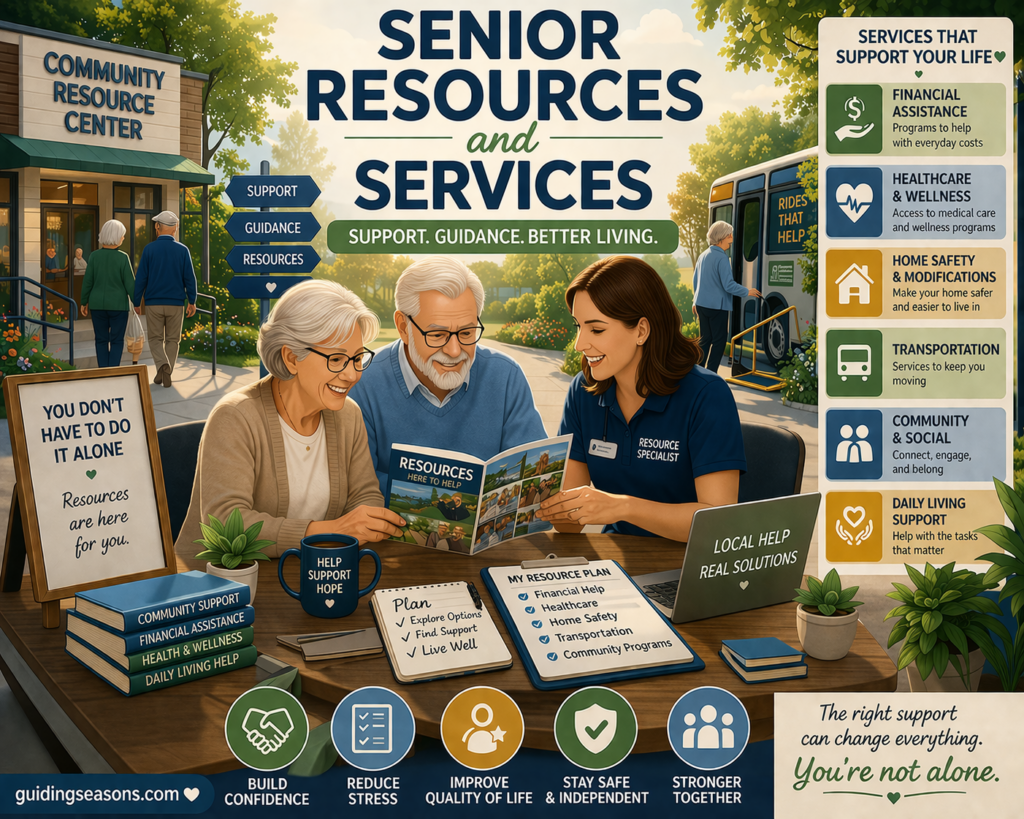
Flat illustration of seniors receiving support at a community resource center with icons for healthcare, financial assistance, transportation, and daily living services.
Flat illustration showing senior resources and support services for healthcare, financial help, and daily living assistance. guidingseasons.com

As life changes, having access to the right resources and services can become increasingly important.

Healthcare needs may change. Getting around may become more difficult. A home that once worked perfectly may need accessibility improvements. Managing meals, household tasks, finances, or appointments may require more planning than before.

At the same time, staying socially connected and involved in the community can be just as important as finding practical assistance.

Fortunately, there are many programs and services designed to help older adults maintain their independence, safety, health, and quality of life. The challenge is often knowing what exists, where to look, and which services are actually appropriate for your situation.

This guide provides a starting point for understanding senior resources and building a dependable support system for yourself or someone you care about.

Continue reading “Senior Resources and Services: How to Find Support, Assistance, and Essential Services at Every Stage”

Retirement Planning: How to Prepare for a Secure, Stable, and Stress-Free Future

Flat illustration of an older couple planning retirement finances with charts, savings plans, and goals representing financial security and future planning.
Flat illustration showing retirement planning, financial goals, and long-term security for a stable and comfortable future. guidingseasons.com

Retirement planning is one of the most important financial steps you can take, but it is also one of the easiest to postpone.

When retirement is still years away, other financial priorities can feel more urgent. Mortgages, everyday expenses, family responsibilities, debt, and unexpected costs often take precedence. Retirement can seem like something you will figure out later.

But retirement planning becomes more valuable when you give yourself time.

The goal isn’t simply to accumulate a certain amount of money. A strong retirement plan helps you understand how much you may need, where your income could come from, how your expenses might change, and how you will respond when life doesn’t go exactly according to plan.

Retirement also isn’t simply about stopping work. It’s about maintaining your lifestyle, protecting your independence, managing uncertainty, and creating a financial structure that can potentially support you for decades.

This guide walks through the major pieces of retirement planning and shows how they fit together.

Continue reading “Retirement Planning: How to Prepare for a Secure, Stable, and Stress-Free Future”

Relationships and Family: How to Build Strong, Supportive, and Meaningful Connections

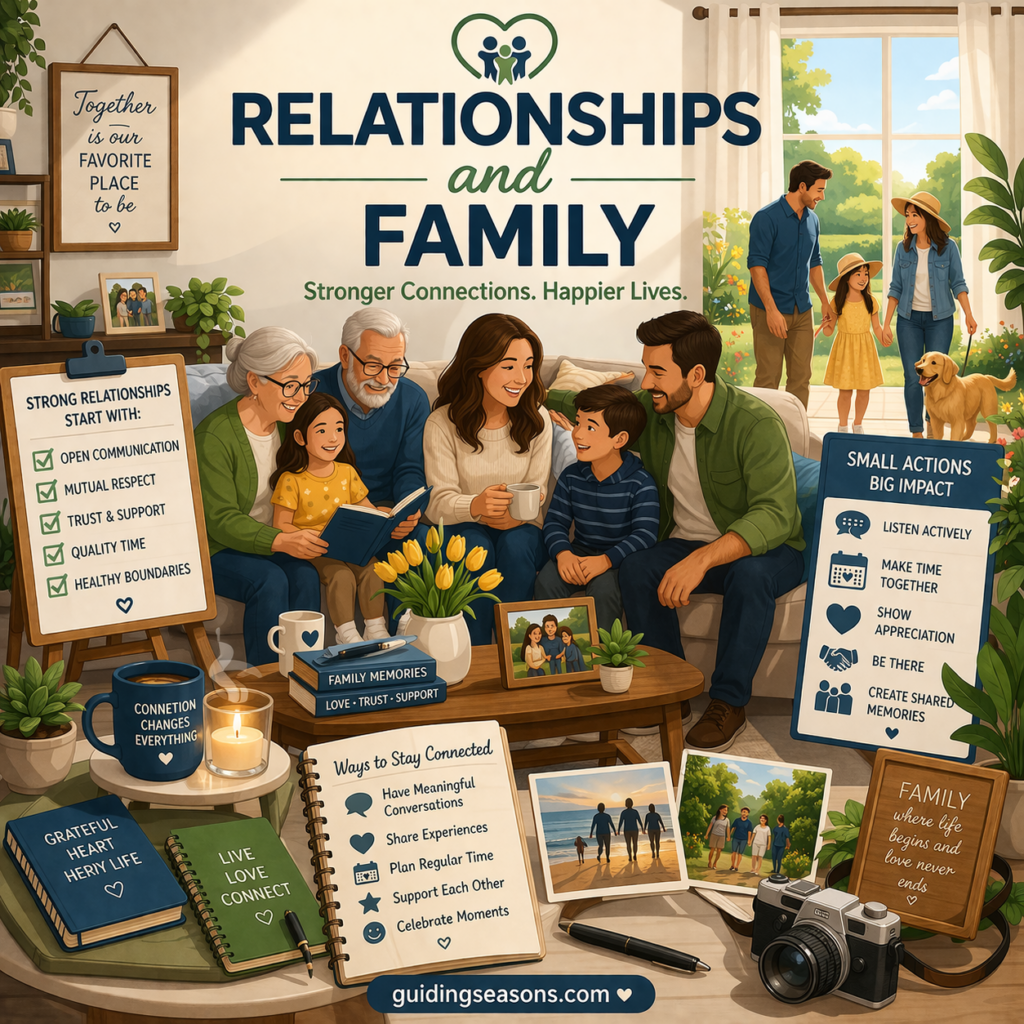
Flat illustration of a multigenerational family spending quality time together, representing strong relationships, communication, and emotional connection.
Flat illustration showing family bonding, communication, and meaningful connections for a strong and supportive home life. guidingseasons.com

Relationships are one of the most important parts of a fulfilling life. The people around us can provide companionship, encouragement, practical help, laughter, perspective, and a sense of belonging.

As we move through different stages of life, however, relationships rarely stay exactly the same. Children grow up and build lives of their own. Friendships change. Couples may spend more time together after retirement. Family members may move away. Health challenges can alter responsibilities, and new relationships may become increasingly important.

These changes don’t necessarily weaken relationships. In many cases, they create opportunities to build deeper and more meaningful connections.

Strong relationships are usually not the result of one dramatic gesture. They develop through communication, trust, patience, shared experiences, healthy boundaries, and the willingness to continue showing up for one another.

This guide explores practical ways to strengthen family relationships, marriages, friendships, and other important connections throughout later life.

Continue reading “Relationships and Family: How to Build Strong, Supportive, and Meaningful Connections”

Mindset and Purpose: How to Find Direction, Clarity, and Meaning at Every Stage of Life

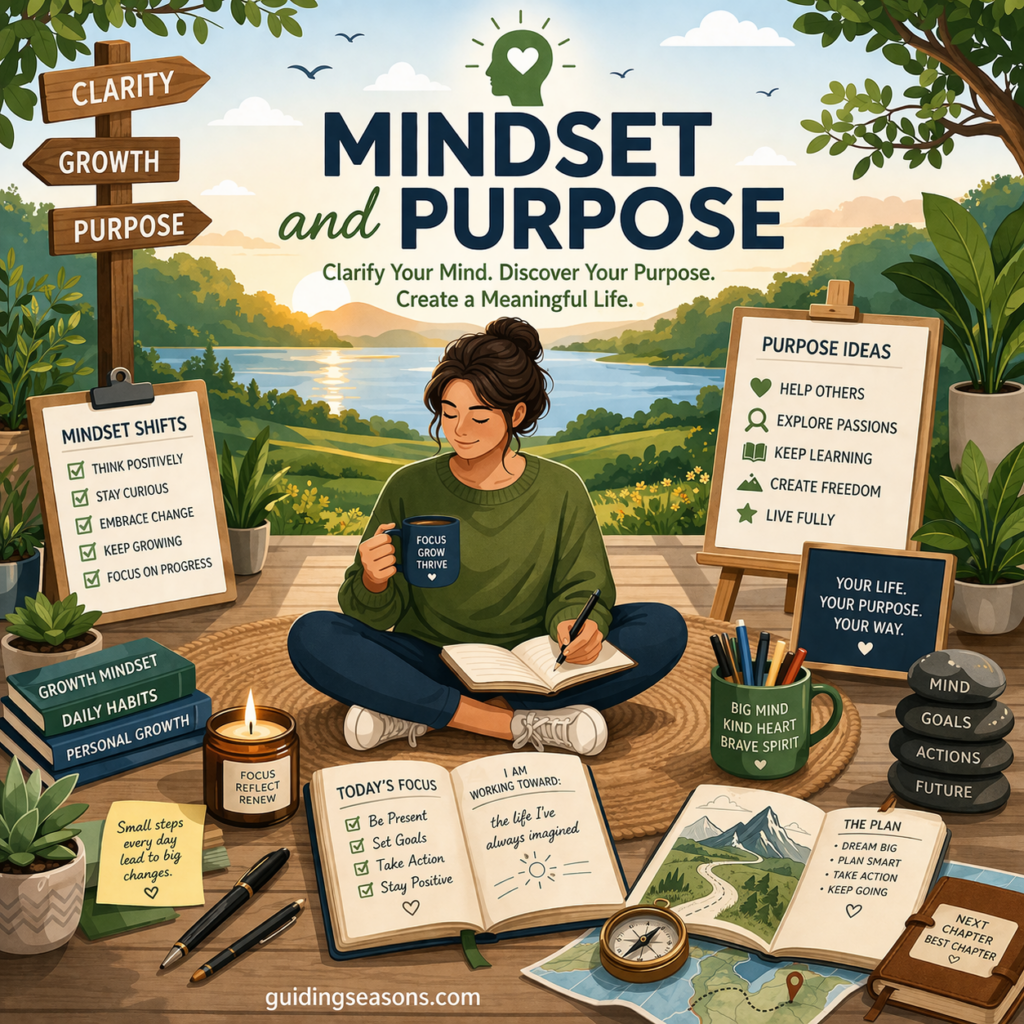
Flat illustration of a woman reflecting and journaling outdoors surrounded by symbols of growth, goals, and purpose representing mindset development and life direction.
Flat illustration showing mindset growth, personal reflection, and purpose-driven living in a calm outdoor setting. guidingseasons.com

At some point in life, almost everyone begins asking bigger questions.

What am I doing with my life?

Am I on the right path?

What actually matters to me now?

What do I want the next stage of my life to look like?

These questions can appear during young adulthood, in the middle of a career, after children leave home, following a major life change, or during retirement. Sometimes they arrive gradually. Other times, a change in circumstances suddenly makes old routines and priorities feel less meaningful.

Questioning your direction does not necessarily mean something has gone wrong. Often, it means you are paying closer attention to how you are living and whether your current life still reflects what matters to you.

Mindset and purpose influence how you respond to these questions. Your mindset shapes the way you interpret your experiences, while your sense of purpose gives those experiences direction.

Neither needs to be perfectly defined.

You can build a meaningful life gradually through your relationships, interests, responsibilities, personal growth, contributions, and everyday choices.

This guide explores how to develop greater clarity, strengthen your mindset, and create a sense of purpose that can evolve with you through every stage of life.

Continue reading “Mindset and Purpose: How to Find Direction, Clarity, and Meaning at Every Stage of Life”

Lifestyle and Hobbies: How to Stay Active, Engaged, and Fulfilled in Everyday Life

Flat illustration of a woman enjoying hobbies like reading, painting, and outdoor activities representing a balanced lifestyle, creativity, and personal fulfillment.
Flat illustration showing hobbies, creativity, and everyday activities that support a balanced and fulfilling lifestyle. guidingseasons.com

A fulfilling life isn’t just about responsibilities, finances, or checking things off a to-do list. It’s also about how you spend your time, what you look forward to, and the activities that bring enjoyment and meaning to your days.

Lifestyle and hobbies can play an important role in maintaining mental clarity, emotional well-being, social connection, and overall life satisfaction.

This can become especially important as you get older. Retirement, changes in family responsibilities, or simply having more control over your schedule can create opportunities to explore interests that may have been pushed aside during busier stages of life.

You don’t need an expensive hobby or a packed calendar to make your days more fulfilling. Small, enjoyable activities can provide structure, encourage curiosity, and give you something positive to anticipate.

This guide explores practical ways to build a lifestyle that keeps you active, engaged, connected, and fulfilled.

Continue reading “Lifestyle and Hobbies: How to Stay Active, Engaged, and Fulfilled in Everyday Life”

Home and Safety: How to Create a Safe, Comfortable, and Functional Living Environment

Flat illustration of a family improving home safety with organized spaces, tools, and safety upgrades like lighting, non-slip surfaces, and accessible layout.
Flat illustration showing home safety improvements, organization, and a secure living environment for everyday comfort. guidingseasons.com

Your home should be a place where you feel comfortable, secure, and in control of your daily life.

As you get older, however, a home that once worked perfectly may gradually become less convenient. Stairs can become more tiring. Poor lighting may make it harder to see obstacles. High shelves can become difficult to reach. Clutter that once seemed harmless can turn into a tripping hazard.

The good news is that creating a safer home usually does not require a major renovation.

Thoughtful changes to organization, lighting, accessibility, security, and everyday routines can make your living environment safer and easier to manage. Many improvements are inexpensive, and some cost nothing at all.

The goal is not to make your home feel clinical or restrictive. It is to create a comfortable environment that supports your lifestyle while helping you maintain independence for as long as possible.

This guide covers the most important areas of home safety and shows you where to start.

Continue reading “Home and Safety: How to Create a Safe, Comfortable, and Functional Living Environment”

Health and Wellness: How to Maintain Physical and Mental Well-Being at Every Stage of Life

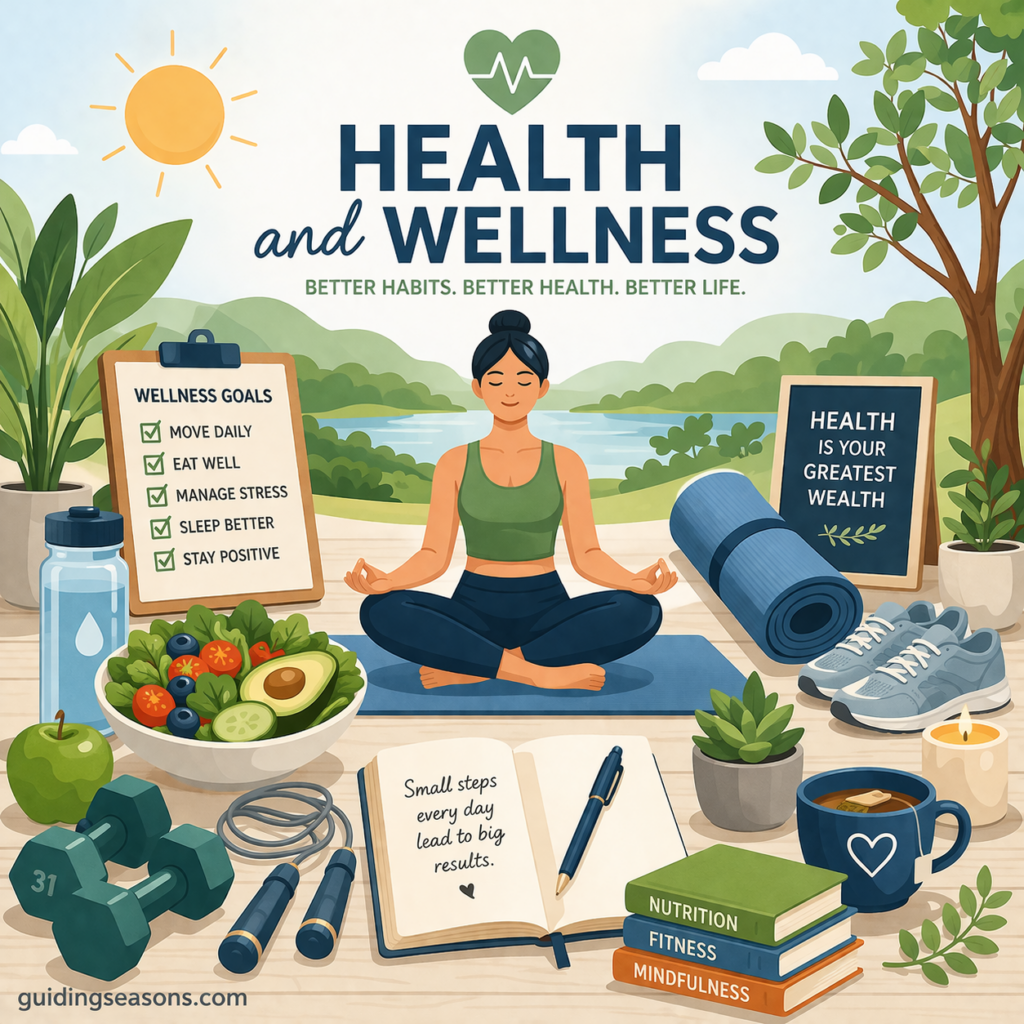
Flat illustration of a woman meditating outdoors surrounded by healthy food, fitness equipment, and wellness items representing balanced lifestyle, mental clarity, and physical health.
Flat illustration showing healthy lifestyle habits including fitness, nutrition, and mindfulness for overall wellness. guidingseasons.com

Health and wellness are the foundation of a stable, fulfilling life.

When you have enough physical energy to stay active, the mental clarity to make decisions, and routines that support your well-being, many other parts of life become easier to manage. Work, finances, relationships, hobbies, travel, household responsibilities, and retirement can all be affected by how well you feel from day to day.

The good news is that maintaining your health does not necessarily require dramatic lifestyle changes.

For most people, wellness is built through consistent habits: moving regularly, eating nutritious foods, getting enough sleep, managing stress, staying socially connected, and paying attention when something about your health changes.

These priorities become particularly important as you get older. Strength, balance, vision, bone health, sleep patterns, metabolism, and energy levels can change over time. Being proactive can help you adapt while maintaining as much independence and quality of life as possible.

This guide explores practical ways to support your physical and mental well-being throughout life, with additional resources for many of the health concerns that become more important with age.

Continue reading “Health and Wellness: How to Maintain Physical and Mental Well-Being at Every Stage of Life”

Financial Security: How to Build Stability and Peace of Mind at Any Stage of Life

Flat illustration of a senior couple reviewing finances with charts, savings plans, and budgeting tools representing financial security and long-term stability.
Flat illustration showing financial planning, budgeting, and saving strategies for building long-term security and peace of mind. guidingseasons.com

Financial security isn’t simply about how much money you have. It’s about having confidence, control, and resilience in your financial life.

When your finances are reasonably stable, everyday decisions become easier. An unexpected repair is less frightening. Monthly bills feel more manageable. Planning for retirement, healthcare, housing, or family needs becomes less overwhelming.

Financial security can look different depending on your stage of life. Someone in their 40s may be focused on reducing debt and increasing retirement savings, while someone who has already retired may care more about controlling expenses, protecting savings, and making a fixed income last.

The goal is not to achieve financial perfection. It is to build a practical system that helps you remain prepared, independent, and confident even when circumstances change.

This guide covers the major areas of financial security, from budgeting and emergency savings to retirement income, insurance, debt, fraud protection, estate planning, and organizing your financial life.

Continue reading “Financial Security: How to Build Stability and Peace of Mind at Any Stage of Life”