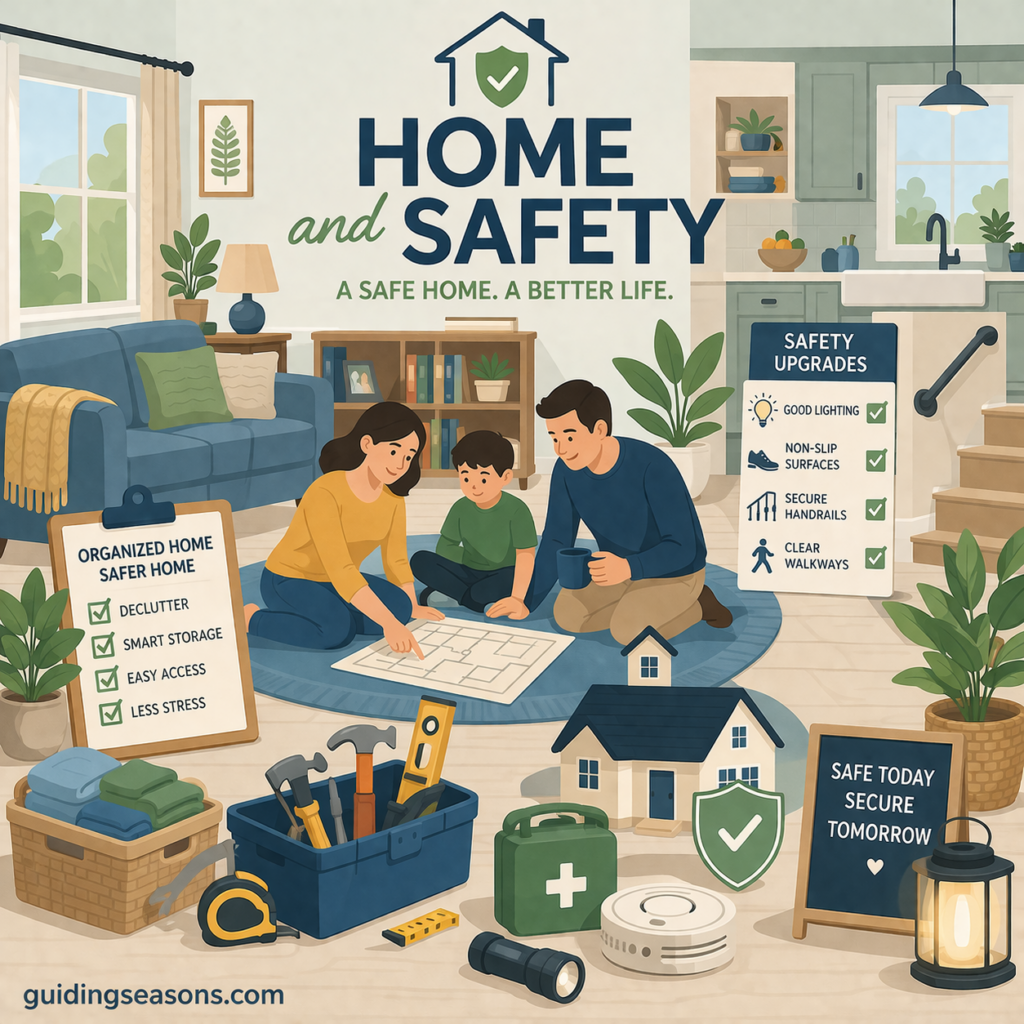
Your home should be a place where you feel comfortable, secure, and in control of your daily life.
As you get older, however, a home that once worked perfectly may gradually become less convenient. Stairs can become more tiring. Poor lighting may make it harder to see obstacles. High shelves can become difficult to reach. Clutter that once seemed harmless can turn into a tripping hazard.
The good news is that creating a safer home usually does not require a major renovation.
Thoughtful changes to organization, lighting, accessibility, security, and everyday routines can make your living environment safer and easier to manage. Many improvements are inexpensive, and some cost nothing at all.
The goal is not to make your home feel clinical or restrictive. It is to create a comfortable environment that supports your lifestyle while helping you maintain independence for as long as possible.
This guide covers the most important areas of home safety and shows you where to start.
What Home Safety and Comfort Really Mean
Home safety is about more than preventing accidents.
A well-designed living environment should make everyday activities easier while reducing unnecessary risks.
That means creating a home that can:
- Reduce the likelihood of falls and injuries
- Make everyday items easier to reach
- Improve visibility throughout the house
- Reduce unnecessary bending, stretching, and climbing
- Keep important supplies organized
- Make entrances and exits easier to navigate
- Improve security and emergency preparedness
- Support independence as your needs change
Comfort is an important part of this equation.
A perfectly safe home is not very useful if it is inconvenient or unpleasant to live in. The best changes improve safety while allowing your home to remain familiar, welcoming, and functional.
If you are beginning to evaluate your living environment, start with How to Identify Home Safety Risks.
Why Your Home Environment Matters More Than You Think
People spend a significant amount of time interacting with their home environment.
You walk through the same hallways, use the same bathroom, prepare food in the same kitchen, reach into the same cabinets, and navigate the same entrances every day.
Small inconveniences therefore become repeated inconveniences.
The same is true of hazards.
A poorly positioned rug may not cause a problem the first hundred times you walk across it, but it still represents an unnecessary risk. A dark staircase may seem manageable until you need to use it when tired or carrying something.
A safer environment can improve more than physical safety.
It can also contribute to:
- Greater confidence
- Less frustration
- Easier daily routines
- Reduced physical strain
- Better organization
- Greater independence
- More peace of mind
The objective is to make your surroundings work with you rather than against you.
Start With a Home Safety Assessment
Before buying equipment or making modifications, walk through your home and look at it specifically from a safety perspective.
Start at the front entrance and move room by room.
Look at the floors, furniture, lighting, storage, electrical cords, stairs, bathrooms, kitchen, bedrooms, outdoor areas, and exits.
Ask yourself questions such as:
- Are the walking paths clear?
- Are there places where someone could easily trip?
- Are stairs and hallways well lit?
- Are frequently used objects easy to reach?
- Are rugs secure?
- Are electrical cords crossing walkways?
- Are bathrooms easy to enter and use?
- Are smoke and carbon monoxide alarms working?
- Can doors and windows be secured easily?
- Could you leave the home safely during an emergency?
You do not have to solve everything immediately.
The purpose of an assessment is to identify the areas that deserve attention first.
For a more detailed process, read How to Reduce Household Hazards and How to Organize a Safe Living Environment.
1. Reduce Clutter and Keep Walkways Clear
Clutter is one of the simplest household problems to overlook because it often accumulates gradually.
A box temporarily placed in a hallway can remain there for weeks. Shoes gather near an entrance. Mail piles up on tables. Extension cords stretch across rooms.
Eventually, these small obstacles can interfere with safe movement.
Pay particular attention to:
- Hallways
- Stairways
- Bedroom-to-bathroom routes
- Entryways
- Areas around furniture
- Frequently used pathways
Try to maintain enough open space to move comfortably without having to step around objects.
This becomes especially important if someone uses a cane, walker, wheelchair, or other mobility aid.
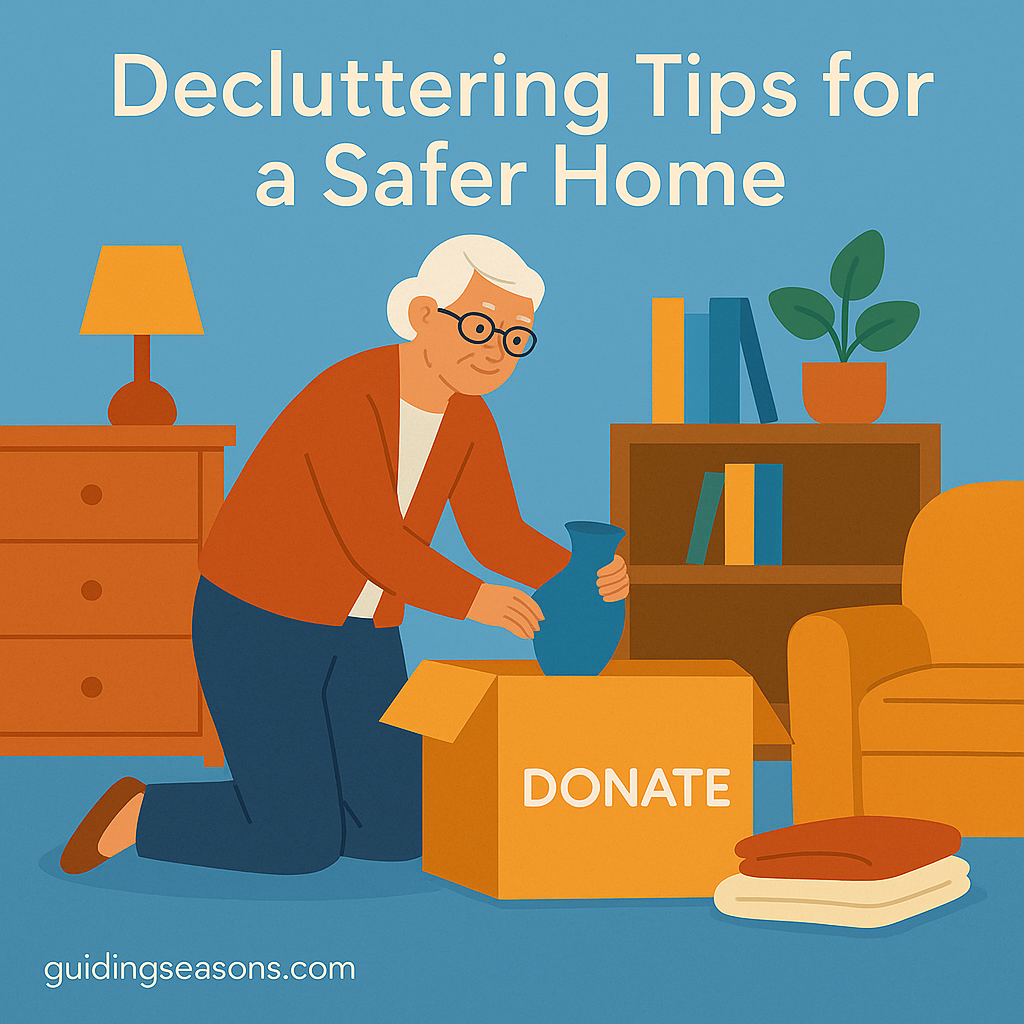
Decluttering does not necessarily mean getting rid of everything you own. The goal is to give belongings practical places so they do not interfere with everyday movement.
For help getting started, see Decluttering Tips for a Safer Home and How to Improve Home Organization.
2. Improve Lighting Throughout the Home
Lighting is one of the most effective safety improvements you can make.
Poor visibility makes it harder to notice steps, obstacles, spills, furniture edges, and changes in floor height.
Evaluate lighting throughout the entire home, especially:
- Stairways
- Hallways
- Entrances
- Bathrooms
- Kitchens
- Bedrooms
- Garages
- Outdoor walkways
Make sure switches are easy to reach and that frequently used areas are adequately illuminated.
Nightlights can also be useful along nighttime routes, particularly between the bedroom and bathroom.
Motion-activated lighting may help in areas where reaching a switch is inconvenient.
Outdoor lighting deserves attention as well. Entrances, steps, pathways, and driveways should be visible when arriving or leaving after dark.
For a room-by-room approach, read How to Improve Home Lighting for Safety.
3. Create a Fall Prevention Plan
Falls are an important home safety concern, particularly as mobility, balance, eyesight, or strength change with age.
The Centers for Disease Control and Prevention (CDC) recommends home-safety measures such as removing things you could trip over, adding grab bars, improving lighting, and installing railings on both sides of stairs.
Fall prevention works best when you address several risks together instead of relying on a single modification.
Begin by checking floors and walking surfaces.
Remove or secure:
- Loose rugs
- Electrical cords
- Clutter
- Uneven mats
- Unstable furniture
- Objects stored on stairs
Keep commonly used pathways open and avoid arranging furniture in ways that create narrow passages.
Bathrooms deserve additional attention because water and smooth surfaces can make floors slippery.
Depending on individual needs, improvements may include non-slip surfaces, strategically placed grab bars, better lighting, and easier access to showers and tubs.
Stairs should have secure handrails and adequate lighting.
If falling has become a concern, create a more complete strategy using How to Create a Fall Prevention Plan.
4. Make the Bathroom Safer
Bathrooms combine several potential hazards in a relatively small area: water, smooth surfaces, tubs, showers, and frequent sitting and standing.
Begin with the floor.
Keep it dry whenever possible and avoid unsecured rugs or mats.
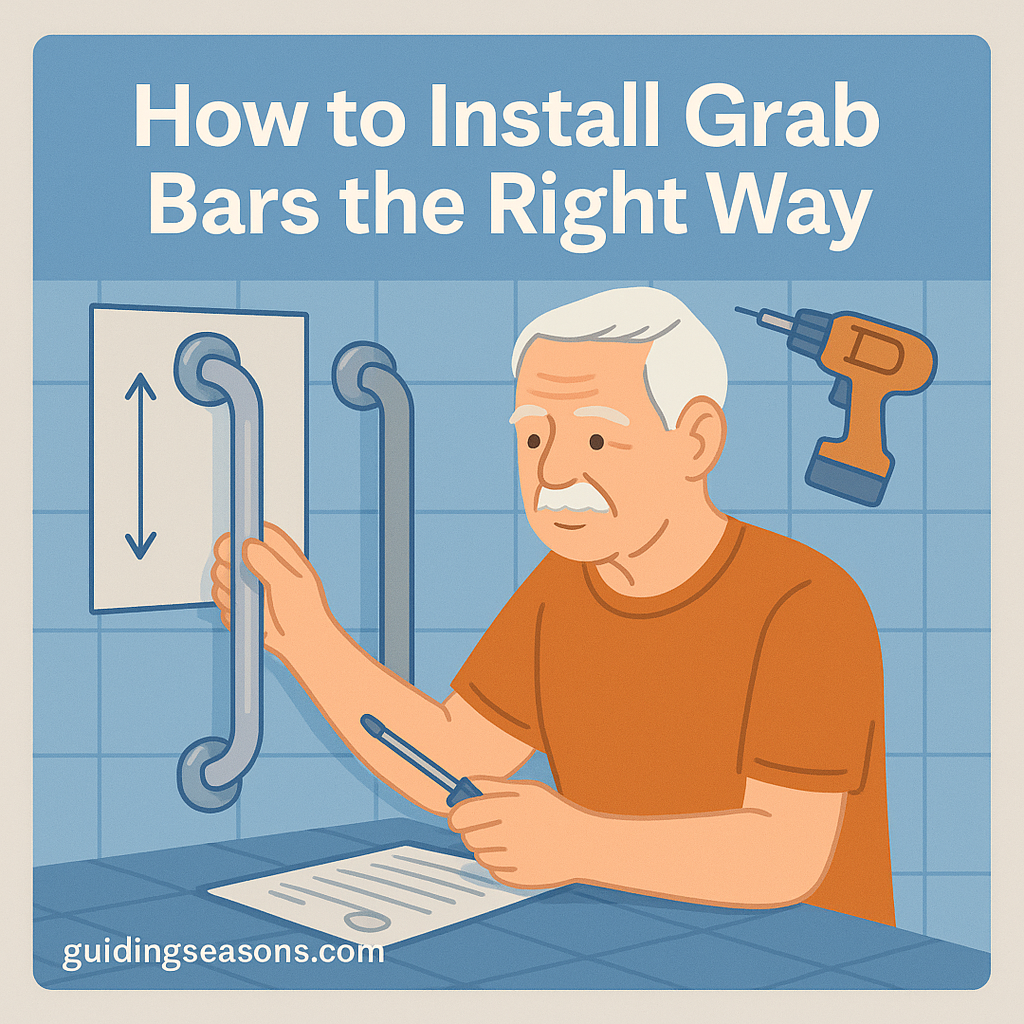
Consider whether getting into and out of the shower or bathtub requires awkward movements. If additional support would help, properly installed grab bars can provide stability.
Placement and installation matter. A grab bar needs to support body weight safely, so it should not simply be attached wherever it looks convenient.
Learn more in How to Install Grab Bars the Right Way.
Other bathroom improvements may include:
- Non-slip surfaces
- Brighter lighting
- Easy-to-reach toiletries
- Accessible towel storage
- Clear pathways
- Secure seating when appropriate
The goal is to reduce unnecessary movements that could cause someone to lose balance.
5. Make the Kitchen Easier and Safer to Use
The kitchen is one of the busiest rooms in the home, which also makes it an important area for safety planning.
Cooking involves heat, sharp objects, electricity, water, and frequent movement.
Start with organization.
Store frequently used dishes, cookware, and ingredients where they can be reached without excessive bending or stretching.
Try to avoid regularly climbing on chairs or unstable stools to reach high shelves.
Keep countertops organized so there is enough space for food preparation, and clean spills promptly.
When cooking:
- Turn pot handles away from the edge of the stove
- Keep flammable materials away from burners
- Avoid leaving active cooking unattended
- Keep knives stored safely
- Keep frequently used appliances easy to access
- Make sure work areas are well lit
A well-organized kitchen can reduce both accidents and physical strain.
For more detailed kitchen guidance, read How to Prevent Kitchen Accidents and How to Build a Senior-Friendly Kitchen.
6. Make Everyday Storage Easier to Reach
Storage should make your life easier rather than forcing you into uncomfortable positions.
Frequently used objects are generally best stored between approximately waist and shoulder level whenever practical.
This can reduce repeated:
- Bending
- Stretching
- Reaching
- Kneeling
- Climbing
Reserve very high or very low storage for objects you rarely need.
Pull-out drawers, organizers, clearly labeled containers, and accessible shelving can also make cabinets and closets easier to manage.
Medication deserves particular attention.
Medicines should be stored according to their instructions and kept organized so they are not confused, damaged, or accidentally accessed by children or visitors.
See How to Store Medication Properly for more guidance.
7. Improve Accessibility Before It Becomes Urgent
Accessibility is often treated as something to address only after mobility becomes difficult.
Planning earlier can be much easier.
Look for parts of the home that could become challenging if your mobility changed temporarily or permanently.
Potential obstacles include:
- Narrow pathways
- Difficult stairs
- High thresholds
- Heavy doors
- Hard-to-reach switches
- Inaccessible bathrooms
- Frequently used items stored too high or low
Not every home needs extensive accessibility modifications.
Sometimes relatively simple changes—such as rearranging furniture, relocating frequently used items, adding a handrail, or improving an entrance—can make a noticeable difference.
Explore How to Improve Home Accessibility and Simple Home Modifications for Comfort and Safety for practical options.
8. Think About Safety as You Age
Aging in place means remaining in your own home as your needs change.
For many people, preparing the home gradually is easier than waiting until a safety problem makes changes urgent.
Think about how easily you could continue using your home if climbing stairs became harder, your eyesight changed, or you temporarily needed a mobility aid.
Consider:
- Entryway accessibility
- Bathroom safety
- Bedroom location
- Stair use
- Lighting
- Kitchen accessibility
- Outdoor maintenance
- Emergency communication
You do not need to predict every future need.
Instead, look for changes that improve the home now while also making it easier to use later.
How to Make Your Home Safer as You Age provides a more detailed starting point.
9. Consider Additional Safety Measures When Living Alone
Living alone can provide independence and privacy, but it also makes emergency planning especially important.
Think about what would happen if you became ill, fell, lost power, or needed assistance unexpectedly.
Useful precautions can include:
- Keeping a phone within easy reach
- Having emergency contacts readily available
- Maintaining clear exits
- Checking smoke and carbon monoxide alarms
- Keeping essential supplies available
- Establishing regular communication with family or friends
Some people may also benefit from a medical alert device.
These systems vary considerably, so it is important to understand what they do, where they work, how alerts are handled, and what ongoing costs may be involved.
Read Understanding Medical Alert Systems and Safety Tips for Seniors Living Alone to explore these considerations further.
10. Improve Home Security
Feeling safe at home includes protection from both accidents and outside security risks.
Develop a simple nighttime routine that may include:
- Checking exterior doors
- Closing or securing accessible windows
- Turning on appropriate outdoor lighting
- Keeping a phone nearby
- Making sure entrances are visible
- Avoiding obvious signs that the home is unattended
Good security does not have to mean turning your home into a fortress.
Consistent habits can make a meaningful difference.
For additional ideas, see How to Keep Your Home Secure at Night.
11. Don’t Forget Outdoor Areas
Home safety extends beyond your front door.
Walkways, patios, steps, porches, decks, driveways, and yards can all create hazards.
Check outdoor areas for:
- Cracked or uneven surfaces
- Loose railings
- Poor lighting
- Slippery steps
- Overgrown vegetation
- Unstable outdoor furniture
- Garden hoses crossing walkways
Weather can make outdoor surfaces more dangerous, so conditions may need to be reassessed throughout the year.
If you regularly spend time outdoors, create an area that is both comfortable and easy to navigate.
Read How to Set Up a Safe Outdoor Space for additional ideas.
12. Prepare Your Home for Weather Emergencies
Home safety also includes preparing for events that may interrupt normal routines.
Depending on where you live, that could include:
- Extreme heat
- Winter storms
- Flooding
- Wildfires
- Hurricanes
- Tornadoes
- Earthquakes
- Power outages
Your emergency preparations should reflect the hazards most likely to affect your area.
At a minimum, think about how you would manage if utilities or normal services were temporarily unavailable.
Keep important contact information accessible and consider what essential food, water, medication, lighting, batteries, and other supplies you may need.
Avoid waiting for an emergency warning to begin thinking about these issues.
Use How to Prepare for Weather Emergencies to develop a more complete plan.
13. Make Your Home Safer for Visiting Grandchildren
If grandchildren or other young children visit your home, your normal household setup may contain hazards you rarely think about.
Medicines, cleaning products, electrical outlets, stairs, cords, small objects, and certain furniture can all present risks to young children.
Before a visit, consider the child’s age and mobility.
A crawling baby requires different precautions than an older child.
You may need to:
- Move medications out of reach
- Secure cleaning supplies
- Check accessible electrical outlets
- Block dangerous stairways
- Remove small choking hazards
- Secure unstable furniture
- Keep sharp objects inaccessible
You do not necessarily need to permanently redesign your home. Temporary precautions can make visits considerably safer.
See How to Childproof Your Home for Grandkids for a more complete checklist.
14. Maintain a Clean Home Without Creating New Hazards
Cleaning supports a healthy and comfortable home, but the way you clean also matters.
For example, a freshly mopped floor can temporarily become a slipping hazard. Cleaning products may need careful storage, and carrying heavy supplies between rooms can create unnecessary strain.
Try to establish manageable routines instead of allowing chores to accumulate into large projects.
You might divide household maintenance into smaller tasks throughout the week.
Keep cleaning products organized, follow product instructions, and store potentially hazardous substances appropriately.
For a practical routine, read How to Maintain a Clean and Safe Home.
15. Create a Home That Feels Peaceful, Not Just Safe
Safety is important, but your home should still feel like home.
A comfortable environment can contribute to relaxation and make everyday routines more enjoyable.
Consider:
- Reducing unnecessary visual clutter
- Keeping comfortable seating available
- Allowing natural light into living spaces
- Organizing belongings so they are easy to find
- Creating quiet areas for reading or relaxing
- Keeping frequently used rooms comfortable and welcoming
Personal belongings, photographs, plants, artwork, and familiar furnishings can remain part of a safe environment.
The objective is not to remove personality from the home. It is to remove unnecessary friction and hazards.
Explore How to Create a Peaceful Home Atmosphere for additional ideas.
16. Know When In-Home Help May Be Useful
Home modifications can make independent living easier, but the home itself is only one part of the picture.
Sometimes additional assistance with daily activities becomes useful.
In-home care can vary considerably, from occasional assistance with household activities to more regular personal support.
If you are considering outside help for yourself or a family member, evaluate providers carefully.
Consider factors such as:
- Services offered
- Qualifications
- Screening procedures
- Reliability
- Scheduling
- Communication
- Costs
- References
- Backup arrangements
Do not choose solely based on convenience.
How to Choose Reliable In-Home Care explains some of the factors worth considering.
How to Improve Home Safety on a Budget
One of the biggest misconceptions about home safety is that improvement requires expensive remodeling.
Many useful changes cost very little.
Start with free or inexpensive improvements such as:
- Removing clutter
- Rearranging furniture
- Relocating frequently used items
- Securing loose cords
- Removing unnecessary rugs
- Replacing burned-out light bulbs
- Organizing cabinets
- Keeping pathways clear
- Testing alarms regularly
Then prioritize purchases according to actual risk.
For example, fixing a hazardous stairway should generally take priority over cosmetic improvements.
Create a list and divide potential changes into three groups:
Immediate: Hazards that could reasonably cause injury or prevent safe movement.
Important: Improvements that would make daily activities safer or easier.
Optional: Changes that improve convenience but are not currently necessary.
This approach allows you to improve your environment gradually without feeling pressured to complete everything at once.
For additional cost-conscious ideas, see How to Maintain Home Safety on a Budget.
Common Home Safety Mistakes to Avoid
Even a generally safe home can develop problems over time.
Some common mistakes include:
- Allowing clutter to gradually return
- Ignoring loose rugs or flooring
- Using chairs instead of appropriate step stools
- Leaving stairways poorly lit
- Keeping frequently used objects on very high shelves
- Delaying repairs to railings or steps
- Blocking exits with furniture or storage
- Forgetting to reassess the home after mobility changes
- Assuming a modification is safe simply because it was installed
- Trying to solve every problem at once
Home safety should be treated as an ongoing process rather than a one-time project.
Create a Simple Home Safety Routine
Once the major hazards have been addressed, maintaining a safe home becomes much easier.
Every few months, take a short walk through your home.
Check:
- Floors and rugs
- Hallways
- Stairs and railings
- Lighting
- Bathrooms
- Kitchen areas
- Entrances and exits
- Outdoor walkways
- Smoke and carbon monoxide alarms
- Emergency supplies
The U.S. Fire Administration recommends installing smoke alarms inside every bedroom, outside each separate sleeping area, and on every level of the home, including the basement. Smoke alarms should also be tested at least once a month.
Also reassess the home whenever circumstances change.
An injury, surgery, new mobility limitation, vision change, or change in who lives in the household may create new needs.
The safest home is one that continues adapting with the people who live in it.
A Practical Order for Improving Your Home
If the number of possible improvements feels overwhelming, you do not need to tackle everything at once.
Start with the issues most likely to affect immediate safety.
A practical order is:
- Identify obvious household hazards.
- Clear major walking paths.
- Address fall risks.
- Improve inadequate lighting.
- Make bathrooms safer.
- Improve kitchen organization and safety.
- Move frequently used belongings to accessible locations.
- Check stairs, entrances, and outdoor pathways.
- Review home security.
- Prepare for emergencies.
- Consider longer-term accessibility improvements.
- Reassess the home periodically.
Small improvements made consistently can transform how easy a home is to live in.
Continue Improving Your Home Environment
Home safety covers many different areas, so use the guides below to focus on the parts of your home that need the most attention:
- How to Identify Home Safety Risks
- How to Reduce Household Hazards
- How to Organize a Safe Living Environment
- Decluttering Tips for a Safer Home
- How to Improve Home Organization
- How to Improve Home Lighting for Safety
- How to Create a Fall Prevention Plan
- How to Install Grab Bars the Right Way
- How to Prevent Kitchen Accidents
- How to Improve Home Accessibility
- Simple Home Modifications for Comfort and Safety
- How to Make Your Home Safer as You Age
- Safety Tips for Seniors Living Alone
- Understanding Medical Alert Systems
- How to Keep Your Home Secure at Night
- How to Set Up a Safe Outdoor Space
- How to Prepare for Weather Emergencies
- How to Maintain Home Safety on a Budget
- How to Maintain a Clean and Safe Home
- How to Store Medication Properly
- How to Childproof Your Home for Grandkids
- How to Create a Peaceful Home Atmosphere
- How to Choose Reliable In-Home Care
Final Thoughts
Creating a safe, comfortable, and functional home does not require making your living space perfect.
It means paying attention to the small things that affect your everyday life.
Clear the pathways you use most. Improve poor lighting. Make frequently used belongings easier to reach. Address slipping and tripping hazards. Think about bathroom and kitchen safety. Prepare for emergencies. And make gradual accessibility improvements as your needs change.
Most importantly, do not wait until a problem occurs before looking at your home differently.
A few thoughtful improvements today can make everyday living easier while helping your home continue to support your comfort, safety, and independence for years to come.