
A comfortable home should make everyday life easier, not create unnecessary obstacles. As we get older, however, features that once seemed harmless—such as a loose rug, a dim hallway, a low toilet, or a difficult-to-turn doorknob—can become frustrating or even unsafe.
Improving home accessibility means adapting your living space so it remains comfortable, practical, and easy to navigate as your needs change. Some improvements cost very little, while others may involve larger renovations. You do not need to make every change at once.
In fact, starting with the areas you use most often can make a noticeable difference without completely remodeling your home.
According to the Centers for Disease Control and Prevention (CDC), more than one in four adults age 65 and older reports falling each year. Falls can have serious consequences, but many risk factors around the home can be addressed. CDC — Older Adult Falls
Here are practical ways to make your home safer, easier to use, and more accessible.
1. Start With a Home Accessibility Walkthrough
Before buying equipment or beginning renovations, take a careful walk through your home.
Try to look at each room from a new perspective. Instead of focusing on how the room looks, think about how easily you can use it.
Ask yourself:
- Are there objects I have to step around?
- Are any floors slippery?
- Are doorways difficult to pass through?
- Do I have to stretch to reach frequently used items?
- Is there enough light at night?
- Are stairs easy to navigate?
- Is it difficult to get in and out of the shower?
- Are chairs or beds too low?
- Do I have something sturdy to hold when I need additional balance?
Pay particular attention to transitions between rooms. Raised thresholds, changes in flooring, small steps, and loose rugs can easily go unnoticed because you are accustomed to them.
Consider doing the walkthrough twice—once during the day and again after dark. A hallway that seems perfectly safe at noon may be surprisingly difficult to navigate at 11 p.m.
Write down what you find and prioritize the easiest or most important improvements first.
2. Improve Lighting Throughout the Home
Good lighting is one of the simplest accessibility improvements you can make.
As people age, adequate lighting becomes increasingly important for seeing obstacles, reading labels, navigating stairs, and completing everyday tasks.
Consider improving lighting in:
- Hallways
- Staircases
- Bathrooms
- Kitchens
- Bedrooms
- Closets
- Entrances
- Garages
Replace burned-out bulbs promptly and consider brighter bulbs where appropriate for the fixture. LEDs are available in many brightness levels and generally last much longer than traditional incandescent bulbs.
Night-lights can be particularly useful along the route between the bedroom and bathroom.
Motion-activated lights are another option. A light that automatically comes on when you enter a hallway means you do not have to search for a switch in the dark.
The National Institute on Aging recommends keeping rooms well lit and using night-lights in areas such as hallways and bathrooms as part of reducing fall hazards at home. National Institute on Aging — Falls and Fractures in Older Adults
3. Remove Tripping Hazards
You may not need to remodel anything to make your home considerably easier to navigate.
Sometimes, simply removing obstacles is enough.
Walk through your most frequently used pathways and look for:
- Loose rugs
- Electrical cords
- Shoes
- Pet toys
- Small tables
- Boxes
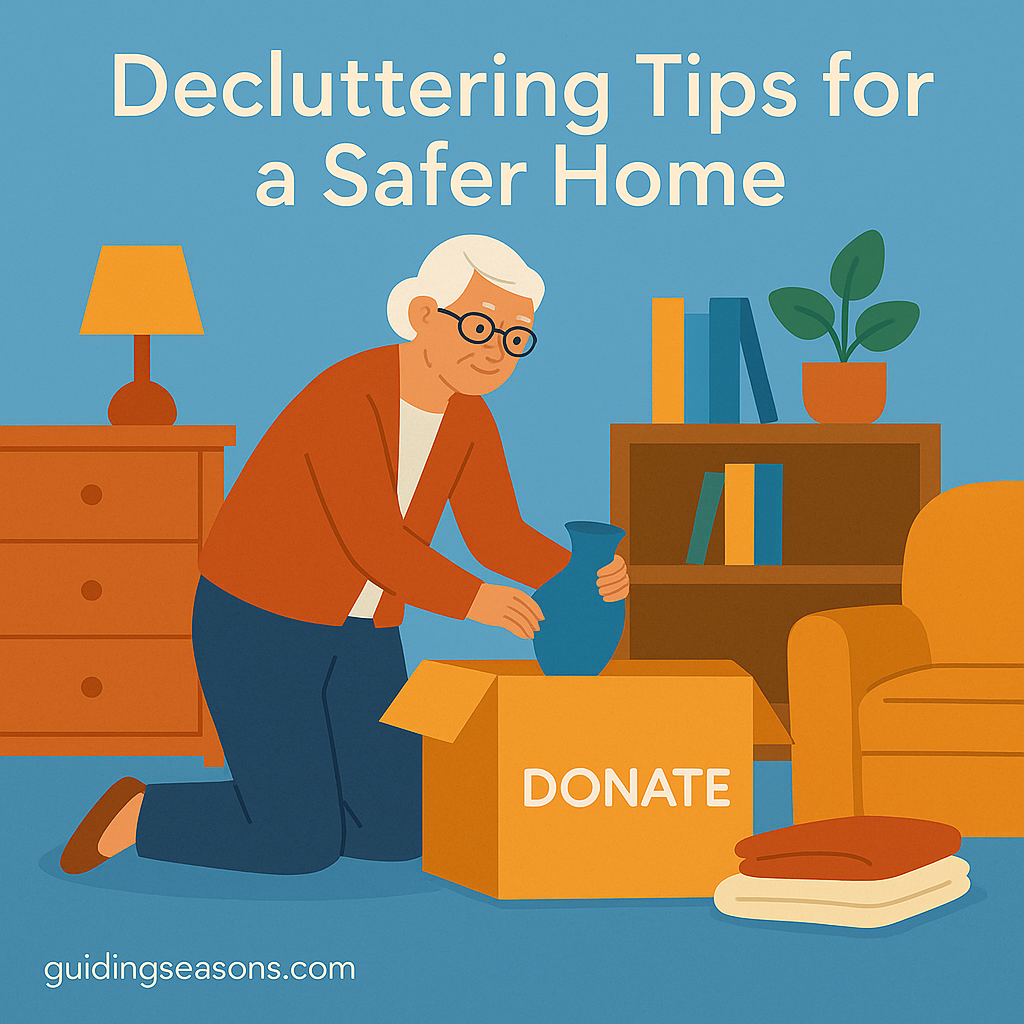
- Clutter
- Uneven flooring
Loose area rugs deserve special attention. Consider removing unnecessary rugs or securing those you want to keep with an appropriate non-slip backing.
Electrical cords should also be positioned away from walking paths whenever possible.
Think of the floor as a clear transportation route through your home. The fewer obstacles you encounter between your bedroom, bathroom, kitchen, and living area, the easier everyday movement becomes.
4. Install Grab Bars and Secure Handrails
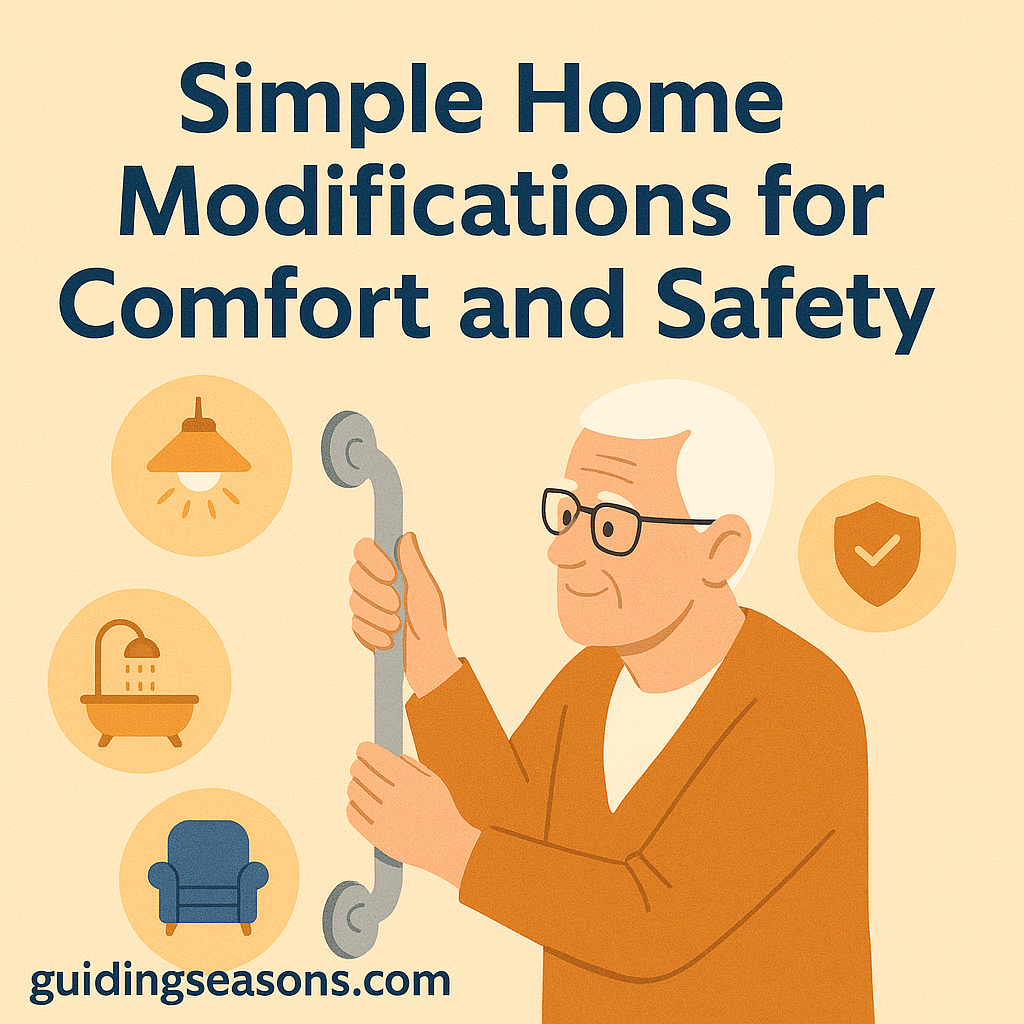
Grab bars provide a stable place to hold when balance is needed.
They can be particularly useful:
- Inside showers
- Near bathtubs
- Beside toilets
- Near steps
- In other areas where additional stability is helpful
Grab bars should be securely installed into appropriate structural support or with mounting hardware designed for the wall and application. Do not assume that a towel rack can support your body weight.
Suction-mounted handles may seem convenient, but they should not be treated as equivalent to properly installed structural grab bars.
Stairways should also have secure handrails. Depending on your home and mobility needs, having a usable handrail on both sides may make stairs easier to navigate.
If you are uncertain about installation, consider hiring a qualified professional rather than guessing about placement or mounting.
5. Create Wider, Clearer Pathways
Furniture placement has an enormous effect on accessibility.
A room can contain plenty of square footage but still be difficult to navigate if chairs, tables, lamps, and decorative items interrupt the main walking route.
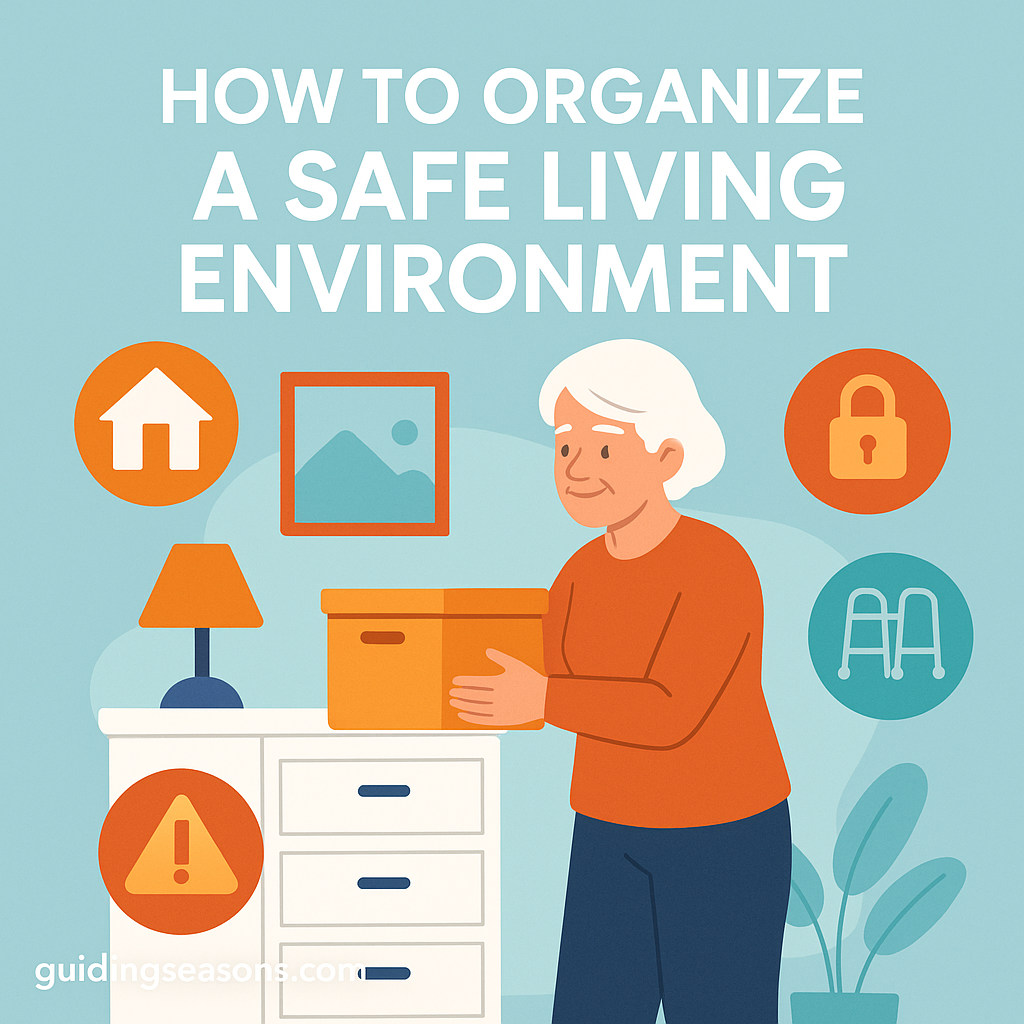
Try rearranging furniture to create direct paths between frequently used areas.
For example, imagine a bedroom where the route from the bed to the bathroom is approximately 15 feet. If that short journey requires navigating around a chair, stepping past a rug, squeezing between a dresser and the bed, and locating a light switch, there are several opportunities for difficulty.
Moving the chair, removing the rug, widening the path, and adding a motion-activated night-light could transform the same 15-foot journey without any construction.
If someone uses a walker or wheelchair, doorway width and turning space become more important. Offset hinges may provide a little additional clearance in certain doorways, while more significant accessibility needs may require professional doorway modifications.
6. Keep Everyday Items Within Easy Reach
Repeatedly stretching overhead or bending close to the floor can make everyday activities harder than necessary.
Try organizing frequently used belongings between roughly waist and shoulder height when practical.
In the kitchen, this might include:
- Plates
- Drinking glasses
- Coffee
- Frequently used cookware
- Everyday food items
In the bedroom, keep clothing you wear regularly within easy reach rather than on the highest shelf.
You can also consider:
- Pull-down closet rods
- Reacher tools
- Pull-out cabinet shelves
- Drawer organizers
- Lazy Susans
The goal is simple: organize the home around the person using it.
7. Improve Floor Traction
Flooring should provide a stable surface for walking.
Highly polished or slippery surfaces can be more difficult to navigate, particularly when wet.
Depending on the room, accessible flooring choices may include:
- Slip-resistant vinyl
- Low-pile carpet
- Textured flooring
- Properly secured mats
Bathrooms, kitchens, entrances, and laundry rooms deserve additional attention because moisture can make floors slippery.
If you use rugs or mats, make sure they lie flat and do not create raised edges that can catch a foot, cane, or walker.
You may not need to replace flooring throughout your entire home. Start by addressing areas where you have noticed slipping, uneven surfaces, or difficulty walking.
8. Make the Bathroom Safer and Easier to Use
Bathrooms are one of the most important places to consider when improving accessibility because they combine hard surfaces, water, and movements such as sitting, standing, stepping, and turning.
Possible improvements include:
- Secure grab bars
- Non-slip surfaces
- A shower chair or bench
- A handheld showerhead
- Improved lighting
- An appropriate raised toilet seat
- Easy-to-operate faucets
For larger renovations, a curbless or low-threshold shower may reduce the need to step over the side of a traditional bathtub.
Think about the entire bathroom routine rather than one feature.
Can you safely enter the room, use the toilet, reach toiletries, get into the shower, bathe, dry yourself, and leave without unnecessary reaching or balancing?
Accessibility works best when all of these activities are considered together.
9. Improve Kitchen Accessibility
The kitchen contains many opportunities for reaching, bending, carrying, lifting, and standing.
Start by moving frequently used items to convenient locations.
Consider:
- Pull-out shelves
- Large, easy-to-grip handles
- Lever-style faucets
- Lazy Susans
- Lightweight cookware
- Frequently used appliances placed within easy reach
Avoid storing heavy cookware on high shelves.
For example, instead of lifting a heavy pot down from above your head, keep it in a waist-level cabinet or large drawer.
If standing for long periods becomes tiring, consider whether some food-preparation tasks can be performed while comfortably seated at a suitable work surface.
Small organizational changes can sometimes provide more practical benefit than expensive kitchen renovations.
10. Make Stairs Easier to Navigate
Stairs deserve careful attention because a small loss of balance can have serious consequences.
Check that your stairs have:
- Secure handrails
- Adequate lighting
- Clear steps
- Consistent surfaces
- Good traction
Do not store shoes, boxes, laundry, or other objects on stairways.
Contrast can also help some people identify where one step ends and another begins. Depending on individual vision needs and the staircase design, contrasting markings may make step edges easier to distinguish.
If stairs eventually become difficult despite these improvements, talk with an appropriate professional about alternatives. Depending on the home and individual needs, options could include relocating essential living spaces to one floor, installing a stair lift, or making larger accessibility renovations.
11. Make Entrances Easier to Use
Accessibility begins before you walk through the front door.
Look at the route from your driveway or sidewalk to your entrance.
Ask:
- Is the pathway level?
- Is it well lit?
- Are there cracks or obstacles?
- Are steps difficult to navigate?
- Is there a sturdy handrail?
- Is the door easy to open?
For someone who uses a wheelchair or has difficulty with steps, a properly designed ramp or other accessible entrance may be necessary.
Major modifications should be professionally designed and installed so that dimensions, slope, structural requirements, local building codes, and individual mobility needs are properly addressed.
12. Choose Easier-to-Use Handles and Controls
Small details can have a surprisingly large impact on independence.
Traditional round doorknobs, for example, require gripping and twisting. Lever-style handles may be easier for someone with reduced hand strength or dexterity.
Similar improvements can be made with:
- Faucet handles
- Cabinet pulls
- Light switches
- Appliance controls
- Shower controls
Look for controls that require minimal gripping, twisting, or force.
These upgrades are relatively small but can make dozens of everyday interactions easier.
13. Use Smart Home Technology Where It Helps
Technology can improve accessibility, but only when it makes everyday tasks simpler.
Useful options may include:
- Voice-controlled lights
- Smart thermostats
- Video doorbells
- Automatic lighting
- Remote-controlled blinds
- Smart plugs
- Voice assistants
For example, voice-controlled bedroom lighting can allow you to turn on a hallway or bedside light before getting out of bed.
A smart thermostat can reduce the need to repeatedly walk to a wall-mounted control.
Avoid adding technology simply because it is available. Choose devices that solve a specific problem and are easy for you to operate.
It is also worth having a backup plan for essential functions if the internet or power goes out.
14. Make the Bedroom Easier to Navigate
The bedroom should provide a safe place to rest as well as an easy route to the bathroom and other parts of the home.
Consider whether:
- The bed is an appropriate height.
- There is a clear path to the doorway.
- A lamp or light switch is within reach.
- Your phone is accessible.
- Glasses are easy to find.
- Mobility aids have a designated location.
- Night-lights illuminate the route to the bathroom.
A bed that is extremely low may make standing difficult, while one that is excessively high can also create problems.
The appropriate height depends on the individual, so comfort and safe transfers are more important than following a universal measurement.
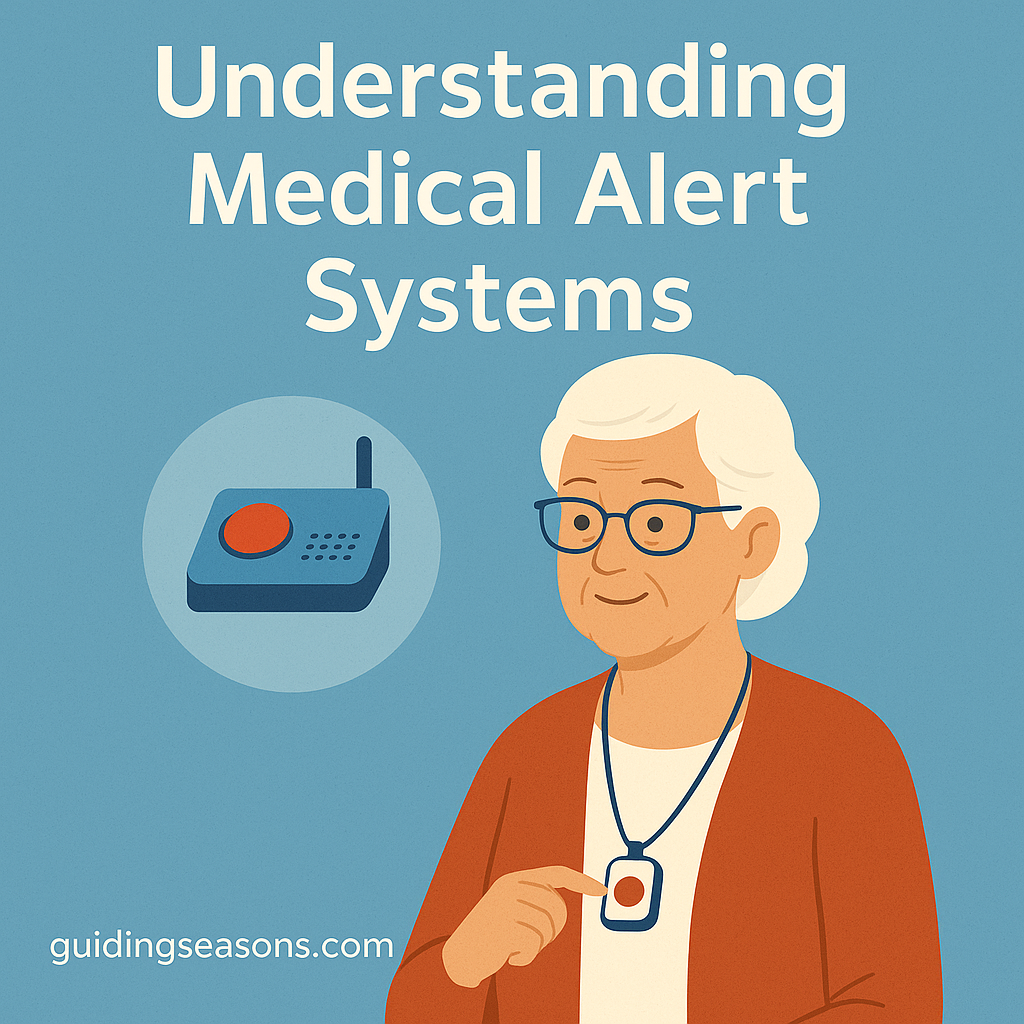
15. Keep Emergency Essentials Accessible
Accessibility also means being prepared when something unexpected happens.
Keep important items where you can reach them easily.
These might include:
- A charged phone
- Emergency contact information
- Glasses
- Hearing aids
- Mobility aids
- Flashlights
- Necessary medications
Avoid storing essential emergency items in difficult-to-reach cabinets.
You might also keep a flashlight near the bed in case of a power outage.
The objective is to reduce the number of obstacles between you and whatever you may need quickly.
16. Consider an Occupational Therapist or Home-Safety Professional
You do not have to determine every accessibility modification yourself.
An occupational therapist can evaluate how you perform everyday activities in your actual living environment and may recommend changes based on your individual abilities and needs.
An assessment may look at:
- Getting in and out of bed
- Bathing
- Using the toilet
- Preparing meals
- Navigating stairs
- Moving between rooms
- Reaching everyday items
- Using mobility equipment
This can be especially valuable because accessibility is not one-size-fits-all.
A grab bar that is perfectly positioned for one person may not be ideal for another. The same is true of furniture height, bathroom equipment, ramps, and other modifications.
For significant renovations, an experienced accessibility or aging-in-place professional can also help determine which structural changes make sense for the home.
17. Prioritize Improvements Instead of Doing Everything at Once
Creating a more accessible home does not have to become a massive renovation project.
Divide improvements into stages.
Start with simple changes: remove clutter, secure rugs, improve lighting, move frequently used items, and clear walking paths.
Then address moderate improvements: install grab bars, replace difficult handles, add handrails, improve bathroom equipment, and reorganize storage.
Finally, consider larger projects if necessary: doorway modifications, accessible showers, ramps, stair lifts, or major flooring changes.
This approach makes accessibility improvements easier to manage financially and practically.
It also allows your home to evolve as your needs change.
A Simple Home Accessibility Checklist
Walk through your home and check whether:
- Walking paths are clear.
- Loose rugs and cords have been addressed.
- Rooms and hallways have adequate lighting.
- Night-lights are available where needed.
- Stairways have secure handrails.
- Bathroom surfaces provide good traction.
- Grab bars are securely installed where appropriate.
- Frequently used items are easy to reach.
- Furniture does not obstruct pathways.
- Exterior entrances are well lit and manageable.
- Door and faucet handles are easy to operate.
- Your phone and emergency essentials are accessible.
You do not need to check every box immediately. Use the list to identify your priorities.
Final Thoughts
Improving home accessibility is not simply about preparing for a future limitation. It is about making your home easier, safer, and more comfortable to use today.
Start with simple improvements. Clear pathways, secure loose rugs, increase lighting, reorganize frequently used items, and examine the bathroom and stairs carefully. These relatively modest changes can eliminate unnecessary obstacles without requiring a major renovation.
As your needs change, you can consider additional improvements such as grab bars, accessible showers, wider doorways, ramps, smart-home technology, or professional accessibility assessments.
Most importantly, design your home around the people who actually live in it.
A well-planned accessible home should help you spend less time worrying about reaching, bending, balancing, or navigating obstacles—and more time comfortably enjoying your home and maintaining your independence.