Living alone can provide independence, privacy, and the freedom to maintain your own routines. For many older adults, remaining in a familiar home is an important part of maintaining independence.
Living independently, however, also makes preparation especially important. If you fall, become ill, experience a power outage, encounter a suspicious visitor, or have another emergency, there may not be another person in the home to immediately notice what happened.
That does not mean living alone has to feel unsafe.
Simple changes to your home, daily routines, and communication habits can reduce common risks while allowing you to continue enjoying your independence.
Fall prevention deserves particular attention. According to the Centers for Disease Control and Prevention (CDC), more than one in four adults age 65 and older reports falling each year. The CDC recommends practical home modifications such as removing tripping hazards, improving lighting, installing grab bars, and adding railings to reduce fall risks. CDC — Older Adult Fall Prevention
Here are practical safety strategies for older adults who live alone.
1. Make Your Home Entrance Safe and Secure
Start with the place where people enter your home.
Your front and back entrances should be well lit, easy to navigate, and securely locked.
Consider:
- A quality deadbolt
- A peephole or door viewer
- A video doorbell
- Motion-activated exterior lighting
- Secure locks on windows near doors
- Clearly visible house numbers
Keep walkways leading to entrances clear of hoses, tools, packages, leaves, and other obstacles.
If someone unexpectedly comes to your door, you do not have to open it.
Use a peephole, window, intercom, or video doorbell to identify the visitor first.
If someone claims to represent a utility company, government agency, repair service, or other organization and you were not expecting them, keep the door locked while independently verifying their identity.
Avoid telling an unknown visitor that you live alone.
2. Reduce Fall Hazards Throughout the Home
Falls are particularly concerning for someone living alone because assistance may not be immediately available.
Walk through your home and look for:
- Loose rugs
- Electrical cords
- Shoes
- Pet toys
- Boxes
- Clutter
- Low furniture
- Uneven flooring
Clear the routes you use most frequently.
Pay particular attention to the path between your bedroom and bathroom because you may use it at night when you are sleepy and visibility is reduced.
The CDC recommends keeping floors free of objects that could cause tripping, improving home lighting, and installing supports such as grab bars and stair railings. CDC — Preventing Falls and Hip Fractures
If you have stairs, keep every step free of belongings.
Do not use stairs as temporary storage for laundry, shoes, packages, or other items.
3. Improve Nighttime Lighting
A home that is easy to navigate during the day may feel very different after dark.
Install night-lights or other appropriate lighting:
- Between the bedroom and bathroom
- In hallways
- Near stairs
- In the kitchen
- Near entrances
Motion-activated lights can be especially convenient because they turn on automatically when movement is detected.
Keep a lamp or light switch within easy reach of your bed.
If you wake during the night, turn on a light before getting up rather than attempting to navigate a dark room from memory.
A small flashlight near your bed can also be useful during a power outage.
4. Consider a Medical Alert Device
A medical alert system can provide another way to request assistance if you cannot easily reach your phone.
Depending on the device or service, features may include:
- Emergency call buttons
- Fall detection
- Two-way communication
- GPS location features
- Cellular connectivity
- Waterproof wearable buttons
- 24-hour monitoring
Some systems are designed primarily for use inside the home, while others can also work when you are away.
Think about your routine when comparing options.
For example, if you regularly walk around your neighborhood, drive, or visit stores independently, a mobile system may be more useful than one designed only for use around the house.
Automatic fall detection may provide additional reassurance, but no technology detects every fall. A medical alert device should be considered one part of a broader safety plan.
5. Keep Your Phone Within Reach
Your phone is one of your most important safety tools.
Get into the habit of keeping it nearby rather than leaving it in another room.
At night, place it on a bedside table and make sure it is adequately charged.
Consider adding important contacts to favorites or speed dial, including:
- Family members
- Trusted neighbors
- Close friends
- Healthcare contacts
Learn how to use your phone’s emergency features as well.
Some smartphones and smartwatches offer emergency calling or emergency contact functions that can be activated without navigating through several menus.
If you use a cordless home phone, remember that some models may not work during a power outage.
6. Create a Daily Check-In Routine
Living alone does not have to mean being disconnected.
A simple check-in system with someone you trust can provide reassurance without interfering with your independence.
For example, you and a family member might agree on a 9:00 a.m. daily text.
Your message could simply say, “Good morning.”
If the family member does not receive the message by 10:00 a.m., they know to call you. If you do not answer after an agreed number of attempts, they know what the next step should be.
The exact schedule is less important than having a clear routine everyone understands.
You might arrange check-ins with:
- Adult children
- Siblings
- Friends
- Neighbors
For some people, a daily check-in is appropriate. Others may prefer every few days.
Choose a system that feels supportive rather than intrusive.
7. Keep Emergency Information Easy to Find
During an emergency, you or someone helping you may need important information quickly.
Create a simple emergency information sheet containing appropriate details such as:
- Emergency contacts
- Healthcare providers
- Current medications
- Medication allergies
- Important medical information
- Preferred emergency contact
Keep a copy somewhere easy to locate, such as on the refrigerator or another agreed-upon location.
You might also keep relevant information in your wallet or phone.
Review the list periodically so that outdated medications, telephone numbers, and other information can be updated.
Avoid publicly displaying information that could unnecessarily expose sensitive personal or financial details to visitors.
8. Maintain a Consistent Medication Routine
Medication mistakes can happen when schedules become complicated.
Create a system that works for you.
Depending on your medications and professional guidance, this might include:
- A medication schedule
- Phone reminders
- A suitable pill organizer
- Pharmacy packaging
- Written instructions
Keep medications in a consistent location and make sure labels are easy to read.
If you take several prescriptions, ask your pharmacist or healthcare professional whether your medication schedule can be simplified.
Do not combine medications into unlabeled containers.
If a medication causes dizziness, drowsiness, or other symptoms that could affect balance, discuss the issue with an appropriate healthcare professional rather than stopping the medication on your own.
9. Make the Bathroom Safer
Bathrooms combine water, hard surfaces, and movements such as stepping, turning, sitting, and standing.
Possible improvements include:
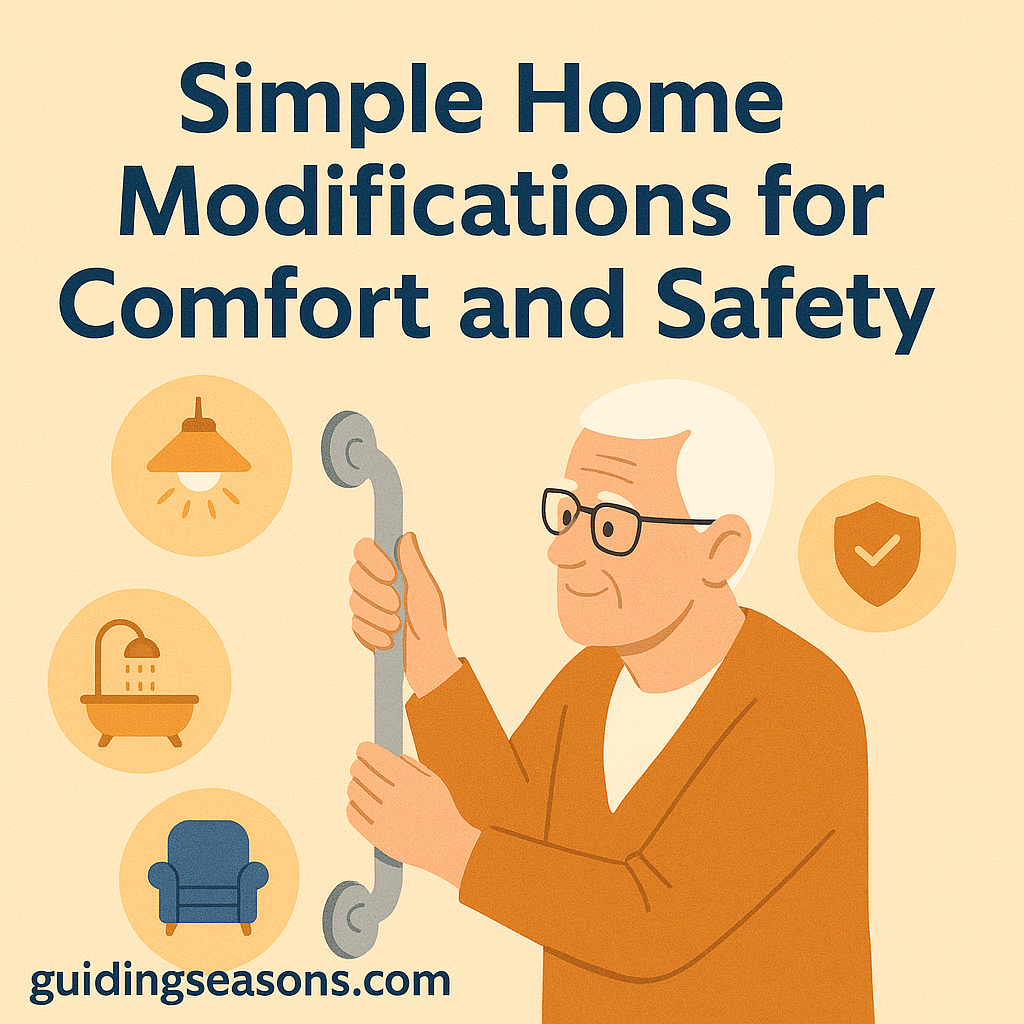
- Securely installed grab bars
- Slip-resistant surfaces
- A shower chair
- A handheld showerhead
- An appropriate raised toilet seat
- Good lighting
Keep bathroom floors dry and remove unnecessary clutter.
Toiletries should be positioned where you can reach them comfortably without excessive bending or stretching.
If you use a medical alert button or other wearable emergency device, check whether it is designed to be worn in the shower before doing so.
10. Keep Frequently Used Items Within Easy Reach
Climbing onto a chair or step stool to retrieve something can create unnecessary risk.
Organize your home around the items you actually use.
Keep frequently used belongings somewhere between comfortable waist and shoulder height when practical.
In the kitchen, this might include:
- Plates
- Cups
- Everyday cookware
- Coffee or tea
- Common food items
In the bedroom, keep frequently worn clothing easily accessible.
Heavy objects should generally be stored where they can be handled without lifting them from overhead.
Rarely used items can occupy less convenient storage areas.
The goal is to reduce unnecessary climbing, bending, and reaching during everyday routines.
11. Practice Kitchen Safety
Cooking is an important part of independent living, but kitchens contain hot surfaces, sharp tools, water, and electrical appliances.
Develop a simple routine when cooking.
Before leaving the kitchen, check:
- Stove burners
- Oven
- Small appliances
- Faucets
- Floor for spills
Avoid leaving active cooking unattended.
Keep towels, paper products, and other combustible materials away from burners.
Turn pot handles inward so they are less likely to be accidentally bumped.
Clean grease and water from floors promptly.
If remembering whether the stove has been turned off becomes difficult, discuss appropriate safety solutions with family members, an occupational therapist, or another qualified professional. Automatic stove shutoff products may be worth considering depending on individual circumstances.
12. Check Smoke and Carbon Monoxide Alarms
Working alarms are essential when you live alone because there may not be another person in the home to notice smoke or other signs of danger.
The U.S. Fire Administration recommends installing smoke alarms inside every sleeping room, outside each separate sleeping area, and on every level of the home, including the basement. Smoke alarms should be tested at least once a month. U.S. Fire Administration — Smoke Alarms
Carbon monoxide alarms are also important in homes where CO exposure could occur.
Follow manufacturer instructions for:
- Installation
- Testing
- Battery replacement
- Device replacement
If reaching an alarm requires climbing onto a ladder or unstable chair, ask someone else to test or replace it.
13. Have a Fire Escape Plan
Think about how you would leave your home if a fire occurred.
Identify at least two possible escape routes when the layout allows.
Keep exits clear of:
- Furniture
- Boxes
- Shoes
- Storage containers
If you live in an apartment or condominium, learn the building’s emergency procedures.
If mobility limitations could make evacuation difficult, consider discussing your situation in advance with building management, family members, caregivers, or local emergency-planning resources as appropriate.
Do not rely on an elevator during a fire unless emergency authorities specifically direct you to use one.
14. Use Space Heaters Carefully
Portable heaters require extra caution.
Keep combustible materials such as:
- Curtains
- Bedding
- Clothing
- Papers
- Upholstered furniture
away from heat sources.
Use heaters according to manufacturer instructions and plug them directly into an appropriate wall outlet rather than using unsuitable extension cords or power strips.
Turn portable heaters off when you leave the room or go to sleep unless the manufacturer’s instructions specifically state otherwise.
Never use an oven or stove as a substitute for home heating.
15. Protect Yourself From Scams and Fraud
Safety while living alone also includes protecting your personal and financial information.
Unexpected phone calls, emails, text messages, and visitors may attempt to create urgency.
Be cautious if someone unexpectedly asks for:
- Bank information
- Credit card numbers
- Passwords
- Social Security numbers
- Gift cards
- Cryptocurrency payments
- Remote access to your computer
Do not assume that the caller ID or name appearing on your phone proves who is contacting you.
If someone claims to represent your bank, government agency, utility provider, or another organization, end the conversation and independently contact the organization using a trusted official number.
Never allow someone to pressure you into making an immediate financial decision.
16. Build a Relationship With Trusted Neighbors
A trustworthy neighbor can be extremely valuable when you live alone.
You do not need to share private details about your life.
Simply exchanging phone numbers with one or two trusted neighbors can make it easier to:
- Ask for help during an emergency
- Report unusual activity
- Check on each other after severe weather
- Collect mail during travel
- Handle a misplaced package
Choose people you know and trust.
Community connections can provide an additional layer of support without reducing your independence.
17. Prepare for Power Outages
A power outage can make an otherwise safe home difficult to navigate.
Keep basic supplies accessible, including:
- Flashlights
- Spare batteries
- Charged portable power banks
- Necessary emergency supplies
Avoid relying exclusively on candles for emergency lighting because open flames introduce a fire hazard.
If you rely on electrically powered medical equipment, talk with your healthcare provider, equipment supplier, utility company, or local emergency-management resources about appropriate backup planning.
Keep important phone numbers somewhere accessible even if your internet connection is unavailable.
18. Keep Doors and Windows Secure at Night
Develop a short nighttime security routine.
Before bed:
- Lock exterior doors.
- Check accessible windows.
- Secure patio or sliding doors.
- Close curtains or blinds.
- Turn on appropriate exterior lighting.
- Place your phone near the bed.
Try following the same sequence every evening.
A routine reduces the chance that you will forget an important step and can eliminate the familiar question after getting into bed: “Did I lock the back door?”
19. Keep an Emergency Supply Kit
Unexpected situations can occasionally make it difficult to leave home or obtain supplies.
Consider keeping basic emergency supplies together in an easy-to-access location.
Depending on your circumstances, your kit might include:
- Water
- Nonperishable food
- Flashlights
- Batteries
- First-aid supplies
- Copies of important information
- Phone charging equipment
- Necessary personal supplies
If medications require refrigeration or special handling, ask an appropriate healthcare professional or pharmacist how to prepare for a power outage.
Review emergency supplies periodically and replace expired items.
20. Know When to Ask for Help
Independence does not mean doing every household task yourself.
Some jobs create unnecessary risk.
Consider asking for assistance with:
- Moving heavy furniture
- Changing high light bulbs
- Cleaning gutters
- Climbing ladders
- Installing grab bars
- Electrical repairs
- Carrying heavy objects on stairs
Family members, trusted neighbors, professional cleaners, handymen, occupational therapists, or other qualified professionals may be appropriate depending on the task.
Avoiding an unnecessary injury is more important than proving you can complete a difficult household job alone.
A Simple Safety Checklist for Seniors Living Alone
Periodically check whether:
- Exterior doors and windows lock properly.
- Entrances are well lit.
- Walking paths are clear.
- Loose rugs have been removed or secured.
- Bathroom grab bars are secure.
- Night-lights are working.
- Your phone is charged and accessible.
- Emergency contacts are current.
- Medications are organized appropriately.
- Smoke alarms work.
- Carbon monoxide alarms work.
- Stairways and exits are clear.
- Frequently used items are easy to reach.
- Emergency supplies are accessible.
- At least one trusted person knows how to check on you.
You do not need to address everything in one day.
Start with the issues that present the greatest immediate risk and gradually work through the rest.
Final Thoughts
Living alone can continue to be safe, comfortable, and rewarding as you get older.
The key is preparation.
Start by making the physical environment safer. Clear walking paths, improve lighting, secure entrances, reduce bathroom hazards, and keep frequently used belongings within comfortable reach.
Then create systems for situations where another person may not be immediately available. Keep your phone nearby, maintain current emergency information, consider a medical alert device if appropriate, and establish a simple check-in routine with someone you trust.
Fire safety, medication organization, scam awareness, and emergency preparedness deserve attention too.
None of these precautions means giving up independence. In many cases, they help protect it.
A grab bar can make bathing easier without assistance. A video doorbell can let you identify visitors without opening the door. A daily text can reassure family without requiring someone to constantly check on you. A medical alert device can provide another way to request assistance while allowing you to continue your normal routine.
Living independently is not about handling every situation entirely by yourself. It is about creating a home, routine, and support network that allow you to live confidently while knowing help is available when you genuinely need it.
A few thoughtful precautions today can help make living alone safer and more comfortable for years to come.