Spending time outdoors can be an enjoyable part of everyday life. Whether you love gardening, reading on the patio, having coffee outside, or simply enjoying fresh air, a comfortable outdoor area gives you another place to relax and stay connected with your surroundings.
As we get older, however, outdoor spaces may present challenges that are easy to overlook. Uneven pavement, poor lighting, slippery steps, excessive heat, garden hoses, and unstable furniture can make an otherwise inviting yard or patio more difficult to use safely.
The good news is that you don’t necessarily need a large yard or major renovation. A few thoughtful adjustments can make a patio, porch, balcony, garden, or backyard more accessible, comfortable, and enjoyable.
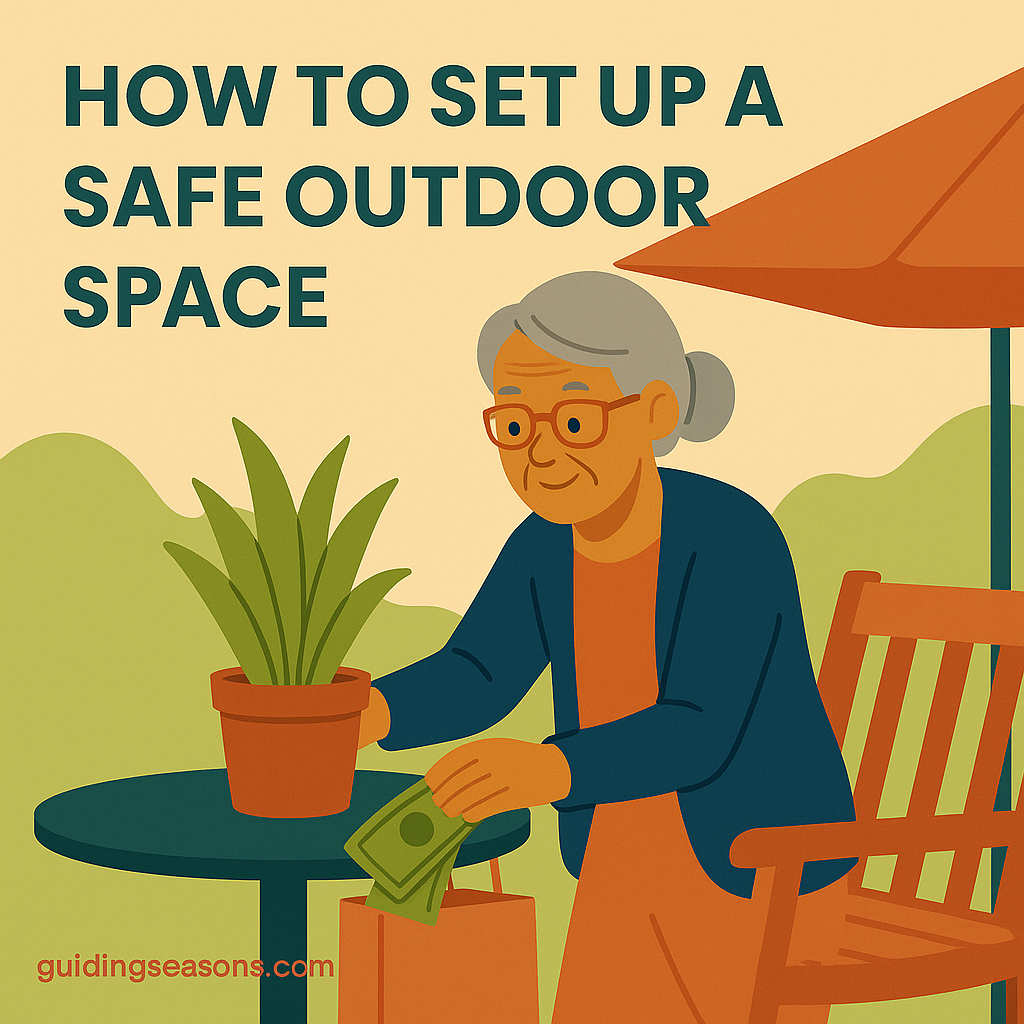
Here’s how to set up a safe outdoor space that can continue serving you as your needs change.
Ensure Paths and Walkways Are Clear
Start with the routes you use most often.
Walk from your door to your patio, garden, driveway, mailbox, or other frequently visited outdoor areas and look carefully at the ground.
Watch for:
- Loose rocks or gravel
- Fallen branches
- Cracked pavement
- Uneven stepping stones
- Raised concrete edges
- Exposed tree roots
- Garden hoses crossing pathways
- Wet or slippery surfaces
- Plants growing into walking areas
Even a relatively small change in surface height can become a tripping hazard.
Improve pathways by:
- Removing loose debris
- Repairing damaged walking surfaces
- Repositioning hoses and extension cords
- Trimming plants away from pathways
- Using appropriate slip-resistant surfaces
- Making frequently traveled routes wide enough for comfortable movement
If you use a cane, walker, or wheelchair, consider whether the pathway provides enough room to use it comfortably.
The National Council on Aging’s falls prevention resources offer additional information about reducing fall risks and maintaining safer environments as we age.
Add Good Outdoor Lighting
Outdoor lighting isn’t only decorative. It can make steps, pathways, changes in elevation, and obstacles easier to see.
Pay particular attention to:
- Front and back entrances
- Steps and stairs
- Walkways
- Patio and deck edges
- Driveways
- Garden paths
- Gates
- Changes in surface height
Consider motion-activated lighting near frequently used entrances so you don’t have to search for a switch while carrying groceries or other items.
Solar lights can be useful in some locations because they don’t require wiring, but make sure they provide enough illumination for the intended area. Decorative solar lights may not be bright enough to illuminate steps or significant hazards.
Check outdoor lights periodically and replace bulbs or batteries when necessary.
Install Stable Railings and Support
Steps and changes in elevation deserve special attention.
Consider appropriate support around:
- Outdoor stairs
- Porch steps
- Raised decks
- Ramps
- Sloped areas
- Frequently used entrances
Handrails should be secure enough to provide meaningful support. A loose railing can create a false sense of security and may be more dangerous than having no support at all.
Avoid relying on decorative railings, unstable furniture, door handles, or temporary bars for balance.
If you’re installing new handrails, ramps, or structural safety features, consider using a qualified professional and following applicable local building requirements.
Choose Safe, Comfortable Outdoor Seating
Outdoor seating should be comfortable, but it should also make sitting down and standing up relatively easy.
Look for chairs that offer:
- Sturdy construction
- Supportive armrests
- A comfortable seat height
- A stable base
- Good back support
- Weather-resistant materials
Very low chairs, deep lounge furniture, or unstable folding chairs may be difficult to get out of, particularly if strength or mobility has changed.
Place seating on a level, stable surface.
A small side table can also be helpful for keeping water, reading glasses, a phone, or a book within easy reach. Avoid placing tables where they narrow a frequently used walking path.
Create Shade and Plan for Hot Weather
A comfortable outdoor space should provide somewhere to get out of direct sunlight.
Shade options include:
- Patio umbrellas
- Shade sails
- Pergolas
- Canopies
- Covered porches
- Mature shade trees
Position seating so shade is available during the times of day when you normally use the area.
Remember that outdoor conditions can change quickly. A pleasant patio in the morning may become extremely hot in the afternoon.
Keep drinking water nearby and move indoors when conditions become uncomfortable.
Some medications and health conditions may also affect a person’s response to heat or sunlight. If you have questions about your individual risks, ask your healthcare provider or pharmacist.
The AARP HomeFit Guide provides additional ideas for making entrances, outdoor areas, and the rest of the home easier to navigate as needs change.
Add Slip-Resistant Surfaces
Outdoor surfaces can become slippery after rain, watering plants, or routine cleaning.
Pay attention to:
- Wooden decks
- Tile patios
- Concrete steps
- Ramps
- Pool areas
- Entryways
Depending on the surface, improvements might include:
- Appropriate slip-resistant coatings
- Exterior traction strips
- Properly secured outdoor mats
- Textured walking surfaces
- Promptly removing standing water
Be careful with outdoor rugs. A rug intended to improve comfort can become a tripping hazard if the edges curl, the material slides, or water collects underneath it.
If you use a rug or mat, make sure it lies flat and remains secure.
Keep the Area Free of Hazards
Outdoor spaces naturally accumulate debris, so regular maintenance matters.
Regularly remove:
- Fallen leaves
- Branches
- Loose garden tools
- Hoses
- Extension cords
- Empty pots
- Yard waste
- Toys or pet items
- Overgrown vegetation
Create designated storage locations for outdoor supplies so they don’t end up scattered across walking areas.
Pay extra attention after storms, gardening projects, deliveries, or visits from family members, since these activities can introduce new obstacles.
Add Plants That Are Easy to Maintain
Plants can make an outdoor area feel welcoming without requiring an elaborate garden.
Consider:
- Low-maintenance flowers
- Potted plants
- Herbs
- Raised garden beds
- Plants suited to your local climate
Raised garden beds and elevated containers may reduce the amount of bending or kneeling required for gardening.
Position containers carefully. A beautiful flowerpot shouldn’t narrow an important pathway or create an obstacle near a doorway.
You may also want to avoid plants with sharp thorns, spines, or branches near frequently traveled areas.
If pets or young children regularly visit, check whether the plants you choose could be harmful if touched or eaten.
Create a More Comfortable Gardening Area
If gardening is one of your favorite activities, organize the area around how you actually work.
Keep frequently used tools together and within comfortable reach.
Helpful additions may include:
- Raised planters
- Lightweight garden tools
- A stable gardening seat or bench
- A small cart for moving supplies
- An accessible water source
- Storage near the garden
Avoid carrying several heavy containers at once. Make multiple trips or use a suitable cart when necessary.
If a gardening task requires climbing a ladder, moving a heavy planter, or lifting a large bag of soil, consider asking someone for assistance.
Reduce Problems With Mosquitoes and Other Pests
Insects can make outdoor spaces uncomfortable, and some can carry disease.
One of the simplest steps is eliminating unnecessary standing water where mosquitoes may breed.
Check:
- Empty flowerpots
- Buckets
- Birdbaths
- Clogged gutters
- Watering cans
- Outdoor containers
- Tarps that collect rainwater
Empty or maintain these areas as appropriate.
Screens around a porch or patio may also provide a physical barrier against insects.
Rather than relying solely on citronella candles or so-called insect-repellent plants, use pest-control methods with evidence behind them and follow product directions carefully.
Be particularly cautious with open flames outdoors, especially around dry vegetation, fabric, pets, or oxygen equipment.
Store Tools and Outdoor Items Safely
Garden tools, hoses, and outdoor equipment should have designated storage locations.
Storage options include:
- Wall-mounted hooks
- Storage benches
- Garden sheds
- Weather-resistant storage boxes
- Small bins for hand tools
Store sharp tools with blades protected and keep heavier objects where they can be retrieved without unnecessary reaching or lifting.
Don’t leave rakes, shovels, hoses, or extension cords lying across walking paths.
After finishing an outdoor project, make putting equipment away part of the routine.
Make Outdoor Routines Easier
The safest outdoor space is one that works with your everyday habits.
Useful conveniences may include:
- A small garden cart
- Motion-activated lights
- Weatherproof storage
- Automatic or simplified watering systems
- An accessible outdoor faucet
- A designated place for outdoor footwear
- A table for commonly used items
Think about what you routinely carry outside.
If you usually bring a phone, water bottle, glasses, book, and sunscreen onto the patio, create a convenient place to keep those items rather than carrying everything back and forth individually.
Simple organization can reduce unnecessary trips and distractions.
Prepare for Changes in Weather
Outdoor safety isn’t the same every day.
Before spending extended time outside, consider:
- Heat
- Direct sunlight
- Rain
- Wind
- Cold temperatures
- Wet or icy surfaces
- Air quality when relevant
Secure umbrellas, lightweight furniture, and decorations when strong winds are expected.
After rain, check decks, stairs, and walkways before assuming they’re safe to use.
Seasonal maintenance is also important. Leaves that weren’t a problem in summer may cover pathways in fall, while winter weather can create entirely different hazards.
Keep Emergency Access Simple
You should have a straightforward way to contact someone if you need assistance while outdoors.
Consider:
- Carrying your phone
- Keeping it adequately charged
- Using a medical alert device if appropriate for your circumstances
- Keeping gates and important pathways accessible
- Making sure your address is visible for emergency responders
- Letting someone know if you’re doing strenuous work outside alone
If you have a large property, think about whether someone could easily locate you if you fell or became ill.
Emergency access also means keeping driveways, gates, and entrances free from unnecessary obstacles.
Try a 30-Foot Outdoor Safety Check
You don’t need to evaluate your entire property at once.
Start with the first 30 feet outside the door you use most often.
Walk that route slowly and ask:
- Is the surface level and stable?
- Are there hoses, cords, roots, or objects in the way?
- Are steps clearly visible?
- Is there a secure handrail where needed?
- Would this route be easy to navigate after dark?
- Does water collect anywhere after rain?
- Could someone using a cane or walker move through comfortably?
Address the problems you find before moving on to less frequently used areas.
This simple approach turns a large home-safety project into a series of manageable improvements.
Add Personal Comfort Touches
Once the basic safety considerations are addressed, make the space somewhere you actually want to spend time.
Consider adding:
- Comfortable outdoor cushions
- A small table
- Weather-resistant pillows
- A fountain or other gentle water feature
- Wind chimes if you enjoy them
- A bird feeder
- Soft outdoor lighting
- Plants or flowers
- A reading area
Keep decorative items away from primary walking routes and make sure they don’t create additional maintenance or tripping hazards.
Comfort is personal. A peaceful outdoor space might mean a colorful garden for one person and a simple chair under a shaded porch for someone else.
Review Your Outdoor Space Regularly
Outdoor environments change more quickly than indoor rooms.
Plants grow. Pavement cracks. Railings loosen. Lights burn out. Weather damages furniture and surfaces.
Every few months, take a short walk around the area and check:
- Paths and pavement
- Steps
- Railings
- Outdoor lighting
- Furniture
- Mats and rugs
- Garden hoses
- Plants near pathways
- Gates and entrances
- Storage areas
Addressing a small problem early may prevent it from becoming a larger repair—or a safety concern.
Final Thoughts
A safe outdoor space can provide a comfortable place to read, garden, visit with family, enjoy a meal, or simply spend a little time outside.
You don’t need to redesign the entire yard. Start with the route you use most frequently. Clear the pathway, improve lighting, check steps and railings, provide stable seating, and make sure shade and water are readily available when conditions are warm.
Then add improvements gradually according to your needs.
The best outdoor space combines safety, accessibility, comfort, and personal enjoyment. With thoughtful planning and regular maintenance, even a small porch, patio, balcony, or garden can become an inviting extension of your home—a place where you can comfortably relax and enjoy the outdoors for years to come.