A safe, well-organized home can play an important role in maintaining independence, confidence, and quality of life as we age. Everyday features that once seemed harmless—such as a loose rug, a dark hallway, a crowded walkway, or items stored on a high shelf—can gradually become more difficult or risky to navigate.
Fortunately, improving home safety does not necessarily mean undertaking an expensive renovation. Many useful changes are surprisingly simple: moving furniture, improving lighting, securing rugs, reorganizing cabinets, installing grab bars, or putting frequently used belongings within easier reach.
Fall prevention deserves particular attention. The Centers for Disease Control and Prevention (CDC) reports that more than 1 in 4 older adults report falling each year, resulting in approximately 37 million falls. The CDC emphasizes that falls are not simply an unavoidable part of getting older and that steps can be taken to reduce the risk.
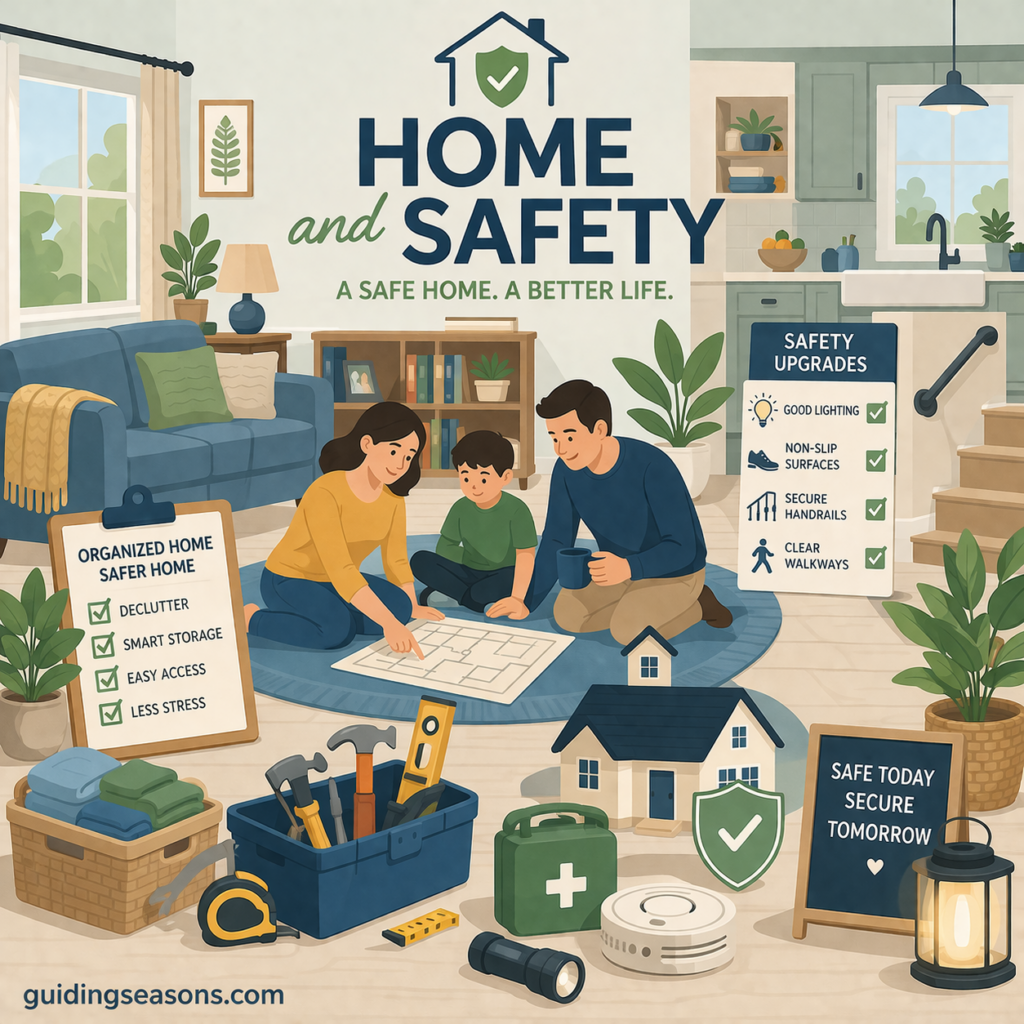
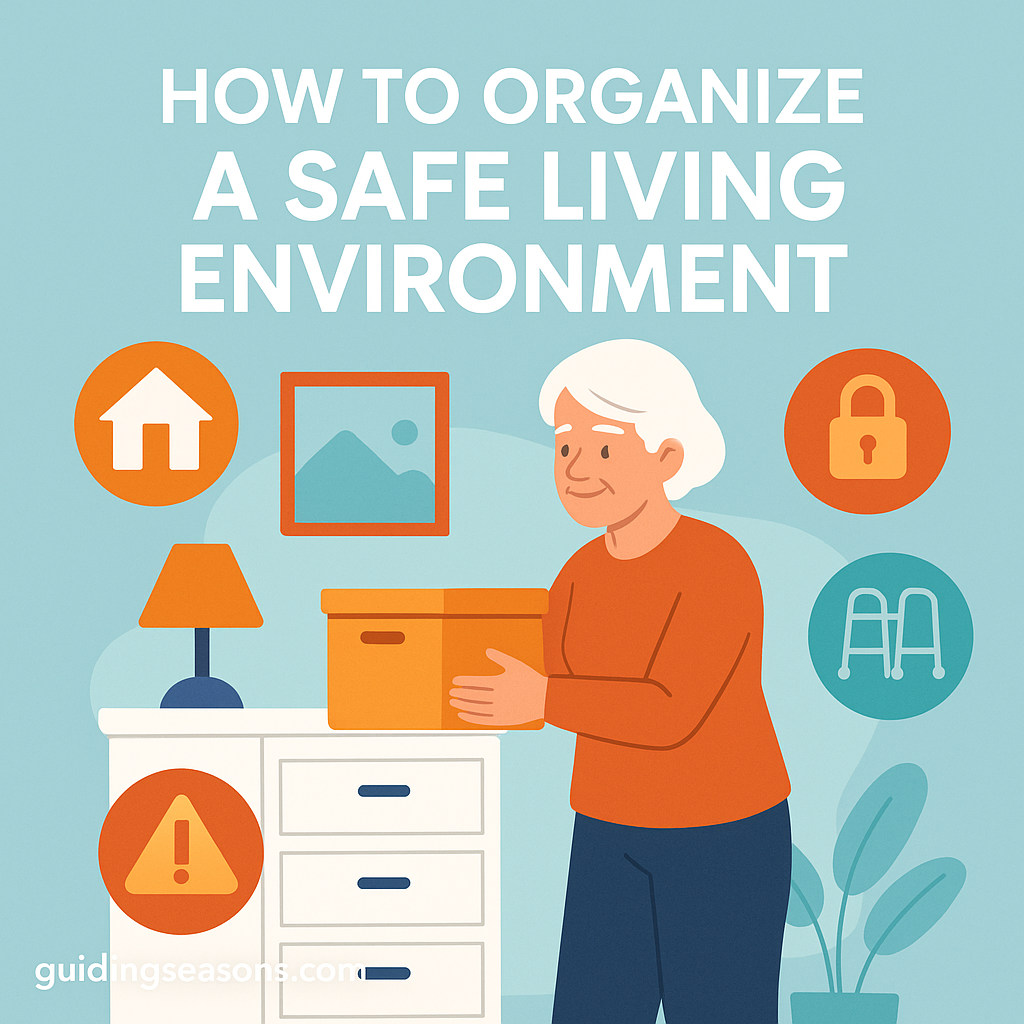
Creating a safer living environment begins with looking at your home differently. Instead of organizing only for appearance, organize for visibility, accessibility, stability, and ease of movement.
Here are practical ways to make your home safer and more comfortable for everyday living.
1. Start With a Room-by-Room Safety Walkthrough
Begin by walking slowly through your home and examining each area from a safety perspective.
Look for anything that is:
- Difficult to reach
- Easy to trip over
- Poorly illuminated
- Unstable
- Crowded or cluttered
- Difficult to open or operate
- Slippery when wet
- Blocking a normal walking path
Pay particular attention to places you use at night, such as the route from your bedroom to the bathroom.
The National Institute on Aging (NIA) recommends going through the home room by room, correcting immediate dangers such as poor lighting and loose stair railings first, and then addressing other improvements that can make the home safer.
Write down what you notice rather than trying to fix everything immediately. You can then divide the list into urgent problems and improvements that can be completed gradually.
For example, a loose stair railing should be repaired promptly, while reorganizing a linen closet can probably wait.
2. Remove Clutter and Create Clear Walking Paths
One of the simplest home-safety improvements is keeping floors and walking areas clear.
Shoes, electrical cords, magazines, bags, boxes, pet toys, and other everyday belongings can become tripping hazards.
Walk through the routes you use most often, including:
- Bedroom to bathroom
- Living room to kitchen
- Front door to living area
- Hallways
- Stairs
- Routes to exterior doors
Keep these areas as open as possible.
Use baskets, shelves, cabinets, hooks, or storage bins to give frequently misplaced items a permanent location.
Be cautious with area rugs. The National Institute on Aging recommends removing area rugs or ensuring carpeting is firmly secured to the floor as part of reducing fall hazards.
Electrical cords should also be positioned away from walking paths whenever possible.
The goal is simple: you should be able to walk through your home without repeatedly stepping around or over objects.
3. Improve Lighting Throughout the Home
Good lighting makes obstacles easier to see and can make everyday activities more comfortable.
Check every room during both daylight and nighttime hours. A hallway that looks perfectly bright at noon may be surprisingly dark at 10 p.m.
Consider:
- Brighter bulbs where appropriate
- Bedside lamps
- Nightlights
- Motion-activated lights
- Illuminated light switches
- Outdoor entrance lighting
- Additional lamps in dark corners
Stairways deserve particular attention. Make sure the entire staircase is visible, including the first and last steps.
The NIA specifically recommends good lighting at the top and bottom of stairs as part of making a home safer for older adults.
Also think about accessibility. A lamp is not especially useful if you must cross a dark room to reach it. Position switches and lamps where they can be reached before entering a dark space whenever possible.
4. Arrange Furniture for Comfortable Movement
Furniture placement can have a major effect on how easily you move around your home.
Avoid layouts that require squeezing between tables, chairs, sofas, or cabinets.
If you use a cane or walker—or think you might use one in the future—consider whether your current arrangement provides enough room.
You may find that removing one unnecessary chair or side table makes an entire room easier to navigate.
Frequently used items should also be close to where you normally need them.
For example, if you spend your evenings in a particular chair, keep your reading glasses, television remote, phone, tissues, and other commonly used items on a stable table nearby.
That reduces unnecessary trips across the room and discourages stretching or leaning awkwardly to retrieve something.
Make sure furniture itself is stable. A lightweight table that slides when you touch it should never be treated as a support when standing up.
5. Make the Bathroom Safer
Bathrooms deserve special attention because water and smooth surfaces can create slipping hazards.
Helpful improvements can include:
- Grab bars near the toilet
- Grab bars in or near the shower
- Nonslip strips or surfaces
- Shower chair or stool when appropriate
- Handheld showerhead
- Easily accessible towels
- Toiletries within comfortable reach
- Adequate lighting
- Nightlights for nighttime visits
The National Institute on Aging recommends grab bars near toilets and in tubs or showers, along with nonslip strips on surfaces that may become wet.
Grab bars should be securely installed and designed to support a person’s weight. A towel rack should not be used as a substitute.
Keep soap, shampoo, towels, and other necessities where they can be reached without excessive bending, twisting, or stretching.
6. Organize the Kitchen Around What You Use Most
A well-organized kitchen can reduce unnecessary reaching, bending, lifting, and climbing.
Start by identifying what you use every day.
Common items might include:
- Plates
- Drinking glasses
- Coffee mugs
- Pots and pans
- Cooking utensils
- Frequently used foods
- Coffee maker or kettle
Move these items to locations that are easy to reach.
Avoid storing something you use every morning on the highest cabinet shelf simply because that is where it has always been kept.
Heavy appliances and cookware deserve special consideration. Store them somewhere that does not require lifting a heavy object above shoulder height.
Try to minimize the need for step stools. If you rarely use something, a high cabinet may be appropriate. Everyday items should be much easier to access.
You can also use clear containers, drawer organizers, labels, and rotating organizers to make items easier to find.
Good organization reduces the temptation to climb, stretch, or search through crowded cabinets.
7. Improve Bedroom Safety
Your bedroom should be easy to navigate even when you are tired or waking during the night.
Keep the area between your bed and doorway free of clutter.
Consider having:
- A stable nightstand
- Bedside lamp
- Flashlight
- Phone
- Eyeglasses
- Water
- Nightlight
- Clear route to the bathroom
Think carefully about bed height as well. Ideally, getting into and out of bed should feel comfortable rather than requiring a difficult climb or a deep upward push.
Avoid allowing clothing, shoes, blankets, charging cables, or other objects to accumulate on the floor beside the bed.
A simple example illustrates why this matters. Imagine waking at 2:00 a.m. to use the bathroom. You are sleepy, the room is dark, and your glasses are on the nightstand. A pair of shoes left in the walking path suddenly becomes much more significant than it seemed during the afternoon.
Organizing for those less-than-perfect moments is an important part of home safety.
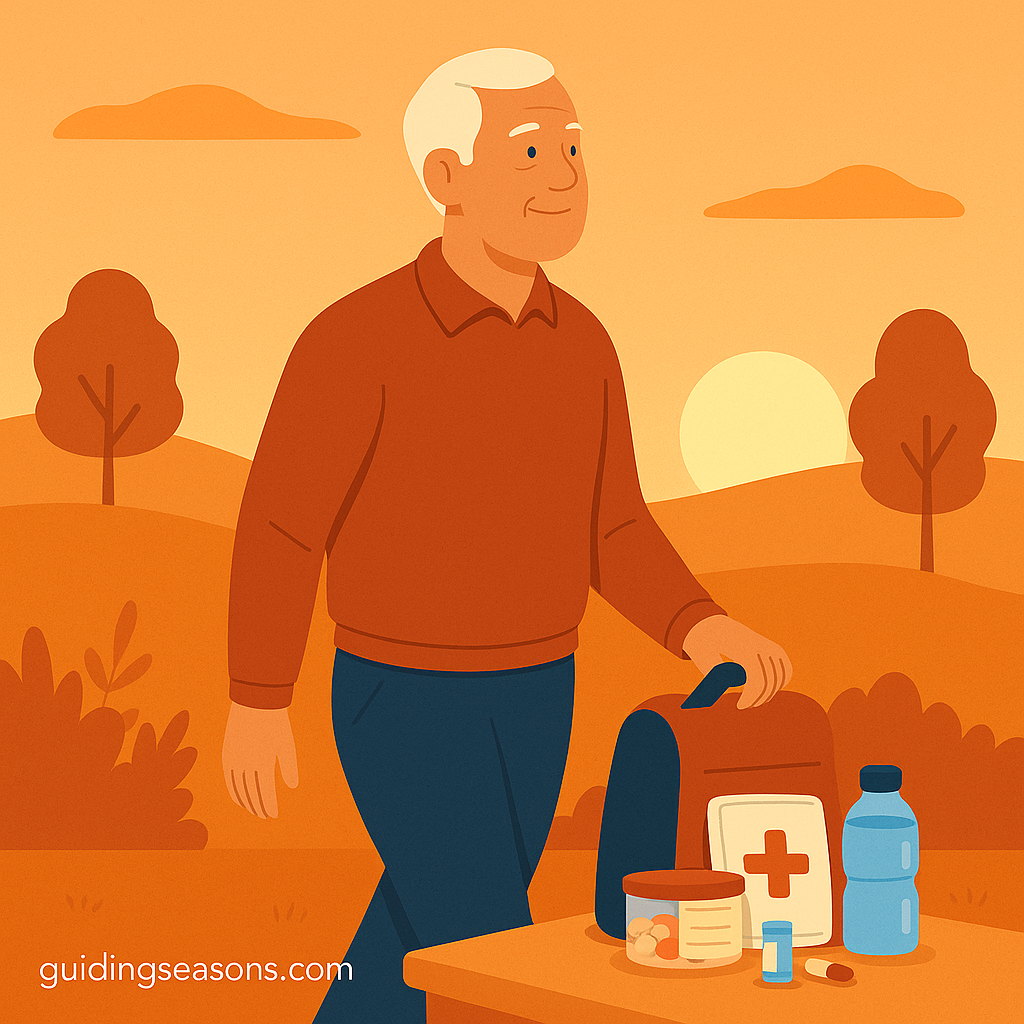
8. Store and Manage Medications Carefully
Medication organization is another important part of maintaining a safe living environment.
Keep medications in a consistent location unless particular medicines require special storage.
Helpful approaches may include:
- Clearly labeled containers
- Pill organizers
- Written medication schedules
- Phone reminders
- Medication lists
- Refill reminders
Keep an updated list of medications that includes the name, dose, and instructions for each medicine.
It is also worth periodically discussing medications with your healthcare provider or pharmacist. Some medications can cause dizziness, sleepiness, or confusion, which can contribute to fall risk. The NIA recommends discussing medication side effects with a healthcare professional as part of fall prevention.
Never stop or change a prescription medication simply because you are concerned about a possible side effect. Discuss those concerns with the appropriate healthcare professional.
9. Make Stairs Easier to Navigate
Stairs require good visibility, secure footing, and reliable support.
Check indoor and outdoor staircases for:
- Loose steps
- Uneven surfaces
- Poor lighting
- Unsecured carpeting
- Clutter
- Missing or loose handrails
Avoid storing objects on stairs, even temporarily.
If you routinely place laundry, mail, shoes, or other belongings on a step to carry upstairs later, find another temporary storage location.
Handrails should be secure enough to provide actual support. The CDC also recommends railings on both sides of stairs as a way of making the home safer and reducing fall risk.
10. Check Entrances and Outdoor Areas
Home safety begins before you walk through the front door.
Inspect:
- Porches
- Steps
- Driveways
- Walkways
- Patios
- Garages
- Exterior lighting
Look for cracks, uneven pavement, loose stones, slippery surfaces, leaves, hoses, tools, or other obstacles.
Make sure steps and ramps have appropriate handrails where necessary.
Outdoor lighting is particularly useful around entrances, stairs, driveways, and pathways used after dark. Motion-activated lighting can provide illumination without requiring you to locate a switch.
Keep gardening tools, hoses, extension cords, and other equipment stored away when not in use.
11. Use Home Safety Technology Thoughtfully
Technology can add another layer of safety, but it should complement basic home organization rather than replace it.
Depending on your needs, useful devices might include:
- Smoke alarms
- Carbon monoxide alarms
- Medical alert systems
- Video doorbells
- Smart lighting
- Motion sensors
- Automatic timers
- Smart plugs
According to the U.S. Fire Administration, smoke alarms should be installed inside every bedroom, outside each sleeping area, and on every level of the home, including the basement. The agency also recommends testing smoke alarms monthly and replacing them when they are 10 years old.
Carbon monoxide alarms should be installed and maintained according to manufacturer instructions and applicable local requirements.
Medical alert systems may also provide reassurance for someone who lives alone or has an increased risk of falling.
Choose technology that you are comfortable using. A complicated device that remains unplugged or ignored does little to improve safety.
12. Create an Emergency Information Area
Emergency information should be easy to locate.
Consider keeping an emergency sheet in a clearly identified location containing:
- Emergency contacts
- Healthcare provider information
- Medication list
- Allergies
- Insurance information
- Important medical information
Some households keep a copy on the refrigerator and another with important documents.
You might also give a spare house key to a trusted relative, neighbor, or friend when appropriate.
Make sure the people close to you know where emergency information is stored.
13. Keep Up With Basic Home Maintenance
Small household problems can gradually become safety hazards.
Periodically inspect your home for:
- Loose railings
- Worn carpeting
- Leaking plumbing
- Broken steps
- Loose floorboards
- Burned-out light bulbs
- Damaged electrical cords
- Unstable furniture
- Sticking doors
- Malfunctioning appliances
Do not postpone a repair simply because the problem seems minor.
A slightly loose railing may not seem urgent until someone needs it for support.
Consider creating a simple home-maintenance checklist and reviewing it every few months.
14. Reevaluate Your Home as Your Needs Change
A home that works perfectly today may need adjustments later.
Changes in vision, hearing, balance, strength, flexibility, or mobility can affect how comfortably you use different parts of your home.
That is why home safety should be treated as an ongoing process rather than a one-time project.
The National Institute on Aging recommends periodically reevaluating home safety as a person’s needs change.
If a particular daily activity becomes difficult—such as stepping into the bathtub, climbing stairs, reaching kitchen cabinets, or getting out of a chair—do not automatically assume you simply have to tolerate the inconvenience.
It may be a sign that the environment needs to change.
A healthcare professional, physical therapist, or occupational therapist may also be able to recommend adaptations based on your individual needs.
Final Thoughts
Organizing a safe living environment is about more than preventing accidents. It is about creating a home that supports independence, comfort, confidence, and everyday convenience.
Start with the simplest improvements.
Clear walking paths. Improve dark areas. Secure rugs and carpeting. Move frequently used belongings within comfortable reach. Check railings and stairs. Make bathrooms less slippery. Keep medications organized. Remove unnecessary obstacles.
Then walk through your home again and ask a simple question: Does this space make everyday life easier or harder?
You do not have to redesign your entire home at once. Start with one room or even one problem. Removing a loose rug today, adding a nightlight tomorrow, and reorganizing a kitchen cabinet this weekend are all meaningful improvements.
Small changes can add up to a home that is easier to navigate and better suited to your needs over time.
A safer home should not feel restrictive. Ideally, good home organization does the opposite—it allows you to move around more confidently, complete everyday activities more comfortably, and continue enjoying your home with greater peace of mind.