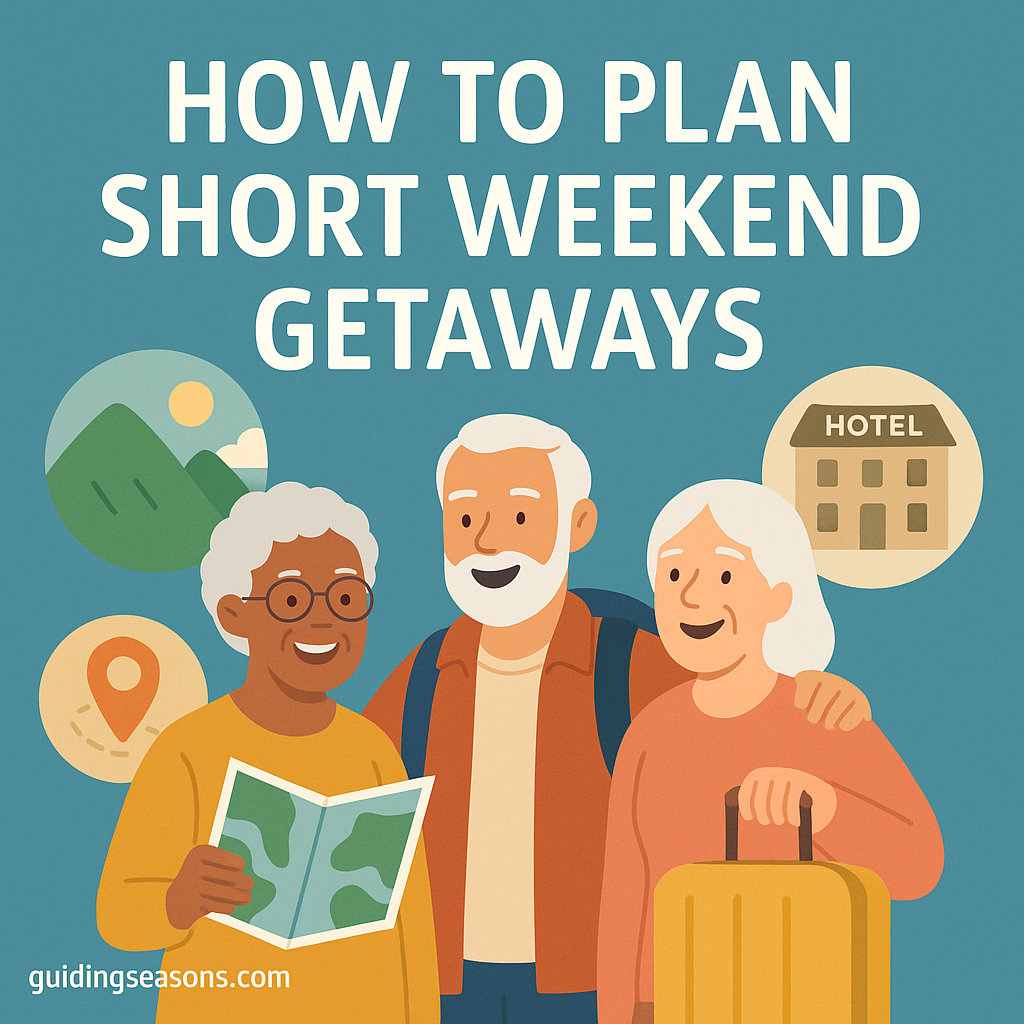
Short weekend getaways are one of the easiest ways to enjoy travel without the expense, complicated planning, or physical demands that can come with a long vacation. For retirees and older adults, a two- or three-day trip can provide just enough time for a refreshing change of scenery while still allowing you to maintain your normal routine at home.
You don’t need to fly across the country or create a packed itinerary to have a memorable experience. A quiet coastal town, scenic mountain community, historic district, nearby lake, or state park may be only a couple of hours away.
The key is to design the trip around your interests, energy level, budget, and comfort. Instead of trying to see everything, focus on enjoying a few experiences at a relaxed pace.
Here’s how to plan a simple, comfortable weekend getaway that leaves you feeling refreshed rather than exhausted.
1. Choose a Destination That Matches Your Energy Level
Start by thinking about how much traveling you actually want to do.
For many weekend trips, a destination within roughly 1 to 3 hours of home is a practical starting point. A shorter journey means less of your weekend is spent getting there and more time can be spent enjoying the destination.
Before choosing a location, ask yourself:
- How long am I comfortable driving or riding in a car?
- Do I want relaxation, sightseeing, or a little of both?
- Would I rather visit nature, a city, or a quiet town?
- How much walking do I want to do?
- Am I traveling alone, with my spouse, with friends, or with family?
- Would I enjoy returning to a familiar destination or discovering somewhere new?
Senior-friendly weekend destinations might include:
- Nearby lakes or beaches
- Historic towns
- Scenic state or national parks
- Countryside inns
- Hot springs or wellness retreats
- Art districts
- Museums
- Botanical gardens
- Wildlife preserves
- Small mountain communities
- Coastal towns
Don’t assume a destination has to be famous to be worthwhile. Some of the most enjoyable weekend trips happen in places that are close enough to visit without a major travel commitment.
2. Plan Around Comfort and Accessibility
A beautiful destination isn’t much fun if getting around it becomes stressful.
Before booking accommodations, spend a few minutes researching accessibility and transportation. Even travelers without significant mobility limitations may appreciate shorter walking distances, elevators, comfortable seating, and convenient parking.
Check details such as:
- Does the hotel have an elevator?
- How far is the room from parking?
- Are there stairs at the property?
- Is an accessible bathroom available if needed?
- Are restaurants within a comfortable distance?
- Is parking available near major attractions?
- Are benches or rest areas available at attractions?
- Are walking surfaces paved, gravel, or uneven?
- Can you use a shuttle, trolley, taxi, or rideshare instead of walking?
Call the hotel or attraction when information online isn’t clear. Asking one or two questions before leaving can prevent an uncomfortable surprise later.
Accessibility doesn’t necessarily mean avoiding activity. It simply means choosing activities that fit your abilities and preferences.
3. Keep Your Weekend Itinerary Simple
One of the easiest ways to turn a relaxing weekend into an exhausting one is to schedule too much.
You don’t need to fill every hour.
A useful rule is to choose one main activity each day, with smaller optional activities around it.
For example:
Saturday
Morning: Breakfast at a local café
Late morning: Botanical garden
Afternoon: Hotel break or leisurely lunch
Evening: Early dinner and sunset walk
Sunday
Morning: Relaxed breakfast
Late morning: Scenic drive
Afternoon: Browse a local market
Early afternoon: Drive home
That is already enough for a memorable weekend.
You could also build a day around combinations such as:
- Morning garden walk → Afternoon café → Evening performance
- Scenic drive → Easy nature walk → Sunset dinner
- Museum visit → Hotel break → Local restaurant
- Historic district → Lunch → Antique shops
- Boat tour → Waterfront lunch → Relaxing afternoon
Leave some open space in the schedule. You may discover a shop, viewpoint, restaurant, or attraction you didn’t know about before arriving.
Spontaneous discoveries often become the most memorable parts of a short trip.
4. Choose Your Lodging Carefully
For a two-night getaway, location can matter more than luxury.
Saving $25 on a hotel isn’t necessarily worthwhile if you have to drive 30 minutes each way to reach everything you want to see.
Look for accommodations near your primary activities and restaurants.
Depending on your preferences, consider:
- Traditional hotels
- Small inns
- Bed-and-breakfasts
- Resorts
- Cabins
- Vacation rentals
- Lodges near parks
Before booking, check recent reviews for recurring comments about noise, cleanliness, parking, stairs, mattresses, and accessibility.
Also look at cancellation policies. Flexible reservations can provide additional peace of mind if your plans need to change.
5. Pack Light but Don’t Forget the Essentials
A weekend trip shouldn’t require a huge suitcase.
Start with comfortable clothing that can be layered. Weather can change quickly, particularly near the coast or in mountain areas.
Useful items include:
- Comfortable walking shoes
- Lightweight clothing layers
- Prescription medications
- A little extra medication in case of delays
- Reusable water bottle
- Small snacks
- Sunglasses
- Sunscreen
- Small day bag
- Phone charger
- Portable battery pack
- Personal identification
- Health insurance information
- Reservation confirmations
For travelers who take regular medications, preparation deserves extra attention. The Centers for Disease Control and Prevention recommends bringing enough medication for the duration of a trip plus extra in case travel is unexpectedly delayed. The CDC also recommends keeping useful health information available while traveling.
For a simple domestic weekend getaway, you probably won’t need an elaborate travel health kit. The goal is simply to have your everyday essentials readily available.
6. Look for Senior Discounts
One advantage of retirement travel is that senior discounts may help stretch your travel budget.
Potential discounts can be found at:
- Museums
- Hotels
- Public transportation systems
- Tours
- Parks
- Entertainment venues
- Local attractions
Always check the organization’s current policy because the qualifying age varies.
One particularly useful option for travelers who enjoy public lands is the federal America the Beautiful Senior Pass. According to the National Park Service, U.S. citizens and permanent residents age 62 and older can purchase a Senior Annual Pass for $20 or a Senior Lifetime Pass for $80. The pass covers entrance or standard amenity fees at participating federal recreation lands and may also provide discounts on certain amenity fees.
If visiting parks is part of your retirement travel plans, the lifetime option could become especially valuable over multiple trips.
7. Choose Low-Stress Transportation
Getting there is part of the getaway, so choose transportation that doesn’t create unnecessary stress.
For nearby destinations, driving often provides the most flexibility. You can stop whenever you want, bring extra belongings, and adjust your schedule.
Other possibilities include:
- Scenic train trips
- Regional rail
- Organized bus tours
- Traveling with friends or family
- Rideshare services at the destination
- Hotel or attraction shuttles
If you’re driving, avoid creating a schedule that requires leaving during heavy traffic whenever possible.
A two-hour drive on quiet roads can feel completely different from two hours of congested highway driving.
If another person is traveling with you, consider sharing driving responsibilities.
8. Build Rest Into the Trip
Rest doesn’t have to be something you do only after becoming tired.
Make it part of the itinerary.
For example, after visiting a museum from 10:00 a.m. to noon, you might have lunch and return to your hotel for an hour before going out again.
This gives you time to relax, recharge your phone, change clothes, read, or simply enjoy the room.
Slow mornings can also make a getaway more enjoyable. Instead of setting an alarm for 6:00 a.m. so you can squeeze in another attraction, enjoy breakfast and begin your activities when you’re ready.
Remember: this isn’t a race.
9. Add a Little Adventure—On Your Terms
Adventure doesn’t have to mean strenuous hiking, rafting, or climbing mountains.
Adventure simply means experiencing something outside your normal routine.
Try:
- Eating at a restaurant you’ve never visited
- Taking a harbor cruise
- Riding a historic trolley
- Exploring an easy nature trail
- Visiting a farmers market
- Attending a local performance
- Touring a historic home
- Taking photographs at a scenic overlook
- Trying a regional specialty
- Visiting a small museum
- Watching wildlife
- Exploring a botanical garden
Even something as simple as having breakfast overlooking the ocean instead of at your kitchen table can make a weekend feel special.
Choose activities because they genuinely interest you—not because you feel obligated to check items off a sightseeing list.
10. Create a Simple Weekend Budget
Short trips can be relatively affordable, but small expenses add up quickly.
Before leaving, estimate four basic categories:
- Transportation
- Lodging
- Food
- Activities
For example, imagine a couple taking a two-night getaway within driving distance:
Hotel: $300
Gas and parking: $70
Meals: $180
Attractions: $60
Coffee, snacks, and miscellaneous spending: $40
Estimated weekend total: $650
This is only an illustrative example—actual prices can be much higher or lower depending on the destination and travel style—but creating a rough estimate makes it easier to decide whether a trip fits your budget.
You can also create a dedicated “weekend getaway” fund. Setting aside even $50 per month equals $600 over a year, which could pay for much or all of a modest nearby getaway.
11. Have a Backup Plan
Weekend trips are short, so bad weather can have an outsized effect on your plans.
Before leaving, identify at least one indoor alternative.
If Saturday’s plan is a botanical garden but heavy rain arrives, your backup might be:
- Museum
- Art gallery
- Historic home
- Indoor market
- Local theater
- Long lunch at a highly rated restaurant
You don’t need to create an entirely separate itinerary. One backup activity is usually enough.
Also save important addresses, reservation details, and phone numbers on your phone before leaving.
12. Prioritize Enjoyment Over Seeing Everything
The biggest mistake you can make on a weekend getaway is trying to experience an entire destination in 48 hours.
You don’t have to.
Give yourself permission to skip attractions.
Spend an extra hour drinking coffee. Sit near the water. Browse a bookstore. Return to the hotel early. Take an afternoon nap.
Travel can become much more enjoyable when you stop measuring success by the number of attractions you visited.
The goal isn’t to come home with an impressive checklist.
It’s to come home feeling glad you went.
13. Capture the Memories
Short trips deserve to be remembered too.
Use your phone or camera to photograph:
- Scenic views
- Interesting architecture
- Meals
- Local landmarks
- Your travel companion
- Wildlife
- Flowers and gardens
- Unexpected discoveries
Try taking at least one photograph together if you’re traveling with someone. Travelers often return home with hundreds of pictures of landscapes but very few pictures of themselves enjoying the experience.
After several weekend trips, consider creating a digital or printed travel scrapbook. Include photographs, ticket stubs, postcards, restaurant names, and a few sentences about what you enjoyed.
Over time, these small adventures can become an important record of your retirement years.
Final Thoughts
Short weekend getaways prove that meaningful travel doesn’t require flying thousands of miles or spending weeks away from home.
A destination just a couple of hours away can provide new scenery, interesting food, beautiful landscapes, cultural experiences, and the simple pleasure of breaking out of your everyday routine.
Start small. Pick somewhere you’ve been curious about within a comfortable driving distance. Book a convenient place to stay, choose one main activity for each day, pack lightly, and leave plenty of room for rest and spontaneity.
Most importantly, plan the getaway around your definition of enjoyment.
Retirement travel doesn’t need to be fast, ambitious, or exhausting to be worthwhile. Sometimes two nights away, a scenic drive, a good meal, and somewhere new to explore are all you need to return home refreshed—and already thinking about where you’d like to go next.