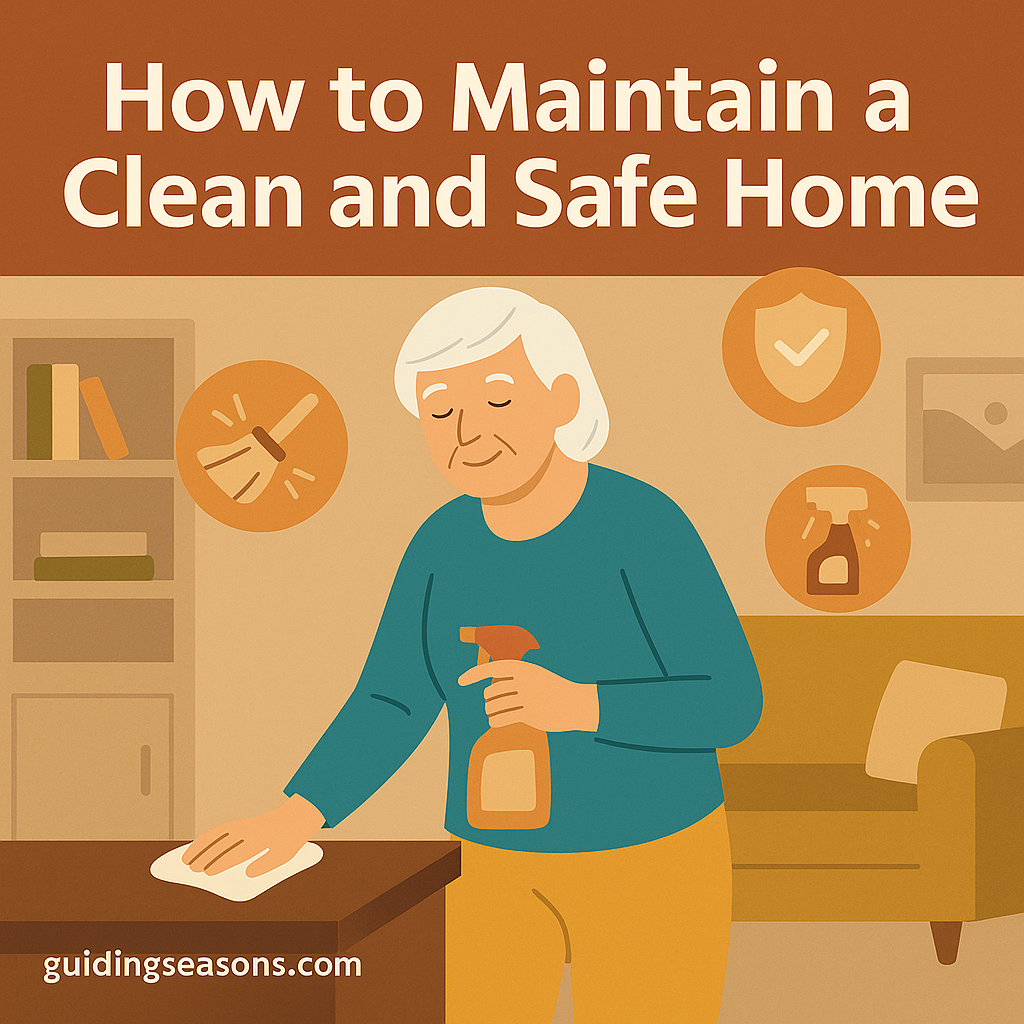
A clean and safe home can make everyday life feel more comfortable, manageable, and independent. As we get older, simple household tasks may take more energy, and small hazards that once seemed harmless can become more important to address.
Cluttered walkways, poor lighting, wet bathroom floors, hard-to-reach storage, and heavy cleaning tools can all make routine tasks more difficult. The goal is not to keep your home perfectly spotless. It is to create a living space that is easy to move through, easy to maintain, and supportive of your daily needs.
The Centers for Disease Control and Prevention (CDC) recommends making the home safer by removing tripping hazards, improving lighting, and adding supports such as grab bars and stair railings to help reduce fall risk among older adults. CDC — Preventing Falls and Hip Fractures
A practical approach is to combine light cleaning, simple organization, and routine safety checks.
Here are some of the most useful ways to maintain a clean and safe home without making the process overwhelming.
1. Start by Reducing Clutter
Cleaning becomes much easier when there are fewer objects in the way.
You do not need to empty entire rooms. Start with small areas such as:
- A kitchen counter
- A bedside table
- A bathroom shelf
- A coffee table
- One section of a closet
Look for items you no longer use, duplicates, old papers, or belongings that do not have a clear purpose.
You might sort items into three simple categories:
- Keep
- Donate or give away
- Discard or recycle
This makes decisions easier than creating too many categories.
Decluttering also improves safety because fewer items on floors and furniture mean fewer things to trip over or bump into.
Pay particular attention to:
- Shoes near doorways
- Boxes in hallways
- Stacks of magazines
- Bags on the floor
- Small stools
- Electrical cords
Try to create clear, direct pathways through every frequently used room.
2. Keep Walkways Open and Easy to Navigate
A clean home should also be easy to move through.
Walk through your usual routes and ask whether anything forces you to step around furniture, squeeze between objects, or change direction unnecessarily.
Important routes include:
- Bedroom to bathroom
- Living room to kitchen
- Front door to main living area
- Hallways
- Stairways
Move furniture if needed to create wider paths.
Check rugs as well. Loose rugs may slide or curl at the edges. The CDC recommends removing throw rugs or securing them to help reduce tripping hazards. CDC — Older Adult Falls
If a rug is difficult to keep flat, removing it may be the simplest option.
Electrical cords should also be routed along walls rather than across walking areas whenever possible.
3. Use a Simple Cleaning Schedule
Trying to clean the entire house in one day can be tiring.
A better approach is to divide tasks across the week.
For example:
Monday: Dust main surfaces.
Tuesday: Clean bathroom sink and counters.
Wednesday: Vacuum or sweep high-traffic areas.
Thursday: Wipe down kitchen surfaces.
Friday: Laundry and linens.
Weekend: Light tidying or rest.
This type of routine spreads the work out and helps prevent tasks from piling up.
You do not have to follow a rigid schedule. The purpose is to keep cleaning manageable.
Even 15 minutes a day for five days equals 75 minutes of cleaning per week. That can be enough to maintain many important areas without requiring a long, exhausting cleaning session.
Consistency usually matters more than intensity.
4. Use Lightweight, Easy-to-Handle Cleaning Tools
Cleaning tools should reduce physical effort, not create more of it.
Look for tools that are comfortable to hold and easy to move.
Helpful options include:
- Lightweight vacuums
- Long-handled dusters
- Spray mops
- Reacher tools
- Easy-grip brushes
- Lightweight laundry baskets
Long-handled tools can reduce the need to bend or stretch.
A lightweight vacuum may be easier to maneuver than a heavy upright model, especially around furniture.
Avoid climbing onto chairs or stools to reach high places. If something is difficult to clean safely, consider using an extension tool or asking someone for help.
5. Keep the Kitchen Organized and Safe
The kitchen benefits from both regular cleaning and thoughtful organization.
Start by keeping counters relatively clear. Too many appliances, papers, containers, and utensils can reduce workspace and make spills harder to notice.
Store frequently used items within comfortable reach.
Good places for everyday items include:
- Middle shelves
- Waist-height drawers
- Front sections of cabinets
- Counter-level storage
Avoid placing heavy cookware or appliances on high shelves.
Clean spills as soon as possible, especially water or grease on the floor.
Also check that:
- Stove knobs are easy to read.
- Pot handles are turned away from the edge.
- Dish towels are kept away from burners.
- Electrical cords are in good condition.
- Expired food is removed periodically.
A five-minute kitchen reset at the end of the day can help prevent clutter from building up.
6. Pay Extra Attention to Bathroom Safety
Bathrooms deserve special attention because water and smooth surfaces can increase the chance of slipping.
Keep the floor dry and uncluttered.
Consider using:
- Slip-resistant flooring or mats
- Secure grab bars
- A shower chair
- A handheld showerhead
- Good overhead lighting
Grab bars should be properly installed and designed to support body weight. A towel rack should not be used as a substitute.
Keep toiletries organized so you do not have to reach awkwardly while bathing.
Store commonly used items where they can be reached without bending deeply or stretching overhead.
After bathing, wipe up excess water promptly.
7. Improve Indoor Air Quality
A clean home also includes clean air.
Dust, smoke, pet dander, mold, and strong chemical odors can affect comfort.
Simple steps include:
- Changing HVAC filters as recommended
- Vacuuming dust and pet hair
- Keeping vents clear
- Using exhaust fans
- Opening windows when outdoor conditions are suitable
If you use an air purifier, choose one that is appropriate for the room size and follow the manufacturer’s filter-replacement schedule.
Be cautious with strongly scented cleaning products if they irritate your eyes or breathing.
Never mix cleaning chemicals unless the product directions specifically say it is safe.
Some combinations can produce dangerous fumes.
8. Keep Dust Under Control
Dust can build up on furniture, vents, ceiling fans, and electronics.
Instead of trying to dust the entire house at once, focus on high-use rooms.
Use a slightly damp microfiber cloth or another suitable cleaning tool to reduce airborne dust.
Prioritize:
- Bedside tables
- Living room surfaces
- Kitchen surfaces
- Bathroom counters
- Heating and cooling vents
High shelves and ceiling fans may require extension tools or help from another person.
Avoid standing on unstable furniture.
9. Improve Lighting Throughout the Home
Good lighting makes cleaning easier and improves safety.
Dark spaces can hide spills, cords, small objects, or uneven flooring.
Check:
- Hallways
- Bedrooms
- Bathrooms
- Stairs
- Entrances
- Kitchens
Replace burned-out bulbs promptly.
Consider:
- Brighter bulbs where appropriate
- Night-lights
- Motion-sensor lights
- Bedside lamps
- Under-cabinet lighting
Make sure switches are easy to reach.
A well-lit home makes it easier to spot hazards before they become problems.
10. Store Items Where They Are Easy to Reach
Good organization reduces the need to bend, stretch, or climb.
Keep frequently used items at comfortable heights.
For example:
In the kitchen: everyday dishes and cookware.
In the bathroom: toiletries and towels.
In the bedroom: frequently worn clothing.
In the laundry area: detergent and supplies.
Heavy items are generally safer on lower shelves than overhead.
Rarely used items can be stored farther away, but avoid putting anything important in a location that requires climbing.
A simple rule is to give your most-used items the easiest-to-reach storage.
11. Check Smoke and Carbon Monoxide Alarms
A clean home is not truly safe if important warning devices are not working.
The U.S. Fire Administration recommends installing smoke alarms inside every sleeping room, outside each sleeping area, and on every level of the home. It also recommends testing smoke alarms at least once a month. U.S. Fire Administration — Smoke Alarms
Check your alarms regularly.
Make sure:
- Smoke alarms respond when tested.
- Carbon monoxide alarms are installed where appropriate.
- Devices are not covered or blocked.
- Batteries and units are replaced according to manufacturer instructions.
If an alarm is difficult to reach, ask someone to help rather than climbing on an unsafe chair or stool.
12. Keep Cleaning Products Organized
Cleaning supplies should be easy to identify and safely stored.
Keep products:
- In original containers
- Clearly labeled
- Away from food
- Away from children or pets
- In a secure storage area
Avoid pouring cleaners into drinking bottles or food containers.
Do not mix bleach, ammonia, or other cleaning chemicals unless the product instructions specifically direct you to do so.
Check periodically for leaking or damaged containers.
Dispose of products according to local instructions when they are no longer usable.
13. Make Laundry Easier to Manage
Laundry can involve lifting, carrying, bending, and reaching.
Reduce strain where possible.
Try:
- Using smaller laundry baskets
- Doing smaller loads
- Keeping detergent within easy reach
- Folding clothes at a comfortable surface
- Avoiding overfilled baskets
Instead of carrying one very heavy basket, consider making two lighter trips.
If laundry facilities are on another floor and stairs are difficult, ask for assistance or explore ways to reduce how often you need to carry loads.
14. Do Not Ignore Small Repairs
Small maintenance problems can become safety hazards over time.
Address issues such as:
- Loose handrails
- Broken cabinet handles
- Torn carpeting
- Leaking faucets
- Wobbly furniture
- Loose floorboards
- Burned-out lights
Create a simple repair list if you cannot fix everything immediately.
Prioritize anything that could contribute to a fall, fire, electrical problem, or water damage.
If a repair involves electricity, structural work, or another task you are not comfortable doing, hire a qualified professional.
15. Keep Entryways Clean and Organized
Entryways often collect shoes, mail, bags, umbrellas, and packages.
Because everyone passes through these areas, clutter can quickly become a hazard.
Use designated storage such as:
- Shoe racks
- Hooks
- Small baskets
- Mail organizers
Keep the immediate walking path clear.
Also make sure the entrance is adequately lit, especially after dark.
Wipe up rainwater near doors promptly to reduce slipping.
16. Create a 15-Minute Daily Reset
One of the easiest ways to maintain a home is to spend a short period each day returning things to order.
A 15-minute reset might look like this:
Minutes 1–3: Put away shoes and clothing.
Minutes 4–6: Clear kitchen and bathroom counters.
Minutes 7–9: Throw away trash and sort mail.
Minutes 10–12: Pick up items from the floor.
Minutes 13–15: Wipe one frequently used surface.
That is enough to prevent many small messes from becoming larger jobs.
You do not need to clean the entire house every day.
The goal is simply to maintain the spaces you use most.
17. Ask for Help With Heavy Tasks
Some household tasks are better handled by someone else.
Ask for help with:
- Moving furniture
- Cleaning gutters
- Washing high windows
- Changing hard-to-reach bulbs
- Deep-cleaning floors
- Carrying heavy objects
You might ask family or friends or hire occasional cleaning help.
Even having someone assist once a month with difficult tasks can make routine maintenance much easier.
Protecting yourself from injury is more important than doing every job independently.
18. Review Each Room Periodically
Homes change over time.
Furniture gets moved, cords appear, rugs become worn, and belongings accumulate.
Every few months, walk through each room and ask:
- Is the floor clear?
- Is there enough light?
- Are frequently used items easy to reach?
- Are rugs secure?
- Are cords out of walking paths?
- Are there any leaks?
- Does anything need repair?
This short review can help you notice gradual changes that might otherwise be overlooked.
A Simple Clean and Safe Home Checklist
Use this list for a quick household review:
- Floors and walkways are clear.
- Rugs are secure.
- Electrical cords are out of walking paths.
- Rooms are adequately lit.
- Bathroom floors are dry.
- Grab bars and handrails are secure.
- Kitchen spills are cleaned promptly.
- Frequently used belongings are easy to reach.
- Cleaning products are labeled and stored safely.
- Smoke alarms work.
- Carbon monoxide alarms work.
- Furniture is stable.
- Broken items are repaired.
- Emergency numbers are easy to find.
- Heavy cleaning tasks are handled safely.
You do not have to complete every task at once.
Use the checklist to decide which improvements would make the biggest difference in your home right now.
Final Thoughts
Maintaining a clean and safe home is not about achieving perfection.
It is about creating a living space that supports your comfort, health, and independence.
Start by keeping floors and walking paths clear. Reduce clutter, secure rugs, improve lighting, organize frequently used belongings, and pay extra attention to bathrooms, kitchens, and stairs.
Use lightweight cleaning tools and spread chores throughout the week rather than trying to complete everything in one day.
Also remember that home safety goes beyond cleaning. Test smoke and carbon monoxide alarms, address small repairs, store cleaning products safely, and ask for help with difficult tasks.
A few minutes of maintenance each day can make a meaningful difference over time.
A cleaner home is easier to navigate, easier to manage, and easier to enjoy—and when cleanliness is combined with practical safety habits, your home can remain a comfortable place that supports everyday independence for years to come.