
The kitchen is the heart of the home—where meals, memories, and daily routines happen. But as we age, everyday kitchen features can present additional safety challenges. Slippery floors, sharp tools, hot surfaces, and cluttered counters can increase the risk of burns, cuts, and falls.
The good news is that simple changes can make your kitchen safer. With thoughtful organization, appropriate tools, and a few consistent habits, you can enjoy cooking confidently and comfortably.
This guide walks you through senior-friendly tips to help prevent kitchen accidents and create a safer, easier cooking environment.
Keep Your Kitchen Well-Lit
Good lighting makes it easier to see spills, sharp utensils, appliance controls, and other potential hazards.
Improve visibility by:
- Using bright overhead lighting
- Adding under-cabinet lights over work surfaces
- Using motion-sensor night-lights for evening use
- Replacing burned-out or dim bulbs promptly
- Making sure stove and appliance controls are easy to see
Clear visibility can make food preparation and movement around the kitchen safer.
Reduce Clutter on Counters
Clutter makes cooking more difficult and increases the chance of knocking something over or reaching across hot surfaces.
Keep counters simple by:
- Storing small appliances when they’re not regularly used
- Keeping only frequently used items, such as a kettle or cutting board, on the counter
- Organizing spices and utensils in drawers or containers
- Cleaning as you cook to prevent unnecessary buildup
Try to maintain at least one clear section of countertop for food preparation. Having a dedicated workspace means you won’t need to balance cutting boards, hot dishes, or ingredients on crowded surfaces.
A clean, open workspace is easier and safer to use.
Keep Floors Dry and Clear
Wet or cluttered floors can create a fall hazard.
Reduce the risk by:
- Cleaning spills promptly
- Using appropriate slip-resistant surfaces where needed
- Keeping walking paths clear of bags, stools, boxes, and trash
- Wearing secure, slip-resistant footwear
- Checking for loose flooring or mats that move underfoot
The National Council on Aging’s falls prevention resources provide additional information about reducing fall risks and creating safer environments for older adults.
Use Safe, Senior-Friendly Tools
The right kitchen tools can make cooking easier, particularly if grip strength, dexterity, or mobility has changed.
Helpful tools may include:
- Lightweight pots and pans
- Easy-grip utensils
- Cutting aids or finger guards
- Electric can openers
- Automatic jar openers
- Cutting boards with slip-resistant bases
- Well-fitting, heat-resistant oven mitts
Choose tools that feel comfortable and secure in your hands rather than assuming a specialized product is automatically safer.
Organize Items Within Easy Reach
Good organization can reduce unnecessary climbing, stretching, and bending.
Store items safely by:
- Keeping frequently used items within comfortable reach
- Using pull-out shelves or baskets
- Limiting the need for step stools
- Storing heavy cookware where it can be lifted comfortably
- Keeping everyday dishes and ingredients on accessible shelves
The AARP HomeFit Guide offers additional ideas for making kitchens and other areas of the home easier to use as mobility and accessibility needs change.
If an item is heavy or used every day, avoid storing it on a high shelf where you have to reach overhead to retrieve it.
Prevent Burns With Simple Habits
Hot cookware, boiling liquids, steam, and cooking surfaces can all cause burns.
Protect yourself by:
- Turning pot and pan handles away from the edge of the stove
- Using dry, properly fitting oven mitts rather than dish towels
- Opening hot lids away from your face and body
- Using timers to keep track of cooking
- Keeping loose clothing and sleeves away from burners
- Allowing hot cookware to cool in a safe location
Take particular care when carrying boiling water or hot pans. If a pot feels too heavy when full, consider using a smaller one or transferring smaller amounts at a time.
Cook With Focus and Avoid Rushing
Cooking is safer when you can give it your attention.
Stay focused by:
- Remaining nearby while food is cooking
- Using timers as reminders
- Checking that burners and appliances are turned off when you’re finished
- Keeping distractions to a minimum when handling knives or hot cookware
Some types of cooking require continuous supervision, while others may allow you to step away briefly. Follow the appliance and recipe instructions and use timers whenever they are helpful.
A calm, steady pace can make cooking both safer and more enjoyable.
Be Prepared for a Kitchen Fire
Knowing what to do before a fire occurs is an important part of kitchen safety.
Basic precautions include:
- Keep an appropriate fire extinguisher accessible
- Learn how to operate it before an emergency occurs
- Keep flammable items away from cooking surfaces
- Never pour water onto a grease fire
- For a small pan fire, if it is safe to do so, turn off the heat and cover the pan with a lid to smother the flames
- Never carry a burning pan through the house
If a fire is spreading or cannot be controlled safely, leave the home and call 911 from a safe location. Your personal safety should always come before trying to save property.
Use Appliances Safely
Kitchen appliances can create burn, electrical, or fire hazards if they are damaged or used incorrectly.
Practice safe use by:
- Following the manufacturer’s instructions
- Checking electrical cords and plugs for visible damage
- Keeping electrical appliances away from water
- Cleaning appliances as recommended
- Making sure microwave-safe containers are used in the microwave
- Replacing damaged appliances rather than attempting unsafe repairs
Not every appliance needs to be unplugged after every use, so follow the manufacturer’s recommendations for your particular device.
Prep Food Safely
Knives and other sharp kitchen tools require careful handling.
Reduce cutting risks by:
- Keeping knives properly maintained
- Using an appropriate knife for the task
- Cutting food on a stable, slip-resistant surface
- Keeping fingers safely positioned while chopping
- Cutting away from your body when appropriate
- Using pre-cut fruits and vegetables if chopping has become difficult
A dull knife can require excessive pressure and may slip unexpectedly, while an extremely sharp knife still requires careful handling. Proper technique and a stable cutting surface are just as important as the condition of the blade.
Install Simple Safety Additions
A few small additions may make the kitchen easier and safer to use.
Useful upgrades can include:
- Easy-to-read appliance controls
- Automatic shutoff features
- Motion-activated lighting
- Slip-resistant flooring or mats where appropriate
- Lever-style handles or easy-grip cabinet hardware
- Stove safety devices when appropriate
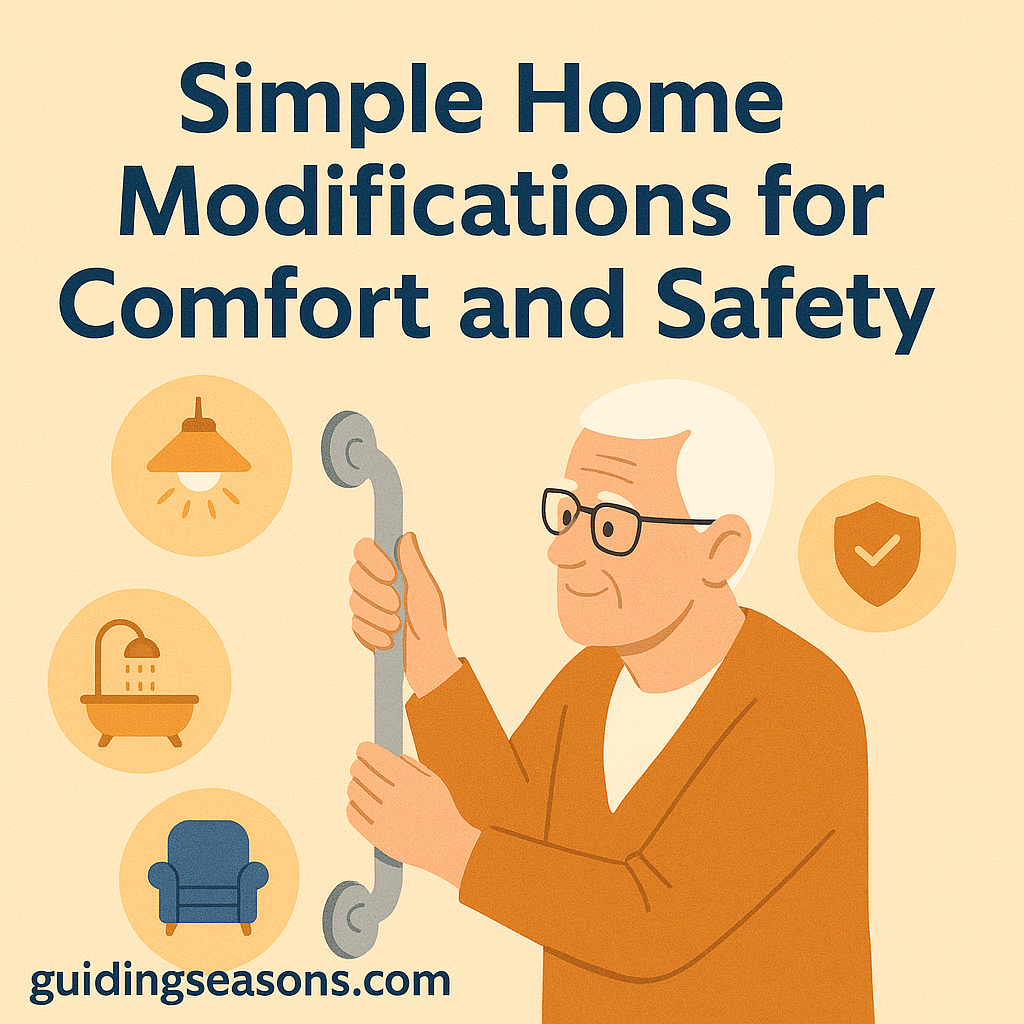
Grab bars should only be installed where they provide a useful, properly anchored support point. Countertops, appliance handles, towel racks, and unsecured bars should not be used as substitutes for properly installed supports.
Make Frequently Used Tasks Easier
Think about the kitchen activities you perform every day and look for ways to reduce unnecessary movement.
For example, if you make coffee every morning, keep the coffee, filters, cups, and other supplies near the coffee maker rather than storing them in different areas of the kitchen.
The same approach can be used for breakfast foods, medications taken with meals, baking supplies, or frequently used cookware.
Creating small “activity zones” can reduce reaching, carrying, and unnecessary trips across the kitchen.
Ask for Help With Difficult Tasks
Maintaining independence doesn’t mean every household task needs to be completed alone.
Consider asking a family member, friend, caregiver, or professional for help with:
- Moving heavy appliances or cookware
- Retrieving items from high shelves
- Cleaning hard-to-reach areas
- Moving furniture
- Reorganizing cabinets
- Installing safety equipment
Avoid standing on chairs or unstable furniture to reach something. If an item is difficult to access safely, move it to a better location or ask for assistance.
Do a Quick Kitchen Safety Check
Every few months, take a few minutes to look around the kitchen with safety in mind.
Check:
- Are the floors clear and dry?
- Is the lighting adequate?
- Are frequently used items easy to reach?
- Are electrical cords and appliances in good condition?
- Are pot holders and oven mitts still in good condition?
- Are smoke alarms working?
- Is your fire extinguisher accessible and within its recommended service period?
Small problems are often easier and less expensive to correct when they’re noticed early.
Final Thoughts
A safe kitchen supports independence and confidence. With good lighting, organized storage, appropriate tools, clear floors, and mindful cooking habits, you can reduce many common risks associated with burns, falls, cuts, and household fires.
You don’t have to redesign your entire kitchen. Start with the areas you use most often and address simple hazards first. Move heavy or frequently used items within comfortable reach, keep your main workspace clear, and make sure you know what to do if an emergency occurs.
Small, thoughtful changes can make everyday cooking safer, easier, and more enjoyable for years to come.