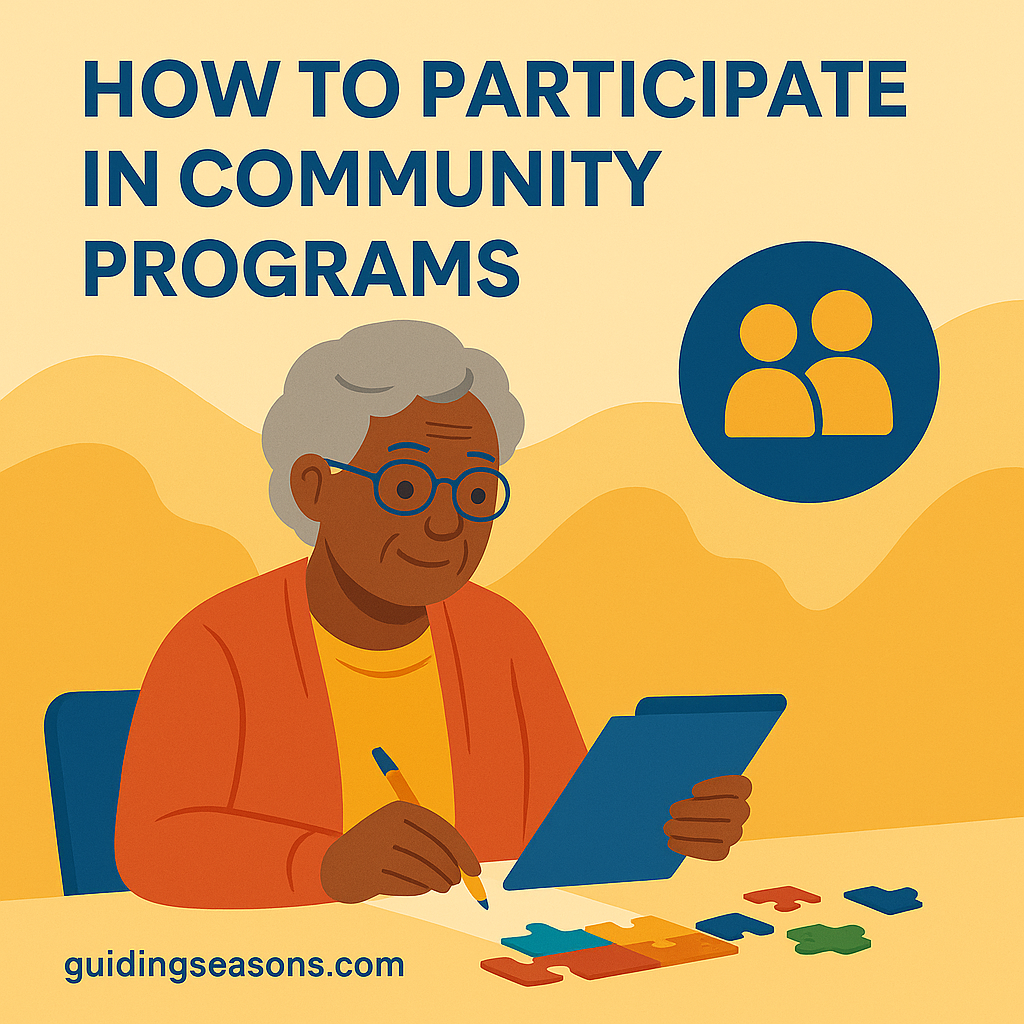
Community programs can provide valuable opportunities to meet people, learn new skills, stay active, and develop a stronger sense of belonging. This can become especially important later in life, when retirement, relocation, family changes, or the loss of familiar routines may reduce the amount of regular social interaction you once had.
But joining a community group is not always easy.
Walking into a room where you don’t know anyone can feel uncomfortable at any age. You may wonder whether you’ll fit in, whether everyone else already knows one another, or whether you’ll be expected to participate more than you want.
The important thing to remember is that community involvement does not require instant confidence.
You don’t have to become the most social person in the room, volunteer for every activity, or commit to attending every week. Participation can begin with something as simple as attending one event, listening to a presentation, taking a class, or introducing yourself to one person.
The goal is to find opportunities that fit your interests, abilities, personality, and comfort level.
Over time, those small steps can lead to familiar faces, friendships, new routines, and a greater feeling of connection to the community around you.
Why Community Involvement Can Matter More Over Time
For much of adulthood, social interaction is often built into everyday life.
You may talk with coworkers, attend children’s activities, interact with customers, participate in professional organizations, or see other parents at school events.
Retirement and other life transitions can change those routines quickly.
Suddenly, you may have much more control over your time but fewer automatic opportunities to interact with people.
Community programs can help create new routines.
The Centers for Disease Control and Prevention (CDC) explains that social connection is an important part of health and well-being. Strong social connections can contribute to longer, healthier lives and may help people manage stress while supporting mental and physical health.
Community participation is one practical way to create those connections.
A weekly class, walking group, volunteer shift, or senior-center activity gives you a reason to leave the house and regularly interact with other people.
Over time, those repeated interactions can become meaningful relationships.
Understand That Community Participation Can Take Many Forms
The word “community” does not refer to one particular type of organization.
Your community might include:
- A senior or community center
- Public library
- Recreation center
- Volunteer organization
- Faith community
- Neighborhood association
- Walking or exercise group
- Gardening club
- Book club
- Art or craft class
- Educational program
- Local museum
- Service organization
- Support group
- Cultural organization
- Hobby club
You do not have to choose something simply because it is marketed toward older adults.
If you enjoy photography, look for a photography group.
If you enjoy gardening, investigate a community garden.
If you love history, see whether a museum needs volunteers.
If you enjoy being around younger people, consider tutoring, mentoring, or helping with an educational program.
The best community activity is usually one that gives you a reason to want to return.
Start With Your Interests
Joining a group becomes easier when the activity itself interests you.
Ask yourself:
“What would I enjoy doing even if I didn’t know anyone there?”
Perhaps you have always wanted to learn watercolor painting.
Maybe you enjoy walking but would prefer not to walk alone.
Perhaps you love books and would enjoy discussing them with other readers.
Or maybe you spent decades working in a particular profession and would enjoy using those skills to help others.
Interest provides a natural starting point for conversation.
If everyone is attending a gardening workshop, you already have something to talk about.
You can simply ask:
“What are you growing this year?”
That can be much easier than entering a purely social event and trying to invent a conversation with a stranger.
Give Yourself Permission to Observe First
You do not have to participate fully on your first visit.
Sometimes the best first step is simply observing.
Attend a meeting.
Sit near the back if that makes you more comfortable.
Listen to the discussion.
Watch how people interact.
Ask yourself:
“Do people seem welcoming?”
“Would I enjoy spending time here?”
“Does the activity interest me?”
“Could I imagine coming back?”
This removes some of the pressure.
You are not committing to joining permanently. You are gathering information.
If the group does not feel right, you can try something else.
Community involvement is not a test you can fail.
Try the “Three-Visit” Approach
First impressions can be misleading.
The first time you attend a group, almost everyone may feel unfamiliar. You may not understand how things work or know where to sit.
The second visit may already feel easier because you’ve seen some of the people before.
By the third visit, someone may recognize you.
Consider giving a promising program three visits before deciding whether it is right for you.
For example, imagine joining a Tuesday morning walking group.
During the first week, you mostly listen.
During the second week, you talk with another participant for five minutes.
During the third week, that person sees you arrive and says:
“Good morning. Glad you’re back.”
Something important has changed.
You are no longer walking into a room or group of complete strangers.
This is how belonging often develops — gradually rather than instantly.
Look for Programs Through Familiar Organizations
You may be surprised by how many community opportunities already exist around you.
Good places to investigate include libraries, recreation departments, community centers, parks departments, senior centers, colleges, nonprofit organizations, museums, and faith communities.
The National Institute on Aging (NIA) encourages older adults to stay socially connected through activities such as volunteering and participating in community organizations, as well as learning something new and spending time with others who share similar interests.
If searching online feels overwhelming, start with one familiar organization.
Call your local library and ask:
“What programs do you have for adults?”
Visit a nearby community center and request an activity calendar.
Ask a friend:
“Do you belong to any groups you enjoy?”
One conversation may uncover several possibilities.
Consider Going With Someone the First Time
You do not necessarily have to attend alone.
Ask a friend, spouse, sibling, neighbor, or other acquaintance to join you.
You might say:
“The library has a local history presentation Thursday. Would you like to check it out with me?”
Having one familiar person nearby can make entering a new environment much easier.
Once you become comfortable, you may eventually attend independently.
You can also ask whether someone you know already belongs to a group.
Being introduced by an existing participant can remove much of the uncertainty of the first visit.
Focus on One Person Instead of the Whole Room
A room containing 25 unfamiliar people can feel intimidating.
You do not need to connect with all 25.
Talk to one.
Sit beside someone and introduce yourself.
Ask a simple question:
“Have you been coming here long?”
“Is this your first class too?”
“What do you think of the program?”
Small conversations are enough.
You are not trying to create an instant friendship.
You are simply creating familiarity.
The next time you attend, that person is no longer a stranger.
Allow Relationships to Develop Slowly
One common mistake is expecting immediate friendship.
Most close relationships do not develop after one conversation.
They grow through repeated contact.
You see someone every Tuesday.
You learn their name.
A few weeks later, you talk before the program begins.
Eventually, you discover a shared interest.
Several months later, you might have coffee after the activity.
That gradual progression is normal.
Suppose you attend a one-hour community class once a week for 40 weeks of the year.
That’s 40 hours of shared activity with many of the same people.
Those repeated encounters provide numerous opportunities for relationships to develop naturally without forcing them.
Volunteer for a Cause You Care About
Community participation does not have to revolve around social activities.
Volunteering can provide both connection and purpose.
Depending on your interests and abilities, you might help with:
- Food distribution
- Animal shelters
- Museums
- Libraries
- Community gardens
- Schools
- Hospitals
- Neighborhood organizations
- Environmental projects
- Cultural events
- Mentoring programs
The NIA specifically identifies volunteering as one way older adults can remain engaged and connected with other people.
Volunteering also gives interaction a purpose.
Instead of thinking:
“I have to meet people,”
you are thinking:
“We’re working on something together.”
That can make social interaction feel much more natural.
Start With a Small Commitment
You don’t need to fill your calendar.
In fact, overcommitting can turn something enjoyable into another obligation.
Start small.
One activity each week may be enough.
Suppose you volunteer for two hours every Wednesday.
Over 50 weeks, that’s approximately 100 hours of community involvement in one year.
That is a substantial amount of participation from a commitment of only two hours per week.
You can always become more involved later.
It is often easier to add activities than to escape commitments you’ve taken on too quickly.
Ask About Flexible Participation
Before assuming that a program requires a major commitment, ask.
You might say:
“Do I need to attend every week?”
“Can I try one meeting before joining?”
“Is registration required?”
“Can volunteers choose their own shifts?”
Many organizations offer flexible participation.
Knowing this can reduce anxiety about becoming trapped in an obligation.
Your involvement should fit your life, not control it.
Consider Your Physical Comfort and Accessibility
A program may sound wonderful but still need to be practical.
Before committing, consider:
- Transportation
- Parking
- Walking distance
- Stairs
- Seating
- Restroom accessibility
- Hearing environment
- Activity intensity
- Time of day
If you have particular accessibility needs, contact the organization beforehand and ask questions.
For example:
“Is the meeting room accessible without stairs?”
“Is there seating throughout the activity?”
“How far is the parking area from the entrance?”
Knowing what to expect can make your first visit much more comfortable.
Use Community Programs to Learn Something New
Community involvement does not have to focus entirely on socializing.
Learning can provide an excellent reason to participate.
You might take a class in:
- Painting
- Photography
- Computers
- Gardening
- Cooking
- History
- Music
- Languages
- Fitness
When everyone is learning together, there is less pressure to make conversation.
Discussion happens naturally.
You might ask the person next to you:
“Did you understand that part?”
Before long, you may be talking about something completely unrelated to the class.
Share Skills You Already Have
You also have knowledge worth sharing.
Years of work, family life, hobbies, and personal experiences may have given you skills that can benefit other people.
Perhaps you know:
- Accounting
- Carpentry
- Cooking
- Gardening
- Sewing
- Technology
- Writing
- Business
- Music
- Photography
- Home repair
Look for opportunities to teach, mentor, or assist.
A retired professional might mentor younger workers.
Someone who enjoys reading might help with literacy programs.
A gardener might contribute to a community garden.
Participation becomes especially meaningful when you can both contribute and learn.
Be Realistic About Your Social Energy
Not everyone enjoys large groups.
You do not have to become highly social to participate in community life.
If large gatherings exhaust you, look for smaller programs.
A six-person book club may suit you better than a 100-person community event.
If long activities feel tiring, choose something lasting an hour rather than an entire afternoon.
The goal is sustainable connection.
You should generally leave feeling that the experience added something positive to your life, even if you’re naturally tired afterward.
Notice How a Group Makes You Feel
Not every community program will be a good fit.
Pay attention to the atmosphere.
A supportive group should generally feel respectful and welcoming.
Reconsider your involvement if you repeatedly experience:
- Pressure to overcommit
- Disrespect
- Constant negativity
- Uncomfortable conflict
- Exclusion
- Pressure to spend money
- Activities you simply do not enjoy
You are allowed to leave.
Trying one group and deciding it isn’t right does not mean community involvement isn’t for you.
It means you learned something about what you’re looking for.
Don’t Compare Yourself With Longtime Members
When joining an established group, other participants may already know one another.
They may understand the routines, have inside jokes, or possess more experience with the activity.
That can make you feel like an outsider.
Remember that they were newcomers once too.
Give yourself time.
Instead of asking:
“Why don’t I fit in yet?”
ask:
“Did I feel slightly more comfortable this week than last week?”
Progress may be gradual.
Take Small Social Risks
Building community sometimes requires doing something mildly uncomfortable.
Introduce yourself.
Sit beside someone instead of sitting alone.
Ask a question.
Accept an invitation for coffee.
Volunteer for a small task.
You don’t need to transform your personality.
Think in terms of small steps.
One introduction can lead to a conversation.
One conversation can create familiarity.
Repeated familiarity can eventually develop into friendship.
Stay Connected Between Activities
If you begin getting to know someone, the relationship does not have to remain confined to the program.
You might exchange phone numbers.
Invite someone for coffee.
Send information about another community event.
Ask whether they want to attend next week’s program together.
This is often how community acquaintances gradually become personal friends.
Let the relationship develop naturally rather than forcing closeness.
Related Guidance You May Find Helpful
Community involvement often becomes easier when you also strengthen confidence and emotional well-being.
You may find these topics helpful:
- How to Strengthen Your Inner Confidence
- How to Stay Positive Through Aging Changes
- Relaxing Hobbies That Boost Senior Well-Being
Confidence can make it easier to enter unfamiliar environments, while hobbies provide natural opportunities to meet people with similar interests.
Together, these habits can support a broader sense of connection and purpose.
Give Yourself Credit for Showing Up
Joining something new takes courage.
You may walk into a program and speak to only one person.
That’s still progress.
You may attend a class and mostly listen.
That counts too.
You may volunteer for one hour and decide you would like to return.
Community involvement does not have to produce immediate friendships to be worthwhile.
Sometimes the first success is simply showing yourself that you can walk into an unfamiliar place and participate.
The next visit is usually easier.
Final Thoughts
Participating in community programs is not about filling every empty hour or forcing yourself to become more outgoing.
It is about finding places where you can participate in life alongside other people.
That might mean attending a weekly class, helping at a community garden, volunteering twice a month, joining a walking group, visiting your library for educational programs, or contributing your experience to an organization you believe in.
Start small.
Choose something that genuinely interests you.
Give a promising group more than one chance. Consider the three-visit approach before deciding whether you belong. Talk to one person instead of worrying about everyone in the room.
Most importantly, allow connection to develop gradually.
According to the CDC, social connection can support health and well-being, while the National Institute on Aging encourages older adults to remain engaged through activities such as volunteering, learning, hobbies, and community groups.
You do not need a huge social circle to benefit.
A weekly activity can introduce structure into your routine. A familiar face can become an acquaintance. An acquaintance can eventually become a friend. A volunteer role can give you a renewed sense that your knowledge and time still make a difference.
Community begins with participation.
Sometimes that participation starts with nothing more complicated than finding an interesting program, walking through the door, and deciding to stay for an hour.