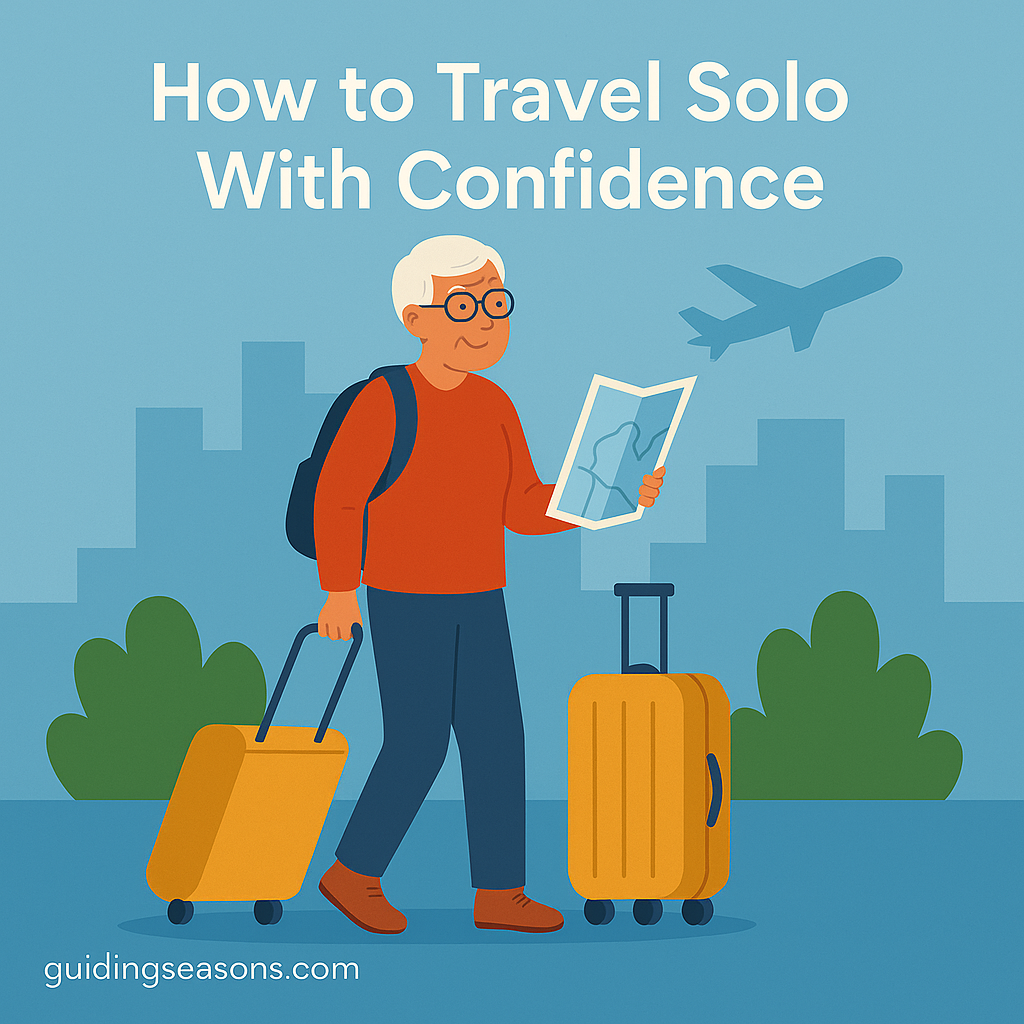
Traveling solo can be one of the most rewarding experiences of your life—especially in retirement. It offers freedom, flexibility, and the opportunity to explore the world entirely at your own pace. You decide where to go, what to see, when to wake up, and how long to stay.
But traveling alone can also feel intimidating if you haven’t done it before. You may wonder what happens if you get lost, become ill, encounter a travel delay, or simply feel lonely.
Those concerns are understandable, but they don’t have to prevent you from traveling.
Confident solo travel isn’t about being fearless or taking unnecessary risks. It’s about preparing well, knowing your limits, staying aware of your surroundings, and gradually becoming comfortable making decisions on your own.
With the right preparation and mindset, solo travel can become a safe, enjoyable, and deeply fulfilling part of retirement.
Start With a Destination That Feels Comfortable
Your first solo vacation doesn’t have to involve flying halfway around the world.
Starting somewhere relatively familiar can help you learn what traveling alone feels like without adding unnecessary complications.
Choose destinations that:
- Are relatively easy to navigate
- Have established tourism infrastructure
- Offer convenient transportation
- Provide activities that match your interests
- Have accommodations near the places you want to visit
- Fit your personal comfort level
You might even begin with a 3-night trip to a destination within a few hours of home.
That gives you enough time to experience the important parts of solo travel—checking into a hotel, eating alone, navigating attractions, managing your schedule, and solving small problems—without committing to a two-week international vacation.
If that trip goes well, your next adventure can be a little farther away.
Confidence often grows through experience.
Plan Your Itinerary in Advance
Planning removes some of the uncertainty that can make solo travel intimidating.
You don’t need to schedule every hour. Instead, create a basic framework for your trip.
Before you leave:
- Identify the main attractions you want to visit
- Research transportation options
- Check museum, park, and attraction hours
- Find a few restaurants near your accommodation
- Save your hotel address on your phone
- Learn how you’ll get from the airport or station to your hotel
- Share your basic itinerary with someone you trust
It can also help to know what you’ll do during your first few hours after arriving.
For example, rather than landing in an unfamiliar city and deciding everything on the spot, know how you’re getting to your hotel and where you can find a nearby meal.
Once you’re settled, you can be much more spontaneous.
A basic plan provides structure without taking away the freedom that makes solo travel enjoyable.
Stay in Safe, Conveniently Located Accommodations
Where you stay can make an enormous difference in how comfortable you feel traveling alone.
A cheaper hotel far outside the area you want to explore may save money initially, but it can create additional transportation challenges and leave you returning to an unfamiliar area late at night.
Look for accommodations with:
- Strong recent guest reviews
- Convenient access to restaurants and attractions
- Good lighting around entrances
- Reliable transportation nearby
- A staffed front desk or customer support
- Elevators if stairs are difficult
- Secure room access
Read recent reviews rather than relying only on the overall rating. Look specifically for comments about noise, location, cleanliness, transportation, and how guests felt walking around the surrounding area.
You may decide that paying a little more for a central location is worthwhile because it reduces transportation time and makes returning to your room easier.
Arrive During Daylight When Possible
Arriving somewhere unfamiliar can feel much easier when you can see your surroundings clearly.
When practical, consider scheduling your arrival during daylight or early evening rather than late at night.
This gives you time to:
- Find your accommodation
- Become familiar with the neighborhood
- Locate nearby restaurants
- Identify transportation stops
- Purchase anything you forgot
- Settle into your room
A delayed flight may make this impossible, of course. The point isn’t to create a rigid rule but to remove one unnecessary source of stress when you have the choice.
Pack Light and Smart
Packing light becomes particularly valuable when you’re traveling alone because you’re responsible for handling your own luggage.
You don’t want a suitcase so heavy that getting it onto a train, into a rental car, or through a hotel becomes an ordeal.
Consider bringing:
- Comfortable walking shoes
- A lightweight rolling suitcase or manageable backpack
- A secure day bag
- Prescription medications
- Copies or secure backups of important information
- Versatile clothing you can mix and match
- Phone charger
- Portable battery
- Basic toiletries
Before leaving home, try walking around with your packed luggage.
If it already feels too heavy in your house, it probably won’t feel better after navigating an airport.
Leave unnecessary “just in case” items behind.
Keep Medications and Health Information Accessible
Traveling alone means you should be especially organized about medications and important health information.
Keep prescription medications somewhere accessible rather than placing them in checked luggage.
Consider carrying:
- Your regular medications
- A current medication list
- Health insurance information
- Emergency contact details
- Relevant medical information
- Contact information for your healthcare provider when appropriate
If you’re traveling for an extended period, make sure you have enough medication for the trip and some flexibility for unexpected delays.
If you have Medicare, it’s also useful to understand how your coverage works away from home. Original Medicare and Medicare Advantage plans can have different provider networks and coverage rules.
You can review Medicare.gov’s information about Medicare health plans before traveling and contact your specific plan if you’re uncertain about receiving care at your destination.
International travelers should take additional precautions because Medicare generally provides limited coverage outside the United States.
Trust Your Instincts and Stay Aware
Your instincts are an important part of staying safe.
You don’t need to spend your vacation worrying about everything that could go wrong, but remain aware of your surroundings.
Pay attention to:
- People or places that make you uncomfortable
- Someone pressuring you to make a quick decision
- Unexpected requests for money or personal information
- Transportation situations that don’t match what you booked
- Areas that become isolated or poorly lit
- Your own energy level and concentration
If something doesn’t feel right, you don’t need to stay simply to be polite.
Leave, enter a staffed business or hotel, change transportation, or ask an appropriate person for assistance.
AARP’s travel safety resources provide additional guidance for older travelers on common travel risks, preparation, personal security, and avoiding scams.
Stay Connected With Someone You Trust
Solo travel doesn’t mean traveling without support.
Before leaving, give a trusted friend or family member a basic idea of where you’ll be.
You might share:
- Flight information
- Hotel name and address
- Major transportation plans
- General itinerary
- Emergency contact information
Establish a simple check-in routine if that makes you more comfortable.
For example, send a short message each evening letting someone know you’re back at your hotel.
You don’t need to provide constant updates or report every movement. The goal is simply to make sure someone knows your general plans and can recognize if something unusual happens.
Protect Your Phone
Your smartphone can become one of your most important solo travel tools.
It may contain your:
- Boarding pass
- Hotel information
- Maps
- Transportation apps
- Translation tools
- Emergency contacts
- Reservation details
Protect it accordingly.
Use a screen lock such as a PIN, fingerprint, or facial recognition. Keep your phone charged and consider carrying a small portable battery.
Also write down a few essential pieces of information separately from your phone.
If your phone disappears or stops working, you should still know your hotel name, important phone numbers, and basic travel information.
Technology should make solo travel easier—not become a single point of failure.
Keep Important Items Secure
Protecting your belongings helps prevent an inconvenience from turning into a major problem.
Simple precautions include:
- Keep valuables close to you
- Avoid displaying large amounts of cash
- Use hotel safes appropriately when available
- Keep backup payment methods separate
- Protect your passport and identification
- Be discreet when using expensive electronics
- Don’t leave bags unattended
Consider keeping your primary credit card and a backup card in different secure locations.
If your wallet is lost, having every payment method inside it defeats the purpose of carrying backups.
Join Group Activities and Tours
Solo travel doesn’t require spending every day alone.
Group activities are an excellent way to combine independence with social interaction.
Consider:
- Guided city tours
- Cooking classes
- Museum tours
- Walking tours
- Food tours
- Boat excursions
- Photography walks
- Small-group day trips
A guided tour can be particularly useful at the beginning of a vacation because it helps you become familiar with the destination.
You might take a walking tour on your first morning, learn where major attractions are located, and then spend the rest of the trip exploring independently.
Group activities also create natural opportunities to talk with other travelers without requiring you to find a travel companion for the entire vacation.
Learn a Few Local Phrases When Traveling Abroad
You don’t need to become fluent in another language before traveling internationally.
Learning a handful of practical words and phrases can make everyday interactions easier.
Useful phrases include:
- Hello
- Please
- Thank you
- Excuse me
- Where is…?
- How much?
- I need help
- Do you speak English?
Translation apps can provide additional help, but learning a few phrases yourself gives you a useful backup when technology isn’t available.
It can also make everyday interactions with local residents more enjoyable.
Be Comfortable Eating Alone
Eating alone is one of the things that makes some first-time solo travelers nervous.
It usually becomes much easier after you’ve done it a few times.
Start somewhere casual—a café, hotel restaurant, food hall, or outdoor patio.
Bring a book or journal if that makes you more comfortable, although you may eventually discover that you enjoy simply watching the world around you.
You can also sit at a restaurant counter or bar where appropriate, which sometimes makes conversation with staff or other diners more natural.
Remember that most people aren’t paying attention to the fact that you’re eating alone.
You’re simply another traveler enjoying a meal.
Take Breaks and Pace Yourself
One of the greatest advantages of traveling solo is having complete control over your schedule.
Use that freedom.
Remember:
- You don’t have to see everything
- You can change your plans
- Rest is part of traveling
- Slow mornings are perfectly acceptable
- You can return to your hotel whenever you want
- You can spend longer somewhere you particularly enjoy
If you planned a museum, walking tour, and evening show but feel tired after the museum, skip something.
There is nobody else whose vacation you’re ruining by changing the itinerary.
That freedom can be one of the most enjoyable parts of traveling alone.
Know How You’ll Get Back to Your Hotel
Before exploring somewhere unfamiliar, make sure you know how you’ll return.
Save your hotel’s address on your phone and consider carrying the address written on a small card.
Research:
- Public transportation hours
- Taxi availability
- Ride-hailing options
- Walking distance
- Hotel shuttle services
This becomes especially important in the evening.
If you’re unsure about an area or transportation option, ask hotel staff for recommendations before leaving.
Be Careful With New Acquaintances
Meeting people is one of the pleasures of travel, and solo travelers often find themselves talking to people they might never have approached when traveling with a companion.
Enjoy those interactions while maintaining sensible boundaries.
Don’t immediately share detailed information about:
- Where you’re staying
- Your room number
- Your financial situation
- Exactly how long you’ll be alone
- Personal account information
You can be friendly without giving strangers information they don’t need.
Prepare for Small Problems
Confidence grows when you realize you can handle things that don’t go according to plan.
Before your trip, think through a few common situations.
What would you do if:
- Your flight were canceled?
- Your phone battery died?
- Your credit card stopped working?
- You couldn’t find your hotel?
- You lost your wallet?
- You became ill?
- Your luggage didn’t arrive?
You don’t need an elaborate emergency plan for every possibility.
Simply knowing that you have a backup credit card, written hotel information, travel insurance details, emergency contacts, and a phone charger can make many situations much easier to manage.
Enjoy the Freedom of Solo Travel
Once the practical details are handled, allow yourself to enjoy what makes solo travel special.
You can:
- Wake up when you want
- Eat wherever you want
- Change your itinerary at the last minute
- Spend three hours in a museum nobody else would enjoy
- Skip an attraction that doesn’t interest you
- Sit at a café without watching the clock
- Take photographs
- Explore local neighborhoods
- Spend an afternoon doing absolutely nothing
You aren’t compromising with anyone else’s preferences.
That can feel remarkably freeing.
Give Yourself Time to Become Comfortable
Your first solo trip may feel strange at times.
You may experience moments when you wish someone were there to share an experience with you. You might feel nervous navigating an unfamiliar transportation system or awkward walking into a restaurant alone.
That’s okay.
Confidence doesn’t have to appear before the trip begins. It often develops during the trip.
The first time you successfully navigate an airport alone, find your hotel, order dinner, explore a new neighborhood, and return safely at the end of the day, you’ve proved something important to yourself.
The next day often feels easier.
And the next trip can feel easier still.
Final Thoughts
Traveling solo with confidence isn’t about being fearless. It’s about being prepared, aware, flexible, and willing to trust your ability to handle unfamiliar situations.
Start small if necessary. A three-night trip close to home can teach you many of the same skills you’ll eventually use on a longer international adventure.
Choose comfortable accommodations, create a basic itinerary, keep important information accessible, stay connected with someone you trust, protect your belongings, and listen to your instincts.
But don’t become so focused on safety and planning that you forget why you wanted to travel in the first place.
Solo travel gives you something unusual: complete freedom over your time.
You can follow your curiosity, change your plans, meet new people, spend time alone, and discover destinations entirely on your own terms.
Every trip won’t go perfectly—and it doesn’t need to. Each time you solve a small problem, navigate somewhere unfamiliar, or try something new on your own, you build confidence for the next adventure.
Eventually, traveling alone may stop feeling like something you need courage to do.
It may simply feel like freedom.