Good communication is an essential part of maintaining strong relationships, especially as we grow older. Whether you’re connecting with family, friends, caregivers, or your community, the way you communicate can shape the quality of your relationships and your overall well-being.
In retirement and beyond, communication becomes more than just daily conversation—it becomes a powerful tool for expressing needs, building trust, maintaining independence, and staying emotionally connected.
Healthy communication doesn’t require a perfect memory or flawless speech. What matters most is intention, understanding, patience, and a willingness to stay engaged.
Why Healthy Communication Matters as You Age
Communication can change with age. Hearing may shift, energy levels may fluctuate, and relationships and family roles can evolve. These changes make clear, positive communication especially important.
Healthy communication can help seniors:
- Strengthen family bonds
- Support emotional well-being
- Reduce misunderstandings and conflict
- Maintain independence by clearly expressing needs
- Build stronger friendships and community ties
- Feel more connected and valued
Good communication enriches relationships and can create a more supportive, enjoyable daily life.
Common Communication Challenges for Seniors
Understanding possible communication challenges can help you develop strategies that make conversations easier and more comfortable.
Hearing Changes
Hearing changes can make conversations difficult and sometimes lead to frustration for both seniors and their loved ones.
These changes are also quite common. According to the National Council on Aging (NCOA), about 1 in 3 adults between ages 65 and 74 experiences hearing loss, and nearly half of adults over 75 have difficulty hearing.
Speaking clearly, facing the person you’re talking with, and choosing environments with minimal background noise can make conversations easier.
Memory and Processing Speed
Some people may need more time to process information as they age. There is nothing wrong with slowing down a conversation, taking a moment to gather your thoughts, or asking someone to clarify what they mean.
Allowing enough time for a conversation can make communication feel less pressured and more productive.
Emotional Sensitivity
Life transitions—such as retirement, changing family roles, losing loved ones, or adjusting to new routines—can bring up strong emotions. Honest, respectful conversations can make these transitions easier to navigate.
Technology Barriers
As communication becomes increasingly digital, some seniors may feel uncertain about smartphones, texting, video calls, or social media.
These tools do not have to replace face-to-face communication. Instead, they can provide another way to stay connected, particularly with friends and family who live far away.
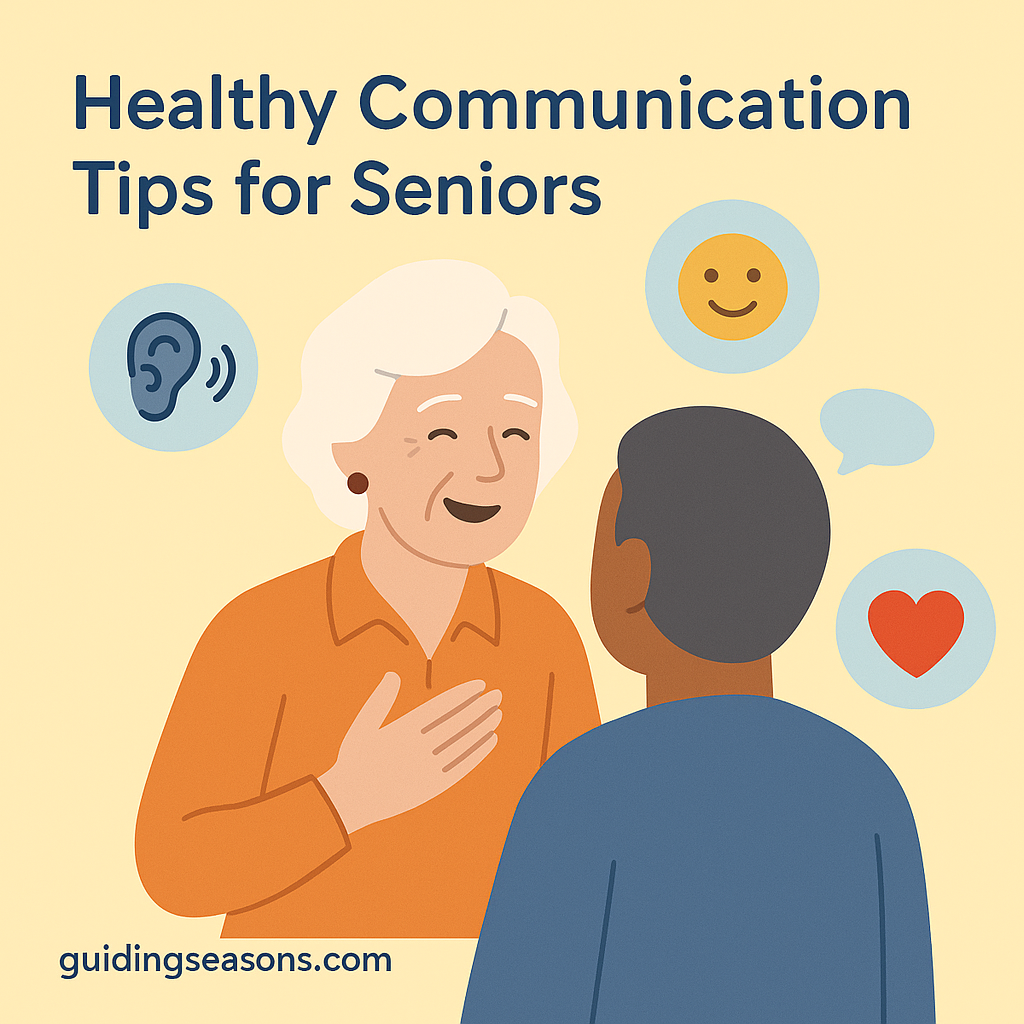
Healthy Communication Tips for Seniors
Listen With Full Attention
Active listening strengthens relationships. This means giving someone your full focus—not simply hearing their words, but trying to understand the meaning and feelings behind them.
Try:
- Putting aside distractions
- Maintaining comfortable eye contact
- Nodding or responding to show you’re engaged
- Asking questions
- Allowing the other person to finish before responding
When people feel heard, conversations often become more meaningful.
Speak Clearly and Calmly
You don’t necessarily need to speak loudly—clear speech is usually more helpful. Speaking at a comfortable pace gives everyone time to follow the conversation and allows you to express your thoughts without feeling rushed.
Shorter sentences can also make complicated information easier to understand.
Express Your Needs Directly
Whether you’re asking for help, seeking support, or sharing a preference, being direct helps other people understand what you need.
For example:
- “I enjoy our conversations more when we talk slowly.”
- “I need help reading this document.”
- “Could we turn the television down while we talk?”
- “I feel better when we plan our visits ahead of time.”
Imagine you’re having dinner with your adult children in a busy restaurant and are having trouble following the conversation. Rather than remaining quiet, you might simply say, “I’m having trouble hearing everyone with the music. Could we move to a quieter table?”
A small, specific request can sometimes solve the problem immediately.
Use Positive Body Language
A warm smile, relaxed posture, comfortable eye contact, and open gestures can make conversations feel more inviting.
Body language also provides useful context when words are difficult to hear or express.
Be Patient With Yourself and Others
Patience can make communication more enjoyable for everyone. Give yourself time to gather your thoughts before responding.
If you don’t understand something, ask:
- “Could you repeat that?”
- “What do you mean by that?”
- “Can you say that another way?”
- “Could you write that down for me?”
Asking for clarification is often much better than pretending to understand and discovering later that something important was missed.
Share Feelings Honestly
Later life can bring a wide range of emotions, including joy, nostalgia, uncertainty, frustration, gratitude, and worry.
Sharing those feelings with people you trust can strengthen emotional connections. You don’t have to explain everything perfectly. Sometimes simply telling someone how a situation makes you feel is enough to begin a productive conversation.
Try New Communication Tools
Technology can help strengthen connections with loved ones near and far.
Helpful tools may include:
- Video calling apps such as FaceTime or Zoom
- Voice messages
- Text messaging
- Group family chats
- Smartphones or tablets with accessibility features
If technology feels overwhelming, start with one feature rather than trying to learn everything at once. For example, learn how to make a video call first and practice it with a family member.
Reduce Background Noise
Clear communication is easier in quiet environments. Turn down the television or radio during conversations, close a door if another room is noisy, or request a quieter table when dining out.
The NCOA also recommends reducing background noise, using good lighting, facing the person directly, and speaking clearly when communicating with someone experiencing hearing loss. You can find additional guidance in its tips for communicating about hearing loss.
Use Humor and Lighthearted Conversation
A little laughter can go a long way. Sharing funny stories, memories, or lighthearted moments can reduce tension and help conversations feel natural.
Not every conversation has to accomplish something. Sometimes enjoying another person’s company is enough.
Practice Empathy
Try to consider how the other person may be feeling. Whether you’re talking with a spouse, adult child, friend, neighbor, or caregiver, empathy can help you respond with greater patience and understanding.
Simple responses such as “I understand why you feel that way” or “That makes sense” can show that you are listening without immediately trying to solve the problem.
Strengthening Relationships Through Communication
With Family
Open communication helps strengthen family bonds. Share memories, ask about what is happening in their lives, and express appreciation.
Communication should also go both ways. Giving younger family members an opportunity to share their experiences and opinions can help bridge generational differences.
With Friends
Friendships can be especially valuable during retirement. Reach out regularly, schedule meetups, make phone calls, and continue sharing mutual interests.
You don’t always have to wait for someone else to make the first move. A simple message asking, “Would you like to have coffee this week?” can keep a friendship active.
With Caregivers
Caregivers can provide better support when they understand your preferences, comfort level, routines, and boundaries.
Be specific about what you can do independently and where you would appreciate assistance. Clear communication can help preserve independence while making caregiving more effective.
With Healthcare Providers
Clear communication with healthcare professionals can help you better understand your care.
Before an appointment, consider writing down your two or three most important questions. During the visit, ask for clarification when something is unclear and request written instructions when helpful.
Before leaving, you can also repeat the main instructions in your own words: “So I should take this medication in the morning, schedule the follow-up appointment, and call if this symptom gets worse. Is that correct?”
This gives the healthcare provider an opportunity to correct any misunderstanding before you leave.
Tips for Conversations That Feel Supportive and Easy
A few simple habits can make everyday communication more comfortable:
- Choose a time of day when you feel alert and energetic
- Sit close enough to hear comfortably
- Reduce unnecessary background noise
- Use written notes when helpful
- Ask one question at a time during complicated discussions
- Repeat important information to confirm understanding
- Clarify plans or agreements before ending a conversation
- Follow up with a written message when something is important
Small habits like these can create reliable and comfortable communication patterns.
When Communication Becomes More Difficult
Occasional misunderstandings happen to everyone. However, if hearing, speech, memory, or another change is regularly making communication difficult, consider discussing it with an appropriate healthcare professional.
It may also help to tell family members what makes communication easier for you. Simple adjustments—such as facing you while speaking, slowing the conversation, reducing background noise, or writing down important information—can make a meaningful difference.
Final Thoughts
Healthy communication is one of the most valuable tools for maintaining strong relationships throughout later life. With patience, openness, and a willingness to stay connected, conversations can become easier and relationships can grow stronger.
Whether you’re engaging with family, friends, caregivers, healthcare professionals, or neighbors, good communication creates a bridge between your needs and the people around you.
By practicing active listening, clearly expressing your needs, asking questions when something is unclear, and making small adjustments when communication becomes difficult, you can reduce misunderstandings and enjoy more meaningful connections throughout your senior years.