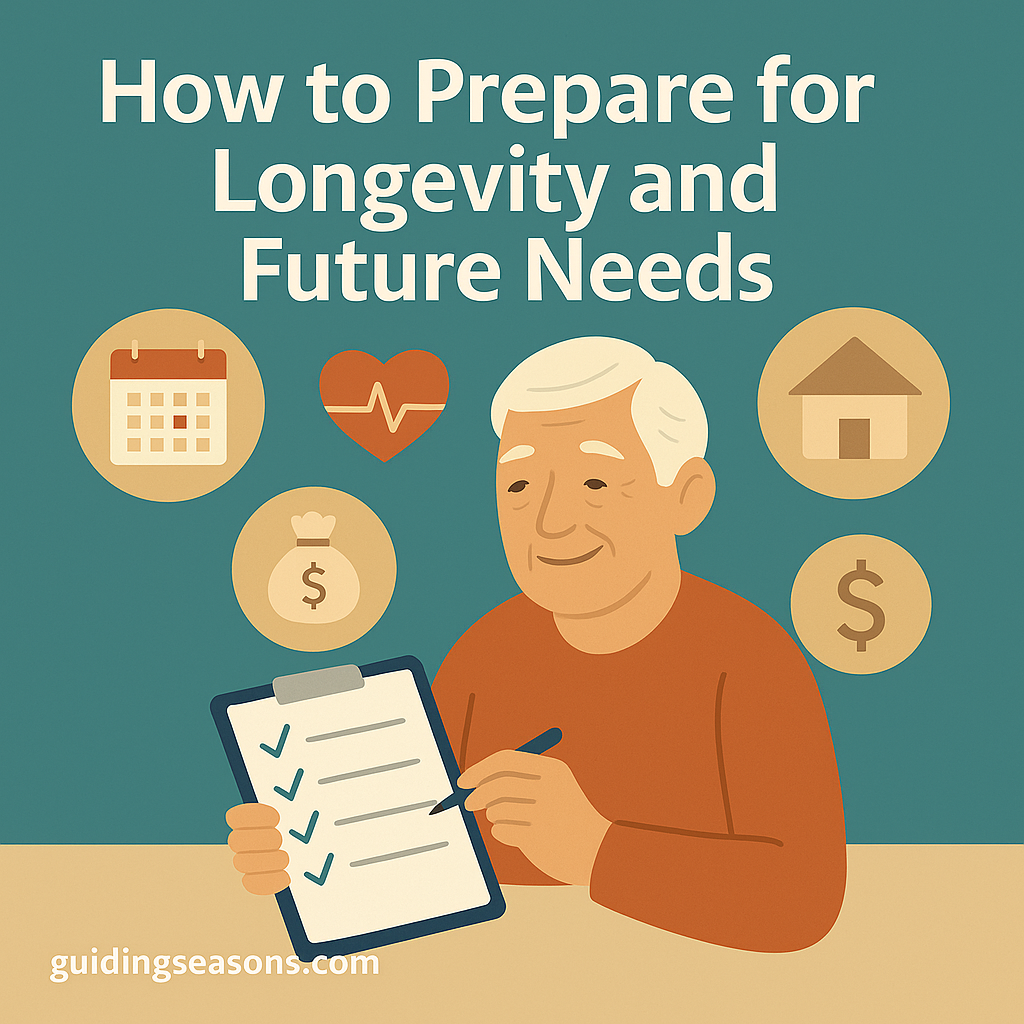
Living a longer life can mean more time with family, more opportunities to enjoy retirement, and more years to pursue hobbies, travel, volunteer, or simply appreciate everyday life. But longevity also creates new challenges.
A retirement that once needed to cover 15 or 20 years may need to support you for 25 or 30 years—or longer. Your healthcare needs may change. Your home may become harder to maintain. You may eventually need help with transportation, household tasks, or personal care.
Preparing for longevity does not mean assuming that something will go wrong. It means giving yourself more choices if your circumstances change.
The best approach is to look at your future from several angles: health, finances, housing, long-term care, relationships, legal planning, and emotional well-being.
Here are practical ways to begin.
1. Understand Your Current Health and Lifestyle
Good longevity planning starts with knowing where you are today.
Consider your current health, mobility, medications, family medical history, and daily habits. You don’t need to predict exactly what your health will look like 10 or 20 years from now. Instead, look for areas where preparation could make your future easier.
Ask yourself:
- Do I have chronic health conditions that require regular care?
- Are there health conditions that commonly occur in my family?
- How active am I?
- Is my home easy for me to move around in?
- Could I manage my daily routine if my mobility changed?
- Who could help me if I temporarily became ill or injured?
These questions aren’t meant to cause worry. They help identify areas you can strengthen while you have plenty of time and options.
2. Maintain a Strong Relationship With Your Healthcare Team
Regular healthcare becomes increasingly important as we age.
Your doctor can help you understand your individual risk factors, recommend appropriate preventive screenings, review medications, and identify changes that may deserve attention.
Try to make routine healthcare a habit rather than something you seek only when you’re sick.
That may include:
- Scheduling regular checkups
- Keeping an updated medication list
- Reviewing medications and supplements periodically
- Discussing recommended screenings and vaccinations
- Getting vision, hearing, and dental care
- Asking questions when you don’t understand something
It can also help to keep basic medical information organized in one location. Include your medications, doctors, allergies, emergency contacts, insurance information, and important health conditions.
This information can be especially valuable during an emergency.
3. Make Physical Activity Part of Your Longevity Plan
Staying physically active isn’t only about fitness. It can help support mobility, strength, balance, and the ability to continue performing everyday activities independently.
The Centers for Disease Control and Prevention recommends that adults age 65 and older generally aim for at least 150 minutes of moderate-intensity aerobic activity each week, along with muscle-strengthening activity on at least two days and activities that improve balance. Your individual abilities and medical conditions should always be considered.
That may sound like a lot, but 150 minutes can be divided into manageable amounts.
For example, walking for 30 minutes five days per week equals 150 minutes.
Your routine might include:
- Walking
- Swimming
- Gardening
- Light resistance training
- Chair exercises
- Stretching
- Tai chi
- Balance exercises
If you have a chronic condition, mobility limitation, or haven’t exercised recently, talk with your healthcare professional about activities appropriate for you.
Consistency is more important than trying to become an athlete.
4. Build a Financial Plan for a Longer Retirement
One of the biggest financial risks in retirement is simply living longer than expected.
Suppose someone retires at age 67 and plans financially through age 87. That’s a 20-year retirement. But if that person lives to 97, the same savings suddenly need to cover another 10 years of expenses.
That’s why longevity should be built into retirement planning.
Review areas such as:
- Social Security income
- Pensions
- Retirement accounts
- Savings and investments
- Required or planned withdrawals
- Inflation
- Taxes
- Healthcare expenses
- Housing expenses
- Emergency reserves
It may be helpful to run several scenarios rather than relying on one prediction.
For example, ask:
What happens if I live to 85?
Then:
What if I live to 95?
And finally:
What if I live to 100?
You don’t need to assume you’ll reach any particular age. The exercise simply shows whether your financial plan has enough flexibility.
A qualified financial professional can help evaluate retirement income strategies based on your circumstances.
5. Plan for Inflation
Longevity and inflation are closely connected.
Even modest annual price increases can make everyday expenses considerably more expensive over a long retirement.
Imagine a household spending $4,000 per month today. If prices increased by an average of 2.5% annually, maintaining roughly the same lifestyle would cost about $6,550 per month after 20 years.
That doesn’t mean every expense will rise at exactly that rate. Some may increase faster and others more slowly. But it demonstrates why keeping all retirement money in assets that never grow can create its own risk.
Your retirement plan should consider both safety and the need for purchasing power over time.
6. Give Yourself Housing Options
Many older adults want to remain in their homes for as long as possible. Planning ahead can make that goal more realistic.
Look around your current home and consider what might become difficult if your mobility changes.
Potential improvements include:
- Better lighting
- Handrails
- Grab bars
- Non-slip flooring
- Lever-style door handles
- Walk-in or low-threshold showers
- Fewer stairs
- Easier access to bedrooms and bathrooms
You should also consider alternatives before you need them.
These might include downsizing to a smaller home, moving closer to family, relocating to a more walkable community, or considering an independent or assisted living community.
Researching these possibilities doesn’t mean you have to move. It simply gives you choices.
7. Understand Long-Term Care Before You Need It
Long-term care is one of the most important—and often overlooked—parts of longevity planning.
According to the U.S. Administration for Community Living, someone turning 65 has almost a 70% chance of needing some type of long-term care services and supports during their remaining years. The amount and duration of care vary considerably from person to person.
Long-term care doesn’t automatically mean living in a nursing home.
Care may include:
- Help from family or friends
- In-home personal care
- Home health services
- Adult day programs
- Assisted living
- Memory care
- Skilled nursing care
It is also important to understand what Medicare does and doesn’t cover. The Administration for Community Living notes that Medicare generally does not pay for the non-skilled assistance with everyday activities that makes up much of long-term care.
This makes it worthwhile to research potential costs, insurance options, personal savings strategies, and available community resources well before care becomes necessary.
8. Build and Maintain a Strong Support Network
Money and healthcare are important, but relationships are another major part of aging well.
Think about the people you could rely on if you needed help.
That might include:
- A spouse or partner
- Adult children
- Siblings
- Friends
- Neighbors
- Members of a religious community
- Local community organizations
Maintaining these relationships requires effort.
Call people. Meet for lunch. Attend community activities. Volunteer. Join clubs or classes. Stay connected with neighbors.
A strong support network provides companionship, but it can also become a practical safety net during difficult periods.
9. Organize Important Legal and Financial Documents
A well-organized plan makes it easier for others to follow your wishes if you’re unable to communicate or manage your affairs yourself.
Depending on your circumstances and state laws, documents to discuss with qualified professionals may include:
- A will
- Durable financial power of attorney
- Healthcare power of attorney or healthcare proxy
- Advance healthcare directive
- Trust documents, when appropriate
- Beneficiary designations
Beneficiary information on retirement accounts, insurance policies, and other financial accounts should also be reviewed periodically, particularly after major life events.
Keep important documents somewhere secure but accessible to the appropriate person.
Someone you trust should know where to find them.
10. Create an Emergency Information Folder
One simple longevity-planning project is creating an emergency folder.
It can contain:
- Emergency contacts
- Doctors’ names and phone numbers
- Medication list
- Medical conditions and allergies
- Insurance information
- Copies or locations of important legal documents
- Financial professional contact information
- Instructions for pets
- Home information
- Preferred hospital
- People who should be contacted during an emergency
You don’t necessarily need to put sensitive financial passwords in this folder. The goal is to make essential information easy for a trusted person to locate.
Review the folder once or twice a year.
11. Keep Your Mind Engaged
Retirement doesn’t mean you should stop challenging yourself.
Continue learning and exploring things that interest you.
You might:
- Read regularly
- Learn a language
- Take a community class
- Play games or puzzles
- Learn to use new technology
- Practice an instrument
- Garden
- Write
- Volunteer
- Teach someone a skill you already know
The activity itself matters less than staying curious and engaged.
Having something to look forward to can also give structure and meaning to your days.
12. Use Technology to Support Independence
Technology can make everyday life easier and help older adults remain independent.
You don’t need every new gadget. Focus on tools that solve actual problems.
Examples include:
- Medical alert devices
- Video calling
- Medication reminders
- Telehealth
- Smart speakers
- Video doorbells
- Automatic lighting
- Digital calendars
- Online grocery delivery
- Transportation apps
Learning these tools before you truly need them can make the transition much easier.
It’s also important to learn basic online safety, particularly how to recognize suspicious emails, text messages, phone calls, and financial scams.
13. Talk About Your Future With Family
Some families avoid conversations about aging because they feel uncomfortable.
Waiting until a crisis happens usually makes those conversations harder.
Instead, explain your preferences while you’re able to participate fully in the decisions.
You might discuss:
- Where you would prefer to live
- Who should make healthcare decisions if you cannot
- Whether you would consider assisted living
- Who should manage finances during an emergency
- What kind of help you would be comfortable receiving
- Where important documents are stored
You don’t need to resolve everything in one conversation.
Think of longevity planning as an ongoing family discussion rather than a single meeting.
14. Prepare for the Possibility of Living Alone
Even people who are married today may eventually live alone.
Consider whether your future plan would still work with only one person in the household.
Would the home still be manageable?
Could one person afford the household expenses?
Who would provide transportation?
Who would notice if something were wrong?
Who would help after surgery or illness?
Thinking through these situations doesn’t mean expecting them to happen. It allows you to build backup plans.
15. Review Your Plan Every Year
Longevity planning isn’t something you complete once and forget.
Your health changes. Families change. Financial markets change. Housing costs change. Technology changes. Your priorities may change too.
Choose one time each year to conduct a simple “longevity review.”
Review your:
- Health
- Medications
- Retirement income
- Savings and investments
- Insurance
- Beneficiaries
- Legal documents
- Housing situation
- Emergency contacts
- Long-term care plan
You might even schedule the review around your birthday so it’s easy to remember.
Ask one simple question:
“If my life changed significantly next year, am I prepared?”
If the answer is mostly yes, you’re doing well. If you discover a weakness, you now have time to address it.
16. Remember That Longevity Planning Is About Living, Not Just Aging
It’s easy for discussions about longevity to focus entirely on medical care, money, and emergencies.
Those things matter—but they aren’t the whole picture.
Think about what you want your additional years to contain.
Maybe it’s traveling.
Maybe it’s spending more time with grandchildren.
Maybe it’s gardening, volunteering, attending church, learning photography, adopting a pet, mentoring younger people, or simply enjoying peaceful mornings at home.
Financial and health planning should ultimately support those goals.
Preparing for longevity isn’t merely about extending the number of years you can manage financially. It’s about creating the conditions that allow those years to remain meaningful.
Final Thoughts
A longer life can be one of retirement’s greatest gifts, but longevity works best when you’re prepared for it.
You don’t need to predict exactly what will happen.
Instead, build flexibility.
Take care of your health. Keep moving. Protect your finances against a potentially long retirement. Understand long-term care before you need it. Make your home safer. Organize important documents. Maintain relationships. Learn new things. And talk openly with the people you trust about your wishes.
Most importantly, don’t wait for a crisis to begin planning.
A few thoughtful decisions today can create many more options later.
The goal isn’t simply to prepare for getting older. It’s to give your future self the best possible chance to remain independent, secure, connected, and engaged with life for as long as possible.
Disclaimer: This article is for general educational purposes only and is not a substitute for individualized medical, legal, financial, or insurance advice. Consider consulting qualified professionals regarding your personal circumstances.