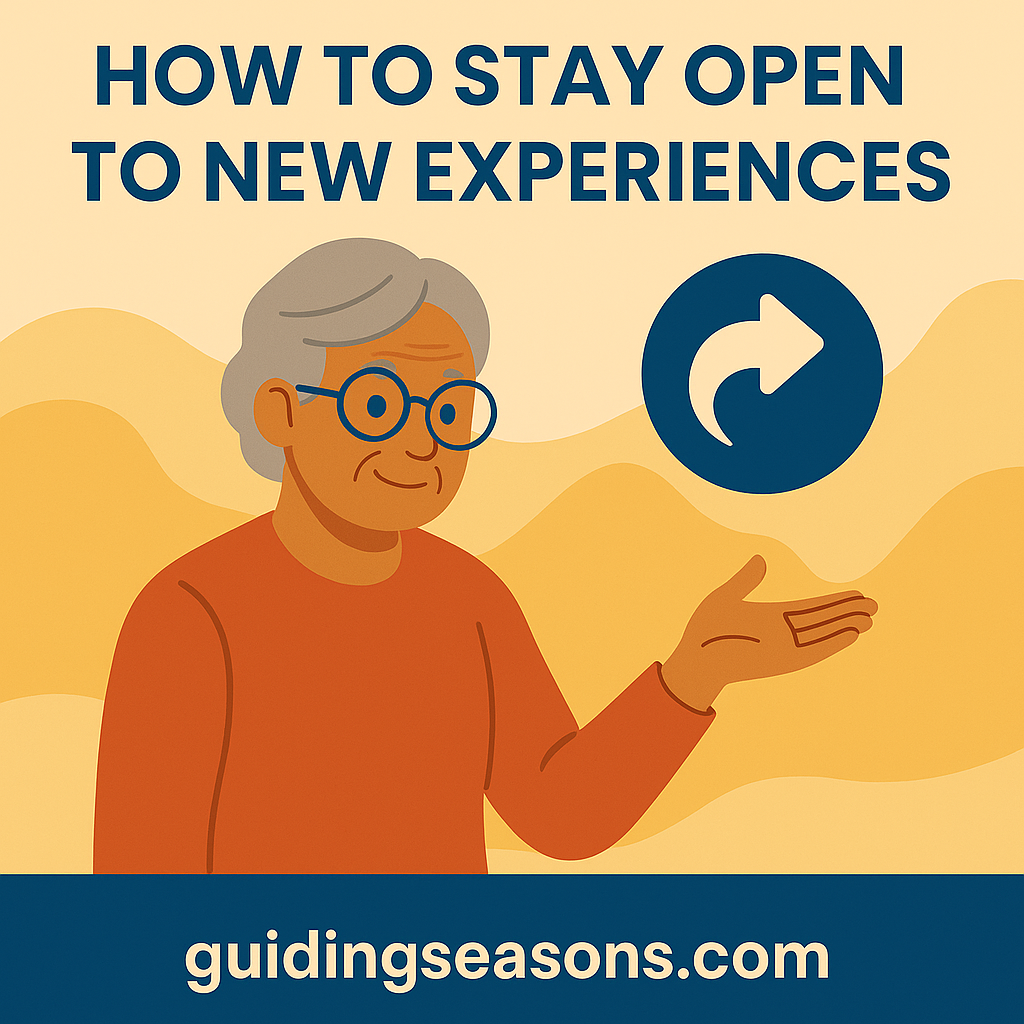
Staying open to new experiences is a valuable way to keep life feeling meaningful, engaging, and fulfilling—especially during later life stages. With greater self-awareness, years of life experience, and often more flexibility in your schedule, this season can offer unique opportunities to explore what genuinely interests you.
Being open to new experiences doesn’t mean forcing yourself into situations that feel uncomfortable or overwhelming. Instead, it means developing a thoughtful, self-respecting approach to curiosity and growth. When openness is guided by intention, it can feel energizing rather than stressful.
By the end of this article, you’ll have a simple decision filter to help you choose which new experiences may be right for you, along with practical examples based on common life situations.
Why Staying Open to New Experiences Matters
A willingness to explore new experiences can support emotional well-being while helping you remain engaged with the people and world around you.
Openness can help you:
- Keep your mind active and engaged
- Build confidence and adaptability
- Break up repetitive routines
- Discover new interests or rediscover old ones
- Create fresh memories
- Find new opportunities for social connection
- Add greater variety and purpose to everyday life
Even small changes in routine can create a renewed sense of momentum and curiosity.
Social engagement can be especially valuable as we age. AARP highlights the importance of social connections and offers practical ways older adults can build and maintain relationships.
You don’t need to completely change your lifestyle to experience something new. Sometimes a small departure from your normal routine is enough.
The OPEN Decision Filter
Before saying yes to something new, use the OPEN decision filter to determine whether an experience feels like a good fit.
O – Outcome: What Might This Add to My Life?
Ask yourself:
- Could this bring enjoyment, connection, learning, or meaning?
- Does it align with something I value?
- Is there something about the experience that makes me curious?
An experience doesn’t need a guaranteed benefit—it simply needs enough potential to make exploring it worthwhile.
P – Pace: Can I Approach This at My Own Speed?
Consider:
- Can I participate without unnecessary pressure?
- Can I start small?
- Can I stop or adjust if needed?
- Am I able to participate at a pace that feels comfortable?
Healthy openness respects your energy, abilities, and comfort level.
For example, instead of immediately joining a weekly class for three months, attend one 60-minute introductory session first. That gives you enough exposure to decide whether you enjoy the activity without making a major commitment.
E – Effort: Is the Effort Reasonable Right Now?
Think about what the experience actually requires.
Consider:
- Physical effort
- Emotional energy
- Time commitment
- Transportation
- Cost
- Preparation or equipment
An interesting opportunity may still be the wrong choice if participating would create unnecessary stress.
On the other hand, don’t automatically reject something simply because it requires a little effort. Ask whether the effort feels reasonable compared with what you might gain from the experience.
N – Need: Does This Serve a Current Need or Curiosity?
Ask:
- Am I craving connection, stimulation, creativity, or structure?
- Have my days started feeling too repetitive?
- Is there something I’ve wanted to learn?
- Does this address a gap I’ve been feeling?
Experiences that connect with a current need or genuine curiosity may feel particularly worthwhile.
If an opportunity fits reasonably well across all four parts of the OPEN filter, it may be worth exploring.
Staying Open Through Small, Everyday Choices
New experiences don’t have to be dramatic to be meaningful.
Simple ways to introduce novelty include:
- Taking a different route on your daily walk
- Trying a new recipe or ingredient
- Listening to unfamiliar music or podcasts
- Reading a different genre of books
- Visiting a park or neighborhood you haven’t explored
- Rearranging a familiar space in your home
- Trying a different restaurant or café
- Learning how to use a new piece of technology
The point isn’t to constantly search for excitement. Small changes simply provide opportunities to remain curious and engaged.
Real-Life Examples by Scenario
If You’re Feeling Socially Isolated
You might explore:
- A local walking group
- Community center events
- Discussion groups or book clubs
- Inviting a neighbor for coffee
- Volunteer opportunities
- Classes based around a shared interest
The National Council on Aging (NCOA) provides additional information and resources related to social isolation, loneliness, and staying connected as we age.
Using the OPEN filter can help you choose low-pressure ways to reconnect without immediately overcommitting.
For instance, rather than telling yourself you need to “make new friends,” set a smaller goal: attend one community event and have a conversation with one person. That makes the experience more approachable.
If You’re Adjusting to Retirement
You might try:
- Volunteering a few hours a month
- Taking a class related to a long-held interest
- Exploring creative hobbies you never had time for
- Mentoring or sharing skills informally
- Joining a recreational group
- Starting a small personal project
These experiences can add structure and purpose without recreating the pressures of your previous working life.
If you spent decades working with computers, for example, you might volunteer once a month to help people at a community center with basic technology. Someone who worked with their hands might enjoy woodworking, gardening, or helping with community projects.
Your previous experience can become a starting point rather than a limitation.
If You’re Managing Limited Energy or Health Changes
New experiences can be adapted to your circumstances.
You could consider:
- Virtual classes or tours
- Online interest groups
- Short activities instead of lengthy commitments
- Learning-based experiences you can pause anytime
- Seated hobbies or creative projects
- Smaller social gatherings
Openness doesn’t require ignoring your physical needs.
If a two-hour activity feels exhausting, for example, look for a shorter version or participate only in the portion that interests you most.
When considering a new physical activity, choose something appropriate for your abilities and health circumstances and seek professional guidance when necessary.
If You’re Seeking More Meaning or Direction
You might explore:
- Journaling or reflection groups
- Spiritual or mindfulness practices
- Educational lectures or documentaries
- Volunteer roles aligned with your values
- Mentoring opportunities
- Creative projects
- Family history or genealogy
Meaning often develops through thoughtful exploration rather than constant activity.
You might discover that something relatively simple—helping at a community garden twice a month, recording family stories, or teaching someone a skill you already know—provides more satisfaction than filling your calendar with activities.
Letting Go of Common Barriers
Many people hesitate to try new things because they worry about failure, embarrassment, or comparison.
You might think:
I’m too old to start this.
Everyone else will know more than I do.
What if I’m terrible at it?
What if I don’t enjoy it?
Those thoughts don’t necessarily mean you should avoid the experience.
Helpful reminders include:
- You don’t need to be good at something to enjoy it
- Everyone begins somewhere
- You don’t have to compete with anyone
- You can change your mind
- Not every experiment needs to become a permanent hobby
- Exploration is about experience, not performance
Trying something once and deciding it isn’t for you isn’t failure. You’ve simply learned something useful about your preferences.
Balancing Openness With Self-Kindness
Staying open doesn’t mean saying yes to everything.
In fact, being selective can make new experiences more enjoyable because you preserve your time and energy for opportunities that genuinely interest you.
Practice balance by:
- Respecting your limits
- Choosing experiences that feel aligned with your interests
- Allowing rest after demanding activities
- Saying no when something feels unnecessarily draining
- Avoiding pressure to keep up with other people
- Giving yourself permission to change plans
True openness should feel supportive rather than demanding.
There may also be periods when familiar routines are exactly what you need. You don’t have to constantly challenge yourself or search for something new.
Try the “One New Thing” Approach
If you want more variety in your life but don’t know where to begin, make the goal extremely simple:
Try one new thing each month.
It could be as small as:
- Cooking one unfamiliar recipe
- Visiting a new park
- Attending one community event
- Reading a book outside your usual genre
- Calling someone you haven’t spoken with recently
- Trying a beginner class
- Listening to a new type of music
Over a year, that’s 12 new experiences without requiring a major lifestyle change.
Some may become hobbies or traditions. Others may be things you never do again.
Both outcomes are useful because you’re learning more about what you enjoy.
Reflecting on What You Discover
Reflection helps turn experiences into useful insight.
After trying something new, ask:
- What did I enjoy?
- What felt challenging?
- Would I try this again?
- Would I change anything next time?
- Did this give me energy or leave me drained?
- What did I learn about myself?
You don’t need to formally journal every experience. Even spending a minute thinking about these questions can help you make better decisions about future opportunities.
Over time, you may begin noticing patterns.
Perhaps you enjoy activities involving small groups but dislike large gatherings. Maybe you prefer learning independently rather than attending classes. Or perhaps you discover that outdoor activities consistently improve your day.
Those observations can help you choose experiences that fit you better.
Make Curiosity a Habit
Openness becomes easier when curiosity becomes part of everyday life.
Instead of immediately thinking, That’s not for me, try asking:
What would it be like to try this once?
That small change in perspective doesn’t require you to say yes. It simply gives you a chance to consider the possibility before dismissing it.
Curiosity can show up anywhere—from trying unfamiliar food to learning technology, meeting new people, traveling somewhere different, or returning to an interest you abandoned years ago.
The goal isn’t to become a different person.
It’s to remain willing to discover new parts of the person you already are.
Final Thoughts
Staying open to new experiences is about thoughtful curiosity, not constant change. By using a simple decision filter and choosing experiences that match your needs, values, abilities, and energy, you can continue exploring in ways that feel meaningful and enjoyable.
Remember the OPEN filter:
Outcome: What might this add to my life?
Pace: Can I approach it comfortably?
Effort: Is the commitment reasonable?
Need: Does it connect with something I currently want or value?
You don’t need a dramatic adventure to bring something new into your life. Start with one small experience—a different walking route, a beginner class, a conversation with someone new, or an activity you’ve always wondered about.
Life can remain rich with possibility at every stage. When you stay curious and explore at your own pace, you give new interests, relationships, experiences, and sources of enjoyment an opportunity to develop.