Life can be surprisingly noisy.
Television plays in the background. Phones buzz with notifications. News updates arrive throughout the day. There are appointments to remember, errands to complete, household responsibilities to handle, and worries that sometimes seem determined to occupy our thoughts.
In the middle of all that activity, quiet moments can feel almost unusual.
Yet some of life’s most satisfying experiences happen when very little is happening at all.
A warm cup of coffee in the morning. Sunlight coming through the window. Sitting outside and hearing birds nearby. Reading a few pages of a good book. Watching the sky change colors at the end of the day.
These experiences may seem ordinary, but that is part of what makes them valuable. You don’t need a vacation, an expensive purchase, or a major celebration to enjoy them.
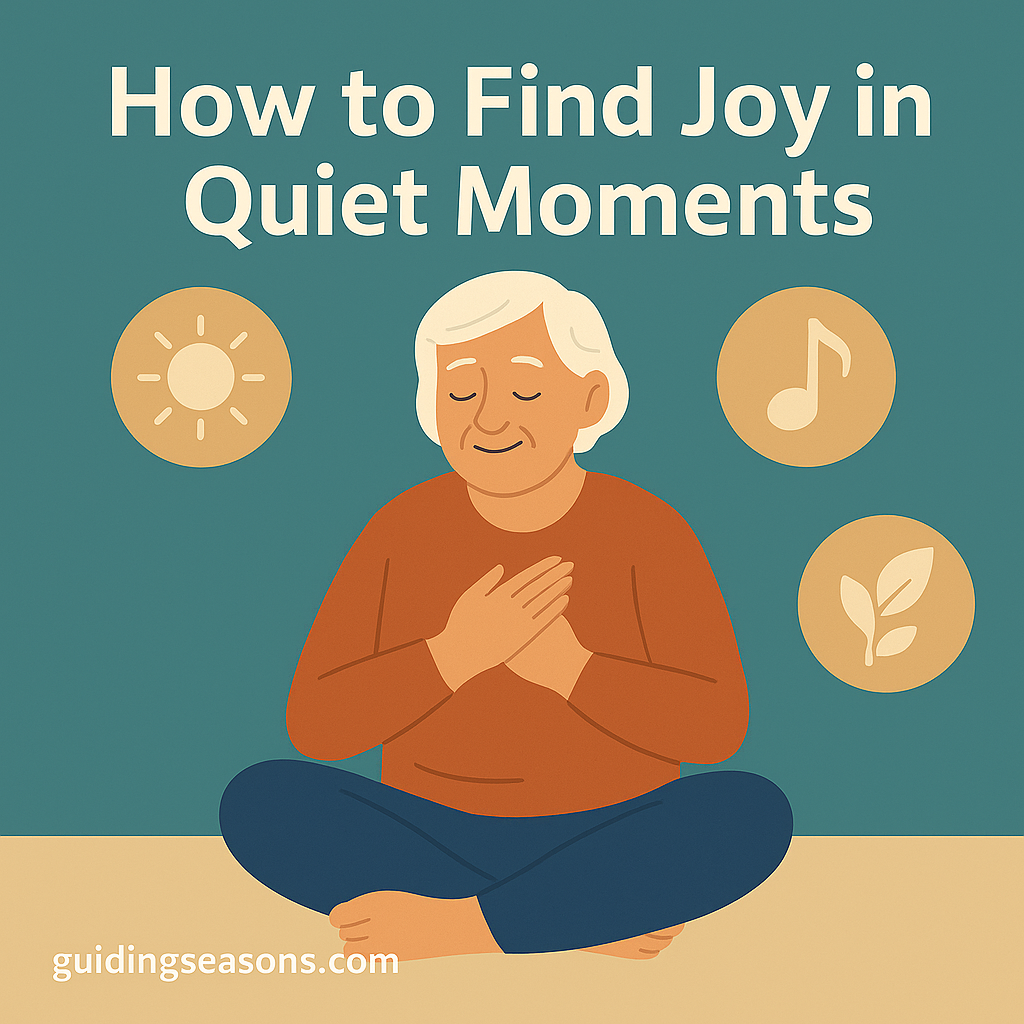
Finding joy in quiet moments is largely about learning to notice what is already around you.
For older adults, this can be particularly meaningful. Retirement and other life changes may create a different daily rhythm than the one you had during your working years. Instead of viewing slower periods as empty time that needs to be filled, you can learn to appreciate them as opportunities for reflection, relaxation, connection, and enjoyment.
Here are practical ways to make quiet moments a meaningful part of everyday life.
1. Slow Down Enough to Notice What’s Around You
Many pleasant experiences are easy to miss simply because we’re thinking about something else.
Imagine sitting at the kitchen table in the morning.
You could drink your coffee while checking your phone, watching television, and mentally reviewing everything you need to accomplish.
Or you could spend five minutes simply enjoying the experience.
Notice the warmth of the mug.
Pay attention to the aroma.
Look at the morning light coming through the window.
Listen to the sounds outside.
Notice how the chair feels beneath you.
Nothing extraordinary has happened, yet you’ve turned an ordinary cup of coffee into a small moment of enjoyment.
Try asking yourself occasionally:
“What is pleasant about this moment?”
The answer doesn’t need to be profound.
Maybe the room is comfortable.
Maybe your favorite song is playing.
Maybe dinner smells good.
Maybe the house is finally quiet.
Learning to recognize these details can make ordinary days feel richer.
2. Create a Five-Minute Quiet Ritual
You don’t need an hour of meditation to benefit from slowing down.
Start with five minutes.
Choose one part of your day when you can intentionally remove distractions.
For example, between 8:00 and 8:05 each morning, sit somewhere comfortable without television, news, email, or social media.
During those five minutes, you might:
- Drink coffee or tea
- Look outside
- Listen to the sounds around you
- Breathe slowly
- Think about something you’re grateful for
- Simply sit quietly
Five minutes a day adds up to more than 30 hours of intentional quiet time over a year.
The point isn’t the number itself. It’s a reminder that small practices become meaningful when repeated.
If five minutes feels comfortable, you can eventually make it 10 or 15.
But you don’t have to.
Quiet moments don’t need to be long to matter.
3. Use Your Senses to Return to the Present
One of the easiest ways to become more present is to pay attention to your senses.
Look around and notice what you can see.
Listen carefully.
Notice temperature, texture, scents, and tastes.
You might become aware of:
- Rain tapping against the window
- A breeze moving through the trees
- Freshly brewed coffee
- A soft blanket
- The ticking of a clock
- A bird outside
- Warm sunlight on your hands
- The smell of dinner cooking
This can be especially helpful when your thoughts are racing between the past and future.
Instead of following every thought, bring your attention back to what is physically happening around you.
You’re not trying to eliminate your thoughts.
You’re simply giving your attention another place to rest.
4. Practice Gentle, Comfortable Breathing
Breathing is something we do automatically, but intentionally slowing down can create a useful pause in a busy day.
You might try this simple pattern:
Breathe in gently for four seconds.
Pause briefly.
Breathe out slowly for about six seconds.
Repeat a few times without forcing your breath or trying to achieve a particular result.
If counting feels distracting, forget the numbers. Simply breathe comfortably and pay attention to the sensation.
The purpose isn’t to perform the exercise perfectly.
It’s to create a small transition between activity and quiet.
You could practice while sitting in your favorite chair, before going to sleep, after returning home from an appointment, or anytime you want a moment to settle.
5. Find Quiet Activities You Genuinely Enjoy
Quiet time doesn’t necessarily mean doing nothing.
Some people find stillness relaxing. Others enjoy calm activities that give their hands or minds something gentle to focus on.
Consider:
- Reading
- Knitting
- Drawing
- Coloring
- Journaling
- Puzzles
- Gardening
- Listening to music
- Looking through photographs
- Birdwatching
- Baking
- Working on a model or craft
- Organizing a collection
Choose activities because you enjoy them, not because you feel you should be doing them.
A quiet hobby doesn’t have to produce anything valuable.
You don’t have to sell your crafts, finish a certain number of books, or become an expert gardener.
Enjoyment is enough.
6. Spend a Little Time With Nature
Nature offers countless opportunities for quiet attention.
You don’t have to hike through a national park to experience them.
Nature might be right outside your window.
You can:
- Sit on a porch or patio
- Watch birds
- Care for houseplants
- Walk around the block
- Visit a neighborhood park
- Watch clouds
- Notice seasonal changes
- Grow herbs near a window
- Sit beneath a tree
A gentle walk can combine quiet enjoyment with physical activity. The Centers for Disease Control and Prevention (CDC) notes that physical activity offers important benefits for adults 65 and older, including benefits for sleep, anxiety, brain health, physical function, and independent living.
The walk doesn’t have to become a workout.
You might simply walk for 10 minutes and pay attention to what you see.
Notice which flowers are blooming.
Listen for birds.
Look at people’s gardens.
Feel the temperature of the air.
The destination isn’t always important. Sometimes the experience of moving through your surroundings is enough.
7. Reduce Unnecessary Background Noise
Many homes are rarely quiet.
The television may be playing even when nobody is watching. News programs run in the background. Phones constantly announce messages, emails, and updates.
Try occasionally turning everything off.
At first, the silence may feel strange.
Give it a few minutes.
You may begin noticing sounds that were hidden before—the refrigerator humming, birds outside, wind moving through leaves, or simply your own breathing.
This doesn’t mean television, radio, podcasts, or music are bad.
The goal is to make them choices rather than constant background noise.
You might decide, for example, that breakfast will be a television-free part of your morning.
That one small change creates a predictable pocket of quiet every day.
8. Let Gratitude Be Specific
Quiet moments are also good opportunities to appreciate what’s going well.
Instead of trying to feel grateful for everything, choose something specific.
For example:
“I’m grateful my daughter called today.”
“I enjoyed sitting outside after lunch.”
“The weather felt wonderful this morning.”
“I’m grateful I slept well.”
“Dinner turned out better than I expected.”
Specific gratitude tends to feel more genuine than forcing yourself to make broad statements about how fortunate you should feel.
You can also keep a small notebook nearby and write down one enjoyable moment each evening.
After several months, that notebook becomes a record of hundreds of small experiences that might otherwise have disappeared from memory.
9. Learn to Enjoy Your Own Company
Being alone and being lonely aren’t necessarily the same thing.
You can experience loneliness in a crowded room, and you can feel perfectly content while spending an afternoon alone.
Learning to enjoy your own company can make quiet periods feel less like something that needs to be escaped.
Ask yourself:
What do I genuinely enjoy doing when nobody else is around?
Perhaps you enjoy playing your favorite music.
Maybe you like watching old movies, cooking, tending plants, reading mysteries, working on puzzles, or simply sitting outside.
Create small traditions for yourself.
Friday afternoon might become your time for a favorite movie.
Sunday morning might mean coffee and a crossword puzzle.
Wednesday evening could be dedicated to reading.
These personal rituals can turn ordinary time into something you anticipate.
10. Allow Memories to Bring Comfort
Quiet moments often bring memories to the surface.
Some may be difficult, but others can provide tremendous comfort.
Look through old photographs.
Listen to music you enjoyed when you were younger.
Cook a family recipe.
Think about a memorable vacation.
Remember funny things your children or grandchildren once said.
You might even write some of these memories down.
For example, instead of simply labeling an old photograph “Christmas 1984,” write a paragraph describing who was there, where everyone lived at the time, what you ate, and something funny that happened.
Now you’ve transformed a quiet afternoon into something meaningful—and perhaps created a piece of family history that someone else will treasure later.
11. Combine Quiet Time With Gentle Movement
Stillness doesn’t always require sitting.
Some people feel most peaceful while moving.
You might enjoy:
- Walking
- Stretching
- Gardening
- Tai chi
- Light household tasks
- Watering plants
- Gentle yoga
The CDC recommends that adults 65 and older work toward a mix of aerobic, muscle-strengthening, and balance activities. Its general recommendation includes at least 150 minutes of moderate-intensity aerobic activity per week, while recognizing that abilities and circumstances vary and that activity can be spread throughout the week.
Quiet movement can serve two purposes at once: caring for your body and giving your mind a break from constant stimulation.
If you’re starting a new exercise routine or have a medical condition that affects your ability to be active, ask your health care provider what activities are appropriate for you.
12. Create a Peaceful Corner in Your Home
Your environment can make quiet time easier to enjoy.
You don’t need an entire room.
Choose one chair, corner, porch, or window that feels comfortable.
You might add:
- A favorite chair
- A small lamp
- A blanket
- A few books
- A plant
- Family photographs
- A small table for coffee or tea
Try keeping unnecessary electronics away from this area.
Over time, simply sitting there can become a signal that it’s time to slow down.
Your quiet corner might become the place where you read in the afternoon, drink your morning coffee, write in a journal, or spend 10 minutes watching the world outside.
13. Share Quiet Moments With Someone Else
Quiet doesn’t always mean being alone.
Some of the most meaningful moments happen when two people are together without needing constant conversation.
You might:
- Sit outside with your spouse
- Work on a puzzle with a friend
- Read while your partner reads nearby
- Garden with a neighbor
- Take a relaxed walk with your grandchild
- Watch the sunset with someone you care about
The CDC notes that supportive social relationships are associated with better physical and emotional health, less stress, and greater quality of life.
Connection doesn’t always require a major event or a long conversation.
Sometimes companionship itself is enough.
14. Stop Measuring Every Day by Productivity
Many people spend decades measuring their days by what they accomplished.
How much work was completed?
How many errands were finished?
How many things were crossed off the list?
That mindset can be difficult to release after retirement.
But not every hour has to produce something.
Reading on the porch isn’t wasted time.
Watching birds isn’t wasted time.
Sitting with your spouse over coffee isn’t wasted time.
Resting after lunch isn’t automatically laziness.
A meaningful life includes accomplishment, but it also includes enjoyment, relationships, reflection, curiosity, and rest.
Sometimes the best thing you can do with 20 minutes is simply enjoy those 20 minutes.
15. Create a Simple Daily Quiet-Moment Routine
If you’d like to experience more quiet without dramatically changing your lifestyle, try building three small pauses into your day.
Morning — 5 minutes
Drink your coffee or tea without checking your phone or turning on the television.
Afternoon — 10 minutes
Sit outside, walk slowly, tend your plants, or simply look out the window.
Evening — 5 minutes
Think about one thing you enjoyed during the day.
That’s just 20 minutes.
The rest of your schedule can continue normally.
You don’t need to transform your lifestyle into something completely peaceful and distraction-free. You’re simply creating small openings where you can notice and appreciate your life as it’s happening.
Embrace the Beauty of Doing Less
There will always be another task.
Another email.
Another television program.
Another news story.
Another household chore.
Another thing that could occupy your attention.
But you don’t have to fill every empty space.
Sometimes nothing needs to happen next.
You can finish your coffee slowly.
You can watch the rain.
You can sit outside after dinner.
You can listen to an entire song without doing anything else.
You can close your eyes for a few minutes.
You can rest without needing to justify it.
These moments aren’t empty spaces between the important parts of life.
They are part of life.
Final Thoughts
Finding joy in quiet moments isn’t about withdrawing from the world or avoiding activity.
It’s about becoming more attentive to experiences that are easy to overlook.
The warmth of morning sunlight.
The first sip of coffee.
A favorite song.
A familiar chair.
A phone call from someone you love.
Flowers blooming outside.
A peaceful walk.
A memory that unexpectedly makes you smile.
None of these moments needs to be extraordinary to matter.
Start small.
Tomorrow morning, give yourself five uninterrupted minutes before turning on the television or checking your phone.
Sit somewhere comfortable.
Notice what you hear.
Notice what you see.
Take a few comfortable breaths.
And ask yourself one simple question:
“What can I appreciate about this moment?”
You may discover that joy hasn’t been hiding somewhere far away.
Sometimes it has been quietly waiting for you to notice it.