Staying motivated to take care of your health can become more challenging as life changes. Retirement, changing energy levels, chronic conditions, caregiving responsibilities, sleep changes, and shifts in daily routine can all affect how easy it feels to exercise, eat well, stay socially connected, and keep up with medical care.
The good news is that healthy aging does not require perfect discipline.
In most cases, long-term health is supported by consistent habits that are realistic enough to repeat. A short walk you take regularly can be more valuable than an ambitious workout plan you abandon after two weeks. A simple breakfast routine can be more useful than a complicated diet you dislike.
The National Institute on Aging emphasizes that physical activity can benefit older adults by supporting strength, balance, mood, independence, and the ability to perform everyday activities. It also encourages older adults to choose activities they enjoy and gradually build physical activity into their routines. (nia.nih.gov)
Motivation is helpful, but you do not have to feel motivated every day to take care of yourself. What matters more is creating an environment and routine that make healthy choices easier to continue.
Here are practical ways to stay engaged with your health over the long term.
Why Health Motivation Sometimes Fades
Most people know that exercise, nutritious food, adequate sleep, and regular medical care are important.
Knowing what to do, however, is different from consistently doing it.
Motivation can decline for many reasons, including:
- Loss of a regular work schedule
- Chronic pain
- Reduced mobility
- Fatigue
- Poor sleep
- Caregiving responsibilities
- Feeling overwhelmed
- Depression or anxiety
- Lack of social support
- Goals that are too ambitious
- Previous attempts that didn’t work
- Boredom with the same routine
Sometimes the problem isn’t motivation at all.
For example, someone may appear “unmotivated” to exercise when walking actually causes significant knee pain. Another person may stop preparing healthy meals because cooking for one person feels lonely after losing a spouse.
Understanding the real barrier makes it easier to find an appropriate solution.
1. Start Smaller Than You Think You Need To
One of the easiest ways to lose motivation is to begin with a plan that’s too demanding.
You don’t need to completely transform your lifestyle on Monday morning.
Start with one manageable action.
Examples include:
- Walking for 10 minutes
- Stretching for five minutes after waking up
- Adding vegetables to dinner
- Drinking water with lunch
- Going to bed 15 minutes earlier
- Doing a few chair stands
- Taking the stairs when appropriate
- Preparing one healthy lunch at home
Suppose you haven’t exercised regularly in years.
Starting with a goal of exercising for an hour every day may feel exciting initially, but it can quickly become exhausting.
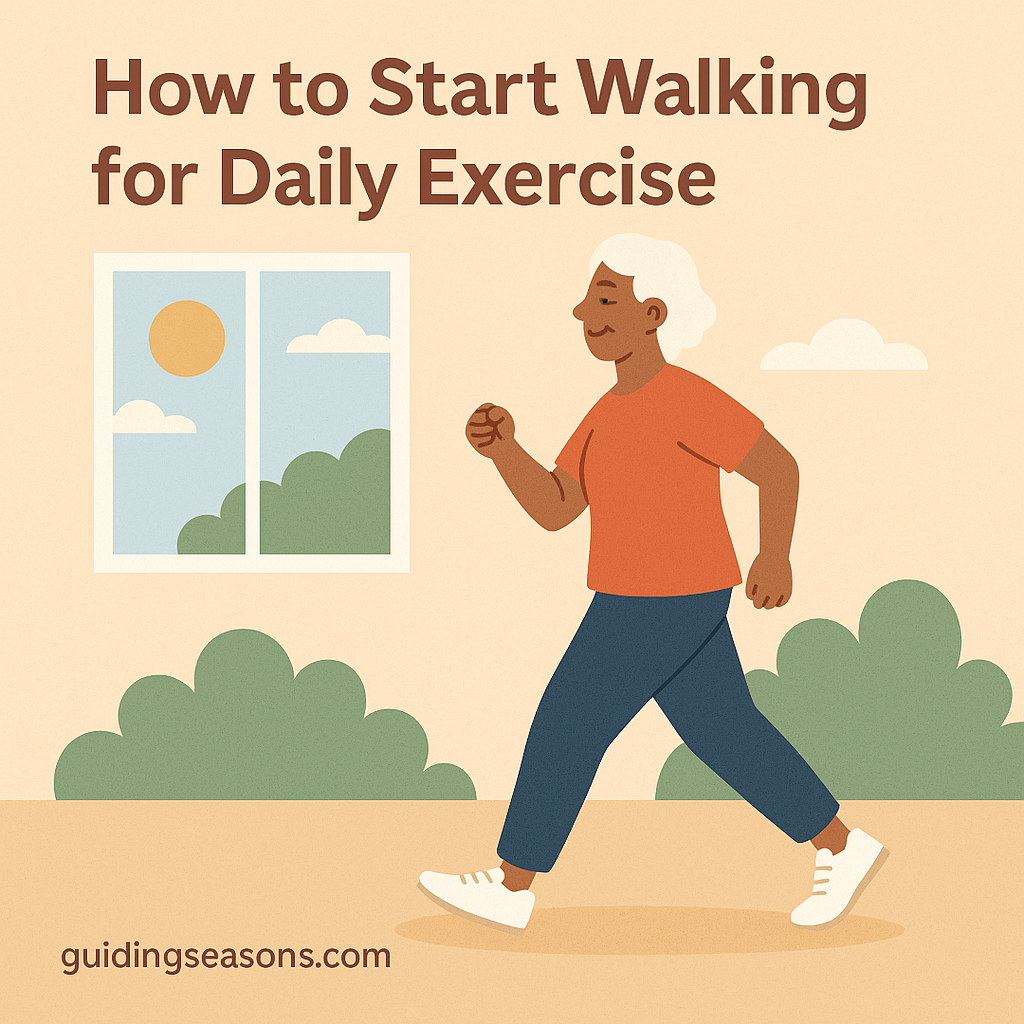
Instead, you might walk for 10 minutes on Monday, Wednesday, and Friday.
That is only 30 minutes for the entire week, but it establishes something far more important: a repeatable routine.
Once it feels easy, you can increase the duration or frequency.
2. Connect Health to Something You Actually Care About
“Be healthier” is a reasonable goal, but it is vague.
Motivation often becomes stronger when health is connected to something specific in your life.
Ask yourself:
What would better health allow me to do?
Your answer might be:
- Travel more comfortably
- Play with grandchildren
- Continue gardening
- Walk around museums while traveling
- Maintain independence
- Carry groceries without difficulty
- Feel steadier on stairs
- Keep golfing
- Attend family events
- Live in your current home longer
These goals can feel more meaningful than simply trying to lower a number on a scale.
Instead of saying:
“I need to exercise.”
Try:
“I want to strengthen my legs so walking around on my vacation is easier.”
The activity hasn’t changed, but the reason behind it has become personal.
3. Focus on What You Can Do Today
Long-term health goals are important, but they can also feel distant.
Rather than constantly thinking about what you should accomplish six months from now, ask:
What healthy action can I take today?
Maybe today you can:
- Walk around the block
- Make a doctor’s appointment
- Eat fruit with breakfast
- Call a friend
- Refill a prescription
- Go to bed at your usual time
- Complete 10 minutes of stretching
Health is built through individual decisions repeated over time.
You don’t need to fix everything at once.
4. Choose Activities You Enjoy
Exercise doesn’t have to mean walking on a treadmill while staring at a wall.
You are much more likely to remain active if movement is connected to something you enjoy.
Consider:
- Walking with a friend
- Gardening
- Swimming
- Dancing
- Pickleball
- Tai chi
- Cycling
- Hiking
- Water aerobics
- Yoga
- Golf
- Fitness classes
- Playing with grandchildren
- Walking your dog
If you dislike one type of exercise, try another.
The CDC recommends that adults age 65 and older include aerobic activity, muscle-strengthening activity, and balance exercises as part of their weekly routine. It also emphasizes that some activity is better than none and that older adults should be as active as their health and abilities allow. (cdc.gov)
Enjoyment can make those recommendations much easier to maintain.
5. Turn Healthy Actions Into Appointments
If something is important, put it on your calendar.
You probably wouldn’t schedule a doctor’s appointment and simply hope you remember it.
You can use the same approach for other healthy habits.
For example:
Monday, 9:00 a.m. — Walk
Tuesday, 10:30 a.m. — Strength exercises
Wednesday, 12:00 p.m. — Lunch with a friend
Thursday, 9:00 a.m. — Walk
Friday, 10:30 a.m. — Strength exercises
Once the activity has a specific time, you no longer have to repeatedly decide when you’re going to do it.
It becomes part of your week.
6. Attach New Habits to Existing Routines
Starting a completely new habit can be difficult.
Instead, connect it to something you already do consistently.
Examples:
After I make my morning coffee, I’ll stretch for five minutes.
After lunch, I’ll take a short walk.
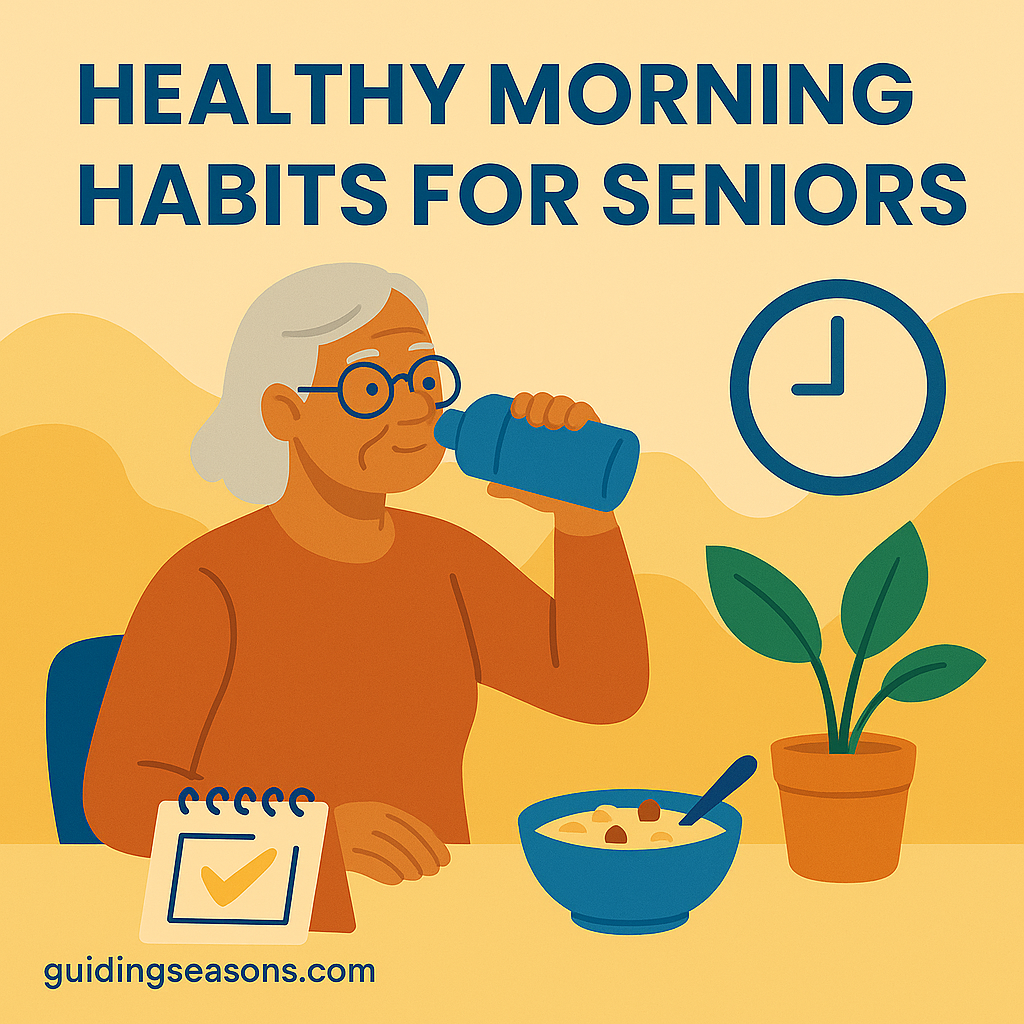
After brushing my teeth at night, I’ll prepare my water bottle for tomorrow.
When I return from grocery shopping, I’ll put fruit where it’s easy to see.
This approach reduces the need to remember a separate task.
Your existing routine becomes the reminder.
7. Make Your Goals Specific
Goals such as “eat better” or “exercise more” are difficult to measure.
Specific goals are easier to follow.
Instead of:
“I’ll walk more.”
Try:
“I’ll walk for 15 minutes after breakfast on Monday, Wednesday, and Friday.”
Instead of:
“I’ll eat healthier.”
Try:
“I’ll include a vegetable with lunch and dinner four days this week.”
Instead of:
“I need more sleep.”
Try:
“I’ll turn off the television at 10 p.m. and begin getting ready for bed.”
The more clearly you define the behavior, the easier it is to know whether you completed it.
8. Build Up Gradually
You don’t need to reach every health recommendation immediately.
The CDC recommends that adults age 65 and older aim for at least 150 minutes of moderate-intensity aerobic activity per week, along with muscle-strengthening activities on at least two days and activities that improve balance. (cdc.gov)
That does not mean someone who currently does almost no exercise should suddenly complete 150 minutes next week.
You might progress like this:
Week 1: 10-minute walk three days
Week 2: 15-minute walk three days
Week 3: 15-minute walk four days
Week 4: Add one short strength session
Progress can continue gradually from there.
Starting below your maximum ability can make the routine easier to sustain.
9. Keep Track Without Becoming Obsessed
Tracking can help you recognize progress that might otherwise go unnoticed.
Your system can be very simple.
You might use:
- A wall calendar
- A notebook
- A smartphone note
- A habit-tracking app
- A paper checklist
- A fitness watch
For example, put a checkmark on your calendar every day you take your planned walk.
At the end of the month, seeing 18 or 20 checkmarks provides concrete evidence that you’ve been consistent.
You can track other behaviors too:
- Strength-training days
- Hours of sleep
- Servings of vegetables
- Daily walks
- Blood pressure, if your clinician recommends monitoring it
- Medical appointments completed
Only track information that helps you make better decisions.
You don’t need to turn your health into a complicated spreadsheet.
10. Measure Progress Beyond the Scale
Body weight is only one measure of health.
Other improvements may be more meaningful.
Notice whether:
- Walking feels easier
- You can climb stairs more comfortably
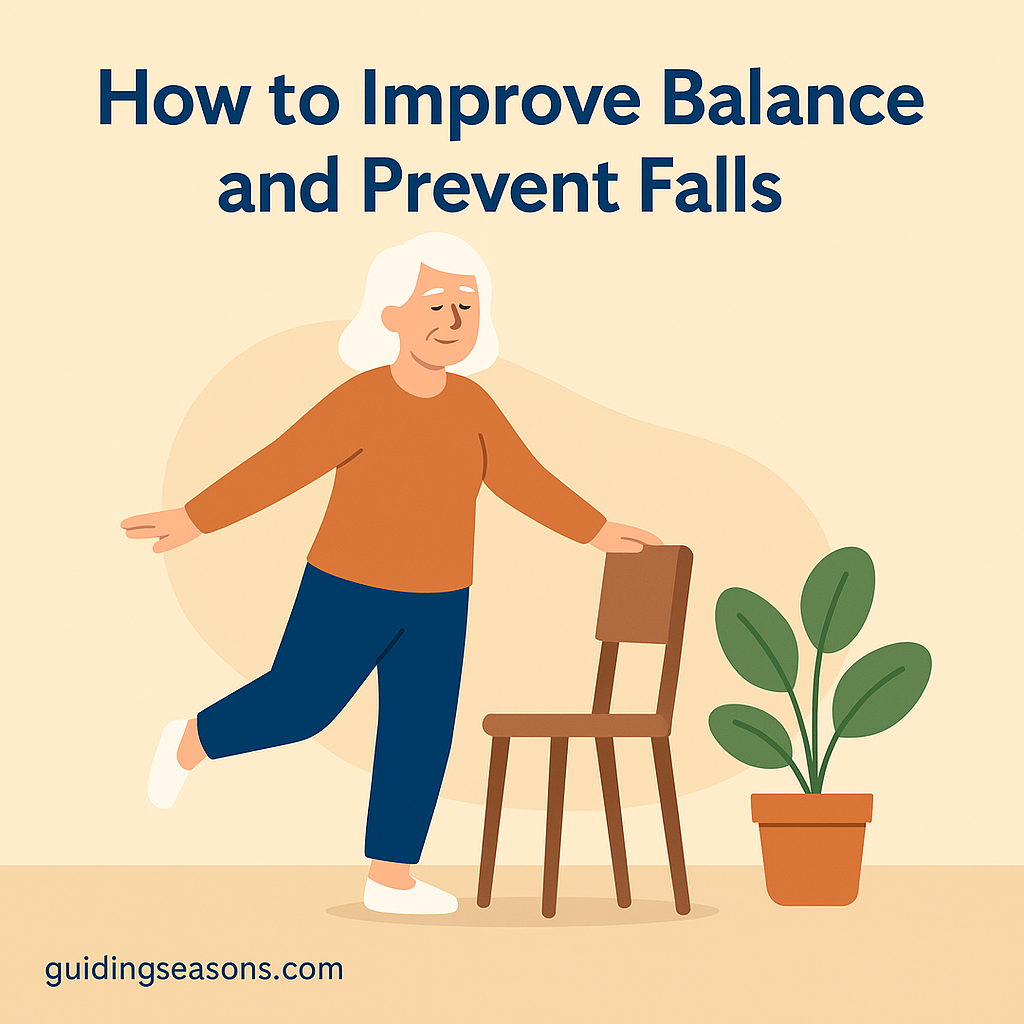
- Your balance has improved
- You can carry groceries more easily
- You have more energy
- You sleep better
- You’re less stiff in the morning
- You can stand from a chair more easily
- You’re spending more time socially engaged
- Your doctor is pleased with your health markers
Sometimes your weight may barely change while your strength and mobility improve significantly.
Those changes count.
11. Make Healthy Choices Convenient
Motivation becomes less important when your environment supports the behavior.
If you want to eat more fruit, keep fruit where you’ll see it.
If you want to walk every morning, leave your walking shoes near the door.
If you want to drink more water, keep a reusable bottle nearby.
If you want to strength train twice a week, place your resistance bands somewhere visible.
Removing small obstacles can make a surprisingly large difference.
Imagine two situations.
In the first, your walking shoes are in a closet upstairs.
In the second, they’re beside the front door with your hat and water bottle.
The actual exercise is the same, but the second environment makes getting started easier.
12. Make Health Social
Healthy habits don’t have to be solitary.
Being active with someone else can make the experience more enjoyable while providing accountability.
You might:
- Walk with a neighbor
- Join a fitness class
- Take water aerobics
- Attend a senior center program
- Join a hiking group
- Garden with your spouse
- Play pickleball with friends
- Share weekly goals with a family member
A regular social commitment can also help create structure after retirement.
For example, if you know a friend will meet you for a walk every Tuesday and Thursday morning, you’re less likely to postpone it indefinitely.
13. Find an Accountability Partner
Accountability doesn’t need to involve strict rules.
It can simply mean having someone who knows what you’re working toward.
You might tell your spouse:
“I’m trying to walk three times this week.”
Or text a friend after completing your workout.
You can even create a shared routine.
For example:
“Every Monday morning we’ll call each other and decide which three days we’re walking this week.”
The goal isn’t to make someone police your behavior.
It’s to add encouragement and consistency.
14. Celebrate Consistency, Not Perfection
Suppose you planned to walk four times this week but only walked three.
That’s not failure.
You completed 75% of your plan.
Instead of focusing entirely on the missed day, recognize the three days you followed through.
Likewise, one restaurant meal doesn’t erase a week of nutritious meals, and one poor night of sleep doesn’t destroy an otherwise healthy routine.
Healthy living works over weeks, months, and years—not individual days.
15. Expect Motivation to Come and Go
You won’t always feel enthusiastic about taking care of your health.
That’s normal.
Sometimes you’ll wake up excited to go for a walk.
Other days, you’d rather stay on the couch.
This is why routine matters.
When the behavior becomes part of your normal schedule, you don’t need to negotiate with yourself every time.
Think about brushing your teeth.
Most people don’t wait to feel inspired before doing it.
It happens because it’s part of the routine.
Over time, some health habits can become similar.
16. Have a Minimum Version of Your Habit
Some days will be harder than others.
Instead of choosing between completing your entire routine and doing nothing, create a smaller version.
Suppose your normal goal is a 30-minute walk.
Your minimum version might be 10 minutes.
If your normal strength workout contains six exercises, your minimum version could be two.
If you’re tired, busy, or having a difficult day, complete the smaller version.
This helps preserve the habit without forcing yourself through an unrealistic routine.
17. Adjust Around Pain or Mobility Limitations
Pain can quickly destroy motivation if every activity makes you uncomfortable.
Don’t simply assume you need more willpower.
The activity itself may need to change.
Depending on your situation, alternatives might include:
- Water exercise instead of long walks
- Chair exercises
- Stationary cycling
- Resistance bands
- Shorter activity sessions
- Physical therapy exercises
- More rest between sessions
Persistent pain or a significant change in mobility deserves medical attention.
A healthcare professional or physical therapist may be able to help you find safer ways to remain active.
18. Watch for Health Problems That Look Like “Low Motivation”
Sometimes a lack of motivation isn’t a habit problem.
Fatigue, low mood, medication side effects, sleep disorders, chronic pain, illness, or nutritional problems can all make it harder to stay engaged with healthy routines.
If you’ve experienced a significant or persistent change in:
- Energy
- Sleep
- Appetite
- Mood
- Interest in normal activities
- Ability to exercise
- Weight
talk with your healthcare provider.
You don’t need to assume that every change is simply part of getting older.
19. Avoid the “All or Nothing” Mentality
One of the biggest threats to consistency is thinking that if you can’t do everything, there’s no point doing anything.
Imagine you’re traveling for a week and can’t follow your usual exercise routine.
Instead of abandoning activity entirely, you might:
- Walk around the hotel
- Use the stairs when appropriate
- Stretch in your room
- Walk while sightseeing
- Complete 10 minutes of body-weight exercises
The routine is different, but the habit of staying active continues.
Healthy habits should be flexible enough to survive real life.
20. Build Healthy Food Habits You Actually Enjoy
Healthy eating doesn’t need to involve foods you dislike.
If you hate kale, don’t build your nutrition plan around kale.
There are plenty of other nutritious options.
Experiment with:
- Berries
- Apples
- Oranges
- Beans
- Oatmeal
- Eggs
- Fish
- Chicken
- Yogurt
- Whole grains
- Nuts
- Sweet potatoes
- Tomatoes
- Carrots
- Broccoli
Look for foods that are nutritious and enjoyable.
A diet you enjoy is much easier to maintain than one that feels like punishment.
21. Keep Medical Care Part of Your Health Routine
Prioritizing health involves more than diet and exercise.
It can also mean keeping up with:
- Routine medical appointments
- Recommended screenings
- Vaccinations
- Dental care
- Vision care
- Hearing care
- Prescription refills
- Medication reviews
Instead of waiting until something feels wrong, build preventive care into your calendar.
For example, choose one month each year to review which routine appointments or screenings are coming due.
Your healthcare provider can help determine which preventive services are appropriate based on your age and medical history.
22. Use Retirement as an Opportunity
Retirement changes your routine, but that can work in your favor.
During your working years, you may have repeatedly said:
“I don’t have time to exercise.”
“I eat whatever is available at work.”
“I’ll take better care of myself when things slow down.”
Retirement can provide more flexibility to:
- Cook meals at home
- Take morning walks
- Attend fitness classes
- Schedule medical appointments
- Sleep consistently
- Spend time outdoors
- Participate in social activities
Instead of viewing retirement as the loss of structure, consider it an opportunity to create a healthier structure.
23. Revisit Your Goals Every Few Months
The goal that motivated you six months ago may not be the goal that matters most today.
Your priorities may change.
Maybe your original goal was losing weight.
After several months, you realize that improving your balance matters more.
Or perhaps you initially wanted to walk farther but now want to become strong enough to comfortably carry your luggage while traveling.
Every few months, ask:
- What is going well?
- What feels difficult?
- Which habits have become easy?
- What could I adjust?
- What matters most to me right now?
Health goals should evolve with your life.
24. Create an Example Weekly Health Routine
You don’t need an elaborate wellness schedule.
Here’s one example of a simple week:
Monday
20-minute walk
Tuesday
15 minutes of strength exercises
Wednesday
20-minute walk and lunch with a friend
Thursday
Rest or light stretching
Friday
20-minute walk and strength exercises
Saturday
Gardening or another enjoyable activity
Sunday
Plan meals and activities for the coming week
This routine includes only a few intentional health activities, yet it creates structure around movement, strength, social connection, and planning.
You can gradually increase the activity level based on your ability and your healthcare provider’s recommendations.
25. Remember Why You Started
When motivation drops, return to your reason.
Maybe you’re taking care of your health because you want to:
- Travel during retirement
- Remain independent
- Keep up with grandchildren
- Continue living in your home
- Feel confident walking
- Maintain your hobbies
- Reduce your risk of future health problems
Write your reason somewhere you can see it.
A note on the refrigerator saying:
“I’m staying active so I can keep traveling.”
may be more motivating than:
“I have to exercise.”
The first statement connects health to your life.
Final Thoughts
Staying motivated to prioritize your health isn’t about maintaining constant enthusiasm or perfect discipline.
Motivation naturally changes.
Some weeks you’ll feel energized and committed. Other weeks, illness, travel, family responsibilities, poor sleep, or simply a lack of enthusiasm may make healthy habits more difficult.
The key is building routines that can survive those fluctuations.
Start small. Choose activities you enjoy. Create specific goals. Put healthy habits on your calendar. Track enough progress to recognize improvement, but don’t obsess over numbers. Make healthy choices convenient and involve other people when possible.
Most importantly, connect your health habits to something meaningful.
You aren’t walking simply because someone says you should exercise.
You may be walking because you want to explore a new city on vacation.
You aren’t strength training simply to complete a workout.
You may be building strength so you can continue carrying groceries, gardening, climbing stairs, or living independently.
A useful starting point could be as simple as 10 minutes of movement three times this week. Once that feels normal, add another five minutes or another day.
The National Institute on Aging encourages older adults to start with manageable amounts of physical activity, choose activities they enjoy, and gradually work toward greater activity as appropriate. (nia.nih.gov)
Your health doesn’t depend on one perfect week. It is shaped by hundreds of small decisions made over months and years.
Keep the goals realistic, make the routine enjoyable, and focus on staying engaged rather than being perfect. That approach can make caring for your health a sustainable part of retirement instead of another obligation you have to force yourself to complete.