
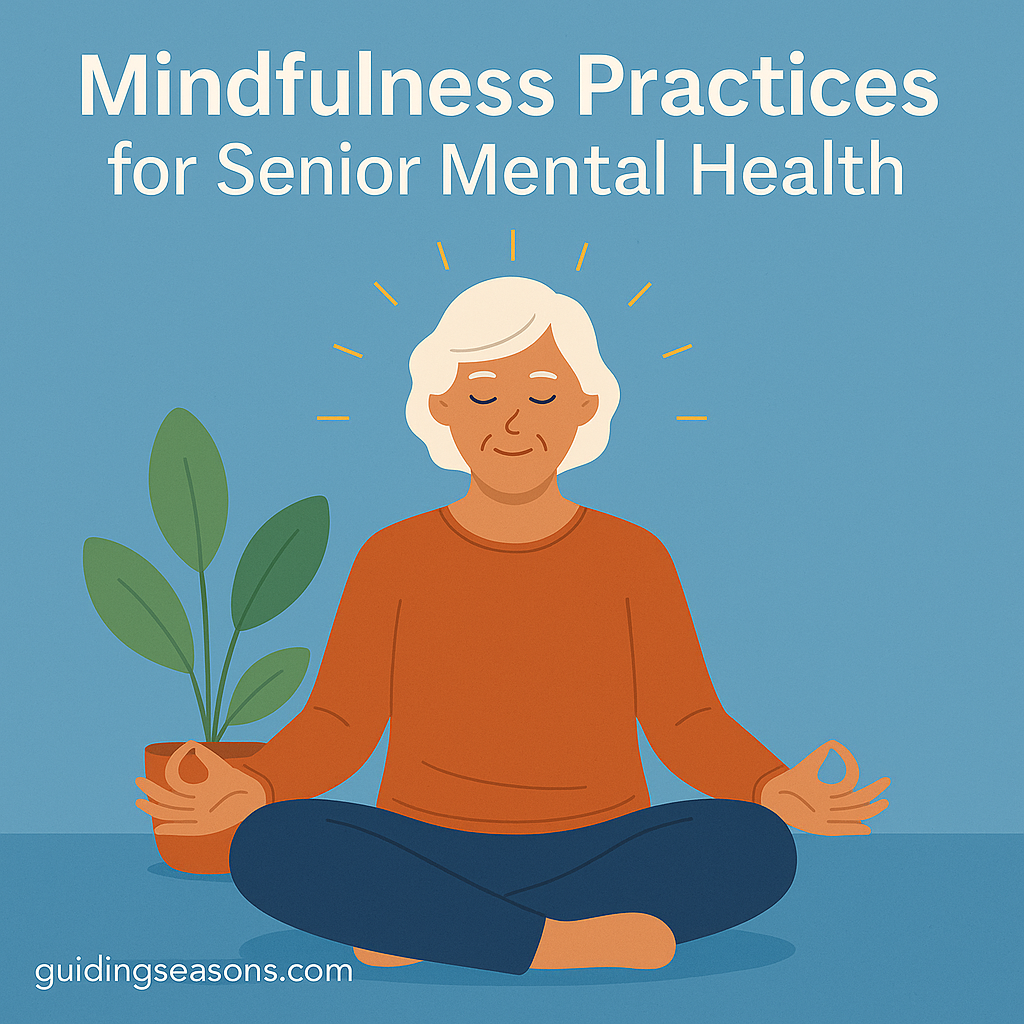
Mindfulness is a simple practice that can support emotional well-being, stress management, and a greater sense of calm at any age. For older adults, it can be particularly useful during periods of change, uncertainty, loneliness, caregiving stress, health concerns, or adjustments to retirement and daily routines.
At its core, mindfulness means intentionally paying attention to what is happening in the present moment without immediately judging the experience. Instead of becoming caught up in worries about tomorrow or repeatedly thinking about something that happened yesterday, mindfulness encourages you to notice what is happening right now.
That might mean paying attention to your breathing, listening carefully to birds outside your window, noticing the warmth of a cup of tea in your hands, or simply recognizing that you are feeling anxious without criticizing yourself for feeling that way.
Mindfulness does not require special equipment, expensive classes, or hour-long meditation sessions. A few minutes can be enough to begin developing the habit.
Research also suggests potential mental health benefits. According to the National Center for Complementary and Integrative Health (NCCIH), mindfulness-based practices may help with symptoms of anxiety and depression, although research varies depending on the technique and condition being studied. Mindfulness should therefore be viewed as a supportive wellness practice rather than a replacement for professional mental health treatment when it is needed.
What Is Mindfulness?
Mindfulness is sometimes confused with meditation, but they are not exactly the same thing.
Meditation is one way of practicing mindfulness. You might sit quietly for several minutes and concentrate on your breathing, for example.
But mindfulness can also happen during ordinary activities.
You can practice mindfulness while:
- Walking
- Eating
- Gardening
- Listening to music
- Washing dishes
- Sitting outdoors
- Talking with a friend
- Drinking your morning coffee
- Working on a hobby
The basic idea is to give more attention to the experience happening in front of you instead of allowing your thoughts to operate entirely on autopilot.
For older adults, this makes mindfulness especially accessible because it can be adapted to different levels of mobility, energy, and experience.
Start With Simple Mindful Breathing
Breathing exercises are among the easiest mindfulness practices to try because your breath is always available as a point of focus.
Sit comfortably in a chair with your feet supported by the floor if possible.
Then:
- Breathe in slowly through your nose.
- Notice your chest or abdomen gently rising.
- Pause naturally without forcing yourself to hold your breath.
- Exhale comfortably.
- Notice the sensation of the air leaving your body.
- Repeat several times.
You do not have to breathe unusually deeply. The purpose is simply to pay attention.
If your mind begins thinking about errands, appointments, family problems, or tomorrow’s plans, notice that your attention has wandered and gently return it to your breathing.
That process of noticing and returning is part of mindfulness.
Try a Five-Minute Mindfulness Routine
Beginners sometimes assume that meditation requires sitting silently for 30 minutes or longer. Starting much smaller may make the practice easier to maintain.
For example, imagine a 72-year-old retiree named Robert who tends to feel tense in the morning while thinking about everything he needs to accomplish.
Instead of immediately checking his phone after breakfast, Robert creates a simple five-minute routine.
For the first minute, he sits comfortably and notices his breathing.
For the next two minutes, he pays attention to sounds around him—the refrigerator humming, birds outside, and occasional traffic.
During the fourth minute, he notices how his body feels in the chair.
During the final minute, he thinks of one thing he appreciates about the day ahead.
Nothing dramatic has happened. Robert has simply spent five minutes directing his attention intentionally instead of immediately becoming absorbed in worries and distractions.
That is mindfulness.
Practice Mindful Walking
Walking provides another opportunity to combine gentle physical activity with mindfulness.
Instead of walking while thinking about your destination, deliberately notice the experience of moving.
Pay attention to:
- Your feet contacting the ground
- The rhythm of your steps
- Your arms moving naturally
- The temperature of the air
- Sunlight or shade
- Sounds around you
- Trees, plants, buildings, or clouds
- Your breathing as you move
You do not need to walk unusually slowly. Walk at a comfortable and safe pace.
If balance or mobility is a concern, mindfulness can also be practiced while seated rather than attempting a walking exercise.
Use Your Senses to Return to the Present
Your senses provide natural anchors for mindfulness.
When your thoughts become busy, choose something you can see, hear, touch, smell, or taste and give it your full attention.
For example, sit near a window and spend several minutes observing what you can see.
Notice the shape of the clouds.
Watch leaves moving.
Observe changing light and shadows.
Listen for birds, voices, wind, or distant traffic.
The goal is not to decide whether these things are good or bad. Simply notice them.
This can be particularly useful when your mind is repeatedly returning to the same worry.
Practice Mindful Eating
Meals offer several built-in opportunities to practice mindfulness every day.
Before taking your first bite, look at your food.
Notice its colors, shapes, and aromas.
As you eat, pay attention to texture and flavor. Chew comfortably and notice how the experience changes from the first bite to the last.
Try occasionally eating part of a meal without television, scrolling through a phone, or reading.
You may discover that slowing down allows you to notice aspects of familiar foods that normally go unnoticed.
Mindful eating is not a diet. It is simply the practice of paying closer attention to the experience of eating.
Try a Gentle Body Scan
Stress does not exist only in our thoughts. People may unknowingly hold tension in their shoulders, jaw, hands, neck, or other parts of the body.
A body scan helps bring attention to those sensations.
Sit or lie in a comfortable position.
Begin with your feet and notice how they feel.
Then gradually move your attention upward:
- Feet
- Ankles
- Legs
- Hips
- Abdomen
- Chest
- Hands
- Arms
- Shoulders
- Neck
- Face
You do not have to change every sensation you notice.
If your shoulders feel tight, simply recognize the tension and allow them to relax if comfortable.
If an area hurts, acknowledge the sensation without forcing movement.
A body scan can take two minutes, 10 minutes, or longer depending on your preference.
Use Guided Meditation
Some people find silent meditation difficult because their thoughts wander quickly.
Guided meditation can provide more structure.
A recorded instructor may guide you through breathing, body awareness, visualization, relaxation, or another mindfulness technique.
Guided sessions are available through meditation apps, community wellness programs, libraries, senior centers, podcasts, and online videos.
Beginners may want to start with a session lasting just 3 to 5 minutes.
Long sessions are not automatically better. A short practice that becomes part of your routine may be more useful than an ambitious routine that you quickly abandon.
Combine Mindfulness With Gratitude
Gratitude and mindfulness complement each other because both encourage attention to experiences that might otherwise pass unnoticed.
At the end of the day, think of three things you appreciated.
They do not have to be major events.
You might appreciate:
- A telephone conversation with a friend
- Comfortable weather
- A good meal
- A pet sitting beside you
- Flowers beginning to bloom
- Finishing a household project
- Hearing a favorite song
- Having a quiet morning
You can write these things in a notebook or simply reflect on them mentally.
The purpose is not to pretend that difficult experiences do not exist. Gratitude is about recognizing that positive or meaningful moments can exist alongside challenges.
Turn Hobbies Into Mindfulness Practices
Many hobbies naturally encourage mindfulness because they require attention to what your hands and senses are doing.
Examples include:
- Gardening
- Knitting or crocheting
- Painting
- Drawing
- Woodworking
- Puzzles
- Coloring
- Cooking
- Baking
- Birdwatching
- Photography
- Playing a musical instrument
Imagine tending a small garden.
Instead of thinking about five other tasks while watering the plants, notice the smell of the soil, the texture of the leaves, the sound of the water, and changes in the plants since yesterday.
The activity itself has become a mindfulness exercise.
Practice Listening Mindfully
Mindfulness can also improve the way we interact with other people.
During a conversation, try listening without simultaneously planning what you are going to say next.
Notice the person’s words, facial expressions, and tone of voice.
Allow brief pauses instead of feeling that every moment of silence needs to be filled.
This kind of attention can make conversations feel more meaningful and may strengthen social connections.
Reduce Multitasking
Modern life encourages people to divide their attention constantly.
You might eat breakfast while watching television, checking messages, and thinking about your afternoon appointment.
Mindfulness takes the opposite approach.
Try doing one thing at a time.
When drinking tea, drink tea.
When listening to music, listen.
When talking with someone, give that person your attention.
When taking a walk, notice the walk.
You do not have to eliminate multitasking completely. Simply create a few moments during the day when one activity receives your full attention.
Use Mindfulness Before Bed
A busy mind can make it difficult to settle down at night.
Mindfulness may provide a gentler transition between daytime activities and sleep.
Once you are comfortable in bed, notice your breathing.
Feel the weight of your body against the mattress.
Relax your jaw and shoulders.
If thoughts about tomorrow appear, acknowledge them and gently bring your attention back to your breathing or physical sensations.
NCCIH reports that research suggests mindfulness meditation may help some people with insomnia and sleep quality, although individual results vary.
Mindfulness should not replace medical evaluation for persistent sleep difficulties.
Spend Mindful Time Outdoors
Nature provides many opportunities for present-moment awareness.
Sit on a porch, visit a park, tend a garden, or walk through your neighborhood.
Notice details you normally overlook.
How many different bird sounds can you hear?
What does the air smell like?
Are the clouds moving quickly or slowly?
How does sunlight feel on your skin?
Even sitting outdoors for a few minutes can provide an opportunity to disconnect from screens and reconnect with your immediate surroundings.
Be Patient When Your Mind Wanders
One of the biggest misconceptions about mindfulness is that successful meditation requires completely stopping your thoughts.
Thoughts will continue to appear.
You might suddenly remember an unpaid bill, tomorrow’s appointment, something you forgot at the grocery store, or a conversation from 20 years ago.
That does not mean you failed.
Simply notice the thought and return your attention to your breathing, surroundings, or whatever you were focusing on.
Think of mindfulness as practicing attention rather than trying to create a perfectly empty mind.
Create a Routine You Can Maintain
Consistency may be easier when mindfulness is connected to something you already do.
You might practice:
- After morning coffee
- Before your daily walk
- While sitting outdoors after lunch
- Before an afternoon nap
- After turning off the television
- Before going to sleep
Start small.
For example, commit to five minutes a day for one week.
That adds up to only 35 minutes of mindfulness practice across the entire week.
If the routine feels helpful and comfortable, you can gradually increase the amount of time.
Know When Mindfulness Is Not Enough
Mindfulness can be a useful wellness tool, but it is not a cure for every mental health concern.
Persistent sadness, severe anxiety, panic attacks, significant changes in sleep or appetite, loss of interest in normal activities, confusion, social withdrawal, or thoughts of self-harm deserve professional attention.
Older adults should not feel that they need to meditate their way through serious emotional distress.
A doctor or mental health professional can determine whether counseling, medication, lifestyle changes, medical treatment, social support, or another approach may be appropriate.
It is also worth recognizing that meditation is not universally comfortable. NCCIH notes that meditation and mindfulness are generally considered low-risk, but some people report negative experiences, including increased anxiety or depression.
If meditation consistently makes you feel worse, stop the practice and discuss your experience with an appropriate healthcare professional.
A Simple Daily Mindfulness Plan
You do not need to practice every technique in this guide.
A manageable routine might look like this:
Morning: Spend three minutes paying attention to your breathing before beginning the day.
Afternoon: Take a short walk or sit outside and intentionally notice five things you can see or hear.
Evening: Think of three things you appreciated about your day.
Bedtime: Spend several minutes noticing your breathing and relaxing areas of physical tension.
These small practices turn mindfulness into part of ordinary life rather than another task on a long to-do list.
Final Thoughts
Mindfulness does not require you to completely clear your mind, sit perfectly still, or meditate for an hour every day. It is simply the practice of bringing your attention back to the present.
For older adults, that might happen during a morning breathing exercise, an afternoon walk, gardening, listening to music, enjoying a meal, talking with a loved one, or relaxing before bed.
Research suggests that mindfulness and meditation may provide benefits for stress and some symptoms of anxiety, depression, and sleep difficulties, although the evidence varies and mindfulness should not be considered a replacement for appropriate medical or mental health care.
The easiest way to begin is often to start small. Choose one activity you already do every day and spend a few minutes giving it your full attention.
Five quiet minutes may not change everything about your day, but they can create a useful pause—a chance to notice where you are, how you feel, and what is happening around you.
Over time, those small moments of awareness can become a natural part of daily life, supporting a calmer, more intentional approach to aging and emotional well-being.