
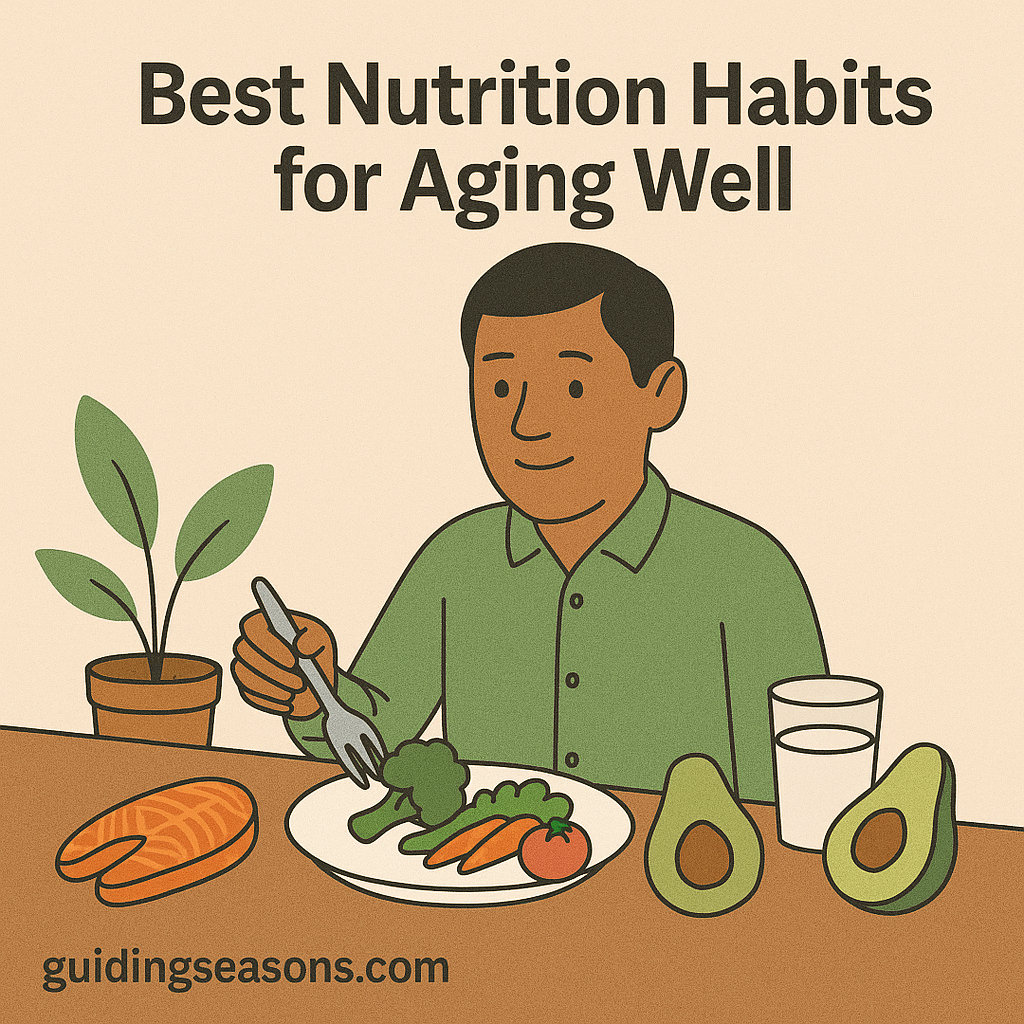
Aging well isn’t just about genetics. The habits you practice every day can influence your energy, strength, mobility, and overall quality of life as you get older. Among those habits, good nutrition plays an especially important role.
Your nutritional needs change with age. You may need fewer calories than you did when you were younger, while still needing plenty of protein, fiber, vitamins, minerals, and other essential nutrients. This makes the quality of the foods you eat increasingly important.
A healthy diet does not have to involve complicated meal plans, expensive ingredients, or strict rules. Instead, focus on building sustainable habits: eating a variety of nutrient-dense foods, getting enough protein, drinking adequate fluids, choosing healthier fats, and limiting foods that provide lots of calories but relatively little nutrition.
The National Institute on Aging (NIA) recommends that older adults choose a variety of foods from the major food groups while paying attention to nutrients such as protein, calcium, vitamin D, potassium, dietary fiber, and vitamin B12. National Institute on Aging
Here are some of the best nutrition habits you can adopt to support healthy aging.
Why Nutrition Matters More as You Age
The body changes gradually throughout adulthood. Muscle mass can decline, calorie needs may decrease, and changes in appetite, activity, medications, dental health, or digestion can affect how and what you eat.
These changes create an interesting challenge: you may require fewer total calories while still needing enough essential nutrients.
That means every meal is an opportunity to give your body useful nutrition.
A diet built around vegetables, fruits, whole grains, protein-rich foods, healthy fats, and appropriate dairy or fortified alternatives can support many aspects of health, including:
- Muscle strength
- Bone health
- Digestion
- Heart health
- Immune function
- Energy
- Healthy body weight
- Overall physical function
Nutrition is only one part of healthy aging, but it works alongside physical activity, adequate sleep, preventive healthcare, stress management, and social connection.
Focus on Whole, Nutrient-Dense Foods
One of the simplest ways to improve your diet is to prioritize foods that provide plenty of nutrients relative to their calorie content.
You don’t need to eliminate processed foods entirely. Instead, gradually make nutrient-dense foods the foundation of your meals.
Foods to prioritize include
- Fresh or frozen fruits and vegetables
- Beans, peas, and lentils
- Whole grains such as oats, barley, quinoa, and brown rice
- Fish and seafood
- Lean poultry and other protein sources
- Eggs
- Tofu and other soy foods
- Nuts and seeds
- Olive oil
- Low-fat dairy or appropriate fortified alternatives
Variety is important. Eating the same healthy meal every day may provide some valuable nutrients, but eating different vegetables, fruits, grains, and proteins gives your body a broader range of nutrients.
An easy strategy is to vary the colors on your plate throughout the week. Dark leafy greens, orange vegetables, berries, tomatoes, beans, and other colorful foods each contribute different nutrients.
Prioritize Protein to Help Maintain Muscle
Maintaining muscle becomes increasingly important as you get older.
Muscles help you do far more than lift heavy objects. They contribute to balance, walking, climbing stairs, getting out of a chair, carrying groceries, and performing everyday activities independently.
Protein provides amino acids the body uses to build and maintain tissues, including muscle.
Rather than consuming most of your protein at one meal, try incorporating protein-rich foods throughout the day.
Good protein sources include
- Fish
- Chicken or turkey
- Eggs
- Greek yogurt
- Cottage cheese
- Beans
- Lentils
- Tofu
- Tempeh
- Nuts and seeds
For example, instead of having toast for breakfast, a sandwich for lunch, and then most of your protein at dinner, you could add eggs or Greek yogurt at breakfast, beans or chicken at lunch, and fish or tofu at dinner.
If chewing becomes difficult, softer options such as yogurt, eggs, beans, lentils, tofu, cottage cheese, or flaky fish may be easier to eat.
Protein requirements can vary based on age, body size, activity level, kidney function, and medical conditions, so individualized advice should come from a physician or registered dietitian.
Keep Hydration a Daily Priority
Thirst can become a less reliable reminder to drink as people get older. Certain medications and health conditions can also affect hydration needs.
Rather than relying entirely on thirst, make drinking fluids part of your regular routine.
Simple hydration habits include
- Drinking water with meals
- Keeping water within easy reach
- Drinking before and after physical activity
- Adding lemon, cucumber, or berries to water for flavor
- Eating foods with a high water content, such as melon, oranges, soups, and vegetables
Water needs vary considerably between individuals. Instead of treating a rule such as “eight glasses every day” as appropriate for everyone, consider your activity, climate, diet, medications, and medical conditions.
Some people with kidney disease, heart failure, or other conditions may actually need to limit fluids. Follow your healthcare provider’s instructions if you have been given a specific fluid target.
Choose Healthy Fats
Fat is an essential part of a balanced diet, but the type of fat you consume matters.
Try replacing some foods high in saturated fat with foods containing unsaturated fats.
Useful choices include
- Olive oil
- Avocados
- Walnuts
- Almonds
- Seeds
- Salmon
- Sardines
- Trout
Fatty fish also provide omega-3 fatty acids.
Rather than thinking of omega-3 foods as a guaranteed way to prevent memory loss or other age-related problems, consider them part of an overall heart-healthy eating pattern. Evidence around individual nutrients and cognitive aging is complex, and no single food can guarantee protection against dementia or other chronic diseases.
A simple change might be using olive oil instead of butter for some meals or replacing processed meat with fish once or twice during the week.
Eat Plenty of Fiber-Rich Foods
Fiber becomes particularly useful as you get older because it supports normal digestion and bowel regularity. Fiber-rich eating patterns can also support cardiovascular and metabolic health.
The Dietary Guidelines for Americans recommend approximately 14 grams of fiber per 1,000 calories consumed. That means someone eating about 2,000 calories per day would have a target of roughly 28 grams of fiber. Dietary Guidelines for Americans
Fiber-rich foods include
- Oatmeal
- Whole-grain bread
- Brown rice
- Barley
- Beans
- Lentils
- Apples
- Pears
- Berries
- Broccoli
- Carrots
- Peas
- Nuts and seeds
Here’s a practical example.
Imagine breakfast includes oatmeal with berries, lunch includes a bean-based soup, your afternoon snack is an apple, and dinner includes broccoli and a whole grain. Without relying on a fiber supplement, you have incorporated several different sources of fiber throughout the day.
If your current diet is relatively low in fiber, increase it gradually. A sudden large increase can cause gas, bloating, or digestive discomfort.
Support Bone Health With Calcium and Vitamin D
Maintaining healthy bones is an important part of preserving mobility and independence.
Calcium is necessary for bone health, while vitamin D helps the body absorb calcium and performs other important functions.
Sources of calcium may include
- Milk
- Yogurt
- Cheese
- Calcium-fortified plant beverages
- Certain leafy green vegetables
- Tofu made with calcium
- Some canned fish with edible bones
Vitamin D can come from certain foods, fortified products, supplements, and sunlight exposure. However, the body’s ability to produce vitamin D from sunlight depends on numerous factors.
Don’t assume that more calcium or vitamin D is automatically better.
Supplements may be appropriate for some people, but excessive intake can cause problems. A healthcare professional can help determine whether your diet provides enough or whether testing or supplementation is appropriate.
Don’t Forget Vitamin B12
Vitamin B12 deserves particular attention as you get older.
The body needs B12 for healthy blood and nerve cells, among other functions. Some older adults have difficulty absorbing naturally occurring vitamin B12 from food.
Sources include:
- Fish
- Meat
- Poultry
- Eggs
- Dairy products
- Fortified breakfast cereals
- Other fortified foods
People following vegetarian or vegan diets need to pay particular attention to reliable sources of vitamin B12.
Certain medications and digestive conditions can also affect B12 absorption. If you’re concerned about your intake or have been told that your levels are low, discuss testing and supplementation with your healthcare provider.
Limit Added Sugars and Highly Processed Foods
You don’t need to remove dessert or your favorite snack from your life to eat well.
Instead, look at your overall eating pattern.
Foods and drinks containing large amounts of added sugar can contribute significant calories without providing the nutritional value found in fruits, vegetables, whole grains, or protein-rich foods.
Common sources include:
- Sugary soft drinks
- Candy
- Pastries
- Sweetened coffee beverages
- Sugary breakfast cereals
- Some packaged snacks
Try making simple substitutions rather than changing everything overnight.
For example:
- Replace sugary cereal with oatmeal and berries.
- Choose whole-grain bread instead of refined white bread.
- Have fruit and yogurt instead of a pastry on some days.
- Drink water or unsweetened tea instead of soda with lunch.
A sustainable diet can still include foods you enjoy. Frequency and portion size matter.
Watch Sodium Intake
Sodium is another nutrient worth paying attention to, especially because high blood pressure becomes more common with age.
A large portion of dietary sodium can come from packaged, prepared, and restaurant foods rather than from the salt shaker alone.
Foods that can be surprisingly high in sodium include soups, deli meats, frozen meals, sauces, breads, pizza, and snack foods.
Reading nutrition labels makes comparison easier.
If two soups look similar but one contains substantially less sodium per serving, choosing the lower-sodium option is a small decision that can add up over time.
Using herbs, garlic, lemon, pepper, and other seasonings can also add flavor without relying entirely on salt.
Build Balanced Meals
Instead of worrying about individual “superfoods,” consider the overall structure of your meals.
A balanced meal might contain:
- A protein source
- Vegetables or fruit
- A whole grain or other fiber-rich carbohydrate
- A source of healthy fat
For example, dinner could consist of baked salmon, roasted vegetables, brown rice, and a small amount of olive oil used for cooking.
Lunch might be lentil soup with whole-grain bread, a side salad, and fruit.
Breakfast could include oatmeal topped with berries and walnuts alongside Greek yogurt.
These aren’t special anti-aging meals. They simply combine several useful nutritional habits in one place.
Keep Meals Consistent Without Becoming Rigid
Some people naturally eat three meals each day, while others prefer smaller meals with snacks.
There isn’t one schedule that works for everyone.
What matters is getting adequate nutrition and finding an eating pattern that supports your energy, appetite, medications, activity, and health needs.
If you frequently skip meals because you don’t feel hungry, consider smaller nutrient-dense options.
A simple snack might include:
- Yogurt and fruit
- An apple with nut butter
- Whole-grain crackers with cheese
- Hummus with vegetables
- A small handful of nuts
Unexpected appetite loss or unintentional weight loss should be discussed with a healthcare professional rather than dismissed as a normal part of aging.
Plan Ahead for Easier Healthy Eating
Good intentions don’t always survive a busy or tiring day.
Making healthy food convenient can make a major difference.
Try keeping several easy options available, such as frozen vegetables, canned beans, oatmeal, eggs, yogurt, frozen fruit, whole-grain bread, and canned fish.
You can also cook larger portions and refrigerate or freeze individual servings.
For example, preparing six servings of vegetable and bean soup on Sunday gives you several quick meals during the week without requiring you to cook from scratch every day.
Convenience doesn’t have to mean unhealthy.
Frozen vegetables, canned beans, canned fish, and other minimally processed staples can make balanced meals much easier to prepare. Look for lower-sodium or no-salt-added options when appropriate.
Be Careful With Supplements
Supplements can be useful when there is a genuine nutritional need, but they shouldn’t automatically replace a balanced diet.
Older adults may sometimes be advised to supplement nutrients such as:
- Vitamin B12
- Vitamin D
- Calcium
- Iron in specific circumstances
- Other vitamins or minerals when a deficiency is identified
The right supplement depends on the individual.
Supplements can also interact with medications. Even products labeled “natural” can cause side effects or alter the effects of prescription drugs.
Before adding supplements, discuss them with your physician, pharmacist, or registered dietitian, particularly if you take multiple medications.
Make Changes You Can Actually Maintain
One of the biggest mistakes people make with nutrition is trying to overhaul their entire diet overnight.
Healthy aging is a long-term goal, so consistency matters more than perfection.
Instead of changing everything at once, choose one or two habits.
You might decide to:
- Add a vegetable to dinner every day.
- Include protein at breakfast.
- Replace soda with water at lunch.
- Eat fish once or twice per week.
- Switch from refined grains to whole grains more often.
- Add fruit to your afternoon snack.
- Prepare one healthy meal in advance each week.
Once the habit feels normal, add another.
A series of small improvements maintained for years is far more useful than an extremely restrictive diet followed for two weeks.
Final Thoughts
The best nutrition habits for aging well aren’t built around expensive supplements, restrictive diets, or miracle foods. They’re built around consistently giving your body the nutrients it needs.
Focus on a variety of vegetables and fruits, adequate protein, whole grains, fiber-rich foods, healthy fats, and appropriate sources of calcium, vitamin D, and vitamin B12. Stay adequately hydrated, limit excessive added sugars and sodium, and make nutritious foods convenient enough to eat regularly.
Most importantly, adjust your diet to your individual needs.
Your nutritional requirements can change because of medications, activity level, appetite, dental health, digestive problems, kidney function, diabetes, heart disease, and other factors. A physician or registered dietitian can help you make appropriate changes when necessary.
Healthy aging doesn’t require eating perfectly every day. A better goal is to make nutritious choices more often than not.
Small decisions—adding protein to breakfast, eating another serving of vegetables, choosing whole grains, or preparing tomorrow’s lunch ahead of time—may seem insignificant on their own. Repeated consistently, however, they become the habits that support strength, mobility, energy, and independence for years to come.
This article is intended for general educational purposes and does not replace individualized medical or nutritional advice. Speak with your healthcare provider or a registered dietitian about dietary changes if you have a medical condition, take medications, have dietary restrictions, or are concerned about a nutrient deficiency.