A good morning sets the tone for the entire day. For seniors especially, a consistent morning routine can support better energy, mobility, mental clarity, and emotional balance. You don’t need an intense schedule or complicated steps—even small habits can make mornings brighter, healthier, and more enjoyable.
Here’s a simple guide to creating healthy morning habits that strengthen your body, refresh your mind, and help you start each day with confidence and ease.
Wake Up at a Steady, Comfortable Time
You don’t need to wake up at sunrise—what matters is consistency. A predictable wake-up time can help support your body’s natural sleep-wake rhythm and make mornings feel more structured.
Helpful tips:
- Aim for roughly the same wake-up time each day
- Let in natural light as soon as you wake
- Keep your bedroom calm and quiet overnight
- Take your time getting out of bed, especially if you sometimes feel dizzy or unsteady
A steady rhythm can make mornings feel more peaceful and predictable.
Start With Gentle Stretching
Your muscles and joints may feel stiff in the morning. Gentle stretching can help loosen your body and prepare you for everyday movement.
Try:
- Shoulder rolls
- Neck stretches
- Ankle circles
- Gentle back movements
- Standing or seated side stretches
Just 2–5 minutes of gentle movement can be an easy way to start. For example, you might spend one minute doing shoulder rolls, one minute moving your ankles, and two minutes stretching your arms and sides before making breakfast.
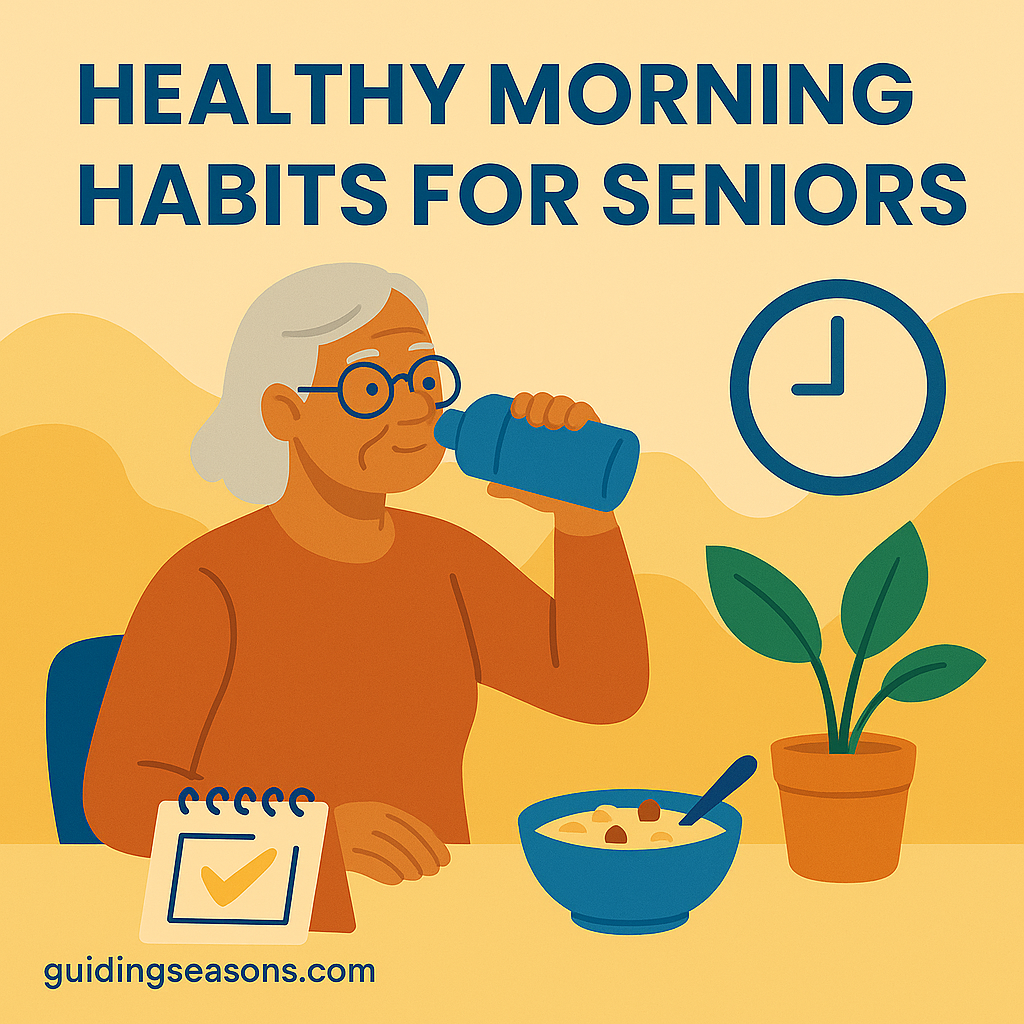
Drink Water Before Your First Cup of Coffee
Hydration is especially important as we get older, and starting the morning with a glass of water is a simple habit to build into your routine.
The National Council on Aging’s guidance on hydration for older adults explains why adequate fluids are important for many normal body functions.
Keep a glass of water next to your bed or in the kitchen so you can:
- Rehydrate after sleeping
- Support normal digestion
- Start your daily fluid intake early
- Build a consistent hydration habit
If you enjoy coffee or tea, consider having some water first or alongside your morning drink.
If your doctor has told you to restrict fluids because of a medical condition, follow their recommendations instead.
Eat a Nourishing Breakfast
A balanced morning meal can provide energy and important nutrients for the day ahead.
Nutritious options include:
- Oatmeal with berries
- Whole-grain toast with nut butter
- Scrambled eggs with vegetables
- Low-fat yogurt with fruit
- Smoothies with greens and a source of protein
Choose foods that leave you feeling satisfied and comfortable rather than overly full or sluggish.
Get a Bit of Movement In
You don’t need a long workout. Even 5 to 15 minutes of comfortable activity can be a practical way to get your body moving in the morning.
Great morning activities:
- Walking around the block
- Light yoga or tai chi
- Chair exercises
- Stationary biking
- Simple strength movements with light weights or resistance bands
The National Council on Aging emphasizes incorporating aerobic activity, strength, flexibility, and balance into an older adult’s overall exercise routine.
Start at a level that feels appropriate for your abilities, and talk with your health care provider before beginning a new exercise routine if you have medical conditions or concerns about exercising safely.
Take Morning Medications as Directed
If you have medications scheduled for the morning, developing a consistent routine can make them easier to remember.
To stay organized:
- Use a labeled pill organizer
- Set alarms or reminders
- Keep medications in a safe, designated location
- Maintain an up-to-date medication list
Always follow the instructions provided with your medication. Some medicines should be taken with food, others on an empty stomach, and some may have specific timing requirements. Ask your doctor or pharmacist if you are unsure.
Do a Quick Mental Check-In
A simple moment of reflection can help you begin your day with greater awareness and clarity.
Ask yourself:
- How am I feeling today?
- What do I need most this morning?
- What one thing can I do today that will make me feel good?
A brief check-in can help you stay connected to your emotional and mental needs.
Practice Mindfulness or Relaxation
Starting your morning calmly can create a more relaxed beginning to the day.
Try:
- Deep breathing
- A short meditation
- Reading something uplifting
- Listening to soft music
- Gratitude journaling
Even a few quiet minutes can become a meaningful part of your morning routine.
Plan Something to Look Forward To
Having something enjoyable or meaningful planned for the day can provide motivation and a sense of purpose.
This could be:
- A phone call with family
- A hobby such as gardening or painting
- A short outing
- A walk with a neighbor
- Listening to an audiobook
- Working on a favorite puzzle or project
It doesn’t have to be a major event. A small enjoyable activity can give you something positive to anticipate.
Do a Quick Home Safety Check
A simple scan of your surroundings can help reduce common tripping and falling hazards, especially first thing in the morning when you may still be waking up.
Look for:
- Items left on the floor
- Loose or slippery rugs
- Poor lighting
- Pets underfoot
- Cords or clutter in walkways
Falls are an important concern for older adults. The National Council on Aging’s falls prevention resources include information about exercise, home safety, health checkups, and other practical ways to reduce fall risk.
Keeping frequently used pathways clear and well-lit is a simple habit that can make the home safer.
Step Outside for Fresh Air, If Possible
A little time outdoors can be a pleasant way to begin the day. Morning light also provides an environmental cue that helps regulate the body’s daily sleep-wake cycle.
Options:
- Sit on the porch for a few minutes
- Walk to the mailbox
- Water outdoor plants
- Take a short walk
- Open a window and enjoy the fresh air when weather permits
You don’t need to spend a long time outside to make it an enjoyable part of your morning.
Keep Your Routine Flexible and Enjoyable
Healthy habits should feel supportive—not stressful. It’s okay if your routine changes slightly from day to day.
Remember:
- Start small
- Adjust activities to your comfort and ability
- Pay attention to your energy level
- Choose habits you genuinely enjoy
- Give new habits time to become part of your routine
You might begin with only three habits: drink a glass of water, stretch for five minutes, and take a short walk after breakfast. Once those feel natural, you can gradually add more.
The best morning routine is one you can realistically maintain.
Final Thoughts
Healthy morning habits can create a strong foundation for a more active, organized, and enjoyable day. Simple practices such as stretching, staying hydrated, moving your body, eating a nourishing breakfast, and taking a few quiet moments for yourself can all become valuable parts of your routine.
You don’t need to change everything at once. Start with one or two habits that fit comfortably into your morning and build from there.
Every new day is another opportunity to care for your health and well-being—and a simple morning routine can help you begin it feeling prepared, steady, and confident.