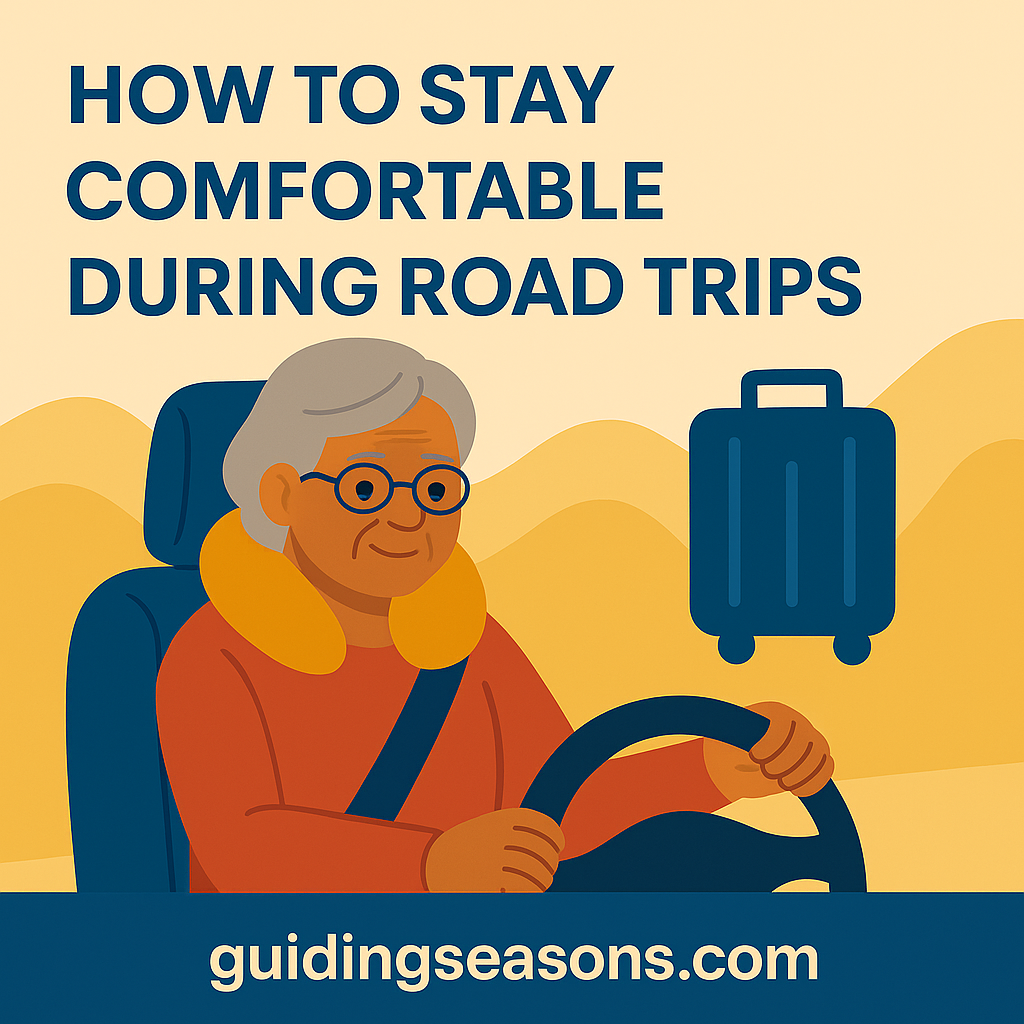
Road trips offer something that air travel often cannot: freedom. You can choose when to leave, where to stop, what scenery to enjoy, and how quickly you want to reach your destination.
For older adults, that flexibility can make driving an especially appealing way to travel. But spending several hours in a vehicle can also bring challenges. Sitting in one position for too long may cause stiffness, driving requires sustained concentration, and an ambitious schedule can turn an enjoyable journey into an exhausting one.
The solution isn’t necessarily to drive less or give up road trips. Instead, it helps to approach them differently.
Comfortable road travel is largely about pacing, preparation, posture, hydration, and recognizing when it’s time for a break. A few adjustments can make a long drive significantly easier and help you arrive with enough energy to actually enjoy your destination.
Here’s how seniors can make road trips safer, more comfortable, and less tiring.
Why Road Trip Comfort Can Change With Age
A six-hour drive that once seemed easy may eventually feel much longer.
That’s not necessarily a reason to stop traveling. Bodies change over time, and so can the way we respond to extended sitting and concentration.
Common challenges during long drives can include:
- Back, hip, knee, or neck stiffness
- Leg discomfort after sitting
- Fatigue from concentrating on traffic
- Increased sensitivity to heat or cold
- Difficulty seeing clearly at night
- Stress when navigating unfamiliar roads
- More frequent restroom stops
- Difficulty getting comfortable in the driver’s seat
Rather than trying to ignore these changes, incorporate them into your travel plans.
If you know your back becomes uncomfortable after two hours, for example, don’t plan to drive four hours before your first stop. Build the trip around what works for you.
1. Break Long Drives Into Manageable Sections
One of the simplest ways to make a road trip more comfortable is to stop thinking only about the total distance.
A 500-mile trip can sound intimidating.
Instead, divide it into smaller driving segments separated by planned breaks.
The National Highway Traffic Safety Administration (NHTSA) advises drivers to take regular breaks during long trips and notes that adequate sleep is the only true protection against drowsy driving. Coffee or energy drinks alone aren’t a substitute for rest. NHTSA guidance on drowsy driving
You don’t need to wait until you’re exhausted before stopping.
For example, imagine you’re planning a 360-mile road trip that will take approximately six hours of actual driving. Instead of attempting the entire distance with only one quick stop, you might divide the day into three two-hour driving periods.
Drive for about two hours, take a 15- to 20-minute break, continue for another two hours, stop for lunch and a longer walk, and then complete the final section.
The journey takes slightly longer, but you may arrive feeling considerably better.
2. Adjust Your Seat Before You Start Driving
Many people don’t think about their driving position until something starts hurting.
Take a few minutes before leaving to adjust your seat properly.
You should be able to reach the steering wheel and pedals comfortably without stretching. Your back should feel supported, and your knees shouldn’t be pressed against the dashboard.
Consider adjusting:
- Seat height
- Distance from the steering wheel
- Backrest angle
- Head restraint
- Steering wheel position
- Lumbar support
- Mirrors
If your vehicle doesn’t provide enough lower-back support, a small lumbar cushion may help.
Avoid using oversized cushions or anything that changes your seating position so dramatically that it interferes with safe control of the vehicle or the proper positioning of your seat belt.
Once you’ve found a comfortable position, save it using your vehicle’s seat-memory function if one is available.
3. Stop and Move Regularly
Movement is one of the most useful ways to reduce the stiffness associated with long periods of sitting.
When you stop, don’t automatically spend the entire break sitting in a restaurant or scrolling on your phone.
Walk around for a few minutes.
You might:
- Walk around the rest area
- Gently stretch your legs
- Move your ankles
- Straighten your knees
- Relax your shoulders
- Change your posture
Long periods of immobility can also contribute to blood-clot risk in susceptible travelers. The Centers for Disease Control and Prevention notes that trips lasting more than four hours, including travel by car, bus, train, or airplane, can increase the risk of blood clots for some people. The overall risk for most people is small, but additional risk factors can increase it. CDC guidance on blood clots and travel
If you’ve previously had a blood clot, recently undergone surgery, have limited mobility, or have other significant risk factors, discuss long-distance travel with your healthcare provider.
4. Keep Water Within Easy Reach
Hydration can easily become an afterthought during road trips.
Some travelers intentionally drink less because they don’t want to stop for the restroom. That may save a few minutes, but it isn’t necessarily a good tradeoff.
Keep a bottle of water somewhere you can safely access it.
If you’re the driver, avoid opening complicated bottles or searching through bags while the vehicle is moving. A passenger can help, or you can drink when safely stopped.
Also remember that hydration needs differ between individuals. If your healthcare provider has instructed you to restrict fluids because of a medical condition, follow that advice instead of general travel recommendations.
Planned restroom stops can actually be useful because they provide another opportunity to stand and walk.
5. Pack Snacks That Support Steady Energy
Road trips and convenience-store food often go together, but relying entirely on fast food, candy, and sugary drinks can leave you feeling sluggish.
Bring a few familiar snacks.
Options might include:
- Nuts
- Fruit
- Whole-grain crackers
- Sandwiches
- Cheese
- Yogurt in a cooler
- Granola or protein bars
- Cut vegetables
Choose foods appropriate for your dietary needs.
A small cooler placed somewhere accessible can make it much easier to eat well without searching for a restaurant every time you’re hungry.
Planning meals also removes one source of travel stress. Instead of reaching a rural stretch of highway at 2:00 p.m. and realizing there isn’t a suitable restaurant nearby, you’ll already have something available.
6. Keep Important Items Accessible
Don’t pack everything you might need into the trunk.
Create a small travel bag containing essentials you may need during the day.
This could include:
- Medications
- Water
- Snacks
- Sunglasses
- Reading glasses
- Tissues
- Hand sanitizer
- Phone charger
- Sunscreen
- A light sweater
- Emergency contact information
Prescription medications should remain accessible rather than being buried beneath luggage.
If you take medication at a particular time of day, consider setting a phone reminder before starting your trip so that driving doesn’t disrupt your normal routine.
7. Dress in Comfortable Layers
Car temperatures can change considerably during a road trip.
Morning temperatures may be cool, afternoon sunlight can make the cabin warm, and air conditioning may eventually make you chilly again.
Layers make these changes easier to manage.
Choose loose, comfortable clothing that doesn’t restrict movement. Supportive footwear is also important, particularly for the driver.
Avoid driving in footwear that can easily slip off, become caught around the pedals, or make it difficult to control the accelerator and brake.
Comfort should never interfere with your ability to operate the vehicle safely.
8. Reduce Neck, Shoulder, and Back Strain
Driving involves more than sitting.
You’re also holding your arms forward, checking mirrors, turning your head, watching traffic, and maintaining a relatively fixed posture.
Over several hours, that can become tiring.
During breaks, relax your shoulders and gently change position. Walk for a few minutes instead of immediately sitting somewhere else.
If you’re a passenger, you have more freedom to adjust your position, but you should still remain properly seated with your seat belt correctly positioned whenever the vehicle is moving.
A small lumbar cushion or rolled towel may provide additional lower-back support if needed.
Persistent or significant pain, however, shouldn’t simply be treated as an unavoidable part of traveling. Discuss recurring pain with an appropriate healthcare professional.
9. Avoid Driving When You’re Tired
Comfort and driving safety are closely connected.
Fatigue can reduce attention, slow reaction time, and impair decision-making.
NHTSA warns that drowsy driving can be dangerous and emphasizes getting adequate sleep before driving. It also notes that drowsiness-related crashes frequently occur between midnight and 6 a.m. or in the late afternoon, when the body’s natural sleep rhythms can contribute to tiredness. NHTSA guidance on drowsy driving
If you begin experiencing:
- Frequent yawning
- Difficulty keeping your eyes open
- Trouble remembering the previous few miles
- Difficulty maintaining your lane
- Missing exits or signs
don’t try to “push through.”
Find a safe place to stop.
Opening a window or turning up the radio isn’t a reliable solution for significant drowsiness.
If another licensed and rested traveler can drive, consider switching drivers.
10. Be Realistic About Night Driving
Some people become less comfortable driving at night as they get older.
Glare from headlights, reduced contrast, unfamiliar roads, rain, and fatigue can make nighttime travel more difficult.
If you know that night driving is stressful for you, build your itinerary around daylight.
For instance, rather than leaving at 3:00 p.m. for a seven-hour drive, consider leaving early the following morning.
Arriving a few hours later is often preferable to spending the final part of a travel day tense and exhausted.
This is another benefit of flexible road-trip planning: you control the schedule.
11. Plan Your Route Before Leaving
Navigation apps have made road trips easier, but don’t rely on technology without understanding your basic route.
Before departure, review:
- Major highways
- Expected travel time
- Construction or closures
- Fuel or charging stops
- Rest areas
- Meal options
- Overnight accommodations
- Alternate routes
If you’re traveling through rural or mountainous areas, don’t assume gas stations, restaurants, or cell service will always be readily available.
Downloading an offline map can provide useful backup navigation if cellular coverage disappears.
If possible, let a family member or friend know your general route and expected arrival time, especially when traveling alone.
12. Don’t Make the Schedule Too Tight
One of the advantages of a road trip is flexibility, so avoid eliminating that advantage by creating an unnecessarily strict schedule.
If your navigation app says the trip takes seven hours, don’t assume you’ll arrive exactly seven hours after departure.
You’ll probably stop for fuel, meals, restroom breaks, stretching, traffic, or something interesting along the way.
Build that time into the trip.
If seven hours of actual driving would be exhausting, consider stopping overnight.
Two relaxed four-hour driving days may be much more enjoyable than one exhausting eight-hour day.
The hotel costs more, but comfort can sometimes be worth more than reaching the destination a day earlier.
13. Make Getting In and Out of the Vehicle Easier
Repeatedly getting in and out of a low or high vehicle can become uncomfortable during a long trip.
Take your time.
When getting out, turn your body toward the door and place both feet securely before standing rather than twisting quickly.
When entering, sit first and then bring your legs into the vehicle if that’s more comfortable for you.
If you use a cane, walker, or another mobility aid, store it somewhere that can be reached without unpacking half the vehicle.
A few seconds of planning can make every stop easier.
14. Keep the Vehicle Comfortable
Prepare the vehicle as carefully as you prepare yourself.
Before a long trip, consider checking:
- Tire condition and pressure
- Fuel or battery charge
- Windshield visibility
- Wiper blades
- Headlights
- Air conditioning and heating
- Oil and other necessary fluids
- Emergency supplies
Keep the cabin organized.
Loose bags, bottles, and other objects rolling around the floor can become distracting and potentially interfere with the driver.
You may also want to bring a lightweight blanket for passengers, particularly when different people prefer different cabin temperatures.
15. Make Stops Part of the Experience
Rest stops don’t have to feel like interruptions.
Instead of always choosing the fastest possible gas station, look for scenic overlooks, parks, cafés, waterfront areas, or interesting small towns along your route.
Suppose your destination is eight hours away.
Adding two pleasant 30-minute stops may extend your travel day to nine hours, but those breaks can transform the drive itself into part of the vacation.
Have lunch somewhere you’ve never visited.
Take a short walk near a lake.
Stop at a scenic viewpoint.
Road trips are uniquely suited to this style of travel because you aren’t tied to an airline schedule.
16. Know When One Day Should Become Two
There is no prize for completing a long drive in a single day.
If you begin feeling sore, mentally exhausted, anxious, or increasingly uncomfortable, reconsider the schedule.
A hotel halfway to your destination may be a better choice.
For example, imagine you have a 650-mile journey ahead of you. Even if navigation estimates roughly 10 hours of driving, breaks, meals, traffic, and fuel stops could make the actual travel day considerably longer.
Instead, driving around 325 miles on the first day and 325 miles on the second creates two much more manageable travel days.
You might even choose an overnight location with a restaurant or attraction you’d enjoy.
The road trip becomes part of the vacation rather than something you have to survive before the vacation begins.
Balancing Independence With Ease
Road trips often represent independence.
You have your own vehicle, your belongings are nearby, and you can change your plans whenever you want.
Adapting your travel style doesn’t take that independence away.
In many cases, it protects it.
Stopping more often, avoiding nighttime driving, choosing shorter daily distances, sharing driving responsibilities, or spending an extra night on the road are simply ways of making travel fit your current needs.
Flexibility is one of the greatest advantages of traveling by car. Use it.
When Discomfort Means It’s Time to Reassess
Some tiredness after a long travel day is normal.
Persistent or worsening symptoms deserve more attention.
Consider reassessing your travel routine if you regularly experience:
- Significant pain while driving
- Severe stiffness after getting out of the car
- Unusual leg swelling
- Increasing anxiety about driving
- Difficulty concentrating
- Frequent drowsiness
- Several days of exhaustion after a trip
You may simply need shorter travel days, better seating support, more breaks, or a different departure time.
But new, severe, or unexplained symptoms should be discussed with an appropriate healthcare professional.
Certain symptoms require urgent medical attention. The CDC notes that symptoms associated with deep vein thrombosis can include swelling, pain or tenderness, warmth, or discoloration in an affected limb, while a pulmonary embolism may cause symptoms such as difficulty breathing, chest pain, coughing up blood, or an unusually fast or irregular heartbeat. CDC guidance on blood clots and travel
A Simple Road Trip Comfort Checklist
Before leaving, make sure you have:
- Prescription medications
- Water
- Healthy snacks
- Phone and charger
- Sunglasses
- Comfortable layered clothing
- Supportive footwear
- Emergency contact information
- Navigation backup
- Appropriate mobility aids
- A small lumbar cushion if needed
- Roadside emergency supplies
Most importantly, leave enough time that stopping doesn’t feel like falling behind.
Related Guidance You May Find Helpful
You may also find these articles useful:
- Best Travel Destinations for Seniors
- How to Prepare for Long Flights as a Senior
- How to Make Your Home Safer as You Age
- Daily Mobility Exercises That Keep Seniors Active
Together, these topics support comfortable travel, everyday mobility, and greater confidence.
A Final Thought
Staying comfortable during a road trip isn’t about seeing how many miles you can tolerate before stopping. It’s about designing the journey so you still feel good when you arrive.
Plan regular breaks. Adjust your seat before leaving. Keep water, medication, and other essentials within reach. Avoid driving when you’re tired, and give yourself permission to stop earlier than originally planned.
Most importantly, don’t treat the drive as wasted time between home and your destination.
Take the scenic route when it makes sense. Stop for lunch somewhere interesting. Stretch your legs at a viewpoint. Spend the night halfway if the distance feels excessive.
One of the greatest advantages of a road trip is that you’re in control of the pace.
Use that freedom to make the journey comfortable enough to enjoy—not merely endure.