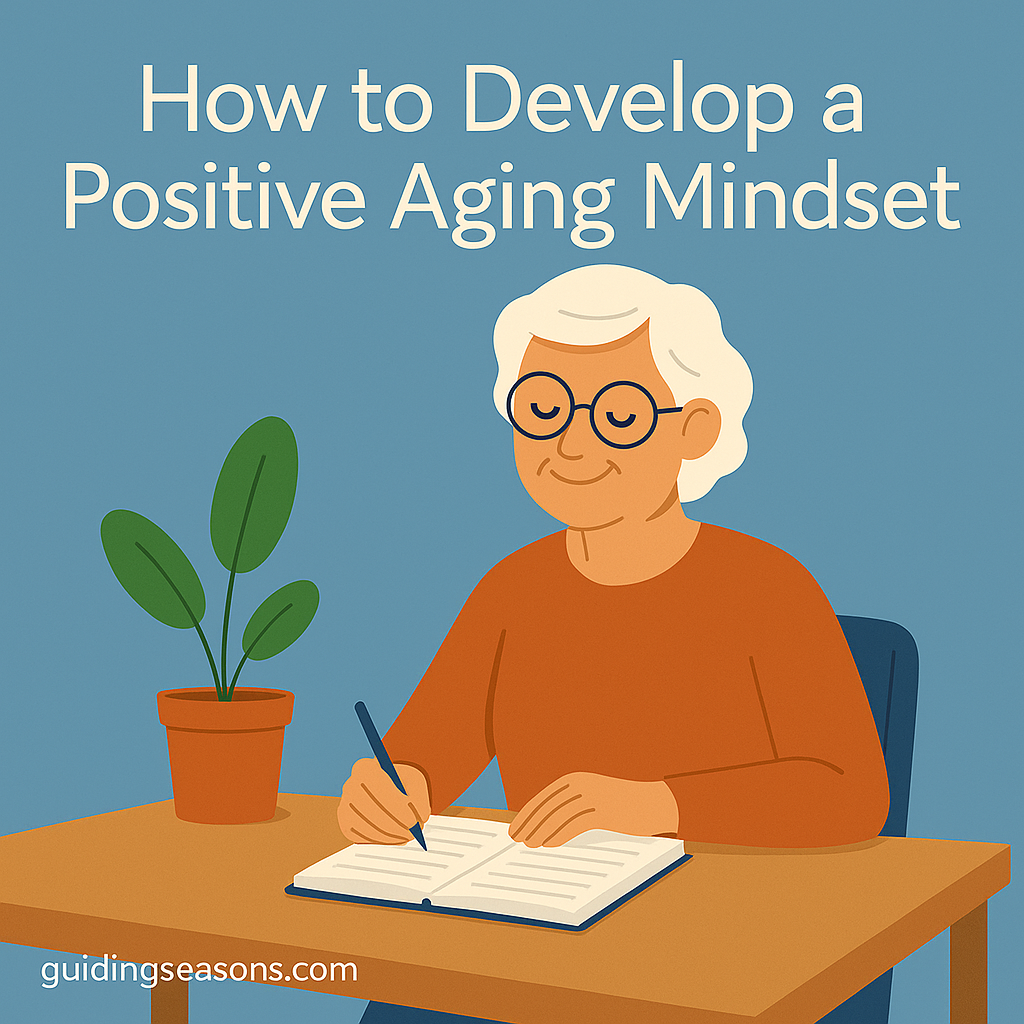
Aging is a natural part of life, but the way we think about getting older can have a powerful influence on how we experience it. For some people, aging brings concerns about health, independence, appearance, finances, or changing roles. For others, it creates opportunities for greater freedom, stronger relationships, new interests, and a clearer understanding of what matters most.
Developing a positive aging mindset does not mean pretending that every part of getting older is easy. Physical limitations, loss, health concerns, and major life transitions can be very real. A healthier mindset means recognizing those challenges without allowing them to define your entire experience of aging.
It also means questioning the idea that getting older automatically equals decline.
The World Health Organization (WHO) notes that ageism—including stereotypes, prejudice, and discrimination based on age—can even become self-directed when people internalize negative beliefs about what they should or should not be able to do as they grow older. WHO reports that ageism is associated with poorer physical and mental health, reduced quality of life, and greater social isolation.
Changing how you think about aging, therefore, is more than simply “thinking positive.” It can be part of creating a healthier, more engaged, and more fulfilling life.
Here are practical ways to develop a more positive and empowered mindset about aging.
Recognize the Strengths That Come With Age
Conversations about aging often focus on what people might lose. A more balanced perspective also recognizes what can be gained.
Years of experience can bring strengths that are difficult to develop any other way.
These may include:
- Greater emotional resilience
- Wisdom from past experiences
- Better understanding of personal values
- Increased confidence in making decisions
- More perspective when problems arise
- Stronger awareness of which relationships matter
- Greater appreciation for time and meaningful experiences
Think about situations that once felt overwhelming but that you would now handle differently. Experience teaches lessons that cannot always be learned from a book, class, or younger person’s advice.
Instead of asking only, “What can’t I do anymore?” occasionally ask yourself, “What do I understand now that I didn’t understand 20 years ago?”
That simple shift encourages you to recognize aging as an accumulation of experience rather than merely a process of losing youth.
Challenge Negative Beliefs About Getting Older
Many beliefs about aging come from culture rather than personal experience.
People may hear statements such as:
“I’m too old to learn that.”
“People my age don’t do things like that.”
“Technology is for younger people.”
“There’s no point starting something new now.”
Repeated often enough, these statements can begin to feel like facts.
They aren’t.
WHO identifies self-directed ageism as one way age stereotypes can affect people themselves. Negative assumptions about aging can influence expectations, behavior, and well-being.
When you notice an age-related assumption, question it.
Ask:
- Is this actually true?
- Is this a physical limitation or simply an assumption?
- Would I tell a friend of my age the same thing?
- Is there another way I could approach this?
- Do I know someone my age or older who has done something similar?
You don’t need unrealistic affirmations. Replace negative thoughts with statements that are both positive and believable.
Instead of:
“I’m too old to learn this.”
Try:
“It may take some practice, but I can learn one step at a time.”
That is a much more useful mindset.
Focus on What You Can Control
Aging naturally includes uncertainty. You cannot control every health condition, family situation, financial event, or physical change.
You can, however, influence many parts of your daily life.
These may include:
- How physically active you are
- What you eat most of the time
- Whether you maintain relationships
- How you structure your day
- Whether you continue learning
- How you respond to setbacks
- When you seek medical care
- What activities receive your time and attention
Focusing on these areas can create a greater sense of personal agency.
For example, someone worried about becoming less socially active after retirement might establish a simple goal of having three meaningful social interactions each week. That could mean meeting a friend for coffee on Tuesday, attending a community class on Thursday, and calling a family member on Sunday.
Three interactions may seem small, but over a year that routine could create more than 150 opportunities for meaningful connection.
Small, repeatable actions often have more influence on daily life than ambitious goals that are quickly abandoned.
Maintain Strong Social Connections
Relationships remain important throughout life.
Retirement, relocation, health changes, or the loss of friends and family members can sometimes reduce the amount of everyday social interaction people experience as they grow older.
Maintaining relationships therefore deserves intentional effort.
The National Institute on Aging (NIA) reports that staying socially connected may benefit more than emotional well-being. Research involving more than 7,000 adults age 65 and older found that higher social engagement—including activities such as visiting neighbors and volunteering—was associated with better cognitive health later in life.
Look for opportunities to stay connected through:
- Friends and relatives
- Community organizations
- Faith communities
- Volunteer groups
- Walking or exercise groups
- Hobby clubs
- Classes
- Neighborhood activities
- Intergenerational programs
Relationships do not have to involve large groups. A few dependable, meaningful connections can be extremely valuable.
Maintain a Sense of Purpose
Work provides structure and purpose for many adults for decades. Retirement or reduced work responsibilities can leave a gap that is sometimes surprising.
Purpose does not have to come from employment.
It can come from:
- Helping care for grandchildren
- Volunteering
- Mentoring someone younger
- Gardening
- Creating art
- Learning something new
- Helping neighbors
- Caring for animals
- Participating in community organizations
- Working toward a personal goal
- Sharing knowledge accumulated over your lifetime
Ask yourself a simple question:
What gives me a reason to look forward to tomorrow?
Your answer may change throughout different stages of life, and that’s fine.
Purpose does not have to be impressive to other people. It only needs to be meaningful to you.
Keep Learning New Things
Curiosity is not reserved for younger people.
Learning can provide stimulation, confidence, social interaction, and a sense of accomplishment. It also creates something valuable to anticipate.
Consider learning:
- A new language
- Photography
- Gardening
- Cooking techniques
- Computer skills
- Painting
- Music
- Local history
- Genealogy
- Financial skills
- Smartphone or tablet features
You don’t need to become an expert.
Imagine someone at age 68 deciding to learn photography. During the first month, the goal might simply be understanding the camera. A few months later, that person could be photographing local parks. Eventually, photography might lead to travel, a community group, new friendships, or a collection of photographs for grandchildren.
One small interest can expand into several meaningful areas of life.
Take Care of Your Body Without Punishing It
A positive aging mindset includes respecting your body as it changes.
That is different from constantly comparing your current body with the one you had at 25.
Focus on supporting the body you have today through habits such as:
- Regular physical activity appropriate for your abilities
- Nutritious meals
- Adequate hydration
- Consistent sleep
- Preventive medical care
- Following recommended screenings
- Managing existing health conditions
- Staying physically and socially active
The goal does not have to be looking younger.
A more useful goal might be maintaining enough strength to carry groceries, enough mobility to enjoy outings, or enough stamina to play with grandchildren.
Function can be a much healthier measure of progress than appearance.
Stop Comparing Your Aging Journey With Someone Else’s
People age differently.
Two people who are both 70 can have dramatically different health, finances, relationships, responsibilities, interests, and abilities.
Comparing yourself constantly with someone else can create unnecessary frustration.
Social media can make this particularly difficult. Seeing someone traveling internationally, exercising intensely, or enjoying an apparently perfect retirement provides only a small glimpse into that person’s life.
Instead of comparing outcomes, compare yourself with your own priorities.
Ask:
- Am I taking reasonable care of myself?
- Am I maintaining relationships that matter to me?
- Am I spending time on things I value?
- Is there something I would like to improve?
Your goal is not to age exactly like somebody else.
It is to build the best life possible within your own circumstances.
Practice Gratitude Without Ignoring Difficulties
Gratitude and difficulty can exist at the same time.
You can be frustrated about a physical limitation while appreciating a close friendship. You can miss your career while enjoying having more control over your schedule. You can experience grief while still finding moments of happiness.
A simple gratitude practice can help bring positive experiences into greater focus.
At the end of the day, identify three things you appreciated.
They don’t need to be significant.
Perhaps you enjoyed:
- A good conversation
- Comfortable weather
- A favorite meal
- A walk outside
- A phone call from someone you love
- Completing something you’ve been putting off
- Watching birds in your yard
The purpose isn’t to deny problems. It is to prevent problems from becoming the only things receiving your attention.
Celebrate What You’ve Already Accomplished
People frequently move from one goal to another without recognizing how much they have already experienced.
Take time occasionally to look backward.
Think about:
- Challenges you’ve survived
- Skills you’ve developed
- People you’ve helped
- Relationships you’ve maintained
- Career accomplishments
- Difficult decisions you’ve made
- Places you’ve visited
- Lessons you’ve learned
- Mistakes that eventually made you wiser
You may discover that your life contains far more evidence of resilience than you normally acknowledge.
That history matters when facing new challenges.
You’ve adapted before.
You can continue adapting.
Spend More Time in the Present
Worry about aging usually focuses on the future.
“What if my health changes?”
“What if I lose my independence?”
“What if I run out of money?”
Planning for realistic possibilities is responsible. Constantly living inside hypothetical problems, however, can prevent you from enjoying the life you have today.
Mindfulness can help bring attention back to the present.
That might involve:
- Taking a slow walk without checking your phone
- Sitting outside for 10 minutes
- Paying attention to your breathing
- Enjoying your morning coffee without multitasking
- Listening carefully during conversations
- Spending time in nature
- Appreciating a familiar daily ritual
The present may seem ordinary, but ordinary days make up much of a lifetime.
Learning to appreciate them is an important part of aging well.
Give Yourself Permission to Change
A positive aging mindset does not require remaining exactly the person you were decades ago.
Your priorities can change.
You might decide that career achievement matters less and relationships matter more. You might become interested in hobbies you previously ignored. You may prefer a quieter lifestyle or suddenly want more adventure.
Growth does not stop at a particular birthday.
Allow yourself to reconsider what you want from the next five, ten, or twenty years.
You are still allowed to make plans.
You are still allowed to change direction.
You are still allowed to become interested in something completely new.
Create Something to Look Forward To
One practical way to improve your outlook is to keep something on your calendar that you genuinely anticipate.
It doesn’t have to be an expensive vacation.
It might be:
- Lunch with a friend next Friday
- A weekend trip next month
- A weekly class
- Planting a garden this spring
- Attending a grandchild’s event
- Finishing a home project
- Learning a new recipe
- Visiting a local attraction
Having future experiences to anticipate reinforces an important message: there are still meaningful things ahead.
Final Thoughts
Developing a positive aging mindset isn’t about denying the realities of getting older. Aging can involve changes in health, relationships, finances, independence, and identity, and some of those changes can be difficult.
But aging is not defined solely by decline.
It can also bring wisdom, perspective, confidence, freedom, stronger relationships, curiosity, and a renewed sense of purpose.
Research and public-health guidance increasingly emphasize that healthy aging involves more than simply avoiding illness. WHO describes healthy aging in terms of maintaining the abilities that allow people to continue doing the things they value.
That is a useful way to think about aging itself.
The goal doesn’t have to be staying young.
The goal can be staying engaged.
Continue learning. Maintain relationships. Take care of your health. Challenge assumptions about what someone your age is “supposed” to do. Appreciate what you’ve accomplished while continuing to create things worth looking forward to.
Aging means your life is changing—but change does not mean your most meaningful experiences are behind you.
There can still be new skills to learn, people to meet, places to explore, relationships to strengthen, and purposes to discover.
A positive aging mindset begins with allowing yourself to believe that those possibilities are still available.