Retirement is often described as a reward—a time to rest, travel, spend time with family, and finally enjoy life on your own terms. But for many people, once the initial excitement fades, something unexpected can appear: a quiet sense of emptiness or loss of direction.
Without daily responsibilities, deadlines, coworkers, or a professional identity, it’s natural to wonder, “What now?”
This feeling doesn’t mean you’ve failed at retirement. It may simply mean you’re entering a new season of life that requires intention, reflection, and adjustment.
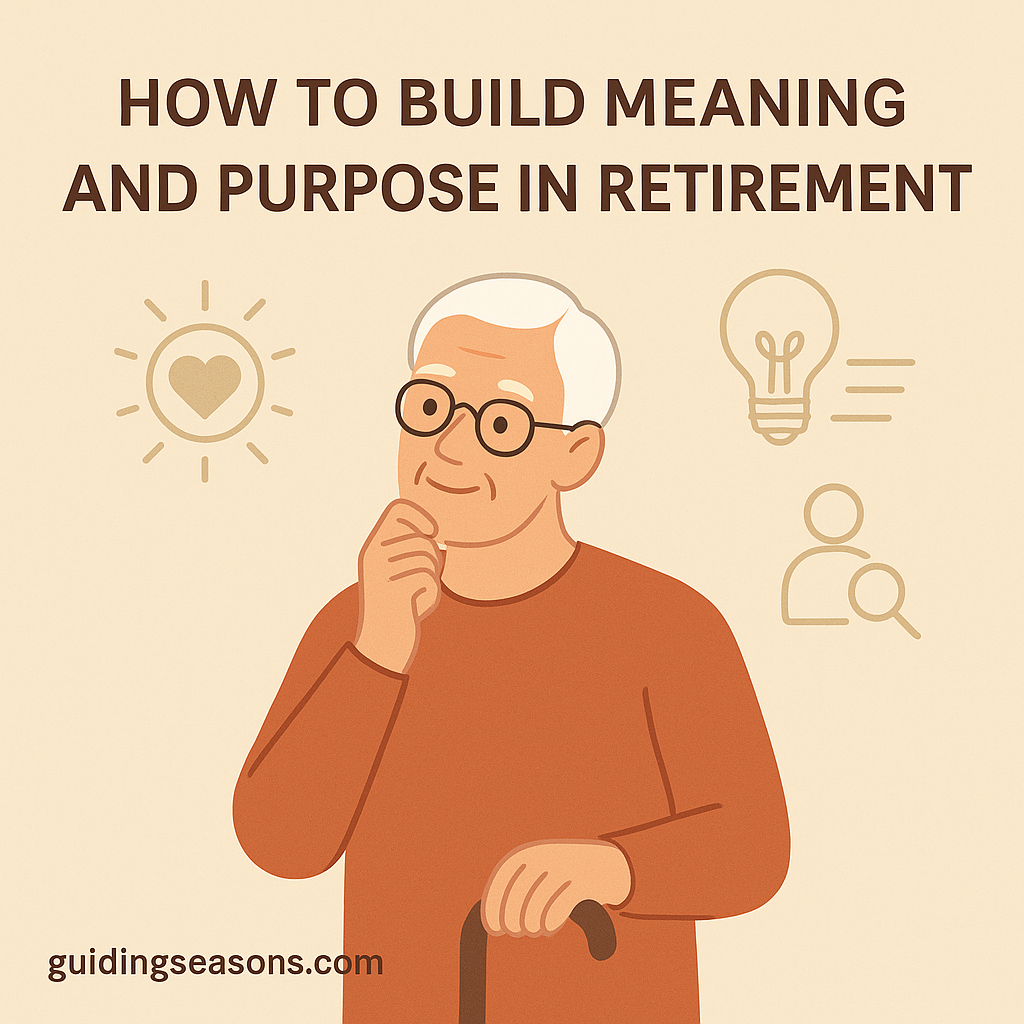
Meaning and purpose in retirement aren’t always discovered overnight. More often, they are built gradually through relationships, activities, responsibilities, and choices that align with who you are now—not simply who you used to be.
The goal isn’t to create another demanding schedule. It’s to build a life that gives you meaningful reasons to engage with each day.
Why Purpose Often Feels Different After Retirement
For decades, work often provides more than a paycheck.
A career can create structure, social interaction, responsibility, recognition, and a sense that other people depend on you. Even if your job wasn’t particularly fulfilling, you probably knew where you needed to be and what you were expected to accomplish.
Retirement changes that structure almost overnight.
Suddenly:
- Days may be less defined
- External expectations decrease
- Professional accomplishments are no longer measured
- Regular interaction with coworkers may disappear
- Your schedule becomes largely your own
- Your identity may no longer be connected to a job title
At first, this freedom can feel wonderful.
But after several months, some retirees discover that having unlimited free time isn’t automatically the same as having a fulfilling life.
The challenge is not necessarily finding enough things to do. It’s discovering which things feel worth doing.
The National Council on Aging (NCOA) emphasizes the importance of remaining socially active and mentally engaged after leaving the workforce. NCOA notes that retirement can increase the importance of deliberately maintaining relationships, community involvement, and activities that provide engagement and satisfaction.
Purpose in later life, therefore, doesn’t have to mean replacing your career.
It can mean redefining what fulfillment looks like when your time finally belongs largely to you.
Purpose Doesn’t Have to Be One Big Mission
One of the biggest misconceptions about purpose is that everyone needs to discover a single grand mission.
You don’t.
Your purpose doesn’t have to be starting a nonprofit, writing a book, traveling the world, or transforming your community.
Purpose can be surprisingly ordinary.
It might mean:
- Being an involved grandparent
- Caring for a garden
- Helping a neighbor
- Volunteering twice a month
- Supporting your spouse
- Learning something you’ve always been curious about
- Caring for a pet
- Staying connected with friends
- Creating art or music
- Mentoring someone younger
- Participating in your faith community
- Maintaining your health and independence
You can also have several sources of purpose at the same time.
Your family may provide one kind of meaning. A hobby may provide another. Volunteering, friendships, faith, learning, or creative projects may provide others.
Instead of asking:
“What is my purpose?”
Try asking:
“What gives my days meaning right now?”
That question is often much easier to answer.
Common Mistakes People Make When Searching for Purpose
Many retirees struggle not because they lack opportunities, but because they approach purpose in ways that don’t fit this stage of life.
Trying to Stay “Busy” Instead of Fulfilled
A packed calendar can create activity without creating meaning.
You can attend classes, run errands, watch television, travel, complete household projects, and fill every hour of the day—and still feel that something is missing.
Busyness answers the question:
“What am I doing today?”
Purpose answers a different question:
“Why does this matter to me?”
The two can overlap, but they aren’t the same.
Comparing This Season to Earlier Life
You may not have the same energy, responsibilities, ambitions, or priorities you had at 35 or 45.
That’s not necessarily a problem.
Retirement gives you an opportunity to redefine success.
Perhaps you once measured a good week by how much you accomplished. Now you might measure it by whether you spent meaningful time with family, stayed active, learned something interesting, helped someone, or simply enjoyed your surroundings.
Purpose evolves because people evolve.
Waiting for Clarity Instead of Experimenting
It’s easy to believe you’ll suddenly wake up knowing exactly what you want from retirement.
For many people, clarity develops through action.
You try a class.
You volunteer once.
You join a walking group.
You restart an old hobby.
You help someone with a problem.
Then you notice how you feel afterward.
Purpose is often discovered through experimentation rather than prolonged thinking.
Believing Purpose Must Be Impressive
Meaning doesn’t require recognition.
Nobody needs to applaud your retirement.
Helping your granddaughter with homework every Wednesday may provide more genuine meaning than joining five organizations simply because you think you should remain busy.
Small, consistent contributions can be deeply fulfilling.
How Purpose Evolves Over Time
During your working years, purpose may have been closely connected to achievement.
You earned promotions, raised children, paid a mortgage, built a career, supported a household, solved problems, or worked toward financial security.
Retirement can shift the emphasis from achievement toward meaning, connection, and contribution.
Instead of asking:
“What can I accomplish?”
You might begin asking:
“What feels meaningful and life-giving now?”
For many people, the answer involves:
- Mentorship or guidance
- Creative expression
- Community involvement
- Personal growth
- Faith or spirituality
- Deepening relationships
- Caring for others
- Learning
- Sharing knowledge accumulated over a lifetime
These forms of purpose may not come with titles, salaries, promotions, or public recognition.
That doesn’t make them less valuable.
Practical Ways to Build Meaning in Retirement
Purpose isn’t something you discover once and keep forever. It’s something you can continue building and adjusting.
Reflect on What Still Energizes You
Start paying attention to activities that leave you feeling satisfied rather than depleted.
Ask yourself:
- What conversations do I enjoy?
- What activities make time pass quickly?
- What problems do people naturally ask me to help solve?
- What did I enjoy before work became so demanding?
- What subjects am I naturally curious about?
- When do I feel useful?
- What would I regret never trying?
Don’t limit your answers to activities that seem productive.
If gardening gives you a peaceful sense of accomplishment, that matters.
If talking with your grandchildren gives you joy, that matters.
If researching family history fascinates you, that matters too.
These small signals can point toward larger sources of meaning.
Focus on Contribution, Not Productivity
Retirement provides an opportunity to separate contribution from productivity.
You don’t have to produce something measurable to be valuable.
Listening to someone who is lonely is a contribution.
Teaching a neighbor how to use a computer is a contribution.
Helping your grandchildren understand family history is a contribution.
Sharing decades of professional knowledge with someone starting a career is a contribution.
Volunteering can be one particularly accessible way to turn experience into contribution. AARP highlights volunteering as a way older adults can build purpose and social connection, while allowing people to choose opportunities that fit their interests and schedules.
You don’t need to volunteer 20 hours a week.
A few meaningful hours can be enough.
Try the “5-Hour Purpose Week”
If you’re unsure where to begin, experiment with giving just five hours each week to activities connected with meaning.
For example:
- 2 hours: volunteer or help someone
- 1 hour: learn something new
- 1 hour: intentionally connect with a friend or family member
- 1 hour: work on a hobby, creative project, or personal goal
That’s only five hours out of a 168-hour week.
The goal isn’t the exact number. It’s to deliberately reserve a small portion of your week for things that matter to you.
After a month, ask yourself:
Which of those hours did I look forward to most?
Which activities gave me energy?
Which felt like obligations?
What would I like to do more often?
Your answers can help you gradually shape a retirement that feels more meaningful.
Use Your Experience in New Ways
Retirement doesn’t erase the skills you’ve developed over decades.
It gives you the opportunity to use them differently.
A retired accountant might help a community organization with budgeting.
A former teacher might tutor a student for an hour each week.
A retired tradesperson might teach a grandchild basic home repair.
Someone who spent decades managing people might mentor younger professionals.
A longtime home cook might begin teaching family members favorite recipes.
You don’t have to recreate your former career.
Take the parts of your experience that still matter to you and leave behind the parts that don’t.
Strengthen Relationships That Matter
Purpose doesn’t always come from doing.
Sometimes it comes from belonging.
Retirement can create opportunities to invest more deeply in relationships that received less attention during busy working years.
That might mean:
- Having lunch with a friend every Tuesday
- Calling your adult children regularly
- Spending intentional time with grandchildren
- Reconnecting with an old friend
- Joining a community or faith group
- Meeting neighbors
- Developing new friendships
NCOA notes that strong connections with friends, family, and community can support well-being and quality of life as we age.
Don’t underestimate small interactions either.
A conversation with a neighbor, greeting someone on your morning walk, or becoming a regular at a community activity can gradually create a greater sense of belonging.
Keep Learning Something
Purpose can also come from growth.
Retirement doesn’t mean you’ve finished developing as a person.
You might:
- Learn a language
- Study history
- Take photography classes
- Learn gardening
- Improve your computer skills
- Study music
- Learn to paint
- Explore genealogy
- Take community college courses
- Read about subjects you’ve always wondered about
You don’t need a degree at the end.
Learning simply gives you something to pursue.
Choose one subject you’ve always thought was interesting and give yourself three months to explore it.
You may discover a new passion—or simply enjoy being a beginner again.
Create Gentle Structure
Complete freedom sounds appealing, but many people function better with at least a little structure.
Your routine doesn’t need to resemble a work schedule.
Instead, create a few weekly anchors.
For example:
Monday: errands and household tasks
Tuesday: walking group
Wednesday: personal project
Thursday: lunch with a friend
Friday: volunteer activity
Weekend: family, recreation, or rest
The specific activities aren’t important.
The goal is to create enough structure that your week has shape while preserving the flexibility that makes retirement enjoyable.
Allow Your Purpose to Change
What feels meaningful at 65 may not feel meaningful at 75.
Your health may change.
Your family may change.
You might move.
You may become a grandparent or caregiver.
A hobby may lose its appeal while a new interest becomes important.
Purpose should be flexible enough to change with you.
Every six months or so, ask:
What am I enjoying?
What feels meaningful?
What am I doing only out of obligation?
What am I curious about now?
You are allowed to revise your retirement.
When Lack of Purpose Starts to Affect Well-Being
Occasional boredom or uncertainty is normal.
There will be quiet days.
You don’t need every morning to feel profound or productive.
However, pay attention if a persistent loss of interest or motivation begins affecting everyday life.
Possible warning signs include:
- Increasing isolation
- Persistent sadness
- Loss of interest in activities you previously enjoyed
- Ongoing restlessness or emptiness
- Major changes in sleep or appetite
- Difficulty maintaining normal routines
- Persistent feelings of worthlessness or hopelessness
These experiences aren’t necessarily something you should try to solve by simply “finding a hobby.”
If they’re persistent or interfering with daily life, consider talking with your doctor or a qualified mental health professional.
Purpose can support well-being, but it isn’t a substitute for appropriate medical or mental health care when it’s needed.
Build a Personal Purpose Statement
You don’t need a corporate-style mission statement.
Instead, finish this sentence:
“At this stage of my life, I want to spend more of my time…”
Your answer might be:
…being present for my family.
…learning and staying curious.
…helping people with the knowledge I’ve gained.
…taking care of my health and enjoying the world around me.
…creating things I’m proud of.
…strengthening my faith and relationships.
Write down whatever comes naturally.
Then look at your typical week.
Does the way you spend your time reflect that statement?
If not, you don’t need to redesign your entire life. Choose one small change that moves your schedule closer to what you value.
Related Guidance You May Find Helpful
Building purpose often overlaps with other parts of emotional well-being. You may also find these topics useful as you navigate this transition:
- How to Connect With Your Inner Purpose
- How to Improve Your Daily Outlook
- How to Strengthen Your Inner Confidence
- How to Stay Open to New Experiences
- How to Build Healthy Routines for Happiness
These areas reinforce one another. Stronger relationships can create purpose. Purpose can encourage healthier routines. New experiences can reveal interests you didn’t know you had.
You don’t need to work on everything simultaneously.
Start where you feel the strongest pull.
Final Thoughts
Building meaning and purpose in retirement isn’t about replacing your career or proving that you’re still productive.
It’s about creating a life that feels worthwhile to you.
That may involve family, friendships, volunteering, faith, creativity, learning, mentoring, travel, hobbies, community involvement, or simply becoming more intentional about how you spend your time.
Your purpose doesn’t have to be impressive.
It doesn’t need a title.
And it doesn’t have to remain the same for the rest of your life.
Start small.
Give a few hours each week to something that creates connection, curiosity, contribution, or enjoyment. Notice what gives you energy and what doesn’t. Keep what feels meaningful and give yourself permission to let go of what doesn’t.
Over time, those choices begin to create structure and direction.
Retirement isn’t simply the end of your working life. It can also be the beginning of a period in which you have greater freedom to decide what deserves your attention.
Purpose may not arrive as one dramatic realization.
More often, it is built quietly—one relationship, one contribution, one interest, and one meaningful day at a time.