Life moves quickly, and it’s easy for old hobbies to slip into the background. Careers, raising families, responsibilities, and busy schedules often leave little room for activities that once brought joy. But retirement—or simply a calmer chapter of life—can offer the perfect opportunity to return to hobbies that once sparked curiosity, creativity, and excitement.
Rediscovering old hobbies can be more than just fun. Meaningful activities can provide opportunities to stay engaged, connect with others, learn new skills, and add a greater sense of purpose to everyday life. AARP highlights activities such as learning music, dancing, reading, and other mentally engaging hobbies as ways to challenge and stimulate the brain.
Whether it’s painting, playing an instrument, gardening, reading, or building something with your hands, an old passion may be worth exploring again.
Here’s how to reconnect with activities you once loved and bring them back into your daily life.
Reflect on What You Used to Enjoy
Start by taking a moment to remember the hobbies that brought you joy.
Ask yourself:
- What did I love doing as a child or teenager?
- What hobbies did I stop because life got too busy?
- What activities made me feel creative, calm, or excited?
- What did I always wish I had more time for?
Sometimes the hobbies we loved years ago still match who we are today—we simply need to revisit them.
Make a List of Hobbies You Want to Try Again
Seeing your hobbies written down can make them feel more real and accessible.
Include hobbies like:
- Painting or drawing
- Knitting or sewing
- Gardening
- Reading fiction or poetry
- Playing an instrument
- Cooking or baking
- Carpentry or woodworking
- Photography
- Dancing
- Collecting items
- Writing stories or journaling
There’s no wrong answer. The goal is simply to identify activities that sound enjoyable or interesting to you now.
Choose One Small Starting Point
You don’t need to dive back in all at once. A small beginning can help you build momentum without feeling overwhelmed.
Try:
- A single page in a sketchbook
- One chapter of a book
- A 10-minute walk with a camera
- Planting one pot of herbs
- Practicing an instrument for 15 minutes
- Making one favorite recipe from years ago
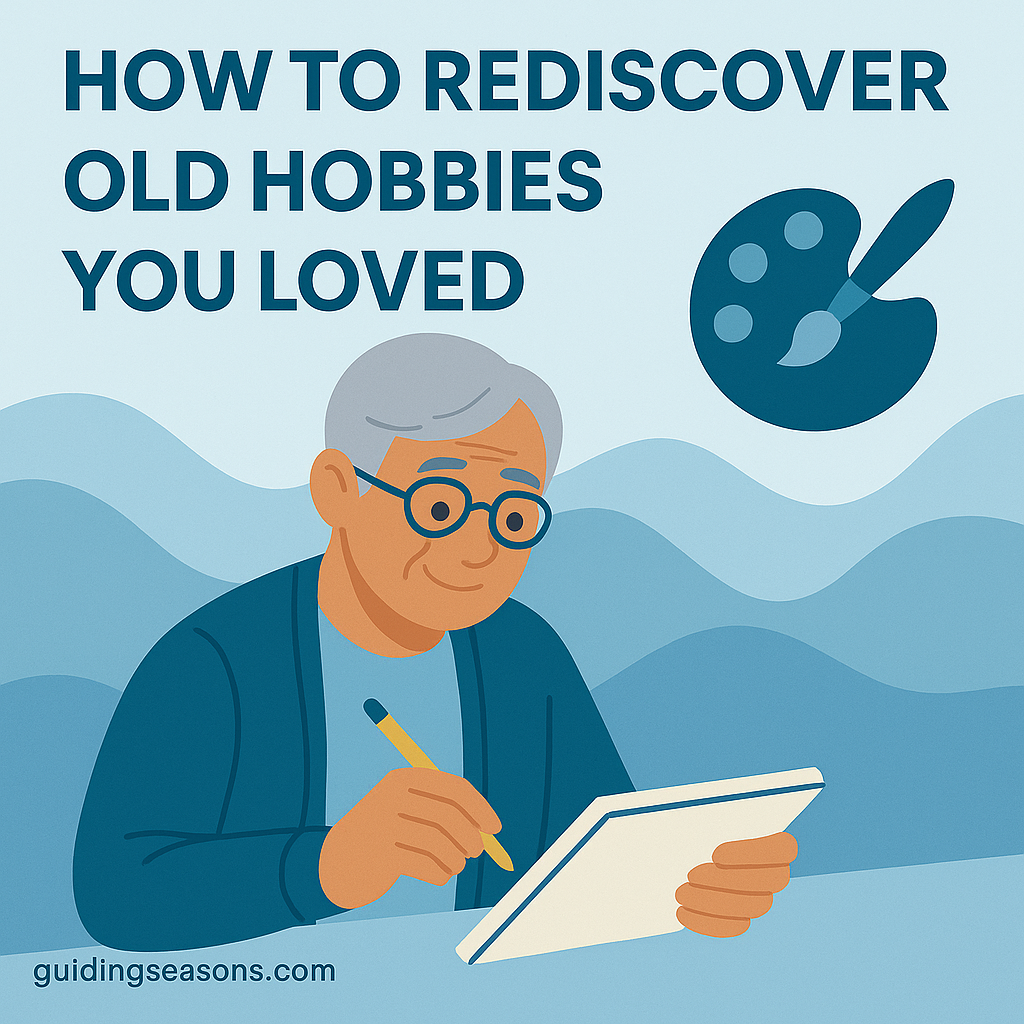
For example, if you once enjoyed painting, set aside 20 minutes twice a week with a small sketchbook and a basic set of paints or pencils. After a month, you’ll have spent nearly three hours reconnecting with your hobby without needing to make it a major commitment.
Small steps can be enough to rediscover what you enjoyed about an activity in the first place.
Update Your Hobby for Your Current Lifestyle
Your interests may stay the same, but how you enjoy those hobbies can change with your schedule, mobility, available space, or preferences.
Examples:
- Love gardening? Try raised beds, containers, or indoor planters.
- Love dancing? Explore gentle dance videos or beginner classes.
- Love photography? Use your smartphone instead of carrying heavy camera equipment.
- Love painting? Try smaller canvases or quick daily sketches.
- Love woodworking? Start with smaller projects that require fewer tools.
Adapting your hobby can make it enjoyable again without turning it into another obligation.
Create a Space Dedicated to Your Hobby
You don’t need a whole room. Even a small corner can become an inviting place for an activity you enjoy.
Your hobby space might include:
- A comfortable chair
- A small table or shelf
- Good lighting
- A basket or bin for supplies
- A calming view, plant, or favorite photo
Keeping your supplies organized and easy to reach removes one of the small barriers that can keep you from getting started.
Join a Group or Club to Stay Motivated
Many hobbies become more rewarding when shared with others.
Look for:
- Local hobby clubs
- Senior center groups
- Online activity communities
- Library meetups
- Adult education classes
- Craft circles
- Gardening clubs
- Walking or photography groups
Social activities can also provide opportunities to build and maintain meaningful connections. The National Council on Aging (NCOA) discusses the importance of social connection for older adults and offers resources for finding greater connection and engagement.
If joining a group feels like too much at first, consider attending just one meeting or class before deciding whether you want to continue.
Try a Modern Twist on an Old Passion
Technology can make many hobbies easier and more accessible than they were years ago.
Try:
- Virtual art or writing workshops
- Online piano or guitar lessons
- Digital scrapbooking
- Step-by-step cooking or baking videos
- Digital photography and editing
- Audiobooks or e-books
- Online hobby communities
You don’t have to replace the traditional version of your hobby. Technology can simply provide another way to learn, practice, or connect with people who share your interests.
Keep Your Expectations Light
Your hobby doesn’t need to be perfect. It’s meant to bring enjoyment, curiosity, and satisfaction—not pressure.
Remind yourself:
- “I’m doing this for fun.”
- “It’s okay to be rusty.”
- “I don’t have to be as good as I once was.”
- “I can learn at my own pace.”
If you haven’t played the piano, painted, gardened, or picked up a camera in 20 years, some skills may take time to return. That’s part of the experience.
Give yourself permission to explore without judging the results.
Celebrate the Joy the Hobby Brings You
Take note of how returning to your hobby makes you feel.
You might notice:
- More relaxation
- A sense of accomplishment
- Greater focus
- More opportunities for creativity
- Something enjoyable to look forward to
- New friendships or conversations
You might even keep a simple hobby journal and write down what you worked on each week. Looking back after several months can show you how much you’ve explored or accomplished.
Share Your Hobby With Others
Sharing can add another layer of connection and meaning to an activity you already enjoy.
You might:
- Gift something you created
- Display your artwork
- Invite someone to cook or bake with you
- Teach your hobby to a grandchild or friend
- Share photographs with family
- Join a local exhibition, club, or community event
You don’t need to turn your hobby into a business or become an expert. Sometimes sharing a loaf of homemade bread, a photograph, a small plant, or a handmade gift is enough.
Allow Yourself to Explore New Interests Too
Rediscovering old hobbies doesn’t mean you’re limited to the past. Returning to an old interest can lead naturally to something completely new.
Try:
- A new style of art
- A different type of music
- A crafting technique you’ve never attempted
- A fresh approach to gardening
- A new recipe or cuisine
- Digital photography or photo editing
- A class related to something you’ve always wanted to learn
Perhaps you return to photography and become interested in birdwatching. Or you start gardening again and discover that you enjoy growing herbs for cooking.
Old passions can become starting points for new adventures.
Final Thoughts
Rediscovering old hobbies can bring enjoyment, purpose, creativity, and meaningful activity back into your daily life. Whether you return to music, art, gardening, writing, photography, cooking, or another passion, the goal isn’t to recreate exactly who you were years ago.
It’s to discover what the hobby can mean to you now.
Start small. Give yourself time to be rusty. Adapt the activity to your current lifestyle, and pay attention to what you genuinely enjoy.
Your old hobbies don’t have to remain memories. One sketch, one song, one photograph, one planted herb, or one chapter of a favorite book may be all it takes to begin enjoying them again.