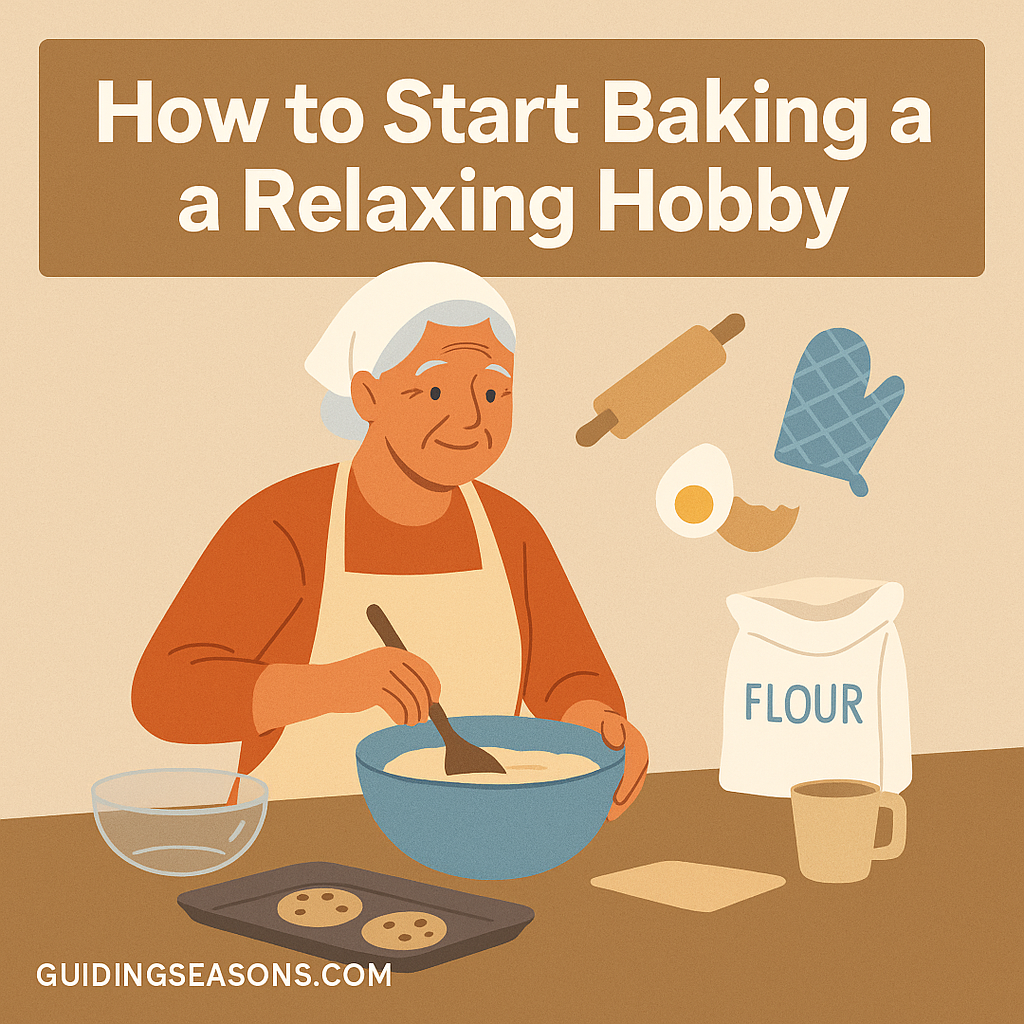
Baking can be one of the most relaxing and rewarding hobbies to enjoy at any age. There is something satisfying about taking a handful of ordinary ingredients—flour, butter, eggs, sugar, fruit, or spices—and turning them into warm bread, cookies, muffins, or a homemade cake.
You don’t need professional equipment or years of kitchen experience to begin. In fact, some of the best recipes for new bakers require only a mixing bowl, a few measuring tools, a pan, and an oven.
Baking can also provide a welcome change of pace from a busy or repetitive day. Instead of staring at a screen or rushing through another task, you can slow down, measure ingredients, mix a batter, enjoy familiar aromas, and eventually sit down with something you created yourself.
For seniors looking for a hobby that can be enjoyed comfortably at home, baking is especially flexible. You can bake alone during a quiet afternoon, prepare something with grandchildren, make treats for neighbors, or gradually challenge yourself with new recipes and techniques.
The key is not to turn baking into another source of pressure. Start simply, work at your own pace, and allow yourself to enjoy both the process and the results.
Here’s how to get started.
1. Begin With Simple, No-Stress Recipes
You don’t need to start with a complicated layer cake or homemade croissants.
Choose recipes with short ingredient lists and straightforward instructions.
Good beginner choices include:
- Muffins
- Banana bread
- Chocolate chip cookies
- Oatmeal cookies
- Scones
- Biscuits
- Brownies
- Simple loaf cakes
- Fruit crisps
Quick breads such as banana bread are particularly approachable because they usually don’t require yeast, kneading, or complicated shaping.
Cookies are another good choice because you can quickly learn several basic baking skills, including measuring flour, creaming or mixing ingredients, portioning dough, using baking sheets, and recognizing when something is properly baked.
Choose one recipe and make it several times.
Your first batch might be slightly dry. The second time, you might measure the flour more carefully. By the third attempt, you may already notice that you’re more comfortable with the process.
Repeating recipes is one of the easiest ways to build confidence.
2. Gather a Few Basic Baking Tools
Walk through the baking section of a kitchen store and you’ll find hundreds of specialized tools.
Ignore most of them when you’re starting.
A basic baking setup might include:
- Two mixing bowls
- Measuring cups
- Measuring spoons
- A liquid measuring cup
- A whisk
- A rubber or silicone spatula
- A baking sheet
- An 8- or 9-inch baking pan
- A loaf pan
- Parchment paper
- Oven mitts
- A cooling rack
A simple kitchen scale can also be useful if you begin following recipes that list ingredients by weight.
You don’t necessarily need a stand mixer. Many muffins, brownies, quick breads, and cookies can be prepared with a spoon, whisk, or inexpensive hand mixer.
Start with the equipment needed for the recipes you actually want to make. If you later become interested in bread, cake decorating, or pastry, you can gradually add specialized tools.
3. Create a Calm and Comfortable Workspace
A relaxing hobby shouldn’t leave you feeling exhausted before the cookies reach the oven.
Before baking, clear enough counter space to work comfortably.
Try to arrange your kitchen so your most frequently used ingredients and tools are easy to reach.
Consider:
- Good lighting
- Clear counter space
- Comfortable working height
- Frequently used tools within reach
- A supportive stool or chair nearby
- A nonslip mat if appropriate
- A clear path between the counter and oven
If standing for long periods is uncomfortable, many preparation tasks can be done while seated at a table.
You can measure ingredients, peel fruit, shape cookies, decorate cakes, or prepare baking pans while sitting comfortably.
There is no prize for finishing a recipe quickly.
Take breaks whenever you need them.
4. Read the Entire Recipe Before You Begin
This is one of the simplest habits that can make baking much easier.
Read the recipe from beginning to end before taking out your first ingredient.
Look for important details such as:
- Oven temperature
- Baking time
- Pan size
- Chilling or resting time
- Ingredients that need to be softened
- Ingredients that need to be divided
- Cooling instructions
Imagine beginning a cookie recipe at 7:00 p.m. and discovering halfway through that the dough needs to chill for two hours.
Reading the recipe first prevents surprises like this.
It also allows you to gather everything you need before you begin.
Professional kitchens sometimes refer to this type of preparation as mise en place—having ingredients and equipment organized before cooking.
At home, it can be as simple as putting your flour, sugar, eggs, butter, measuring tools, and mixing bowl on the counter before starting.
5. Measure Ingredients Carefully
Cooking often allows plenty of improvisation.
Baking usually rewards greater precision.
The amount of flour, liquid, sugar, fat, and leavening in a recipe affects how the finished product rises, spreads, browns, and holds together.
When using measuring cups for flour, avoid packing the flour firmly into the cup unless the recipe specifically tells you to do so.
A common approach is to gently spoon flour into the measuring cup and level the top.
For even greater consistency, you can eventually use a kitchen scale.
For example, King Arthur Baking lists 1 cup of all-purpose flour as approximately 120 grams in its ingredient weight chart. Measuring by weight can help you reproduce the same quantity more consistently from one baking session to the next. (kingarthurbaking.com)
You don’t have to switch to a scale immediately, however. Measuring cups work perfectly well for many home bakers.
The important thing is to slow down and follow the recipe.
6. Start With One Easy 30-Minute Baking Routine
One reason hobbies get abandoned is that they begin feeling like projects.
Keep your first baking sessions manageable.
For example, you could create a simple Saturday morning routine:
9:00 a.m. — Make coffee and preheat the oven.
9:05 a.m. — Gather ingredients for blueberry muffins.
9:10 a.m. — Mix the dry and wet ingredients.
9:20 a.m. — Fill the muffin pan and place it in the oven.
Within roughly half an hour, most of the active work is finished and your kitchen is beginning to smell like fresh muffins.
You don’t have to spend an entire afternoon baking to enjoy the hobby.
Even one simple recipe every week or two can become something you look forward to.
7. Learn What Your Oven Actually Does
Ovens aren’t always perfectly accurate.
Two ovens set to the same temperature can behave differently. One might run slightly hot while another takes longer to bake the same recipe.
Pay attention to how food behaves in your oven.
If cookies repeatedly brown too quickly, for example, you may need to investigate whether the oven temperature is accurate or whether your baking sheet is positioned too close to a heating element.
An inexpensive oven thermometer can help you check.
Also resist the temptation to open the oven repeatedly.
Every time the door opens, heat escapes.
Use the oven light and window when possible, then check the food near the recommended baking time.
8. Enjoy the Sensory Side of Baking
Not every hobby needs to be about becoming highly skilled.
Part of the pleasure of baking is simply experiencing it.
Notice:
- The texture of flour
- The smell of cinnamon
- Butter softening as you mix it
- The sound of a whisk moving through batter
- Dough changing texture as ingredients combine
- Chocolate melting
- Bread browning
- The aroma filling the kitchen
These small experiences encourage you to focus on what you’re doing rather than rushing toward the finished product.
Put on music you enjoy.
Make coffee or tea.
Open the curtains.
Let baking become a quiet part of the day rather than another item on a checklist.
9. Add Your Own Personal Touch
Once you’re comfortable following basic recipes, begin experimenting carefully.
You might try:
- Adding walnuts to banana bread
- Mixing blueberries into muffins
- Adding cinnamon to an apple cake
- Using lemon zest in a glaze
- Adding chocolate chips to cookies
- Decorating cupcakes
- Trying seasonal spices
- Experimenting with different toppings
Make one small change at a time.
If you change five ingredients at once and something goes wrong, you won’t know what caused the problem.
Suppose you’ve made the same basic muffin recipe three times.
On your fourth attempt, add blueberries.
Next time, try lemon zest.
Eventually, that simple beginner recipe becomes something you’ve made your own.
10. Keep a Simple Baking Notebook
A notebook can become one of your most useful baking tools.
After trying a recipe, write down what happened.
For example:
Banana Bread — April 14
Baked for 52 minutes. Good flavor, but slightly dry around the edges. Added walnuts. Next time, start checking at 47 minutes.
These notes help you adjust recipes to your kitchen and preferences.
Record things such as:
- Actual baking time
- Pan used
- Ingredient substitutions
- Favorite additions
- Whether you’d make it again
- Changes to try next time
After a year, you may have your own collection of reliable recipes and personal variations.
11. Bake in Batches and Share the Results
You don’t have to eat everything you bake yourself.
Sharing is one of the pleasures of baking.
You can:
- Bring cookies to a neighbor
- Bake with grandchildren
- Make a cake for a birthday
- Bring muffins to a gathering
- Give homemade treats as gifts
- Freeze extra portions for later
If a cookie recipe makes 24 cookies, for example, you could keep eight at home, freeze eight, and give eight to a friend or neighbor.
That turns one afternoon of baking into several opportunities for enjoyment.
Baking can also become a family tradition.
Perhaps grandchildren visit once a month and help make cookies. Over time, they’ll remember more than the cookies—they’ll remember the experience of making them with you.
12. Keep Food Safety in Mind
Relaxing doesn’t mean ignoring basic kitchen safety.
Wash your hands before handling food, keep preparation surfaces clean, and be particularly careful when recipes contain raw eggs or flour.
One detail beginners sometimes overlook is that raw flour should not be treated as ready-to-eat food. The U.S. Food and Drug Administration explains that flour is generally a raw agricultural product and that cooking is necessary to kill harmful bacteria that may be present. The FDA therefore advises against eating raw dough or batter made with uncooked flour. (fda.gov)
That means resisting the temptation to taste raw cookie dough unless you’re using a recipe specifically designed to be eaten safely without baking.
Also:
- Use dry oven mitts when handling hot pans
- Turn pot and pan handles away from edges
- Keep electrical cords out of walkways
- Set timers
- Keep the floor clear of spills
- Allow pans to cool in a safe location
Simple habits help keep baking enjoyable.
13. Don’t Be Discouraged by Baking Mistakes
Every baker eventually produces something strange.
Cookies spread too far.
Bread doesn’t rise.
A cake sticks to the pan.
Muffins become dry.
A pie crust breaks.
These experiences aren’t proof that you’re bad at baking. They’re part of learning.
When something goes wrong, ask a few questions:
Did I follow the measurements?
Was the oven fully preheated?
Did I use the correct pan?
Did I accidentally leave out an ingredient?
Did I bake it too long?
Treat mistakes like small experiments.
Sometimes they’re even edible experiments.
A cake that breaks while coming out of the pan might not look beautiful, but it could still taste wonderful with fruit or whipped cream.
14. Challenge Yourself Gradually
Once you’ve mastered a few easy recipes, choose something slightly more challenging.
A natural progression might look like:
Stage 1: Cookies and brownies
Stage 2: Muffins and quick breads
Stage 3: Simple cakes and pies
Stage 4: Yeast breads
Stage 5: Decorated cakes or more involved pastries
You don’t have to follow this exact path.
If homemade bread fascinates you, learn bread.
If decorating cupcakes makes you happy, concentrate on that.
A hobby doesn’t need a curriculum.
Follow your curiosity.
15. Make Baking a Peaceful Ritual
Eventually, baking can become part of the rhythm of your week or month.
Maybe Sunday morning becomes bread day.
Perhaps the first Saturday of every month is when you try a new dessert.
You could also bake according to the seasons:
Spring: Lemon cake or berry muffins
Summer: Peach cobbler or fruit crisps
Fall: Apple bread or pumpkin muffins
Winter: Ginger cookies or cinnamon rolls
Seasonal baking gives you something different to anticipate throughout the year.
And you don’t always need to try something new.
There can be tremendous comfort in making the same favorite banana bread you’ve prepared dozens of times.
16. Celebrate What You Create
Your baked goods don’t have to look like professionally styled photographs.
A homemade loaf that’s slightly uneven is still homemade.
Take pictures of things you’re proud of.
Keep favorite recipes.
Share something with a friend.
Teach a family member how to make one of your specialties.
You might even create your own recipe binder.
Imagine choosing 12 favorite recipes—one for each month of the year. After making and adjusting each recipe several times, you could have a small collection of dependable homemade favorites that reflects your own tastes.
Over the years, those recipes may become part of family gatherings and traditions.
That’s a meaningful outcome from something that started simply as a relaxing afternoon hobby.
Final Thoughts
Baking is about much more than producing cookies, bread, or cake.
It can provide a reason to slow down, work with your hands, learn something new, experiment with flavors, and enjoy the satisfaction of creating something from scratch.
You don’t need a professional mixer, an enormous collection of pans, or advanced skills.
Begin with one simple recipe.
Gather your ingredients before you start. Read the directions carefully. Measure at a comfortable pace. Put something you enjoy listening to in the background and allow yourself to experience the process.
If your first batch isn’t perfect, make it again.
Perhaps the second batch will be better.
And by the fifth time, you may no longer need to think carefully about every step because the process has become familiar.
From there, you can explore breads, pies, cakes, pastries, seasonal recipes, or whatever else interests you.
Most importantly, don’t turn baking into another obligation.
Let it remain something you look forward to—a quiet morning in the kitchen, the smell of something warm in the oven, and the satisfaction of knowing you made it yourself.
Sometimes the simplest hobbies become the ones we treasure most.