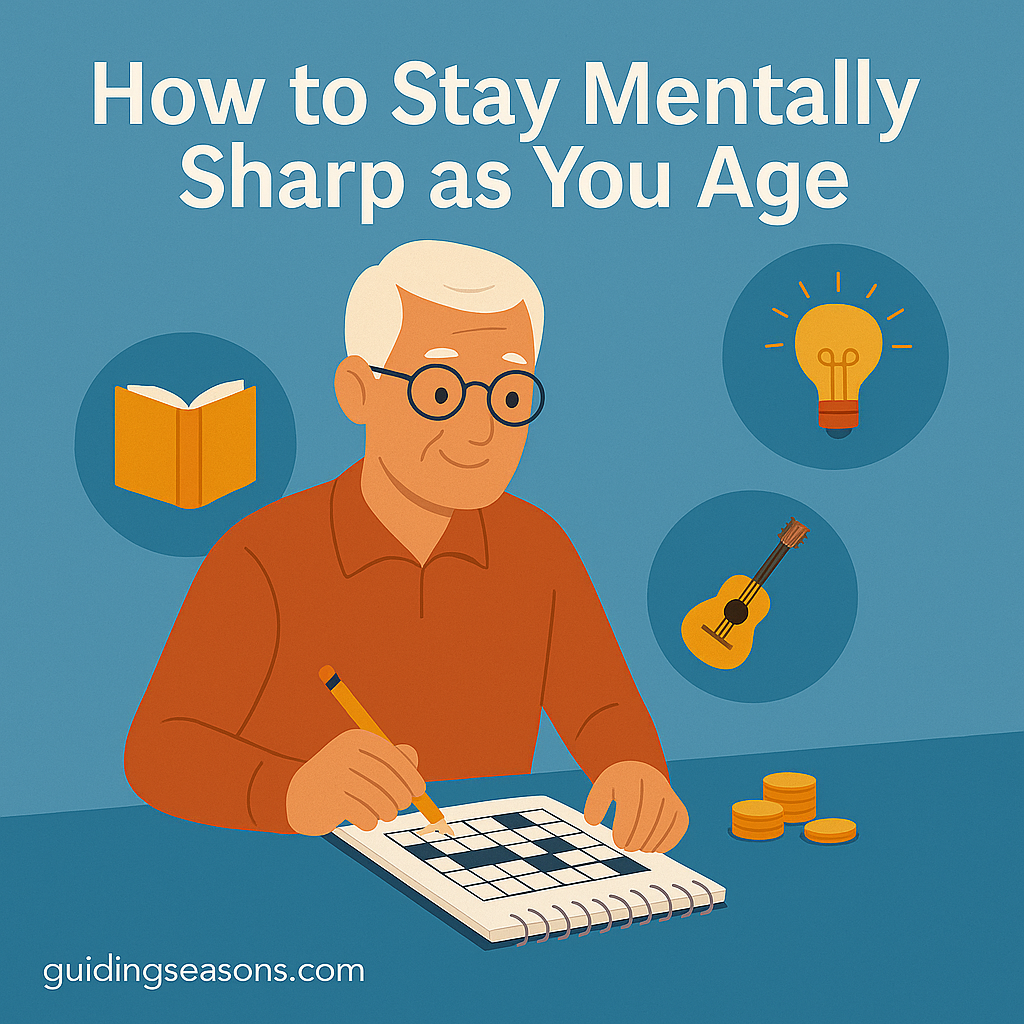
Staying mentally sharp is an important part of healthy aging. Memory, concentration, problem-solving, and processing speed can change over time, but getting older doesn’t mean you have to stop learning, exploring, or challenging your mind.
Many factors influence brain health, including genetics and medical conditions, but everyday habits matter too. Physical activity, sleep, social connection, lifelong learning, nutrition, and managing health conditions can all contribute to overall cognitive well-being.
The goal isn’t to prevent every forgotten name or misplaced pair of glasses. Occasional forgetfulness can happen at any age. Instead, focus on creating a lifestyle that keeps your mind engaged while supporting your overall health.
Here are practical ways to care for your brain and stay mentally active as you age.
Keep Your Brain Active Every Day
Your brain benefits from regular opportunities to think, solve problems, remember information, and engage with new ideas.
You don’t need to spend hours completing complicated puzzles.
Everyday activities can provide mental stimulation.
Ways to engage your mind include:
- Reading books, articles, or poetry
- Solving puzzles or crosswords
- Playing board or card games
- Learning new information
- Writing letters or keeping a journal
- Doing basic mental math
- Discussing current events with friends
- Following recipes
- Planning trips or activities
- Using brain-training games or apps for enjoyment
Variety is useful.
If you complete the same crossword puzzle every morning, consider occasionally replacing it with a different challenge. Read about an unfamiliar subject, learn the rules of a new game, or try writing a short story.
The objective isn’t to become an expert.
It’s to keep giving your brain something interesting to work on.
Continue Learning New Skills
Retirement can provide something that was difficult to find during your working years: time to learn simply because you’re interested.
Learning something unfamiliar requires attention, memory, problem-solving, and persistence.
You might:
- Take a class online or at a community center
- Learn a musical instrument
- Study a new language
- Explore photography
- Learn to paint or draw
- Start woodworking
- Learn gardening techniques
- Try a new type of cooking
- Improve your computer skills
- Explore family history or genealogy
Choose something that genuinely interests you rather than something you think you’re supposed to learn.
You also don’t need to master it.
Suppose you’ve always wanted to learn Spanish. Instead of setting an intimidating goal of becoming fluent, start with five new words each week.
That’s roughly 260 words over a year.
The number itself isn’t the important part. The value comes from repeatedly challenging yourself to learn, remember, and use something unfamiliar.
Small learning goals can make intellectual growth feel enjoyable rather than overwhelming.
Combine Mental and Physical Activity
Taking care of your body is also an important part of caring for your brain.
Physical activity supports cardiovascular health and provides opportunities for movement, coordination, and—in many cases—social interaction.
Depending on your abilities and health, activities might include:
- Walking
- Gentle hiking
- Tai chi
- Yoga
- Strength training
- Dancing
- Swimming
- Water aerobics
- Gardening
- Chair exercises
The National Council on Aging (NCOA) provides resources on physical activity for older adults, including information about maintaining strength, mobility, and overall health.
You don’t necessarily need to separate physical and mental activity either.
Take a walk with a friend and discuss a book you’ve both read.
Learn a new dance.
Listen to an educational podcast while walking.
Try tai chi, where you need to remember and coordinate movements.
Activities that combine movement, attention, and social interaction can make staying active more interesting.
If you have medical conditions, mobility limitations, or haven’t exercised regularly, talk with your health care professional about an appropriate level of activity.
Make Social Connections a Priority
A mentally active life isn’t only about puzzles and learning.
Other people challenge us to listen, remember, communicate, interpret emotions, tell stories, and respond to new ideas.
That’s a lot of mental activity contained within an ordinary conversation.
Social connection can take many forms:
- Meeting friends for coffee
- Having regular family dinners
- Calling relatives
- Joining a walking group
- Playing cards
- Attending religious services
- Joining a book club
- Volunteering
- Participating in community activities
- Taking a class
- Staying connected through phone or video calls
You don’t need a huge social network.
Focus on relationships that feel meaningful.
If your social circle has become smaller after retirement, relocation, or the loss of friends or family members, start gradually.
Choose one recurring activity where you’re likely to encounter some of the same people each week. Familiarity can make it easier for casual conversations to develop into friendships.
The National Council on Aging also provides information about social isolation and loneliness, including resources aimed at helping older adults remain connected.
Nourish Your Brain by Supporting Overall Health
There isn’t one magical “brain food” that guarantees better memory.
Instead, think about nutrition as one part of maintaining your overall health.
A balanced eating pattern may include foods such as:
- Vegetables
- Leafy greens
- Fruits and berries
- Beans
- Nuts and seeds
- Whole grains
- Fish
- Healthy sources of protein
- Olive oil and other unsaturated fats
Hydration matters too.
If you regularly forget to drink water, try connecting it with routines you already have. Drink a glass when you wake up, another with lunch, and another with dinner, for example.
Your nutritional needs may differ depending on medications, kidney function, diabetes, cardiovascular conditions, digestive issues, or other health concerns.
For individualized dietary recommendations, talk with your doctor or a registered dietitian.
Protect Your Sleep Routine
Sleep is important for attention, memory, mood, and overall health.
Sleep patterns may change with age, but consistently poor sleep shouldn’t simply be dismissed as an unavoidable part of getting older.
Healthy sleep habits may include:
- Keeping reasonably consistent sleep and wake times
- Creating a calming nighttime routine
- Limiting caffeine later in the day
- Keeping your bedroom comfortable
- Reducing bright screens before bedtime
- Staying physically active during the day
- Avoiding large meals immediately before bed if they interfere with sleep
Instead of obsessing over achieving a perfect number of hours every night, pay attention to how rested and functional you feel during the day.
If you regularly experience insomnia, excessive daytime sleepiness, loud snoring, breathing interruptions during sleep, or other persistent sleep difficulties, talk with your health care provider.
An underlying sleep disorder or medical issue may need attention.
Manage Stress Before It Becomes Overwhelming
Everyone experiences stress.
But when stress becomes persistent, concentration and memory may feel more difficult.
Think about what helps you reset.
It might be:
- Slow breathing
- Meditation
- Prayer
- Gentle stretching
- Walking
- Gardening
- Spending time outdoors
- Listening to music
- Journaling
- Talking with someone you trust
Try creating a simple 10-minute mental reset.
Spend five minutes walking or stretching, three minutes breathing quietly, and two minutes deciding what deserves your attention next.
You haven’t eliminated the stressful situation.
You’ve simply created some space between the stress and your response to it.
Protect Your Hearing and Vision
Hearing and vision are sometimes overlooked in conversations about mental sharpness.
But your senses play an important role in how you interact with your environment and with other people.
If you can’t clearly hear a conversation, for example, participating becomes more difficult. You may withdraw from discussions or social situations because following along requires too much effort.
Helpful habits include:
- Getting recommended eye examinations
- Keeping glasses prescriptions current
- Discussing hearing changes with your health care provider
- Using prescribed hearing aids consistently
- Improving lighting when reading or working
- Reducing unnecessary background noise during conversations
- Using appropriate hearing and eye protection
Don’t automatically assume difficulty following a conversation is a memory problem.
Sometimes hearing, vision, medication, sleep, or other factors may be contributing.
Maintain a Sense of Purpose
Mental engagement is easier when you have reasons to remain engaged.
Purpose doesn’t have to mean maintaining a career or taking on enormous responsibilities.
It might come from:
- Helping your family
- Caring for a pet
- Volunteering
- Gardening
- Mentoring
- Faith or spiritual involvement
- Creative projects
- Community activities
- Learning
- Traveling
- Maintaining friendships
- Working toward personal goals
Ask yourself:
What gives me a reason to look forward to tomorrow?
Perhaps you’re growing vegetables for your family.
Maybe you’re helping a grandchild with homework every Wednesday.
You might be restoring an old car, researching your family history, learning piano, or volunteering twice a month.
Purpose gives your attention somewhere meaningful to go.
Use Technology as a Mental Tool
Technology can provide useful opportunities for learning and connection when used intentionally.
You might use a smartphone, tablet, or computer to:
- Take online courses
- Video chat with family
- Read digital books
- Research hobbies
- Learn a language
- Watch educational lectures
- Organize photographs
- Explore genealogy
- Play strategy games
- Listen to podcasts
Learning technology itself can also be a mental challenge.
If you’ve never used video calling, digital photo editing, or online banking, learning the steps requires memory and problem-solving.
Don’t try to learn everything simultaneously.
Choose one useful skill and practice until it becomes comfortable.
Challenge Your Memory in Everyday Situations
You don’t necessarily need specialized exercises to challenge your memory.
Create small opportunities throughout your day.
For example:
Before going grocery shopping, write down five items.
Read the list.
Put it in your pocket.
When you arrive at the store, see how many you remember before checking the list.
Or after reading a newspaper article, explain the main idea to your spouse or friend without looking at it again.
After meeting someone new, deliberately repeat their name during the conversation.
These aren’t medical treatments for memory loss.
They’re simply enjoyable ways to practice paying attention and recalling information.
Don’t Rely Too Heavily on “Brain Games”
Crosswords, Sudoku, memory apps, and puzzles can be entertaining and mentally challenging.
Enjoy them if you like them.
But don’t assume that spending hours on one type of brain-training game is the only—or best—way to protect your cognitive health.
A broader approach is more practical.
Try combining:
Mental challenge + physical activity + social interaction + healthy routines.
For example, joining a weekly pickleball group may involve learning strategy, remembering scores, coordinating movement, talking with other players, and maintaining physical activity.
A book club combines reading, memory, conversation, interpretation, and social connection.
Look for activities that engage multiple parts of your life rather than relying on a single app or puzzle.
Keep Your Cardiovascular and Overall Health in Mind
Brain health doesn’t exist separately from the rest of your body.
Conditions such as high blood pressure, diabetes, cardiovascular disease, depression, and other health issues can be relevant to cognitive well-being.
Stay proactive by:
- Attending routine medical appointments
- Managing chronic conditions with your health care team
- Taking medications as prescribed
- Staying physically active as appropriate
- Discussing sleep problems
- Addressing hearing or vision changes
- Avoiding tobacco
- Discussing alcohol use with your health care professional when appropriate
Also review your medications with your doctor or pharmacist periodically, particularly if you’re taking several prescriptions.
Some medications or combinations may contribute to confusion, sleepiness, or other cognitive symptoms.
Never stop a prescribed medication on your own because you suspect it is affecting your memory. Talk with your health care provider first.
Know When Memory Changes Deserve Attention
Everyone forgets things occasionally.
You may walk into a room and temporarily forget why you went there. You might struggle to remember someone’s name and recall it later.
Those experiences don’t automatically indicate dementia.
However, memory or thinking changes deserve medical attention when they become persistent, worsen, or interfere with everyday independence.
Examples might include:
- Frequently getting lost in familiar places
- Repeatedly forgetting important appointments
- Difficulty managing bills or medications that you previously handled easily
- Increasing trouble following familiar instructions
- Frequently repeating the same questions
- Significant changes in judgment or behavior
- Memory problems that family members are noticing
Don’t try to diagnose the cause yourself.
Memory changes can have many possible explanations, and some may be treatable.
If you’re concerned, make an appointment with your health care provider and describe exactly what you’ve noticed.
Create a Weekly Brain-Health Routine
You don’t need to practice every strategy every day.
Instead, build several types of engagement into your week.
For example:
Monday: 30-minute walk and read
Tuesday: call a friend and practice a new skill
Wednesday: strength or balance activity and hobby time
Thursday: community activity or volunteer work
Friday: puzzle, game, or educational program
Saturday: family or social activity
Sunday: relaxation and planning for the week
The schedule isn’t important.
The variety is.
Over seven days, you’ve included physical movement, learning, social connection, relaxation, problem-solving, and purpose without turning healthy aging into a full-time job.
Final Thoughts
Staying mentally sharp as you age isn’t about finding one perfect food, supplement, puzzle, or memory exercise.
Think bigger.
Your brain is part of your overall health and your everyday life.
Keep learning.
Move your body in ways that are appropriate for you.
Stay connected with other people.
Eat nourishing foods.
Protect your sleep.
Manage health conditions.
Take care of your hearing and vision.
Find activities that give your days meaning.
And continue giving yourself opportunities to encounter new ideas and experiences.
Most importantly, don’t measure mental sharpness by whether you occasionally forget a name or misplace your keys.
Healthy aging isn’t about having a flawless memory.
It’s about continuing to participate in your life—to think, learn, communicate, solve problems, build relationships, and remain curious about the world around you.
Start with one manageable change.
Learn five new words. Call a friend. Take a walk. Read about something unfamiliar. Attend a class you’ve been considering.
Small habits may seem insignificant individually, but together they can create a lifestyle that supports your cognitive and overall well-being for years to come.