Retirement is often pictured as a long-awaited reward: no alarm clock, no commute, fewer deadlines, and finally enough time to travel, relax, pursue hobbies, and spend time with the people you care about.
For many people, retirement does bring those benefits. But leaving the workforce can also create emotional changes that aren’t discussed nearly as often.
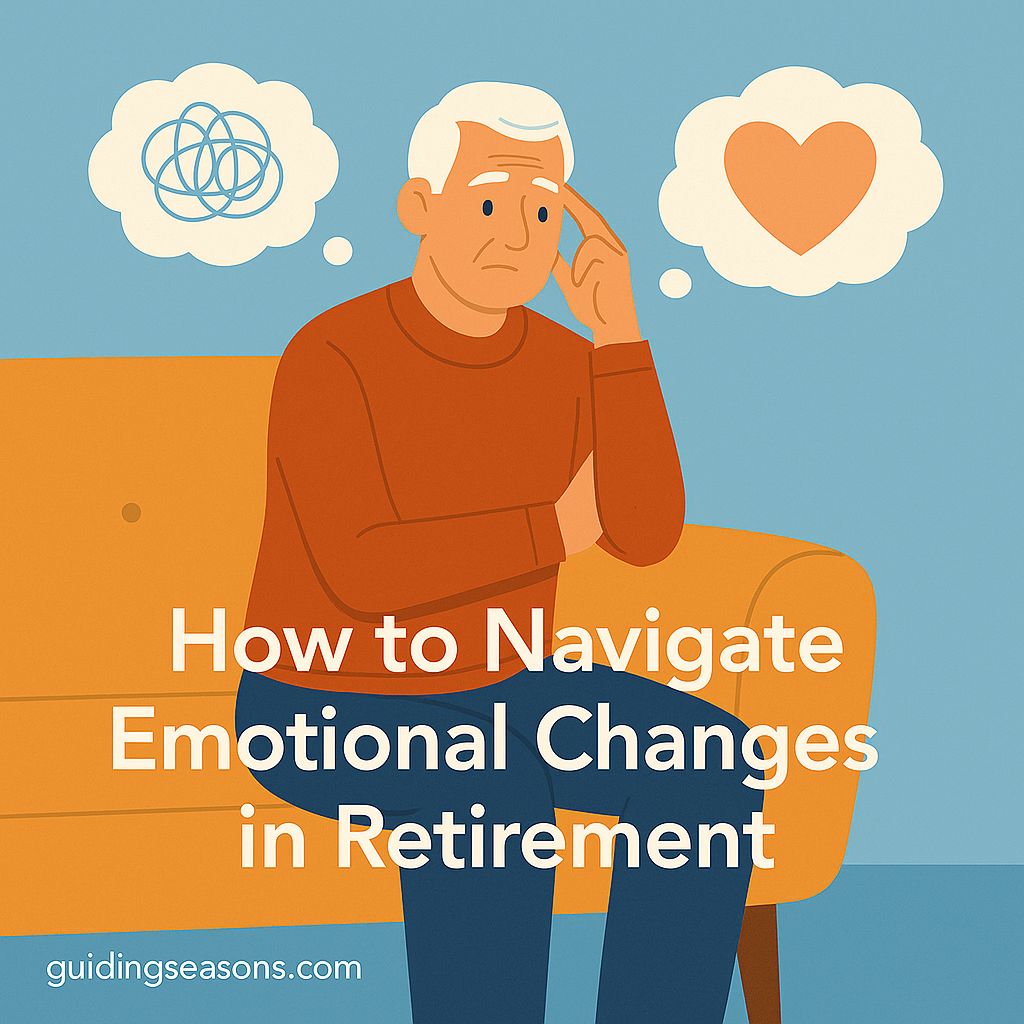
After spending 20, 30, or even 40 years building a career and following a relatively predictable schedule, suddenly having complete control over your day can feel surprisingly unfamiliar. You may miss coworkers, question your sense of purpose, struggle with too much unstructured time, or simply wonder what you’re supposed to do next.
These feelings don’t necessarily mean that retirement was a mistake. Retirement is a significant life transition, and adjusting to it can take time.
The American Psychological Association (APA) notes that preparing for retirement involves more than achieving financial security. People may also need to prepare for changes in identity, relationships, interests, and where they derive their sense of self-esteem.
Understanding these emotional changes—and intentionally building a satisfying new routine—can make retirement a much more rewarding chapter of life.
Recognize That Retirement Is a Major Life Transition
Work provides much more than a paycheck.
For decades, your job may have determined when you woke up, where you went, whom you interacted with, what problems you solved, and how much structure existed in your day.
It may also have become part of how you described yourself.
“I’m a teacher.”
“I’m an accountant.”
“I’m a nurse.”
“I own a business.”
“I’m an engineer.”
Then retirement arrives, and one day that familiar role is no longer part of your everyday life.
The transition can produce a surprising mixture of emotions, including:
- Relief
- Excitement
- Uncertainty
- Boredom
- Loneliness
- Restlessness
- Nostalgia
- Anxiety
- A loss of identity
You might even experience several of these emotions during the same week.
Recognizing this possibility can make the transition less confusing. You don’t have to immediately love every aspect of retirement simply because you spent years looking forward to it.
Give Yourself Permission to Miss Your Working Life
One of the more confusing retirement experiences is discovering that you miss parts of a job you were ready to leave.
You might not miss deadlines, stressful meetings, commuting, or office politics.
But perhaps you miss having lunch with coworkers.
Maybe you miss solving difficult problems.
Perhaps you enjoyed being the person colleagues approached when they needed advice.
You may even miss Monday mornings simply because they provided structure.
Those feelings can coexist with being happy that you retired.
Rather than telling yourself, “I shouldn’t miss work,” try identifying exactly what you’re missing.
If you miss conversation, you may need more social interaction.
If you miss solving problems, you may need an intellectually challenging hobby.
If you miss being needed, volunteering or mentoring could provide a similar sense of contribution.
Understanding what work provided emotionally can help you recreate some of those benefits without recreating the job itself.
Give Yourself Time to Find a New Rhythm
There’s no rule saying you need to have retirement figured out within the first month.
Think about how long it took to become comfortable in your career. You probably didn’t understand everything during your first week on the job.
Retirement deserves a similar adjustment period.
You may initially enjoy having absolutely nothing scheduled. After a few weeks or months, however, the novelty of unlimited free time may begin to fade.
That’s when experimentation becomes valuable.
Try different routines.
Visit new places.
Return to old hobbies.
Spend time with different people.
Volunteer.
Take a class.
Adjust your schedule until you discover what feels comfortable.
Your first retirement routine doesn’t have to become your permanent retirement routine.
Build Structure Into Your Week
Complete freedom sounds wonderful until every day begins to feel the same.
A little structure can provide direction without making retirement feel like another job.
Instead of scheduling every hour, consider creating several dependable anchors throughout the week.
For example:
Monday: Morning walk and household errands.
Tuesday: Hobby or personal project.
Wednesday: Lunch with a friend or family member.
Thursday: Volunteer for two hours.
Friday: Explore somewhere new.
That still leaves plenty of unstructured time while providing several things to anticipate.
A useful goal might be to create three anchors each week:
- Something physically active.
- Something socially engaging.
- Something personally meaningful.
Those three commitments alone can transform an otherwise empty week into one with rhythm and direction.
Rediscover Who You Are Outside of Work
Retirement provides an opportunity to separate your identity from your occupation.
Ask yourself a deceptively simple question:
“Who am I when I’m not working?”
The answer might involve roles you’ve always had but didn’t have enough time to explore.
You might be a:
- Parent or grandparent
- Friend
- Gardener
- Traveler
- Musician
- Volunteer
- Reader
- Artist
- Mentor
- Cook
- Student
- Neighbor
- Community member
You may also discover entirely new parts of yourself.
Someone who spent 35 years working in accounting might discover photography at age 67.
A retired teacher might begin volunteering at an animal shelter.
A former construction worker might finally have time to restore an old car.
Retirement doesn’t erase your professional identity. Your knowledge, experiences, and accomplishments remain part of you.
You’re simply adding new dimensions.
Develop a New Sense of Purpose
One of the biggest emotional adjustments in retirement can involve purpose.
During your career, purpose may have been largely predetermined. There were clients to serve, projects to finish, problems to solve, employees to manage, or people depending on you.
Retirement removes many of those automatic responsibilities.
That can feel liberating initially—but eventually you may begin asking:
“What am I getting up for tomorrow?”
Purpose doesn’t have to involve changing the world.
It might mean helping care for grandchildren, maintaining a beautiful garden, volunteering at a food pantry, mentoring someone entering your former profession, helping your neighbors, learning another language, or becoming healthier.
The APA has specifically highlighted identity, relationships, and purpose as important psychological dimensions of retirement—not simply finances.
Try asking yourself:
Who needs something I can provide?
Your answer might reveal opportunities to use decades of accumulated knowledge and experience in ways that still feel meaningful.
Protect Your Social Connections
Work creates an enormous amount of incidental social contact.
You see the receptionist.
You talk with coworkers.
You attend meetings.
You exchange a few words with someone while getting coffee.
You have lunch with colleagues.
You interact with customers or clients.
Then you retire, and many of those small interactions disappear almost overnight.
You may not immediately notice how important they were.
This is one reason social connection deserves intentional attention during retirement.
The National Institute on Aging (NIA) warns that loneliness and social isolation can affect both physical and mental health, and retirement is among the major life changes that can increase the risk of becoming socially isolated.
Don’t rely entirely on spontaneous social opportunities.
Create them.
Call an old coworker.
Schedule lunch with a friend.
Join a walking group.
Attend community events.
Volunteer.
Join a hobby club.
Participate in activities at a community or senior center.
If family members live far away, establish a regular phone or video-call routine.
Social connection becomes easier to maintain when it is treated as an important part of your schedule rather than something you’ll do “when you have time.”
Prepare for Changes in Your Relationship
Retirement doesn’t affect only the person who stops working.
It can change household relationships too.
A couple who previously spent eight or ten hours apart every weekday may suddenly be together almost constantly.
That can require adjustment.
One partner might imagine retirement as a time to travel.
The other may want to relax at home.
One might enjoy having a detailed schedule.
The other may want complete spontaneity.
Even small household habits can suddenly become noticeable.
Open communication can help.
Discuss how you want to spend your time, what activities you want to share, and which activities you prefer doing independently.
Retirement doesn’t mean couples must do everything together.
Maintaining individual hobbies and friendships can be healthy while still creating meaningful shared experiences.
Take Care of Your Physical Health
Physical and emotional well-being are closely connected.
Retirement can make healthy habits easier because you have more control over your schedule—but it can also make inactivity easier.
Try building movement naturally into your day.
Depending on your health and abilities, this might include:
- Walking
- Swimming
- Gardening
- Cycling
- Strength exercises
- Yoga
- Stretching
- Group fitness classes
Regular meals and consistent sleep schedules can also provide helpful structure.
Preventive medical care remains important as well.
Rather than viewing health as something separate from your retirement lifestyle, think of maintaining your health as one of the projects that makes the rest of retirement possible.
Find Healthy Ways to Manage Stress
Retirement eliminates some sources of stress, but it doesn’t eliminate stress itself.
Financial concerns, health changes, family responsibilities, caregiving, loneliness, or uncertainty about the future may still create anxiety.
Develop several ways to decompress.
You might try:
- Journaling
- Meditation
- Deep breathing
- Prayer
- Listening to music
- Spending time outdoors
- Gardening
- Reading
- Gentle exercise
- Talking with someone you trust
The goal isn’t to eliminate uncomfortable emotions.
It’s to have healthy ways of responding when they appear.
Keep Learning
Learning provides stimulation, goals, and a sense of progress—all things that work may once have supplied.
Retirement can be an ideal opportunity to finally explore subjects that have always interested you.
You could learn:
- Photography
- Painting
- Cooking
- History
- Gardening
- Computer skills
- A musical instrument
- A foreign language
- Genealogy
- Woodworking
Look for community-college courses, library programs, online classes, local workshops, or community organizations.
Learning doesn’t need to lead to a degree or another career.
The experience itself can provide purpose.
Consider Whether You Actually Want to Stop Working Completely
Retirement doesn’t have to mean never earning another dollar or doing professional work again.
Some people enjoy occasional consulting, part-time work, seasonal employment, or freelance projects.
Others start small businesses based on interests they couldn’t pursue during their careers.
For someone whose professional identity was especially important, gradually reducing work may also make the emotional transition easier. The APA notes that some psychologists recommend gradual retirement, such as shifting toward part-time work or consulting before leaving employment completely.
The important distinction is that work can become something you choose rather than something that controls most of your week.
Avoid Comparing Your Retirement With Someone Else’s
It’s easy to compare your retirement with what you see other people doing.
Someone you know may be traveling internationally several times a year.
Another person may spend every weekend with grandchildren.
Someone else may have moved to a beautiful retirement community.
Their retirement isn’t yours.
Your finances, health, interests, relationships, personality, and responsibilities are different.
A successful retirement doesn’t have to look impressive from the outside.
A quiet morning reading, lunch with a friend, an afternoon gardening, and dinner with your spouse might be an extremely satisfying day.
Define retirement according to what actually matters to you.
Know When Emotional Changes May Require Additional Help
Some emotional ups and downs are understandable during retirement, but persistent distress deserves attention.
Depression, for example, should not simply be dismissed as a normal consequence of getting older. The National Institute on Aging specifically notes that depression is not a normal part of aging.
Consider talking with your doctor or a mental health professional if sadness, anxiety, hopelessness, sleep problems, loss of interest, or other emotional difficulties persist or begin interfering with everyday life.
You can also reach out to:
- A licensed counselor or therapist
- A support group
- A trusted faith leader
- Family members
- Close friends
- Community organizations
Getting support can be a practical part of adjusting to a major life transition.
Try a 30-Day Retirement Reset
If retirement currently feels directionless, try a simple experiment.
For the next 30 days, commit to four things each week:
Move: Do something physically active at least three days.
Connect: Have at least two meaningful conversations or social activities.
Create: Spend time on one hobby, project, or learning activity.
Contribute: Do one thing that helps another person.
For example, one week might include three morning walks, lunch with a former coworker, a phone call with your sister, two hours working on your garden, and an afternoon volunteering.
That’s not an elaborate retirement plan.
But after four weeks, you’ve potentially created 12 opportunities for physical activity, eight social connections, four weeks of purposeful activity, and four acts of contribution.
More importantly, you’ll have useful information about which activities actually make your retirement feel better.
Keep what works.
Change what doesn’t.
Reframe Retirement as an Evolution, Not an Ending
Retirement closes one chapter, but it doesn’t erase everything that came before it.
Your professional experience still matters.
Your relationships still matter.
Your skills still matter.
Your curiosity still matters.
And you can continue developing new interests, friendships, goals, and abilities.
Instead of asking:
“What am I retiring from?”
Try asking:
“What am I moving toward?”
That subtle change in perspective can open up many possibilities.
Final Thoughts
Navigating the emotional changes of retirement is a process, not something you need to accomplish by a certain date.
You may love retirement immediately. You may need several months to establish a comfortable rhythm. You may miss your career more than expected or discover interests you never had time to pursue while working.
There is no single correct retirement experience.
What matters is paying attention to what you need.
Build enough structure to give your days direction while preserving the freedom you’ve earned. Maintain relationships rather than assuming they’ll maintain themselves. Find activities that challenge your mind and move your body. Look for ways to contribute your experience to other people. And give yourself permission to experiment until you discover what makes this chapter meaningful.
After decades of having much of your schedule determined by work, retirement offers something unusual: the opportunity to decide intentionally what you want your days to contain.
That freedom may take some getting used to.
But with time, purpose, connection, and a willingness to adapt, retirement can become much more than the end of a career. It can become an opportunity to build a life around the people, experiences, and activities that matter most to you.