
How to Explore New Sources of Purpose

Three older adults enjoying meaningful activities—painting, reading, and gardening—symbolizing new sources of purpose.
Seniors exploring new sources of purpose through creative and fulfilling activities.

Purpose is not something reserved for your working years. It can change, deepen, and take on entirely new forms throughout life.

For many older adults, retirement and other major life transitions create an unusual opportunity. After decades of responsibilities, schedules, careers, raising families, and caring for others, you may suddenly have more freedom to decide how you want to spend your time.

That freedom can be exciting, but it can also raise an important question: What gives my life meaning now?

The answer does not have to involve a major accomplishment or a completely new identity. Purpose can come from relationships, hobbies, learning, volunteering, caring for others, creativity, faith, personal growth, or simply having something meaningful to look forward to.

Research also suggests that staying socially engaged matters as we age. The National Institute on Aging (NIA) notes that social activities, including visiting friends and neighbors and volunteering, have been associated with better cognitive health in older adults.

If your sense of purpose feels different than it once did, that is perfectly reasonable. Instead of trying to recreate an earlier chapter of your life, you can begin exploring what feels meaningful today.

Continue reading “How to Explore New Sources of Purpose”
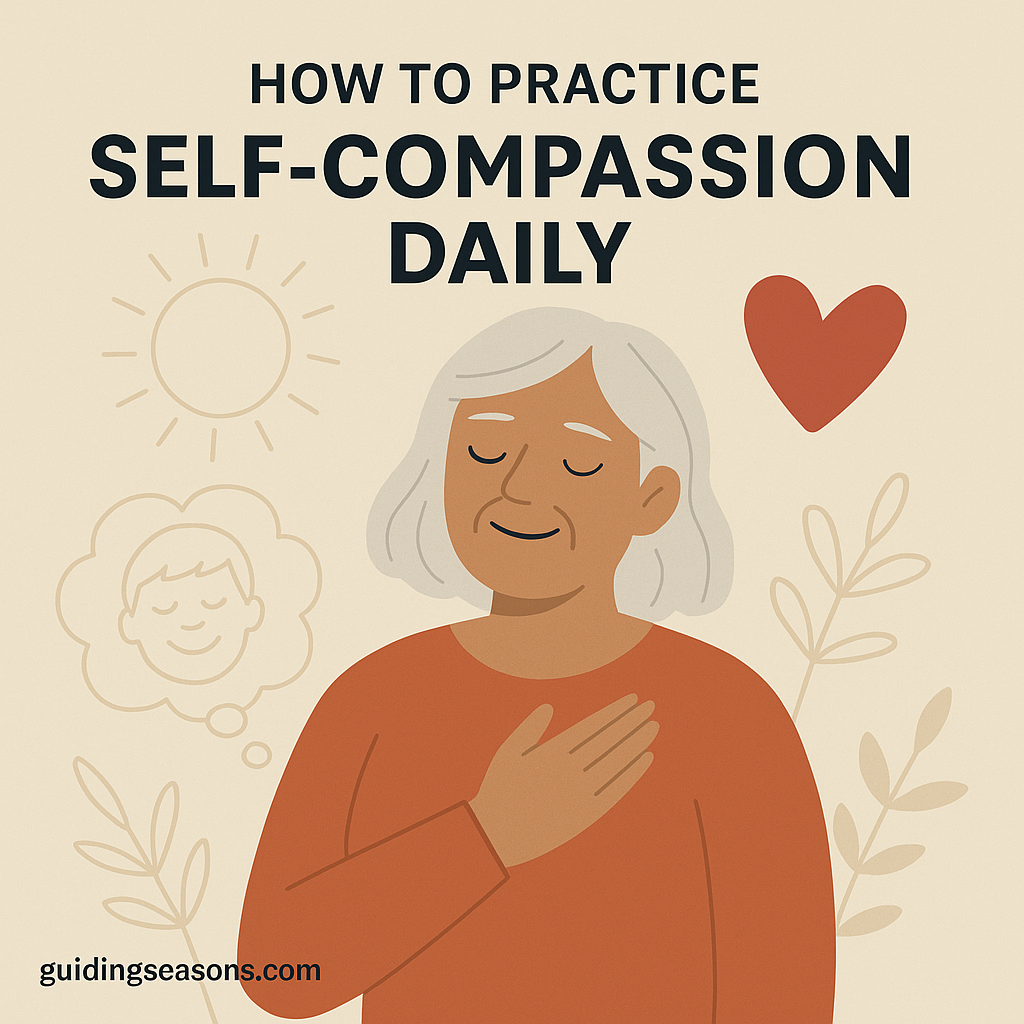
How to Practice Self-Compassion Daily

Older woman with her hand over her heart, surrounded by calm symbols like a heart and sun, practicing daily self-compassion.
Older woman practicing daily self-compassion with calming symbolic illustrations around her.

Most of us understand how to show compassion to another person.

When a friend makes a mistake, we usually don’t tell them they’re a failure. When someone we love is exhausted, we don’t criticize them for needing rest. When a family member is going through a difficult transition, we often remind them to give themselves time.

Yet many people struggle to extend that same understanding to themselves.

You might forget an appointment and immediately think, “What’s wrong with me?”

You may need more time to complete something and tell yourself, “I should be faster.”

Or perhaps retirement, changes in health, family responsibilities, financial concerns, or simply getting older have created a life that looks different from what you expected.

Self-compassion offers another way to respond.

It means recognizing that you’re having a difficult moment and treating yourself with the same patience and basic kindness you would offer someone else.

That doesn’t mean ignoring mistakes, avoiding responsibility, or pretending that everything is fine. In fact, self-compassion can make it easier to acknowledge a problem because you don’t have to attack yourself in the process.

Research increasingly supports this distinction. A 2025 systematic review indexed by the National Library of Medicine examined 113 studies involving self-compassion and psychological outcomes. It found that repetitive negative thinking, including worry and rumination, was an important process connecting self-compassion with psychological health, while mindfulness also appeared to play a role. The researchers cautioned that stronger studies are still needed to establish cause and effect.

Self-compassion doesn’t need to become another complicated self-improvement project.

It can begin with how you respond to yourself during the next difficult five minutes.

Continue reading “How to Practice Self-Compassion Daily”

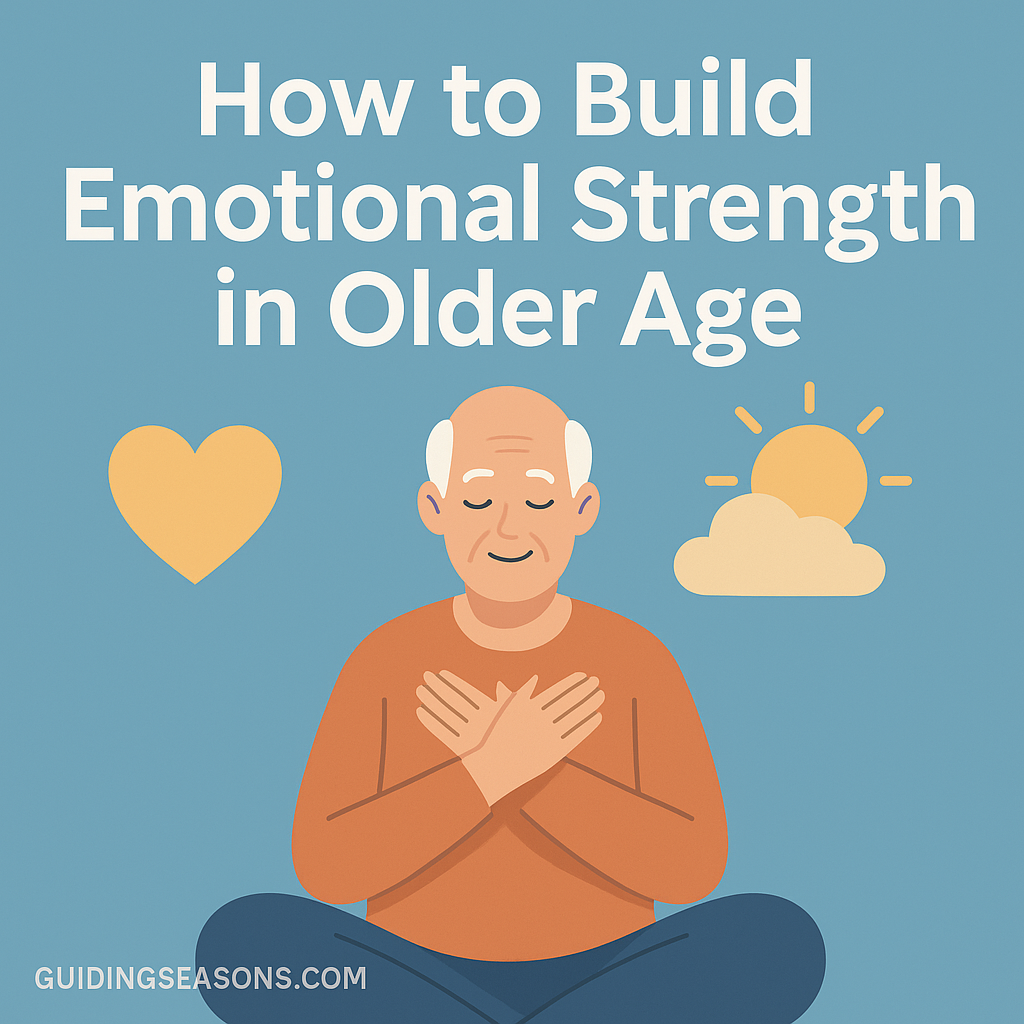
How to Build Emotional Strength in Older Age

Older man sitting peacefully with hands over his chest, surrounded by calm symbols like a heart and sun to represent emotional strength.
Older man practicing calming techniques to build emotional strength in older age.

Emotional strength isn’t about becoming unaffected by difficult experiences. It doesn’t mean suppressing sadness, refusing help, or forcing yourself to remain positive when life is genuinely hard.

Real emotional strength is much more flexible.

It’s the ability to experience disappointment, uncertainty, loss, frustration, or change while gradually finding your footing again. It’s knowing when to solve a problem, when to accept something you cannot change, when to rest, and when to reach out to someone else.

These skills can become especially important as you grow older.

Retirement may change your sense of identity and daily structure. Health concerns can introduce uncertainty. Relationships evolve. Adult children build lives of their own. Financial priorities may shift. Friends or loved ones may move away or pass on.

At the same time, older age can bring decades of experience to draw from.

You’ve already navigated change.

You’ve solved problems you once thought were overwhelming.

You’ve adapted to circumstances you never expected.

That history can become an important source of emotional resilience.

The National Institute on Aging (NIA) describes resilience as the ability to resist, recover from, or successfully adapt to stressors and continues to support research into resilience and healthy aging.

Emotional strength, then, isn’t necessarily something you either have or don’t have. It can be supported through everyday habits, relationships, perspective, and healthy coping strategies.

Here are practical ways to strengthen it.

Continue reading “How to Build Emotional Strength in Older Age”

How to Let Go of Past Stressors

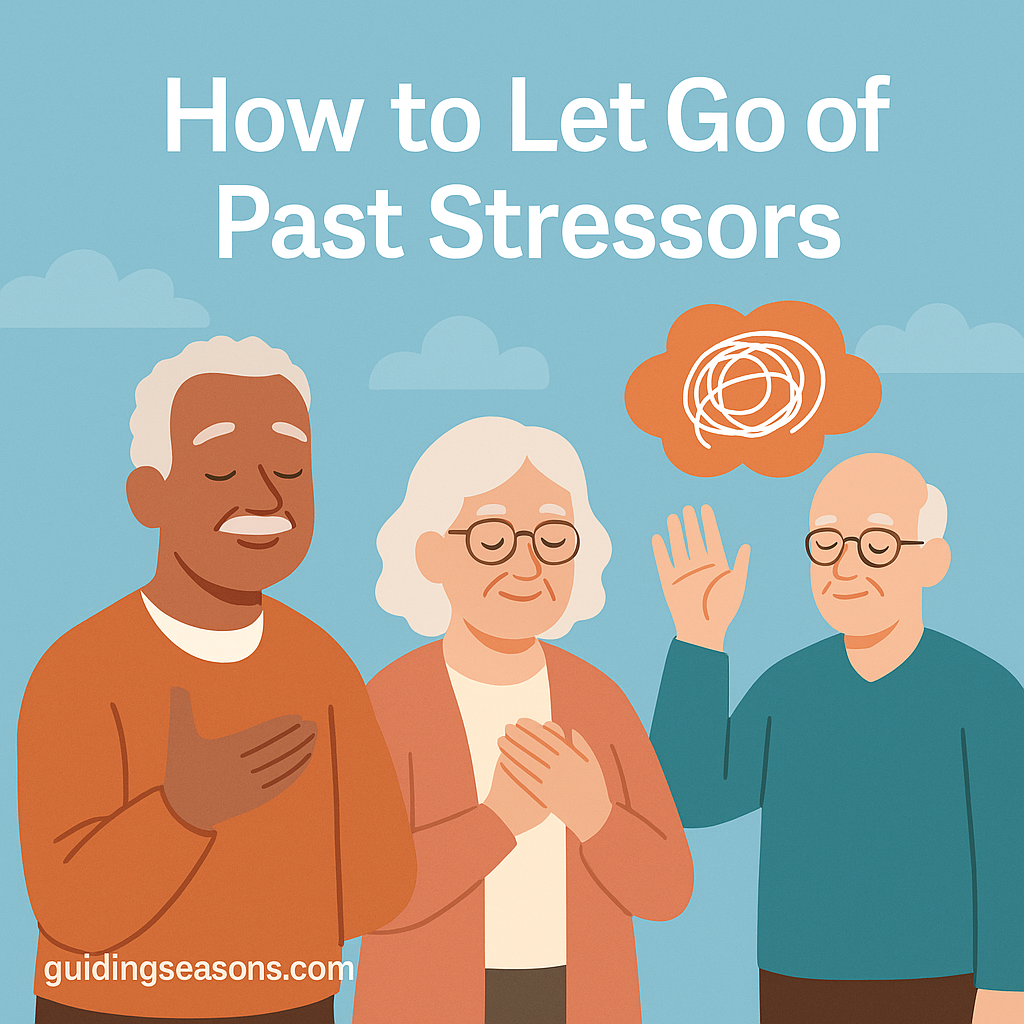
Three older adults practicing calming gestures with an illustrated stress cloud floating above them.
Older adults practicing calming techniques as they learn to let go of past stressors.

Moving into a new chapter of life can create unexpected opportunities for reflection. Retirement, children leaving home, changes in relationships, or simply having more quiet time may bring memories and experiences back to the surface that you haven’t thought about in years.

Some memories are comforting. Others aren’t.

You might find yourself replaying a career decision you regret, thinking about an old disagreement, wishing you had handled a relationship differently, or worrying about choices that can no longer be changed.

Occasional reflection is normal. But repeatedly returning to situations you cannot change can make it harder to appreciate what is happening in your life today.

Letting go doesn’t mean pretending something never happened. It doesn’t require forgiving everyone, forgetting painful experiences, or deciding that something hurtful was acceptable.

Instead, letting go can mean reducing the amount of emotional space the past occupies in your present life.

It’s the gradual process of recognizing what happened, learning what you can from it, and deciding where you want your attention to go next.

Here are practical ways to begin.

Continue reading “How to Let Go of Past Stressors”

How to Reinvent Yourself After Retirement

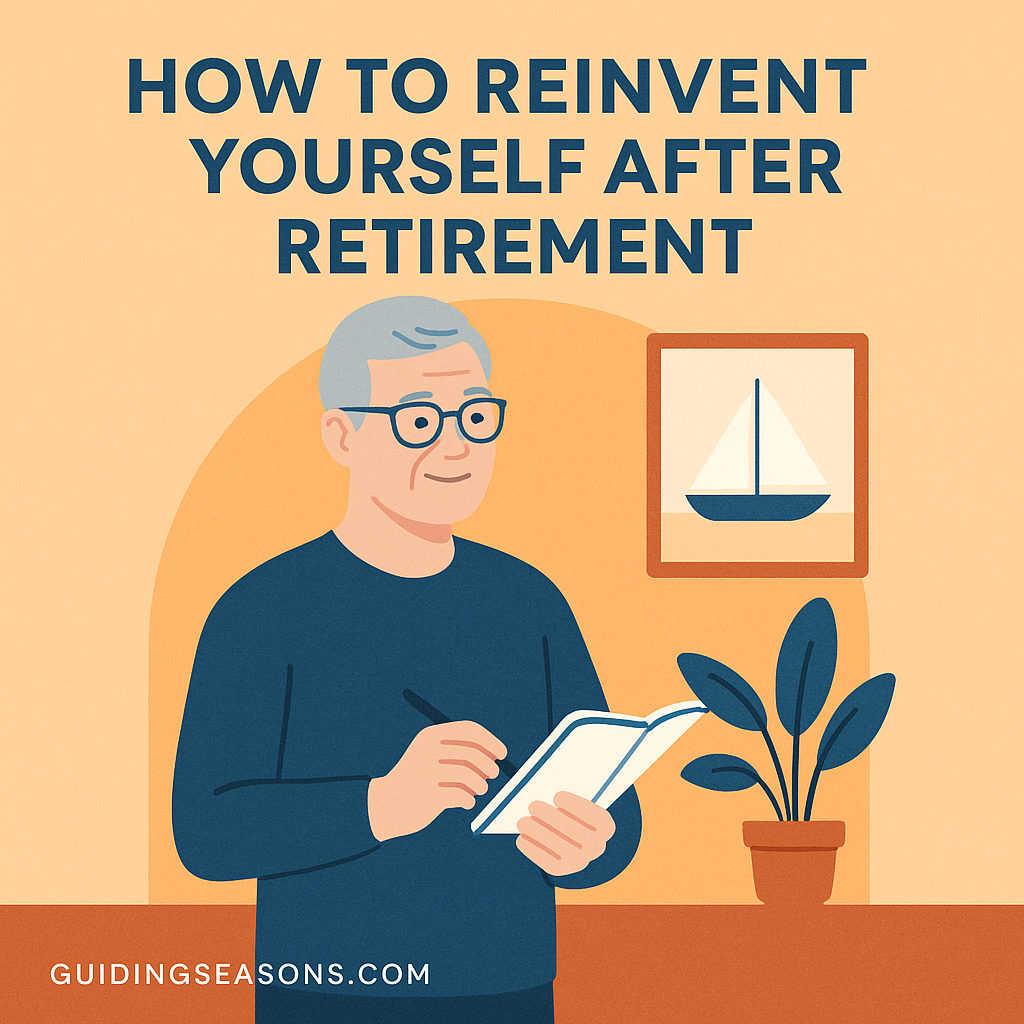
Older man smiling while writing in a notebook as he plans his next chapter after retirement.
Older man reflecting and planning how to reinvent himself in retirement.

Retirement is often described as the reward at the end of a long working life. You finally have fewer deadlines, fewer early alarms, and greater control over how you spend your time.

But retirement can also bring an unexpected question:

Who am I when my career is no longer at the center of my life?

For decades, work may have influenced nearly everything about your daily routine. It determined when you woke up, where you went, who you interacted with, and what responsibilities filled your week. Your profession may even have become part of how you introduced yourself to other people.

Then retirement arrives, and much of that structure can disappear surprisingly quickly.

That transition can be exciting, but it can also feel unfamiliar.

Reinventing yourself after retirement doesn’t mean rejecting the person you used to be or trying to create an entirely new personality. It means deciding which parts of your previous life you want to carry forward while giving yourself permission to explore interests, relationships, goals, and roles that may not have fit into your working years.

The National Institute on Aging (NIA) emphasizes that meaningful and socially engaging activities can support healthy aging. It notes that hobbies, volunteering, time with friends and family, and other meaningful activities can contribute to well-being and help create a sense of purpose in daily life.

Retirement can provide the time to discover what those meaningful activities look like for you.

Continue reading “How to Reinvent Yourself After Retirement”

How to Stay Motivated Without Work Structure

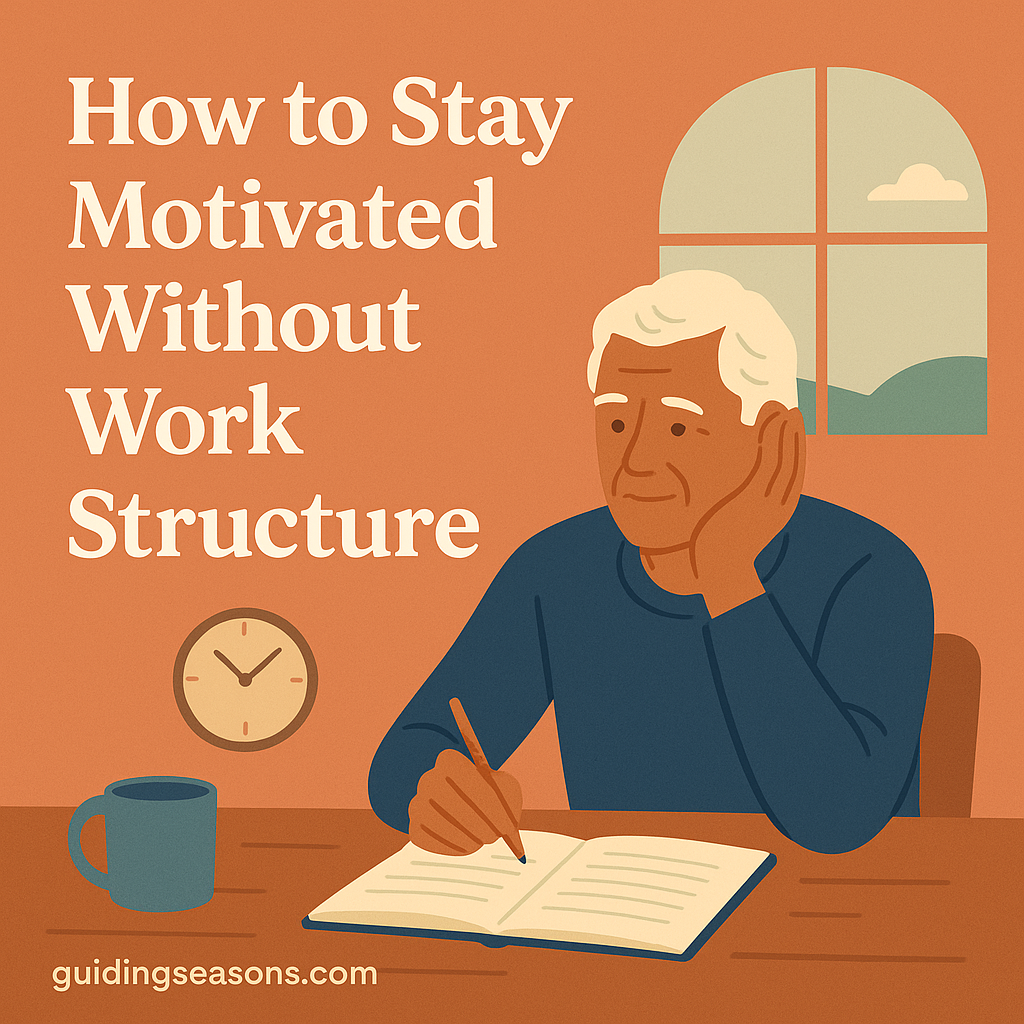
Older man writing in a notebook while reflecting at a table with a clock and window nearby.
An older man reflects on his thoughts while writing in a notebook at a quiet table.

Whether you’re newly retired, transitioning out of a long career, or simply adjusting to a lifestyle with more free time, losing the built-in structure of work can feel surprisingly disorienting.

For decades, much of your day may have been decided for you. You knew when to wake up, where you needed to be, what needed to get done, and when the workday was over. Even if you occasionally dreamed about having an empty calendar, that structure provided something important: direction.

Retirement changes that.

Many people enjoy their newfound freedom but also notice periods of lower motivation, boredom, reduced social interaction, or uncertainty about how to spend their time.

You might wake up and think, What do I actually need to do today?

The answer may be: nothing.

At first, that can feel wonderful. After a while, however, completely unstructured days can begin to feel repetitive.

The solution isn’t necessarily to make yourself busy again or recreate your old work schedule. Instead, you can develop a flexible rhythm that gives your days enough structure to feel purposeful while preserving the freedom you’ve earned.

Here’s how to stay motivated when a traditional workday is no longer organizing your life.

Continue reading “How to Stay Motivated Without Work Structure”

How to Cope With Life Transitions Gracefully

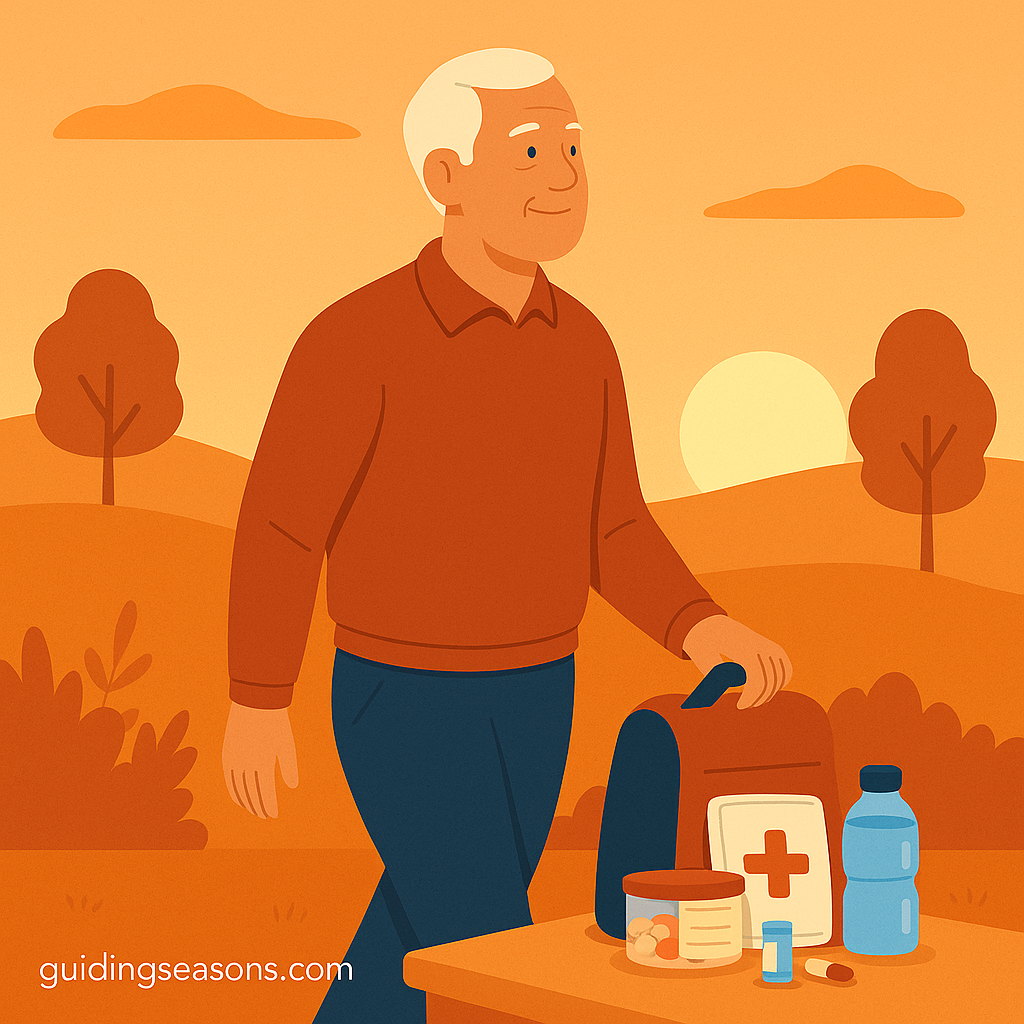
Older man taking a calming walk outdoors during sunset, surrounded by warm orange landscape tones, with the title “How to Cope With Life Transitions Gracefully” above.
An older man walks peacefully at sunset, symbolizing calm, reflection, and resilience during life transitions.

Life rarely stays the same for long. Retirement, changes in health, moving to a new home, becoming a caregiver, losing a loved one, watching children or grandchildren move away, or simply adjusting to a different daily routine can change the shape of everyday life.

Some transitions are welcome and carefully planned. Others arrive unexpectedly. And many bring a mixture of emotions. Retirement, for example, may offer freedom from a demanding work schedule while also creating questions about identity, purpose, finances, and how to spend your time.

Coping with change gracefully does not mean pretending everything is fine or forcing yourself to remain positive. It means giving yourself room to adjust while gradually creating stability, connection, and meaning in your new circumstances.

The American Psychological Association (APA) describes resilience as the process of adapting to difficult or challenging experiences through mental, emotional, and behavioral flexibility. Importantly, resilience is not simply something a person either has or does not have. The thoughts, behaviors, relationships, and coping strategies that contribute to resilience can be developed and strengthened over time.

Here are practical ways to navigate life’s transitions with greater confidence, patience, and grace.

Continue reading “How to Cope With Life Transitions Gracefully”

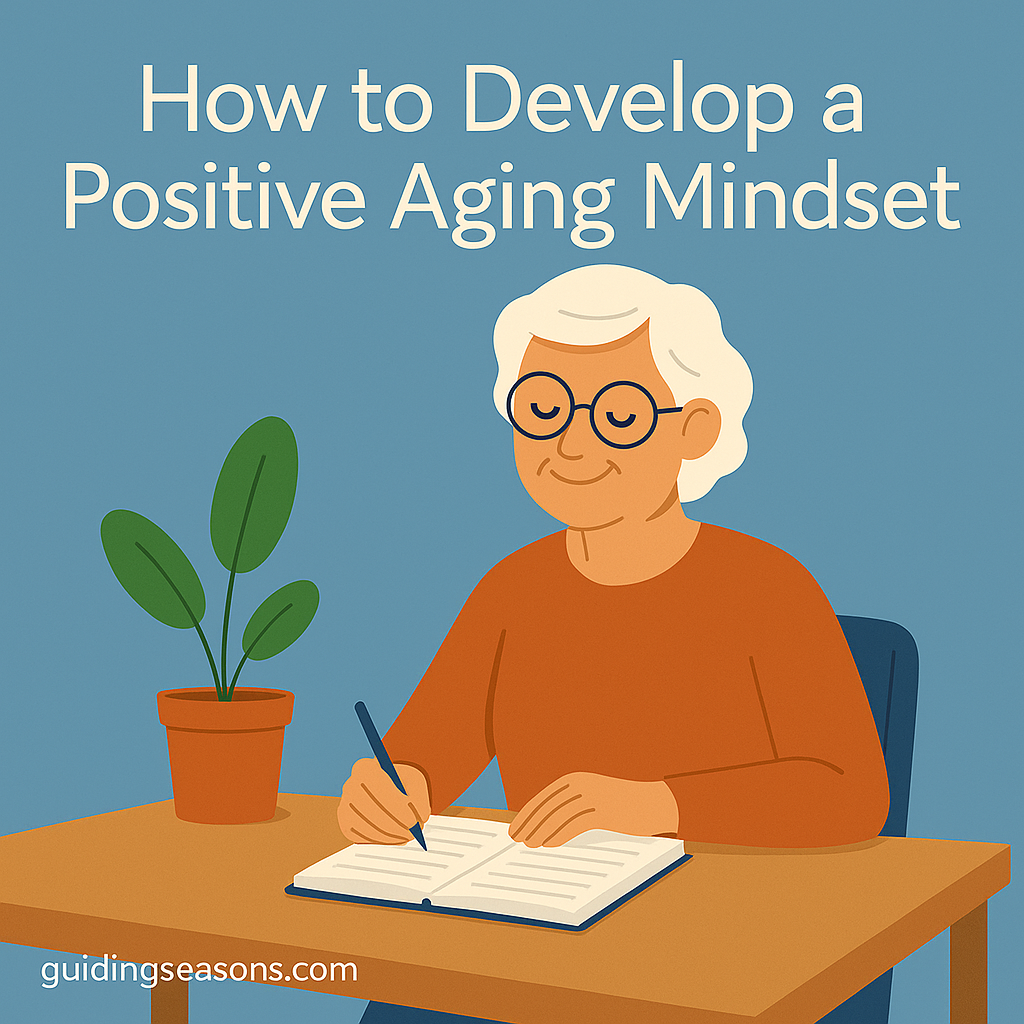
How to Develop a Positive Aging Mindset

Older woman smiling peacefully while journaling at a table, practicing gratitude, with a potted plant beside her and the title “How to Develop a Positive Aging Mindset” displayed above.
An older woman journals peacefully to practice gratitude, illustrating how developing a positive aging mindset begins with simple daily habits.

Aging is a natural part of life, but the way we think about getting older can have a powerful influence on how we experience it. For some people, aging brings concerns about health, independence, appearance, finances, or changing roles. For others, it creates opportunities for greater freedom, stronger relationships, new interests, and a clearer understanding of what matters most.

Developing a positive aging mindset does not mean pretending that every part of getting older is easy. Physical limitations, loss, health concerns, and major life transitions can be very real. A healthier mindset means recognizing those challenges without allowing them to define your entire experience of aging.

It also means questioning the idea that getting older automatically equals decline.

The World Health Organization (WHO) notes that ageism—including stereotypes, prejudice, and discrimination based on age—can even become self-directed when people internalize negative beliefs about what they should or should not be able to do as they grow older. WHO reports that ageism is associated with poorer physical and mental health, reduced quality of life, and greater social isolation.

Changing how you think about aging, therefore, is more than simply “thinking positive.” It can be part of creating a healthier, more engaged, and more fulfilling life.

Here are practical ways to develop a more positive and empowered mindset about aging.

Continue reading “How to Develop a Positive Aging Mindset”

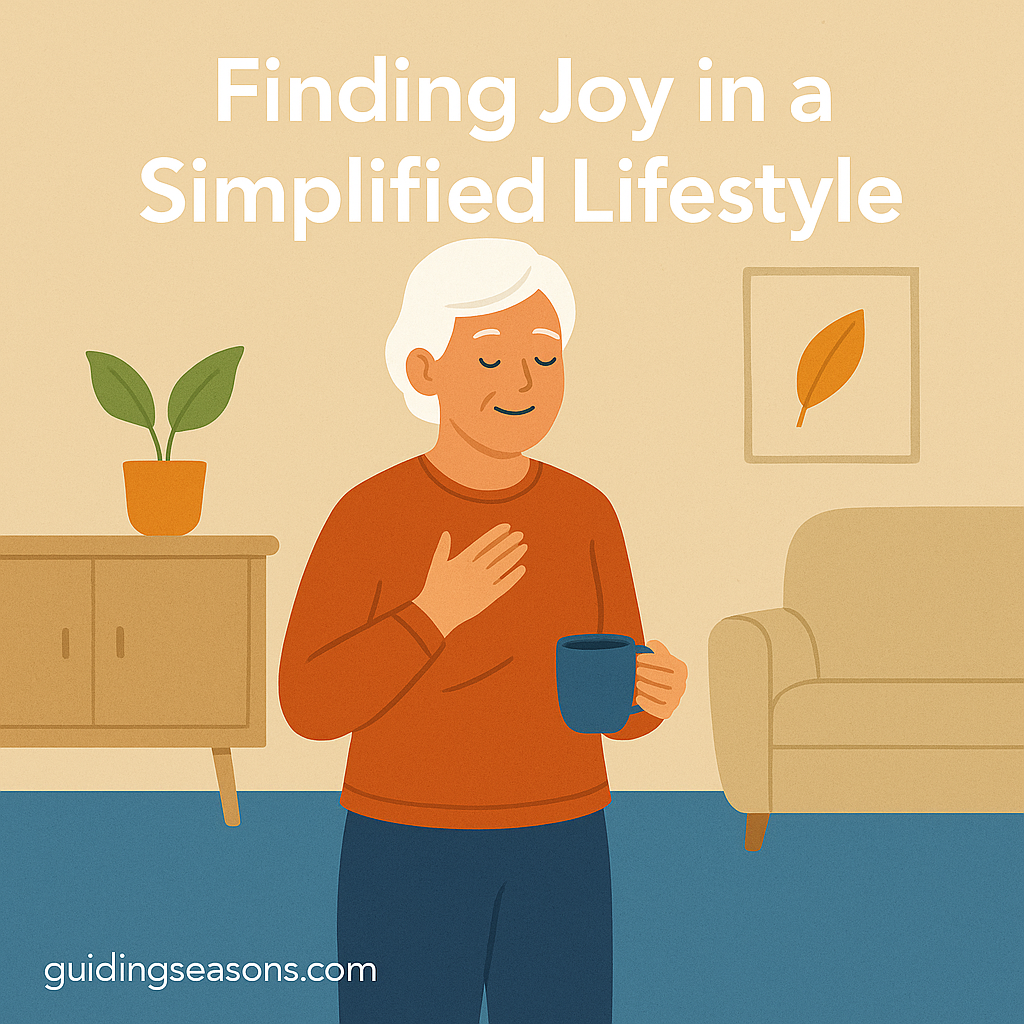
Finding Joy in a Simplified Lifestyle

Older woman enjoying a calm moment with a warm drink in a minimalist living room, with the title “Finding Joy in a Simplified Lifestyle” displayed above.
An older woman relaxes with a cup of tea in a simple, uncluttered living room, illustrating the peace and joy of a simplified lifestyle.

A simplified lifestyle isn’t necessarily about owning fewer things, giving up activities you enjoy, or living according to strict minimalist rules. At its heart, simplifying is about becoming more intentional with your time, belongings, relationships, and energy.

As you move through different seasons of life, your priorities naturally change. Things that once seemed important may no longer deserve as much attention. A packed schedule may become less appealing. Possessions accumulated over decades may begin to feel more like responsibilities than comforts. You may simply find yourself wanting more room to enjoy ordinary life.

Simplifying can help create that room.

It might mean clearing an overcrowded kitchen cabinet, reducing commitments that leave you exhausted, spending less time scrolling through your phone, or developing a peaceful morning routine. Small changes can make everyday life feel more manageable without requiring you to completely reinvent it.

Research also suggests that our physical and social environments can influence well-being. The American Psychological Association has discussed research connecting clutter with stress and anxiety, highlighting how an overabundance of possessions can contribute to feelings of disorder and overwhelm.

The goal, however, isn’t to create a perfectly organized home or an empty calendar.

It’s to make enough space for the people, activities, and experiences that matter to you.

Continue reading “Finding Joy in a Simplified Lifestyle”

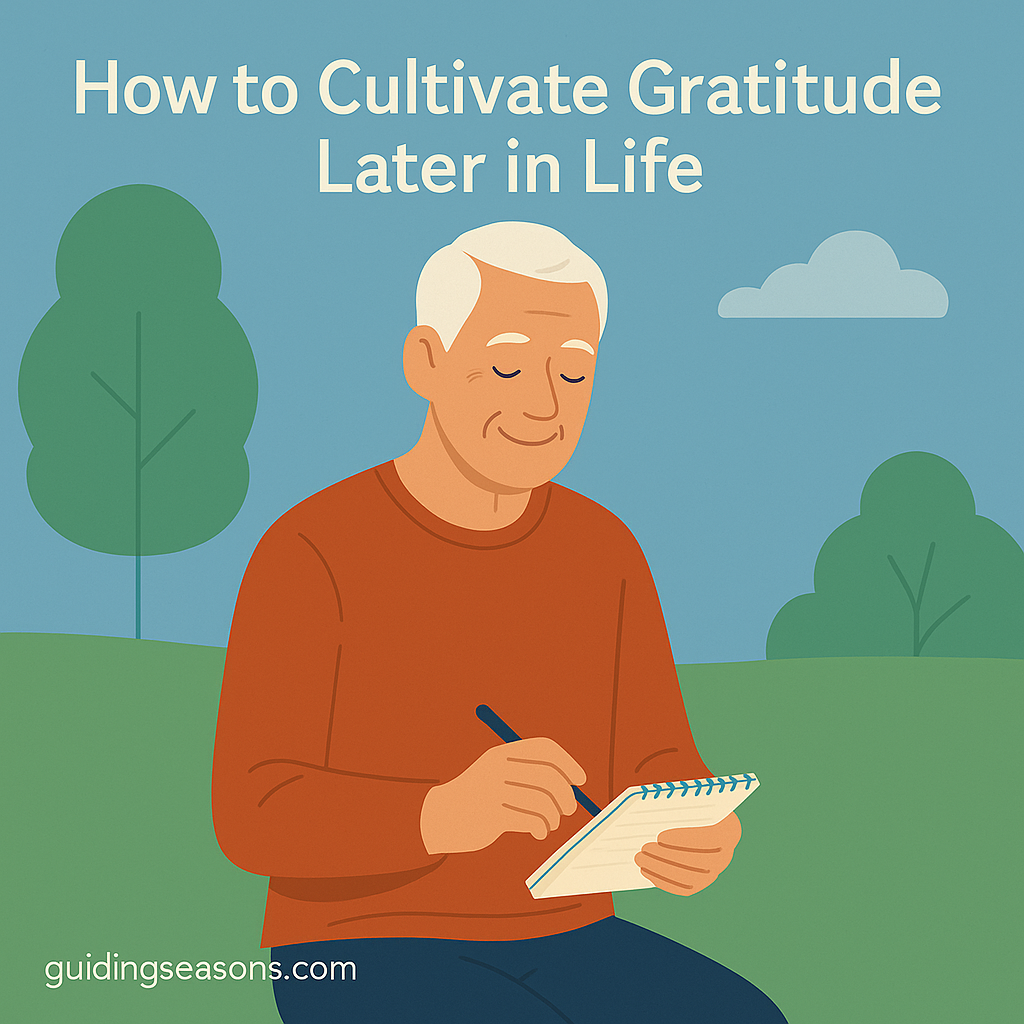
How to Cultivate Gratitude Later in Life

Older man sitting outdoors writing in a gratitude journal, with the title “How to Cultivate Gratitude Later in Life” displayed above him.
An older man reflects and writes in a gratitude journal outdoors, illustrating simple ways to cultivate gratitude later in life.

Gratitude can be a powerful way to enrich everyday life, especially as we grow older. Later life often brings a unique combination of experiences: more memories to appreciate, relationships that have developed over decades, greater perspective, and perhaps more time to notice life’s quieter pleasures.

At the same time, aging can bring real challenges. Retirement may change your sense of identity and daily routine. Friends or family members may move away or pass on. Health concerns can affect independence. Financial circumstances may change, and familiar roles within a family can shift.

Practicing gratitude doesn’t mean ignoring these difficulties or forcing yourself to feel positive when life is genuinely hard. Instead, gratitude involves intentionally noticing what remains meaningful, comforting, beautiful, or supportive alongside life’s challenges.

Research suggests that gratitude and well-being can remain closely connected throughout adulthood. One large study involving more than 31,000 people across three samples found that gratitude was actually higher among older adults than among younger and middle-aged adults. The researchers also found that the relationship between gratitude and subjective well-being remained relatively consistent across adulthood.

The encouraging part is that gratitude doesn’t require major lifestyle changes. It can begin with a few minutes, a conversation, a familiar memory, or simply paying closer attention to something you usually take for granted.

Here are practical ways to make gratitude a more natural part of your life.

Continue reading “How to Cultivate Gratitude Later in Life”