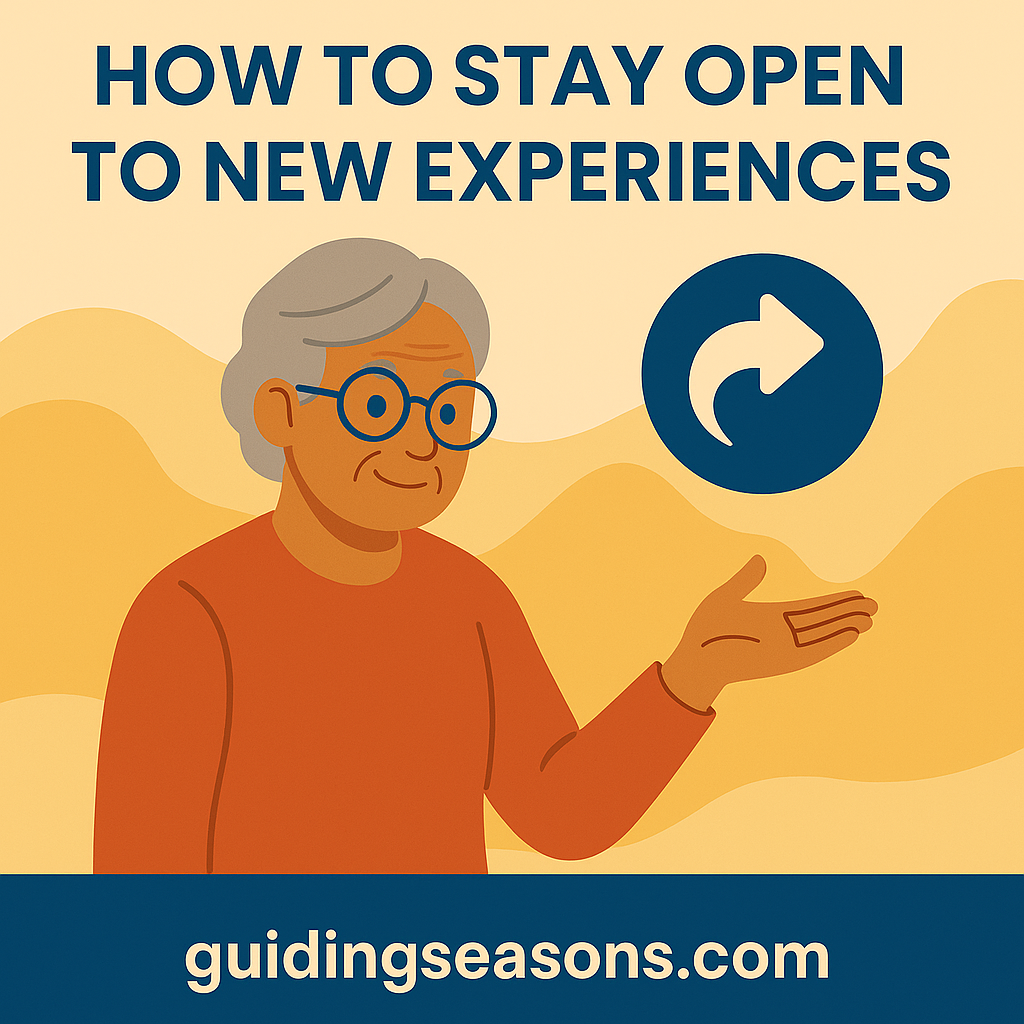
How to Stay Open to New Experiences
Staying open to new experiences is one of the most effective ways to keep life feeling meaningful, engaging, and fulfilling—especially during later life stages. With more self-awareness, life experience, and often more flexibility in your schedule, this season offers unique opportunities to explore what genuinely interests you.
Being open to new experiences doesn’t mean forcing yourself into situations that feel uncomfortable or overwhelming. Instead, it means developing a thoughtful, self-respecting approach to curiosity and growth. When openness is guided by intention, it becomes energizing rather than stressful.
By the end of this article, you’ll have a simple decision filter to help you choose which new experiences are right for you, along with practical examples based on common life situations.
Why Staying Open to New Experiences Matters
A willingness to explore new experiences supports both emotional and mental wellbeing.
Openness can help you:
- Keep your mind active and engaged
- Strengthen emotional resilience
- Build confidence and adaptability
- Reduce isolation and routine fatigue
- Discover new interests or rediscover old ones
- Create fresh memories and social connections
Even small changes in routine can restore a sense of momentum and curiosity.
The OPEN Decision Filter
Before saying yes to something new, use the OPEN decision filter to determine whether an experience is a good fit.
O – Outcome: What Might This Add to My Life?
Ask yourself:
- Could this bring enjoyment, connection, learning, or meaning?
- Does it align with something I value?
An experience doesn’t need a guaranteed benefit—it just needs potential.
P – Pace: Can I Approach This at My Own Speed?
Consider:
- Can I participate without pressure?
- Can I stop or adjust if needed?
Healthy openness respects your energy and comfort levels.
E – Effort: Is the Effort Reasonable Right Now?
Evaluate:
- Physical effort required
- Emotional energy involved
- Time commitment
If the effort feels manageable, the experience is more likely to be positive.
N – Need: Does This Serve a Current Need or Curiosity?
Ask:
- Am I craving connection, stimulation, creativity, or structure?
- Does this address a gap I’ve been feeling?
Experiences that meet a current need tend to feel especially rewarding.
If an opportunity passes all four steps, it’s usually worth exploring.
Staying Open Through Small, Everyday Choices
New experiences don’t have to be dramatic to be meaningful.
Simple ways to introduce novelty include:
- Taking a different route on your daily walk
- Trying a new recipe or ingredient
- Listening to unfamiliar music or podcasts
- Reading a new genre of books
- Rearranging a familiar space in your home
Small changes help keep your mind flexible and engaged.
Real-Life Examples by Scenario
If You’re Feeling Socially Isolated
You might explore:
- A local walking group
- Community center events
- Discussion groups or book clubs
- Inviting a neighbor for coffee
Using the OPEN filter helps you choose low-pressure ways to reconnect without overcommitting.
If You’re Adjusting to Retirement
You might try:
- Volunteering a few hours a month
- Taking a class related to a long-held interest
- Exploring creative hobbies you never had time for
- Mentoring or sharing skills informally
These experiences restore structure and purpose without replicating work stress.
If You’re Managing Limited Energy or Health Changes
You could consider:
- Virtual classes or tours
- Online interest groups
- Short, gentle activities instead of long commitments
- Learning-based experiences you can pause anytime
Openness can adapt to your physical needs.
If You’re Seeking More Meaning or Direction
You might explore:
- Journaling or reflection groups
- Spiritual or mindfulness practices
- Educational lectures or documentaries
- Volunteer roles aligned with your values
Meaning often grows through thoughtful exploration rather than constant activity.
Letting Go of Common Barriers
Many people resist new experiences due to fear of failure or comparison.
Helpful reminders:
- You don’t need to be good at something to enjoy it
- Being a beginner is a strength, not a weakness
- You are not behind anyone else
- Exploration is about experience, not performance
Permission to try without judgment makes openness sustainable.
Balancing Openness With Self-Kindness
Staying open doesn’t mean saying yes to everything.
Practice balance by:
- Respecting your limits
- Choosing experiences that feel aligned
- Allowing rest after new activities
- Saying no when something feels draining
True openness feels supportive, not demanding.
Reflecting on What You Discover
Reflection helps turn experiences into insight.
After trying something new, ask:
- What did I enjoy?
- What felt challenging?
- Would I try this again?
- What did I learn about myself?
Reflection strengthens confidence in future decisions.
Final Thoughts
Staying open to new experiences is about thoughtful curiosity, not constant change. By using a clear decision filter and choosing experiences that match your needs, values, and energy, you can continue growing in ways that feel meaningful and enjoyable.
Life remains rich with possibility at every stage. When you stay open—at your own pace—you allow new opportunities, connections, and joys to unfold naturally.