Best Vitamins and Supplements for Seniors

Older woman holding a pill and a glass of water, surrounded by icons representing vitamins and supplements for seniors.
Illustration of a senior woman taking vitamins with icons symbolizing common supplements for older adults.

As you get older, your nutritional needs can change. Your body may absorb certain nutrients differently, your appetite may decrease, medications can affect nutrient levels, and some people begin eating a less varied diet.

That does not mean every older adult needs a cabinet full of supplements.

For most people, nutritious foods should remain the foundation of a healthy diet. Supplements can be useful when you’re not getting enough of a particular nutrient, have difficulty absorbing it, follow a restricted diet, or have a medical reason for taking one.

The National Institute on Aging (NIA) advises that eating a variety of healthy foods is generally the best way to obtain needed nutrients. However, a doctor or dietitian may recommend supplements when a person’s diet does not provide enough of certain vitamins or minerals. The NIA also warns that supplements can interact with medications and that taking more is not necessarily better.

For older adults, a few nutrients deserve particular attention.

Here are some of the most important vitamins, minerals, and supplements to understand—and when they may or may not be necessary.

Continue reading “Best Vitamins and Supplements for Seniors”

How to Prepare for Longevity and Future Needs

Older man reviewing a checklist with icons of health, housing, finances, and long-term planning surrounding him.
Illustration of an older man planning for longevity with icons representing health, home, money, and future needs.

Living a longer life can mean more time with family, more opportunities to enjoy retirement, and more years to pursue hobbies, travel, volunteer, or simply appreciate everyday life. But longevity also creates new challenges.

A retirement that once needed to cover 15 or 20 years may need to support you for 25 or 30 years—or longer. Your healthcare needs may change. Your home may become harder to maintain. You may eventually need help with transportation, household tasks, or personal care.

Preparing for longevity does not mean assuming that something will go wrong. It means giving yourself more choices if your circumstances change.

The best approach is to look at your future from several angles: health, finances, housing, long-term care, relationships, legal planning, and emotional well-being.

Here are practical ways to begin.

Continue reading “How to Prepare for Longevity and Future Needs”

How to Maintain Curiosity as You Age

Three older adults exploring curious activities such as reading, examining a magnifying glass, and observing a flower, with idea and nature icons above them.
Seniors engaging in curious, exploratory activities to symbolize maintaining curiosity as you age.

Curiosity isn’t something we outgrow.

Children may be famous for asking endless questions, but the desire to understand, explore, and discover can remain with us throughout life. In fact, later adulthood can provide opportunities to explore subjects that were difficult to make time for during the busiest years of work and family responsibilities.

You may finally have time to learn about history, understand how a new piece of technology works, try photography, research your family tree, study another language, identify the birds visiting your backyard, or read about a place you’ve always wanted to visit.

Curiosity doesn’t require traveling around the world or constantly searching for exciting experiences.

It can begin with something as simple as asking:

“I wonder why that happens?”

That question can lead to a book, conversation, class, hobby, outing, or entirely new interest.

Staying mentally engaged can also be a positive part of healthy aging. The National Institute on Aging (NIA) explains that older adults retain the ability to learn new things, form new memories, and improve at different skills. Research reviewed by the NIA has also found promising connections between meaningful, mentally engaging activities and cognitive health, although researchers are still studying the long-term effects.

The goal, however, doesn’t have to be improving your brain or accomplishing something impressive.

Curiosity is worthwhile simply because it can make everyday life more interesting.

Here’s how to keep nurturing it.

Continue reading “How to Maintain Curiosity as You Age”

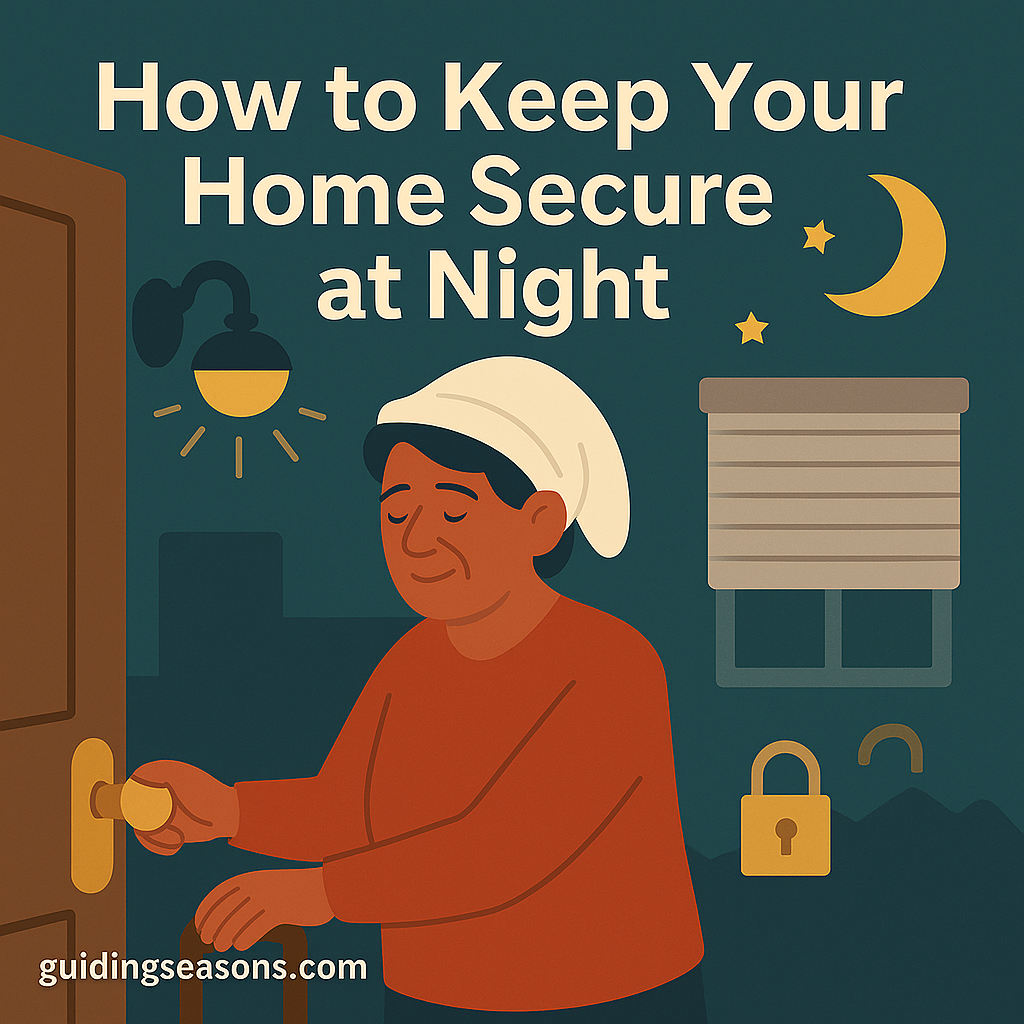
How to Keep Your Home Secure at Night

Older woman locking her front door at night with icons of a moon, stars, window blinds, and a padlock representing nighttime home security.
Illustration of an older woman securing her home at night with supportive safety icons.

Feeling safe at home is important at every age, but nighttime can bring additional concerns for older adults. Darkness makes it harder to see what is happening outside, unexpected noises can be unsettling, and getting around the house safely may become more difficult when the lights are off.

The good news is that improving nighttime security does not necessarily require an expensive alarm system or complicated technology. Simple habits such as locking doors, improving outdoor lighting, closing curtains, and keeping a phone nearby can make a meaningful difference.

Home security is also about more than preventing unwanted entry. For seniors, a secure nighttime environment should make it easier to move around the home safely, contact someone during an emergency, and feel comfortable living independently.

The following steps can help you create a safer and more secure home at night.

Continue reading “How to Keep Your Home Secure at Night”

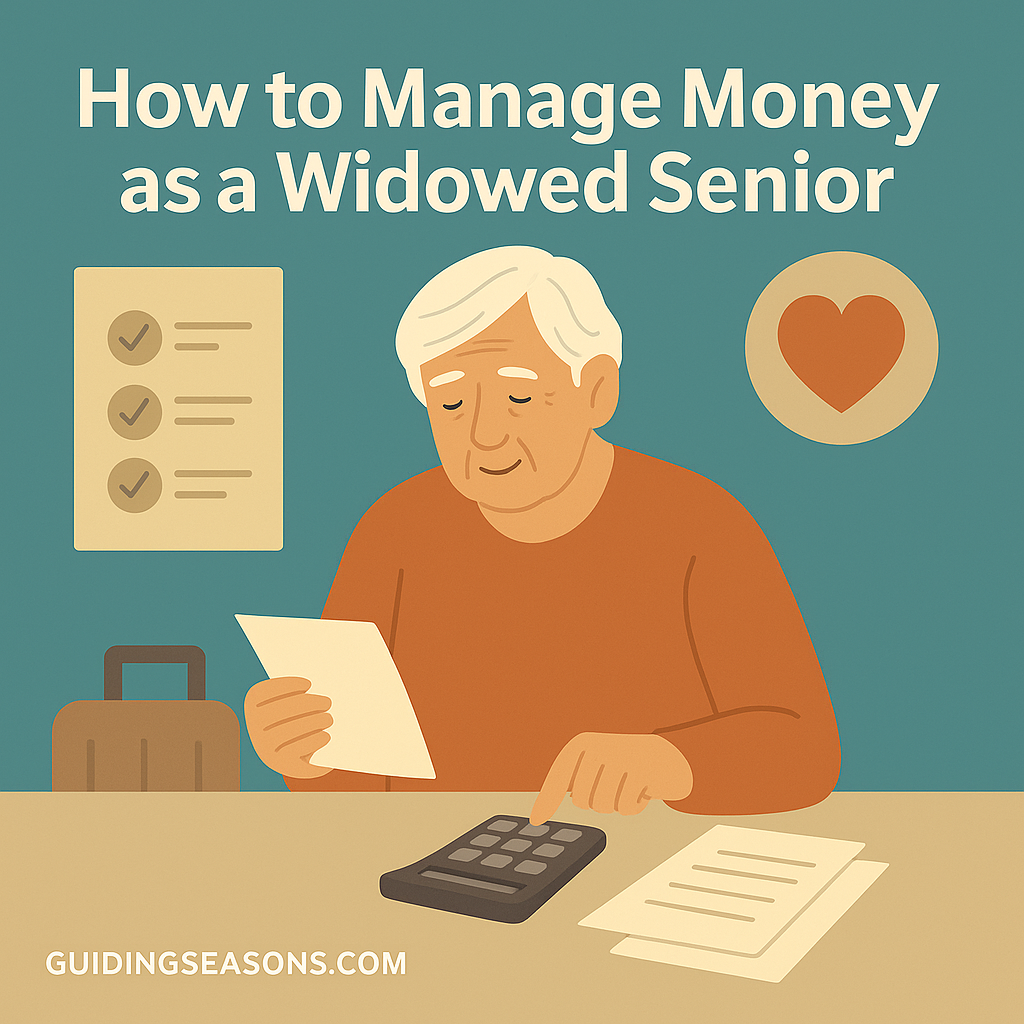
How to Manage Money as a Widowed Senior

Older woman reviewing financial papers with a calculator on the table, surrounded by icons representing organization and emotional support.
Older woman managing finances with supportive icons symbolizing organization and care.

Losing a spouse can bring profound emotional change, but it can also create an immediate shift in your financial life.

You may suddenly be responsible for bills your spouse used to manage, financial accounts you rarely reviewed, insurance decisions, retirement income, Social Security, taxes, property, and estate paperwork. Even someone who has always been comfortable with money can feel overwhelmed when these responsibilities arrive during a period of grief.

The Consumer Financial Protection Bureau recognizes that losing a spouse or partner can be one of life’s most stressful events and provides specific financial resources for surviving spouses to help them address the most urgent tasks first.

The key is not to solve everything immediately.

Instead, focus on the most important financial matters first, then gradually build a clear picture of your income, expenses, assets, accounts, and future needs.

Here is a practical step-by-step approach to managing money after the loss of a spouse.

Continue reading “How to Manage Money as a Widowed Senior”

How to Prepare for Long Flights as a Senior

Older man standing with a suitcase, neck pillow, and travel-related icons like an airplane and water bottle, illustrating how seniors can prepare for long flights.
Older man with travel essentials and airplane icons, representing preparation tips for long flights as a senior.

Long flights can open the door to wonderful experiences, whether you’re visiting family, taking a long-awaited vacation, or traveling somewhere you have always wanted to see. But spending eight, ten, or even twelve hours on an airplane can also be tiring, particularly as we get older.

Limited legroom, long periods of sitting, changing cabin temperatures, disrupted sleep, and navigating a busy airport can all add to the strain. Fortunately, much of that discomfort can be reduced with a little preparation.

The goal isn’t simply to get through the flight. It’s to arrive at your destination feeling as comfortable, rested, and confident as possible.

Here’s how seniors can prepare for a long flight and make the entire travel day easier.

Continue reading “How to Prepare for Long Flights as a Senior”

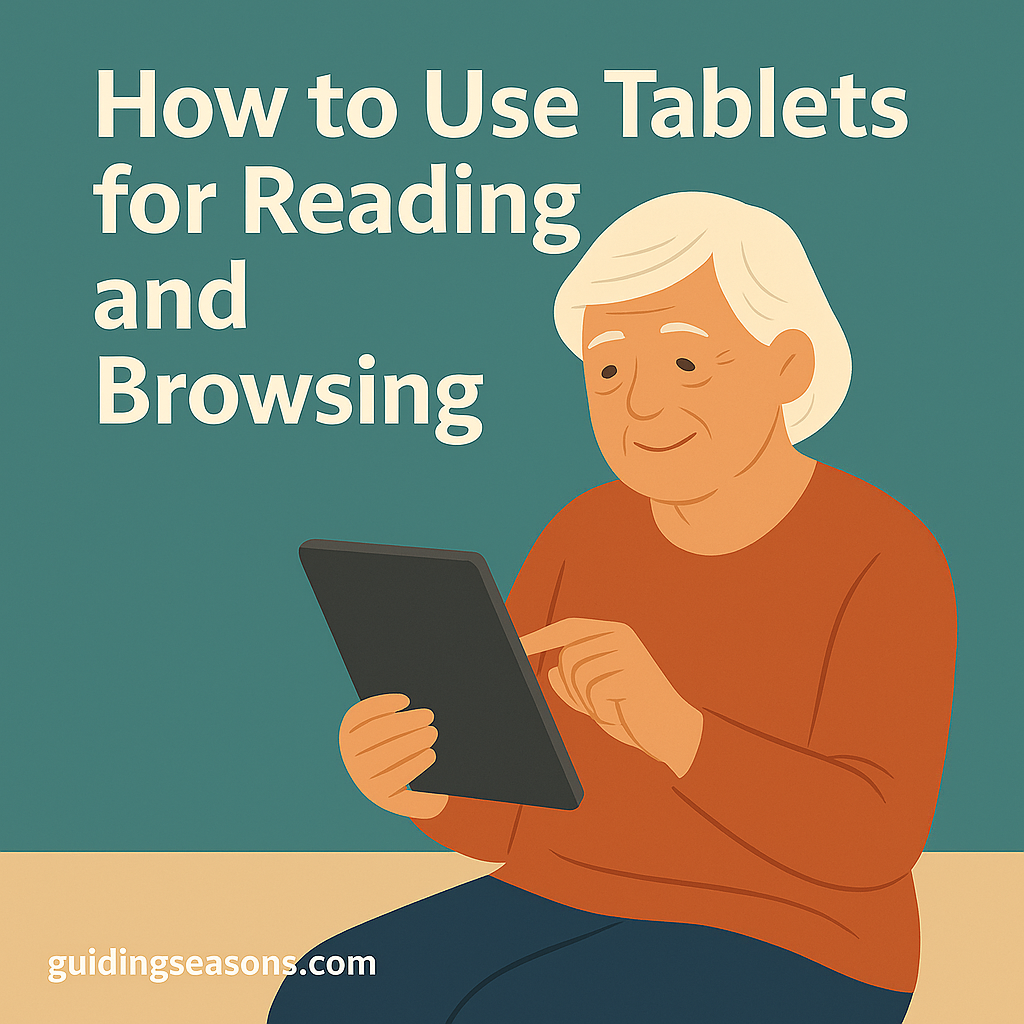
How to Use Tablets for Reading and Browsing

Older adult using a tablet while reading and browsing, shown in a warm flat-style illustration with the article title above.
Illustration of an older adult using a tablet for easy reading and browsing.

Tablets can be one of the easiest ways to enjoy technology at home. They are larger than smartphones, lighter than most laptops, and simple to control with taps, swipes, and on-screen buttons.

For older adults, a tablet can be especially useful because the screen is large enough for comfortable reading while still being easy to carry from room to room. You can use one to read books, browse the internet, watch videos, check email, look at family photos, join video calls, or follow a recipe in the kitchen.

You also do not need to learn everything at once.

A good approach is to start with just a few basic tasks, such as opening a book, visiting a favorite website, and adjusting the text size. Once those actions feel familiar, you can gradually explore more features.

Here is a practical, senior-friendly guide to using tablets confidently for reading, browsing, and everyday activities.

Continue reading “How to Use Tablets for Reading and Browsing”

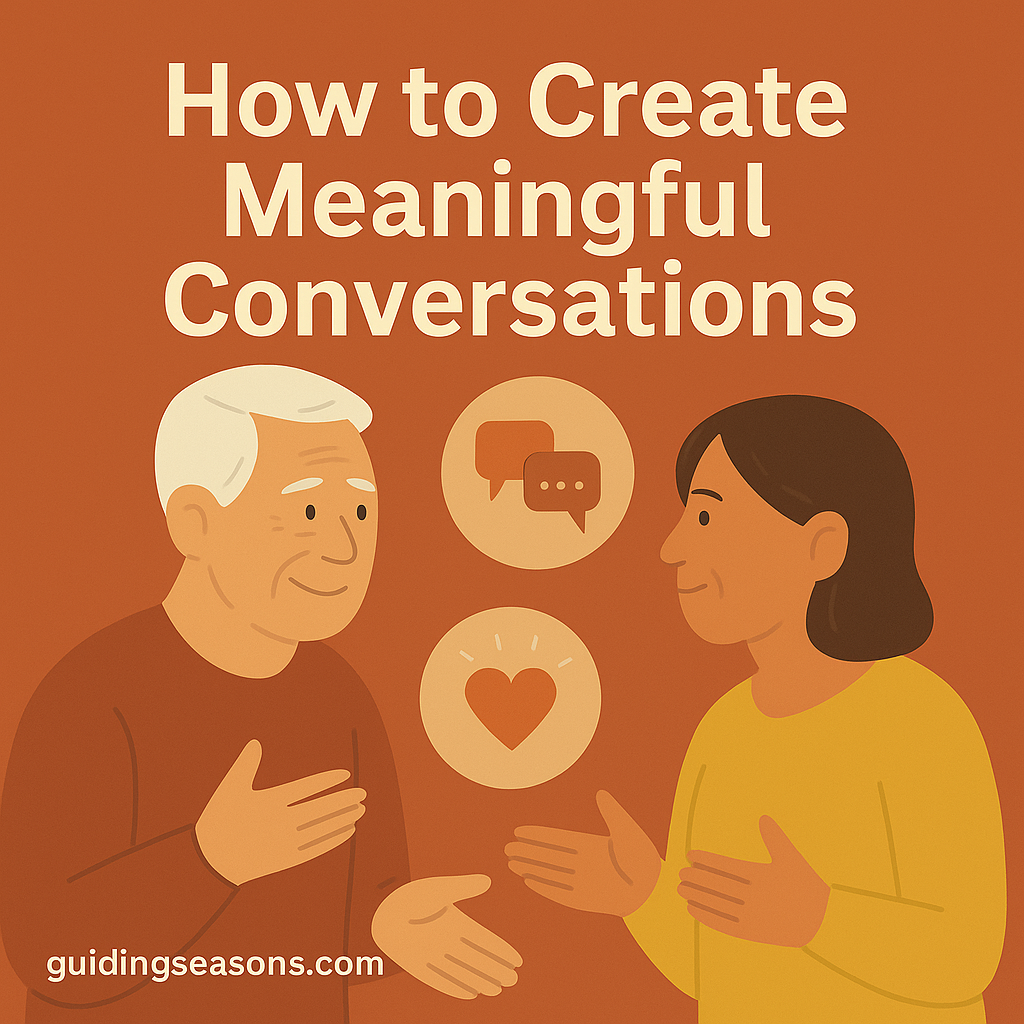
How to Create Meaningful Conversations

Older man and woman having a friendly conversation with icons of speech bubbles and a heart above them.
Older man and woman engaging in a warm conversation with symbolic icons representing meaningful communication.

Meaningful conversations can turn ordinary moments into opportunities for genuine connection. A phone call with an adult child, coffee with an old friend, dinner with a spouse, or a conversation with someone you’ve just met can become much more than casual small talk when both people feel heard and understood.

As we get older, these conversations can become especially valuable. Retirement may change how often we interact with coworkers. Children and grandchildren may have busy lives of their own. Friends may move away, and social circles can change over time. Being able to create deeper connections can help maintain important relationships while also making it easier to develop new ones.

Meaningful conversation doesn’t require being naturally outgoing, having fascinating stories, or knowing exactly what to say. In fact, some of the best conversations begin with a very simple question followed by genuine listening.

The goal isn’t to turn every interaction into a serious discussion. Small talk has an important purpose too. It helps people become comfortable with each other. But when the opportunity arises, curiosity, attention, empathy, and thoughtful questions can take a conversation somewhere more meaningful.

Continue reading “How to Create Meaningful Conversations”

How to Manage Stress and Anxiety Later in Life

Four older adults practicing calming activities—meditation, breathing, reading, and relaxation—illustrated to represent managing stress and anxiety later in life.
Seniors engaging in peaceful activities that support stress and anxiety management later in life.

Stress and anxiety don’t necessarily disappear as you get older. Retirement may remove some pressures associated with work, but later life can introduce an entirely different set of emotional challenges.

Changes in health, financial concerns, caregiving responsibilities, losing a spouse or friend, moving to a new home, or adjusting to retirement can all create stress. Even positive changes, such as traveling more or becoming a grandparent, can require adjustment.

Occasional worry is a normal part of life. However, persistent anxiety that interferes with sleep, relationships, concentration, or everyday activities deserves attention.

The National Institute of Mental Health (NIMH) notes that older adults may experience life changes such as serious illness or the loss of a loved one. Although many people adjust successfully, persistent grief, loneliness, or social isolation can sometimes contribute to mental health conditions such as depression or anxiety. The good news is that effective treatments are available.

Managing everyday stress often begins with surprisingly simple habits. Regular movement, social connection, relaxation, meaningful activities, and a predictable routine can all contribute to emotional well-being.

Here are practical ways to manage stress and anxiety later in life.

Continue reading “How to Manage Stress and Anxiety Later in Life”

How to Build a Simple Retirement Spending Plan

Older woman writing a retirement spending plan with a calculator on the table and financial icons like a bank building and pie chart around her.
Older woman creating a simple retirement spending plan with helpful financial icons illustrated around her.

Retirement should be a time when you can enjoy the money you worked hard to save. But after decades of receiving a paycheck, switching to Social Security, pensions, investments, and retirement-account withdrawals can feel like a major adjustment.

One of the best ways to make that transition easier is to create a simple retirement spending plan.

A retirement spending plan isn’t about restricting every purchase or tracking every dollar. Instead, it gives you a clear picture of how much money is coming in, how much you need for essential expenses, how much you can comfortably spend on the things you enjoy, and how your savings can help support you over time.

You don’t need a complicated spreadsheet or advanced financial knowledge to get started. A notebook, calculator, or basic budgeting app may be enough.

Here are practical steps for building a retirement spending plan that is simple, flexible, and easy to maintain.

Continue reading “How to Build a Simple Retirement Spending Plan”