Senior couple standing together in front of their RV on a sunny day.
Retirement opens the door to a new kind of freedom—more time to explore, relax, and discover new places at your own pace. RV travel is one way retirees can enjoy that freedom. Whether you’re drawn to cross-country adventures, weekend getaways, or scenic road trips, RV life offers comfort, flexibility, and the opportunity to visit places you’ve always dreamed of seeing.
If you’re new to RV travel or simply looking to make the most of it, this guide will show you how to plan comfortable trips, stay safe on the road, and enjoy memorable experiences along the way.
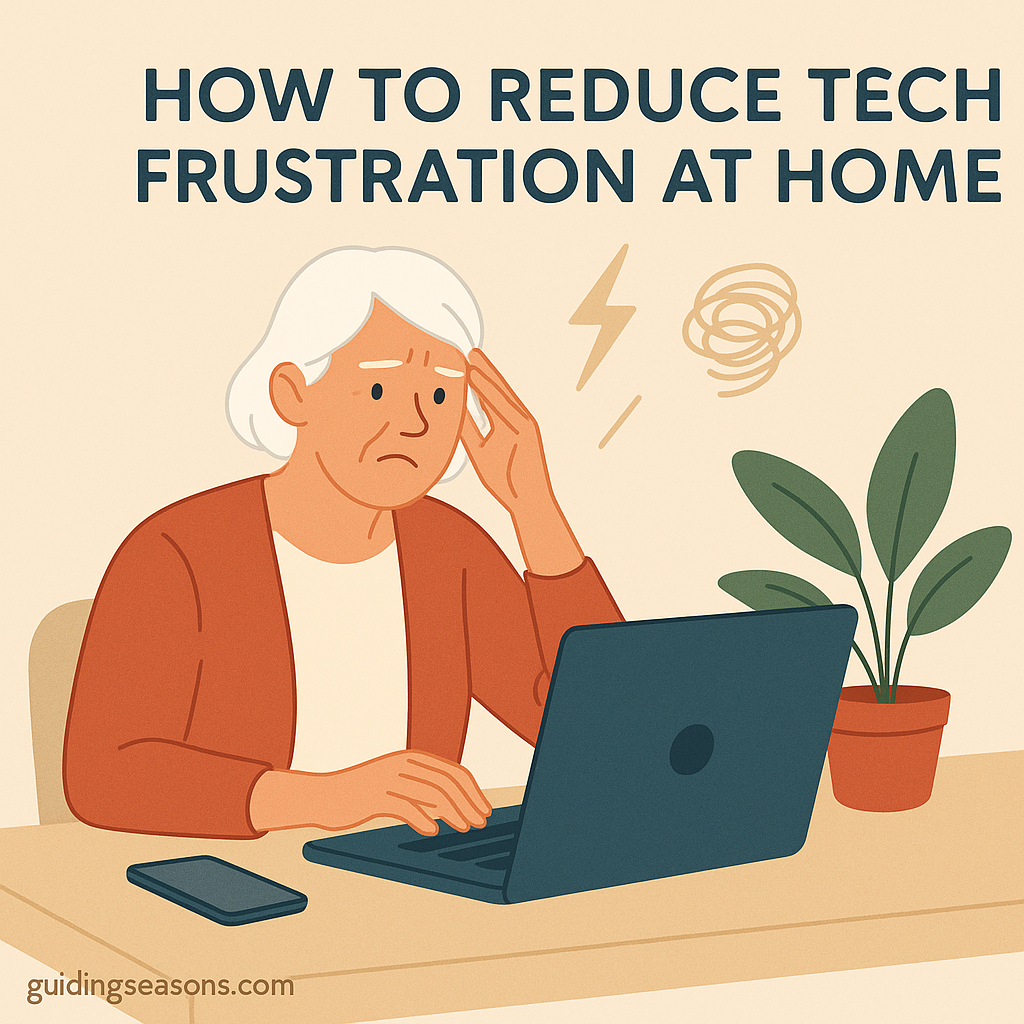
Senior woman feeling frustrated while using her laptop at home.
Technology can make life easier, safer, and more enjoyable—but it can also feel confusing or overwhelming if you’re not sure where to begin. From smartphones and tablets to smart TVs and home Wi-Fi, many older adults feel frustrated by constant updates, new features, and devices that don’t always behave the way they should.
The good news? With the right steps, you can reduce tech frustration at home and feel more confident using the tools that help you stay connected, entertained, and informed. This guide breaks down simple ways to make technology feel more manageable and less stressful.
Senior couple sitting together and sharing a warm moment at home.
Retirement offers couples something they may not have had in decades: time. More quiet mornings, shared meals, relaxed schedules, and the freedom to rediscover life together. But while this new chapter can bring closeness and joy, it also comes with adjustments.
Spending more time together, redefining household roles, managing finances, and deciding how to use newfound free time can create stress if these changes aren’t handled intentionally.
The good news is that with communication, patience, and new shared habits, retirement can become one of the most rewarding stages of marriage. Here’s how to strengthen your relationship and build a meaningful partnership in this next chapter.
Senior man working on a simple woodworking project at home.
Staying active, creative, and engaged at home can be a wonderful way to support your mood, keep your mind engaged, and bring more enjoyment into your daily routine. Home projects don’t need to be physically demanding or complicated. Many can be done at your own pace while providing a satisfying sense of accomplishment and purpose.
Whether you enjoy crafting, organizing, gardening, or exploring something artistic, there’s a home project for nearly every interest and ability level. Here are some fun and meaningful ideas seniors can try right at home.
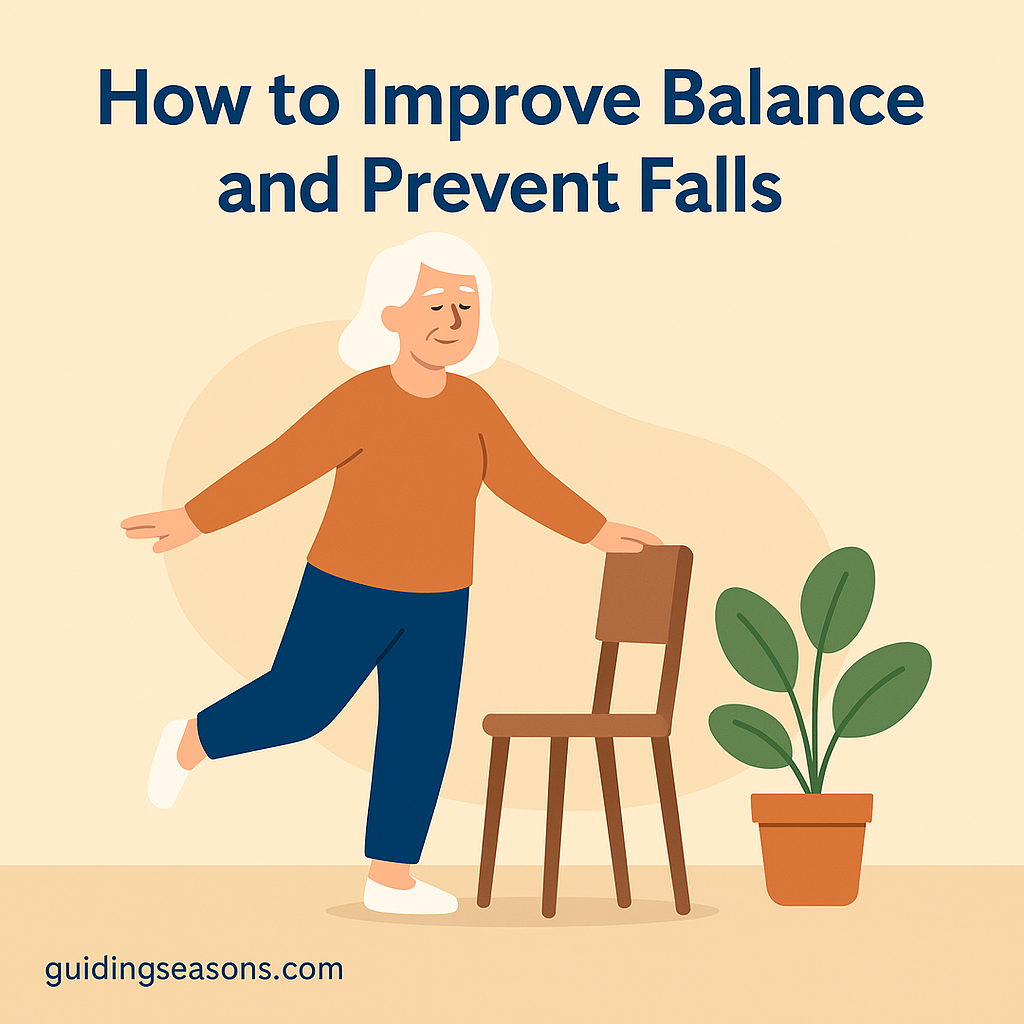
Senior woman practicing balance exercises using a chair for support.
Maintaining good balance is an important part of staying active, independent, and confident as you age. Everyday activities such as getting out of a chair, walking across a parking lot, climbing stairs, or stepping into the shower all require a combination of balance, muscle strength, coordination, vision, and quick reactions.
These abilities can gradually change with age. However, becoming less steady does not mean that falls are inevitable. Exercise, home safety improvements, medication reviews, appropriate footwear, and regular health checkups can all help reduce fall risk.
Fall prevention deserves particular attention because falls are common among older adults. According to the National Institute on Aging (NIA), more than one in four adults age 65 and older falls each year, and the risk increases with age. The NIA also emphasizes that many falls can be prevented through measures such as exercise, medication management, vision checks, and improvements to home safety.
The goal is not to become overly cautious or avoid activity. In fact, staying physically active can be one of the most useful ways to maintain the strength and mobility needed for everyday life.
Senior woman managing her retirement budget with a calculator and paperwork.
Planning for retirement doesn’t end when you stop working—your budget needs to continue evolving as your lifestyle, health, and financial needs change. Adjusting your budget during retirement can help you protect your savings, reduce financial stress, and maintain the freedom to enjoy this stage of life on your terms.
Below is a practical, senior-friendly guide with clear steps you can use right away.
Older woman attending a local community event and holding an event flyer.
Staying involved in your community can be one of the most enjoyable ways to remain socially connected and active as you get older. Community activities provide opportunities to meet people, discover new interests, contribute your experience, and maintain a sense of connection to the place where you live.
Getting involved doesn’t mean filling your calendar with activities. Even one regular event—a weekly walking group, monthly library club, volunteer shift, or community lunch—can create opportunities for meaningful interaction.
Community involvement may also support overall well-being. The National Institute on Aging (NIA) notes that staying socially connected and participating in meaningful activities may support cognitive health and recommends activities such as volunteering, joining social groups, learning new skills, and participating in community programs.
The key is finding activities that match your interests, mobility, schedule, budget, and comfort level.
Whether you enjoy volunteering, gardening, music, learning, exercise, or simply having coffee with other people, there are likely opportunities worth exploring.
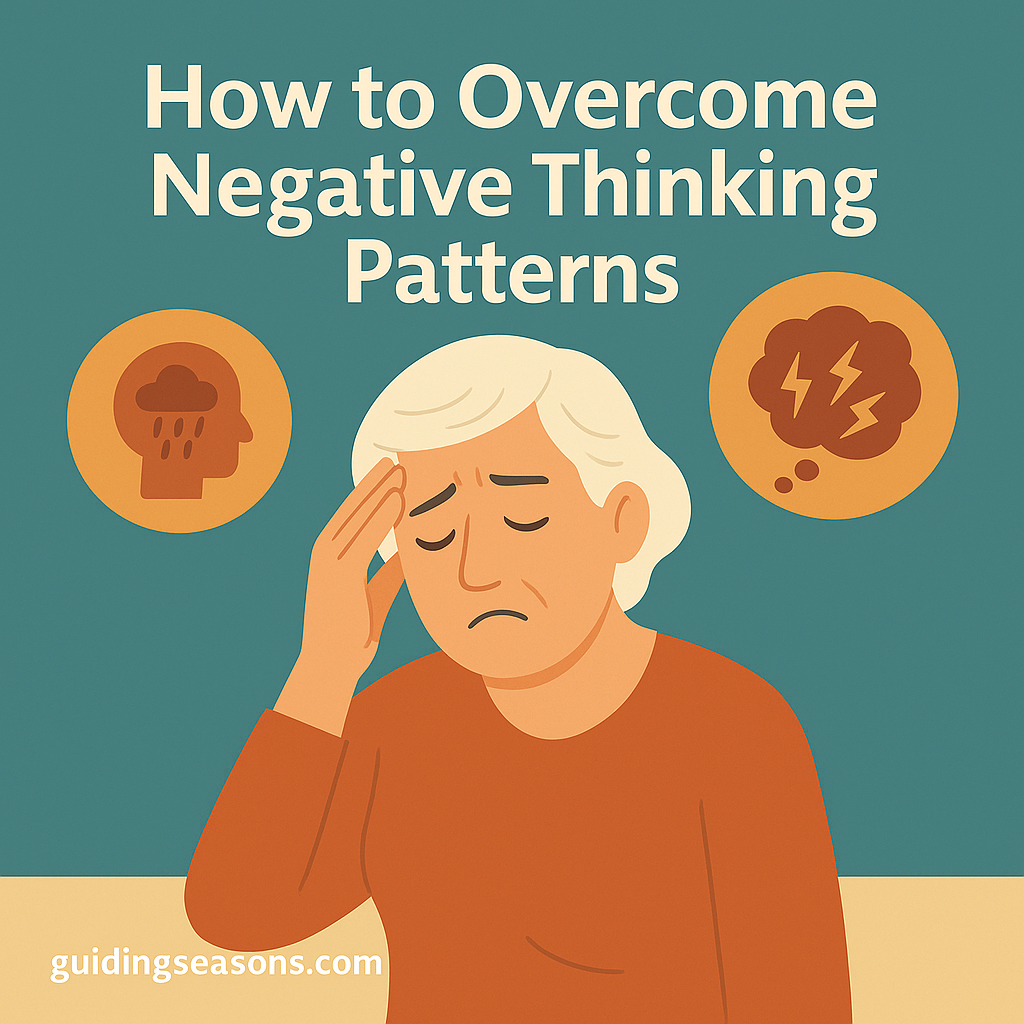
Older woman experiencing negative thoughts with symbolic icons surrounding her.
Everyone has negative thoughts from time to time. You might worry about the future, replay an uncomfortable conversation, criticize yourself for a mistake, or assume that something will go wrong before it has even happened.
These thoughts can become more noticeable during periods of change. Retirement, changes in health or mobility, financial concerns, the loss of familiar routines, caregiving responsibilities, or changes in relationships can all create uncertainty.
Having a negative thought does not automatically mean something is wrong. The problem begins when negative thinking becomes so repetitive that it influences how you see yourself, other people, and the future.
Fortunately, thought patterns are not necessarily permanent. You can learn to recognize unhelpful thoughts, examine them more carefully, and respond in ways that are more balanced.
This idea is central to cognitive behavioral therapy (CBT). According to the National Institute of Mental Health (NIMH), CBT can help people recognize automatic ways of thinking that are inaccurate or harmful, question those thoughts, understand how they affect emotions and behavior, and change self-defeating patterns.
You do not need to force yourself to “think positive” all the time. A more useful goal is learning how to think accurately, fairly, and constructively, especially when your mind automatically moves toward the worst possible interpretation.
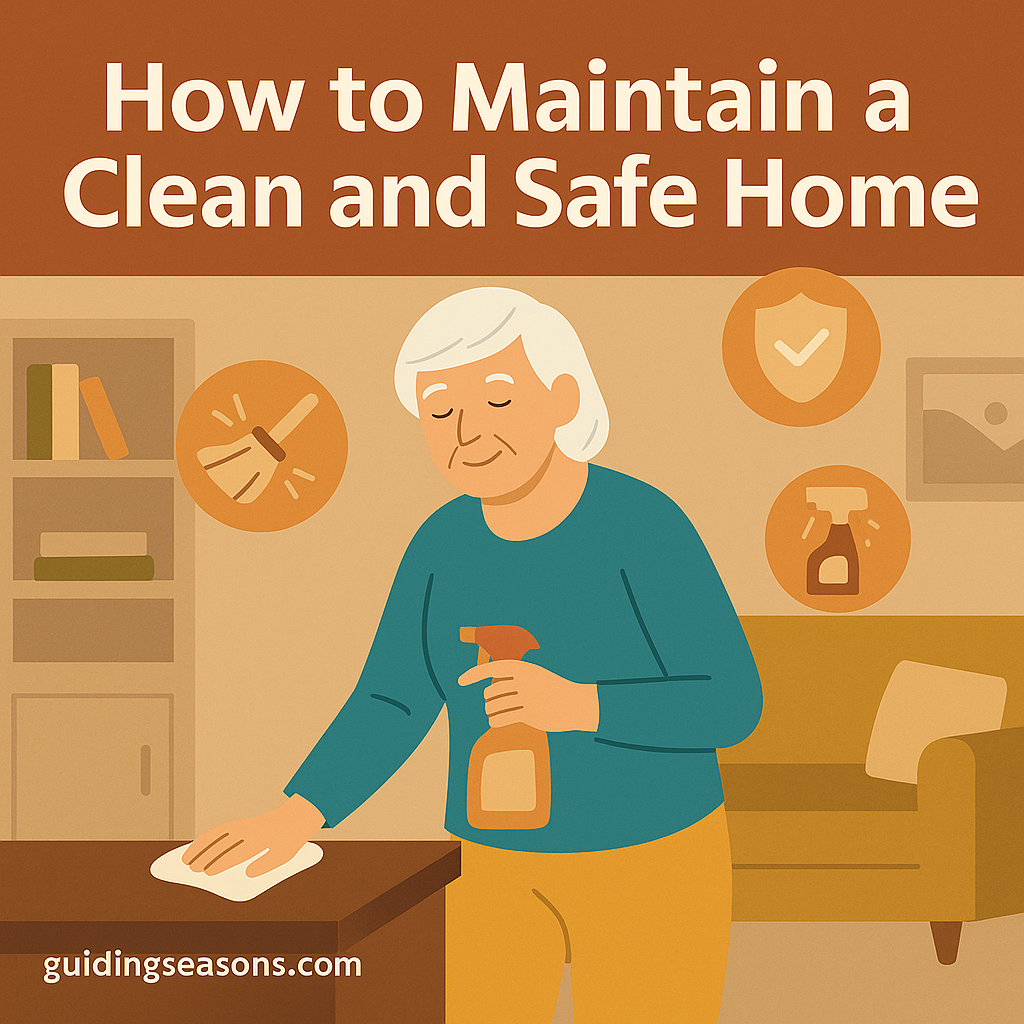
Older woman cleaning her home with safety and housekeeping icons in the background.
A clean and safe home can make everyday life feel more comfortable, manageable, and independent. As we get older, simple household tasks may take more energy, and small hazards that once seemed harmless can become more important to address.
Cluttered walkways, poor lighting, wet bathroom floors, hard-to-reach storage, and heavy cleaning tools can all make routine tasks more difficult. The goal is not to keep your home perfectly spotless. It is to create a living space that is easy to move through, easy to maintain, and supportive of your daily needs.
The Centers for Disease Control and Prevention (CDC) recommends making the home safer by removing tripping hazards, improving lighting, and adding supports such as grab bars and stair railings to help reduce fall risk among older adults. CDC — Preventing Falls and Hip Fractures
A practical approach is to combine light cleaning, simple organization, and routine safety checks.
Here are some of the most useful ways to maintain a clean and safe home without making the process overwhelming.
Older woman giving financial guidance with safety and budgeting icons around her.
Managing money during retirement can become more complicated than many people expect.
Instead of simply earning a paycheck and contributing to retirement accounts, you may now be deciding how much to withdraw from savings, how to invest money you still have, when to claim Social Security, how to manage taxes, how to prepare for healthcare expenses, and whether your savings will last for the rest of your life.
There is certainly no shortage of people offering advice.
Financial planners, investment advisers, brokers, insurance agents, accountants, television personalities, YouTube channels, social media personalities, newsletters, and online financial websites may all provide recommendations.
The challenge is determining which advice deserves your trust.
A professional-looking website or impressive job title doesn’t necessarily mean someone is qualified to provide the type of financial advice you need. Likewise, a legitimate financial professional may still have fees, conflicts of interest, or areas outside their expertise.
Finding trustworthy financial guidance therefore requires more than choosing the first person who calls themselves a “financial adviser.”
Here are practical steps you can use to evaluate financial professionals and find advice that fits your retirement needs.