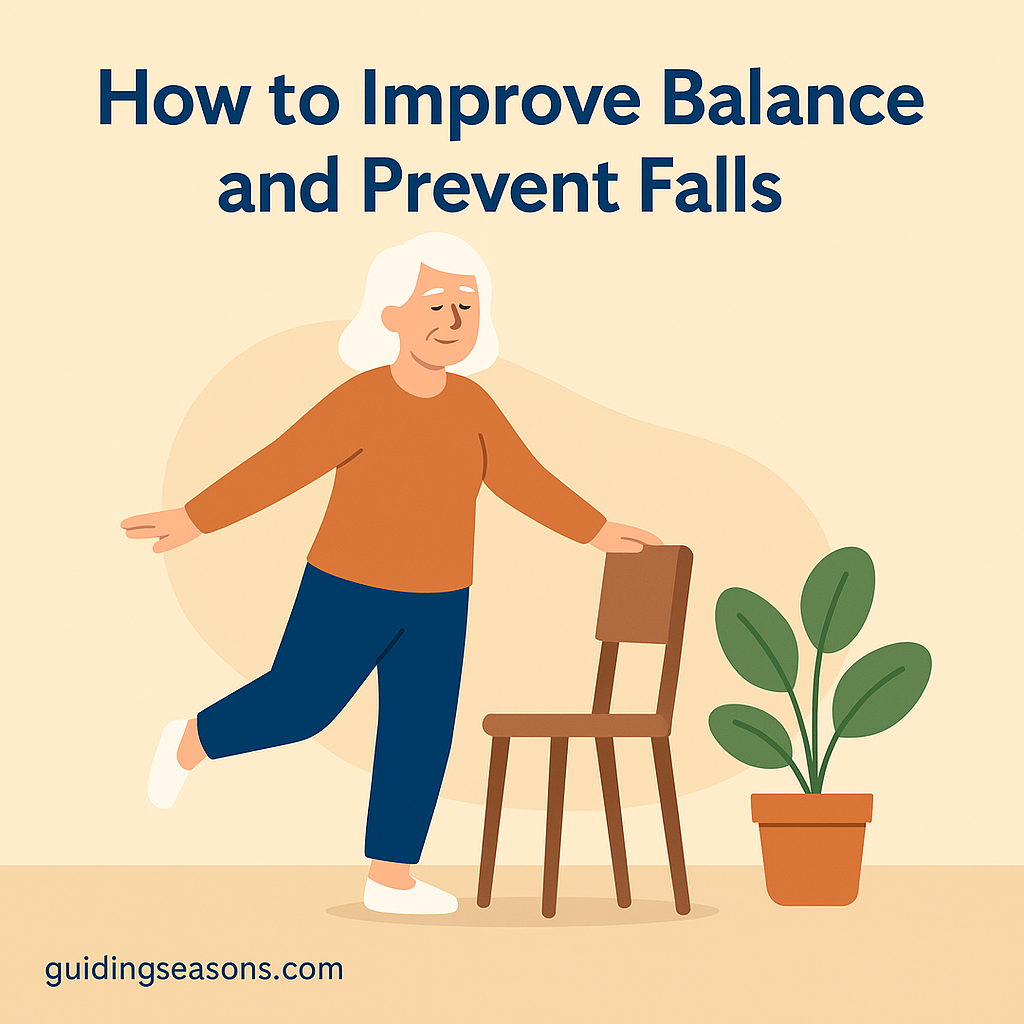
Maintaining good balance is an important part of staying active, independent, and confident as you age. Everyday activities such as getting out of a chair, walking across a parking lot, climbing stairs, or stepping into the shower all require a combination of balance, muscle strength, coordination, vision, and quick reactions.
These abilities can gradually change with age. However, becoming less steady does not mean that falls are inevitable. Exercise, home safety improvements, medication reviews, appropriate footwear, and regular health checkups can all help reduce fall risk.
Fall prevention deserves particular attention because falls are common among older adults. According to the National Institute on Aging (NIA), more than one in four adults age 65 and older falls each year, and the risk increases with age. The NIA also emphasizes that many falls can be prevented through measures such as exercise, medication management, vision checks, and improvements to home safety.
The goal is not to become overly cautious or avoid activity. In fact, staying physically active can be one of the most useful ways to maintain the strength and mobility needed for everyday life.
Why Balance Can Change as You Age
Balance is more complicated than simply being able to stand on one foot. Your brain continuously processes information from your eyes, inner ears, muscles, joints, and feet to determine where your body is in relation to the environment.
Several age-related changes can interfere with this process, including:
- Reduced leg and core strength
- Slower reflexes and reaction time
- Changes in vision or hearing
- Joint stiffness or limited mobility
- Foot pain or reduced sensation
- Medication side effects
- Dizziness or lightheadedness
- Age-related loss of muscle mass
- Certain medical conditions
Diabetes, heart disease, nerve problems, blood-pressure changes, and other conditions can sometimes affect balance as well.
The National Institute on Aging notes that dizziness, feeling unsteady, staggering while walking, lightheadedness, and blurred vision can be symptoms of a balance problem. Frequent or unexplained symptoms should be discussed with a healthcare professional rather than simply accepted as part of getting older.
Strengthen Your Legs, Hips, and Core
Strong muscles provide the foundation for good balance. Your legs help control each step, your hips stabilize your body as your weight shifts, and your core helps maintain posture.
You do not necessarily need complicated gym equipment to work on these areas. Several simple exercises can be performed at home.
Sit-to-Stand
This exercise strengthens muscles used every time you get out of a chair.
- Sit toward the front of a sturdy chair that will not slide.
- Place your feet about hip-width apart.
- Lean slightly forward.
- Stand slowly, using your hands for support if necessary.
- Pause briefly.
- Slowly sit back down.
As a practical starting example, someone new to the exercise might perform 8 repetitions once a day. As strength improves, they might gradually work toward 10 to 15 repetitions.
Quality is more important than speed.
Heel-to-Toe Walking
Heel-to-toe walking challenges coordination and balance.
Place the heel of one foot close to the toes of the other foot, almost as though you were walking along a straight line. Take several controlled steps while looking forward rather than down at your feet.
Practice next to a wall or sturdy countertop so support is immediately available if needed.
Standing Side Leg Lifts
Side leg lifts strengthen muscles around the hips that help stabilize the body while walking.
Stand behind a sturdy chair or at a kitchen counter. Hold on for support and slowly lift one leg out to the side without leaning your upper body. Lower it carefully and repeat on the opposite side.
Start with a comfortable number of repetitions rather than pushing until you become fatigued or unstable.
Calf Raises
Strong calves help with walking, climbing stairs, and controlling forward movement.
While holding a stable surface:
- Stand with your feet comfortably apart.
- Slowly rise onto your toes.
- Pause briefly.
- Lower your heels back to the floor.
Perform the movement slowly and under control.
Practice Balance Exercises Regularly
Strength training is useful, but balance itself can also be practiced.
The National Institute on Aging recommends including balance activities along with aerobic and muscle-strengthening exercise and suggests aiming for about three balance-exercise sessions per week. Examples include tai chi, yoga, standing on one foot, heel-to-toe walking, backward or sideways walking, and practicing standing from a seated position.
Try Supported Single-Leg Standing
Stand next to a sturdy counter and lightly hold it with one or both hands.
Lift one foot slightly from the floor and maintain your position for several seconds. Lower the foot and repeat on the opposite side.
As balance improves, you may be able to rely less on your hands. However, keep a stable support nearby.
Consider Tai Chi
Tai chi uses slow, controlled movements and gradual shifts in body weight. It can be particularly suitable for people who prefer low-impact activity.
In addition to challenging balance, tai chi encourages controlled movement, posture, coordination, and awareness of body position.
Explore Beginner or Chair Yoga
Yoga can help develop flexibility, strength, posture, and body awareness. Chair-based or beginner programs may provide an accessible starting point for people who are uncomfortable getting down onto the floor.
Choose an appropriate class for your ability level and tell the instructor about any mobility limitations.
Make Your Home Safer
Exercise addresses physical risk factors, but your surroundings matter too.
A strong, active person can still trip over a poorly positioned electrical cord or slip on a wet bathroom floor.
Walk through your home and look at it specifically from a fall-prevention perspective.
Remove Tripping Hazards
Pay particular attention to:
- Loose rugs
- Electrical cords across walking areas
- Cluttered hallways
- Low furniture
- Boxes or bags on the floor
- Uneven flooring
- Loose carpeting
- Objects near stairways
Frequently used walking routes should be as clear as possible.
For example, consider the route from your bedroom to the bathroom at night. If you have to navigate around a laundry basket, loose rug, charging cable, and dark hallway every night, you are encountering several unnecessary hazards during a single short walk.
Moving those objects and adding a nightlight could make the same trip considerably safer.
Improve Lighting Throughout the Home
Good lighting makes changes in flooring, furniture, stairs, and other obstacles easier to see.
Consider adding:
- Nightlights between the bedroom and bathroom
- Brighter lighting in hallways
- Lights at the top and bottom of staircases
- Easy-to-reach bedside lamps
- Motion-activated lights where appropriate
Replace burned-out bulbs promptly and keep frequently used areas well illuminated.
Pay Special Attention to Bathrooms and Stairs
Bathrooms can combine slippery surfaces, water, and movements such as stepping over the side of a bathtub.
Helpful modifications may include:
- Grab bars near the toilet
- Properly installed shower or bathtub grab bars
- Nonslip surfaces
- A shower seat when appropriate
- Adequate bathroom lighting
Avoid relying on towel racks as grab bars because they may not be designed to support body weight.
Staircases deserve similar attention. Keep steps free of objects, make sure lighting is adequate, and use secure handrails.
Choose Supportive Footwear
Shoes influence how securely your feet contact the ground.
For everyday use, look for footwear that fits properly and provides:
- Nonslip soles
- A secure fit
- Good support
- Low, stable heels
Loose slippers, backless shoes, worn soles, and walking in socks on smooth floors may increase the chance of slipping.
Foot problems should also be addressed. Pain, numbness, poorly fitting shoes, or changes in sensation can alter the way you walk and affect stability.
Review Your Medications
Some prescription and over-the-counter medications can contribute to dizziness, sleepiness, confusion, or changes in blood pressure.
Do not stop taking medication because you are worried about falling. Instead, periodically review everything you take with your doctor or pharmacist.
Bring a complete list that includes:
- Prescription medications
- Over-the-counter medications
- Vitamins
- Supplements
Ask whether any medication could contribute to dizziness or drowsiness and whether combinations of medications may be affecting your balance.
Pay Attention When Standing Up
Feeling dizzy immediately after standing can sometimes occur when blood pressure drops with a change in position.
Instead of quickly jumping out of bed or a chair, move gradually.
For example:
- Sit upright.
- Pause for several seconds.
- Place both feet securely on the floor.
- Stand while holding a stable surface if necessary.
- Pause again before walking.
If you frequently become lightheaded when standing, tell your healthcare provider.
Keep Your Vision and Hearing Checked
Balance depends partly on sensory information.
Vision helps you identify obstacles, judge distances, and notice changes in walking surfaces. Hearing also contributes to awareness of your surroundings.
Schedule eye examinations as recommended and make sure your prescription glasses are current.
If you use hearing aids, wear and maintain them according to professional recommendations.
Stay Physically Active
Avoiding movement because you are afraid of falling can sometimes work against you.
When activity decreases, muscles may become weaker and endurance may decline. Everyday movements can then become more difficult.
Walking is a simple way to maintain general mobility when it is safe for you. Other possibilities include swimming, stationary cycling, senior fitness classes, resistance training, tai chi, and gardening.
The best activity is one that matches your abilities and that you can perform consistently.
Try to combine different types of movement rather than relying entirely on one activity. Walking improves endurance, for example, but adding strength and balance exercises provides additional benefits.
Support Muscles and Bones Through Nutrition
Good nutrition cannot prevent every fall, but it helps maintain the muscles and bones needed for mobility.
A balanced diet should provide adequate:
- Protein
- Calcium
- Vitamin D
- Fruits and vegetables
- Fluids
Protein is particularly important for maintaining muscle tissue, while calcium and vitamin D support bone health.
Strong bones are important because fall prevention is also about reducing the consequences of a fall. Maintaining bone health may reduce the likelihood of serious fractures.
Stay Hydrated
Not drinking enough fluid can contribute to weakness or lightheadedness in some people.
Drink fluids regularly throughout the day unless a healthcare professional has advised you to restrict fluid intake because of a medical condition.
Pay additional attention during hot weather, physical activity, or illness.
Use Walking Aids Correctly When Needed
Using a cane or walker is not a sign of failure. The right assistive device can improve stability and make it easier to remain active.
However, equipment should fit correctly.
A cane that is the wrong height or a walker used incorrectly can create new problems. A physical or occupational therapist can help determine the appropriate device, adjust it, and teach you how to use it safely.
What to Do After a Fall
Even a fall that does not appear to cause an injury can provide useful information about your health and environment.
Think about what happened.
Did you trip over something? Become dizzy? Lose your footing on a step? Were you rushing to the bathroom? Did your leg suddenly feel weak?
Tell your healthcare provider about falls, particularly repeated or unexplained falls. Identifying the cause may help prevent another one.
If you fall and believe you may be seriously injured, cannot get up safely, hit your head, or develop significant pain, seek appropriate medical assistance rather than forcing yourself to stand.
When to Seek Professional Help
Talk with a doctor or physical therapist if you experience:
- Repeated falls
- Frequent tripping
- Persistent dizziness
- New balance problems
- Difficulty walking
- Unexplained weakness
- Difficulty getting out of a chair
- Numbness in your feet
- Sudden changes in vision
- Feeling as though you may faint
A physical therapist can assess strength, walking patterns, flexibility, and balance and develop exercises appropriate for your abilities.
An occupational therapist may also be able to evaluate your home and recommend practical modifications that make everyday activities safer.
Sudden severe dizziness, fainting, new weakness on one side of the body, trouble speaking, severe headache, chest pain, or other abrupt neurological or cardiovascular symptoms should be treated as potentially urgent medical problems rather than ordinary balance changes.
Build Fall Prevention Into Everyday Life
You do not have to overhaul your entire routine overnight.
A simple fall-prevention plan might begin with four changes:
- Practice a few safe strength and balance exercises several times a week.
- Remove one or two hazards from each frequently used room.
- Review medications at your next healthcare appointment.
- Check that shoes, lighting, handrails, and bathroom safety features are appropriate.
Small improvements can add up.
Someone who strengthens their legs, removes a loose hallway rug, adds a nightlight near the bathroom, and begins standing up more slowly has addressed several different risk factors without dramatically changing daily life.
Final Thoughts
Improving balance and preventing falls involves more than doing a few exercises. Strength, coordination, vision, medications, footwear, home design, nutrition, and underlying health conditions can all play a role.
The encouraging part is that many of these factors can be improved or managed.
Regular strength and balance activities can help maintain physical ability. Clearing walkways, improving lighting, installing appropriate safety features, and choosing stable footwear can make the home easier to navigate. Medication reviews and routine health appointments can identify additional issues that may otherwise go unnoticed.
Most importantly, fall prevention should support independence rather than limit it. The goal is to create a stronger body and a safer environment so you can continue walking, exercising, socializing, traveling, and handling everyday activities with greater confidence.
A few thoughtful changes today can help protect mobility and independence for years to come.