Retirement brings more freedom, more flexibility, and often a completely different daily routine. You may no longer commute to work, walk around an office, eat lunch at a predictable time, or follow the same schedule you maintained for decades.
Those changes can be enjoyable, but they can also affect your weight.
Some retirees gradually gain weight because they become less active while continuing to eat the same amount. Others experience the opposite problem and unintentionally lose weight because of reduced appetite, illness, medications, difficulty cooking, or changes in their social life.
That’s why maintaining a healthy weight in retirement isn’t simply about getting the number on the scale as low as possible. It’s about supporting your muscle strength, mobility, energy, nutrition, and overall health.
The National Institute on Aging (NIA) notes that metabolism can change as people age and that some older adults may need to become more active or consume fewer calories to maintain their weight. However, the NIA also warns that being underweight can create health risks and that sudden, unintended weight loss should be discussed with a healthcare professional.
The best approach is usually a sustainable one: eat nutritious foods, stay active, preserve muscle, get enough sleep, and develop routines you can maintain for years.
Here are practical ways to do it.
1. Understand How Aging Can Affect Your Weight
Your body doesn’t necessarily respond to food and activity at age 65 the same way it did at 35.
As you get older, several things can change:
- Muscle mass may decrease.
- Metabolism can change.
- Daily activity may decline.
- Appetite can increase or decrease.
- Health conditions may affect mobility.
- Medications may influence appetite or weight.
- Sleep patterns may change.
Retirement can amplify some of these changes.
For example, imagine that you previously walked 10 minutes from a parking lot to your workplace each morning and afternoon, climbed stairs during the day, and regularly walked between offices.
After retirement, all of that incidental movement disappears.
Even though you haven’t deliberately “stopped exercising,” you may be moving considerably less than you used to.
Recognizing these changes allows you to intentionally replace some of that lost activity.
2. Focus on Nutrition, Not Just Calories
Calories matter for weight management, but food quality matters too—particularly as you get older.
Instead of concentrating exclusively on eating less, build meals around nutrient-rich foods.
Good choices include:
- Vegetables
- Fruits
- Beans and lentils
- Fish
- Poultry
- Eggs
- Whole grains
- Low-fat dairy or suitable alternatives
- Nuts and seeds
- Healthy oils
The National Institute on Aging recommends a healthy eating pattern that includes vegetables, fruits, whole grains, lean proteins, and other nutrient-dense foods.
You don’t have to eliminate every dessert, restaurant meal, or favorite family recipe. Instead, think about the overall pattern of your diet.
A bowl of ice cream occasionally is very different from eating large desserts every evening.
Aim for consistency rather than perfection.
3. Build Balanced Meals
A simple meal structure can make healthy eating much easier.
For example, dinner might include:
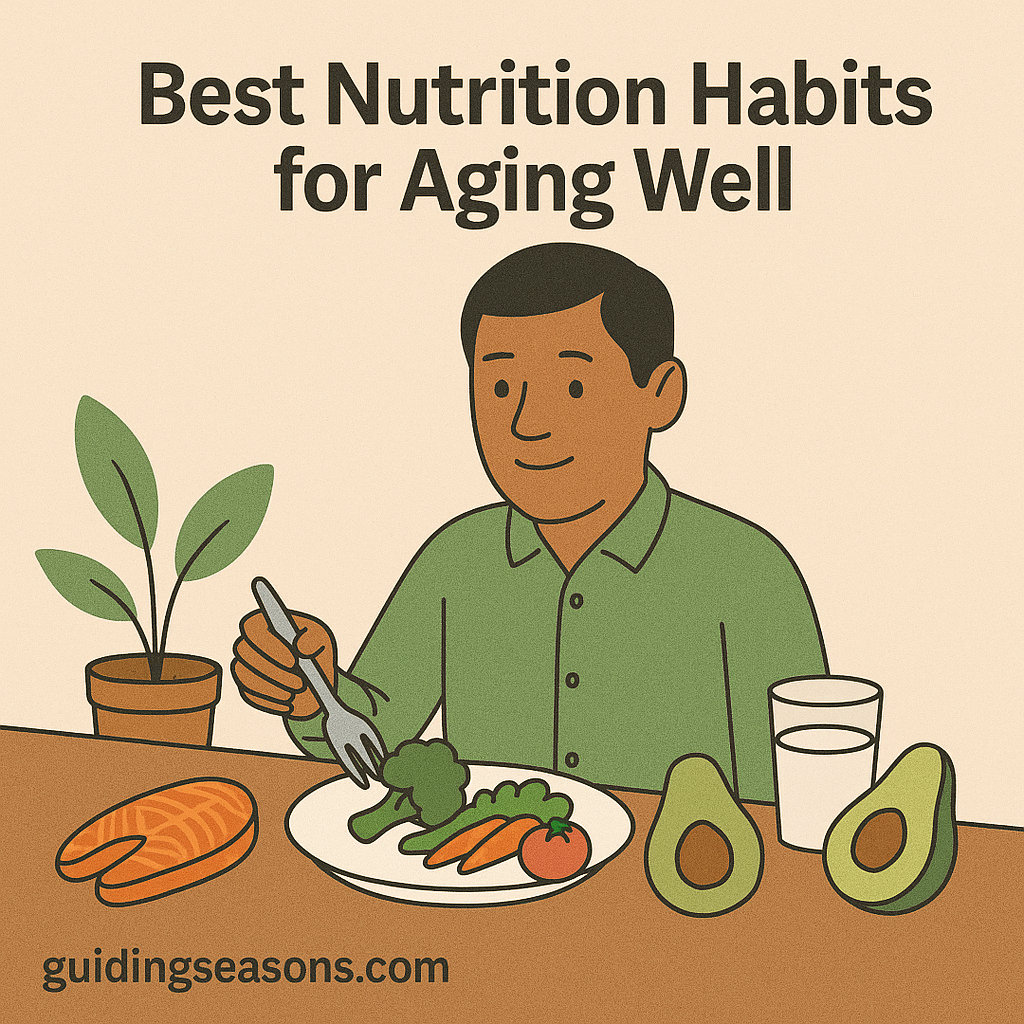
- Grilled salmon or chicken
- A large serving of vegetables
- Brown rice or a baked potato
- Fruit for dessert
- Water or another unsweetened beverage
Another meal might include beans, vegetables, avocado, and a whole-grain tortilla.
You don’t need complicated recipes or expensive “diet” foods.
Try to include a source of protein along with fruits or vegetables and an appropriate serving of whole grains or another nutrient-rich carbohydrate.
4. Maintain a Regular Eating Schedule
One unexpected challenge of retirement is losing the structure that work provided.
When you’re working, your schedule might automatically create breakfast at 7 a.m., lunch at noon, and dinner around 6 p.m.
In retirement, breakfast might happen at 10 a.m., lunch gets skipped, snacks appear throughout the afternoon, and dinner happens late at night.
There’s nothing inherently wrong with changing your meal schedule. However, completely unstructured eating can make it harder for some people to recognize how much they’re eating.
Try creating a routine that works for you.
That might mean:
- Breakfast in the morning
- Lunch around midday
- Dinner in the early evening
- One planned snack when needed
You don’t necessarily need exactly three meals every day. What matters is finding a predictable pattern that helps you get adequate nutrition without constantly grazing.
5. Make Walking Part of Your Retirement Routine
Walking is one of the simplest ways to stay active.
You don’t need special equipment, complicated instructions, or a gym membership.
You might walk:
- Around your neighborhood
- At a local park
- Inside a shopping mall
- With your dog
- With your spouse or friend
- On a treadmill
- While sightseeing or traveling
If a 30-minute walk feels difficult initially, start smaller.
For example, walking for 10 minutes after breakfast and another 10 minutes after dinner creates 20 minutes of additional activity without requiring one long workout.
Over seven days, those two short walks would total 140 minutes of movement.
Small amounts of activity can accumulate surprisingly quickly.
6. Work Toward the Recommended Activity Level
For adults age 65 and older, the CDC recommends at least 150 minutes of moderate-intensity aerobic activity each week, along with muscle-strengthening activity on at least two days and activities that improve balance.
One simple schedule could look like this:
- Monday: 30-minute brisk walk
- Tuesday: 20-minute walk + strength exercises
- Wednesday: 30-minute brisk walk
- Thursday: Light gardening or another activity
- Friday: 30-minute brisk walk + strength exercises
- Saturday: 30-minute walk
- Sunday: Easy recreational activity or recovery
You don’t have to follow that exact schedule.
If you aren’t currently active, you also don’t need to jump immediately from zero activity to 150 minutes. Start with an amount that’s appropriate for your abilities and gradually build from there.
The CDC emphasizes that when older adults cannot meet the full recommendation, they should be as physically active as their abilities and health conditions allow.
7. Prioritize Strength Training
The scale doesn’t tell the entire story.
Maintaining muscle becomes increasingly important as you age because muscle supports everyday activities such as getting out of a chair, carrying groceries, climbing stairs, gardening, traveling, and maintaining independence.
Strength exercises can include:
- Resistance bands
- Light dumbbells
- Weight machines
- Body-weight exercises
- Chair stands
- Wall push-ups
You don’t need to become a bodybuilder.
For example, repeatedly standing up from a sturdy chair without using your hands can strengthen muscles used during everyday movement.
The CDC recommends muscle-strengthening activities for older adults on at least two days each week.
If you’re new to strength training or have medical or mobility concerns, ask a healthcare professional or qualified exercise professional which exercises are appropriate for you.
8. Don’t Obsess Over the Scale
Body weight is useful information, but it shouldn’t be your only measure of progress.
Pay attention to other indicators too.
Ask yourself:
- Can I walk farther without becoming tired?
- Is getting out of a chair easier?
- Are my clothes fitting comfortably?
- Am I getting stronger?
- Do I have enough energy for daily activities?
- Am I eating nutritious foods consistently?
- Can I maintain my routine without feeling deprived?
A person can improve fitness and strength without seeing dramatic changes on the scale.
This is particularly important in later life, when preserving muscle and physical function becomes a major part of healthy aging.
9. Be Mindful of Portion Sizes
Retirement may mean more restaurant meals, vacations, social gatherings, and leisurely dinners.
You can enjoy those experiences without abandoning healthy eating.
Try practical portion strategies such as:
- Use a slightly smaller plate at home.
- Put a reasonable serving on your plate before sitting down.
- Split a large restaurant entrée.
- Take leftovers home.
- Eat slowly.
- Pause before getting a second serving.
- Pay attention to hunger and fullness.
You don’t have to leave the table feeling stuffed for a meal to be satisfying.
Eating more slowly also gives you an opportunity to notice when you’re comfortably full.
10. Watch Liquid Calories
Drinks can contribute more calories than people realize.
Sweetened coffee drinks, soda, sweet tea, juice, alcoholic beverages, and other high-calorie drinks can add substantial energy without being as filling as solid foods.
Make water your primary beverage when possible.
Other options can include:
- Unsweetened tea
- Sparkling water
- Coffee without large amounts of added sugar
- Low-fat milk
- Flavored water without much added sugar
You don’t necessarily need to eliminate your favorite drinks. Simply pay attention to how frequently you’re consuming them and how they fit into your overall eating pattern.
11. Stay Hydrated
Hydration remains important during retirement.
Some older adults may experience changes in thirst, making it helpful to build drinking into their daily routine.
Keep water accessible throughout the day and consider drinking with meals and after physical activity.
Foods can contribute fluids too, including:
- Watermelon
- Oranges
- Berries
- Cucumbers
- Tomatoes
- Soups
- Yogurt
However, don’t assume every feeling of hunger is actually dehydration. Hunger and thirst are separate signals, and there’s no need to suppress genuine hunger by filling up on water.
The goal is simply to stay appropriately hydrated while eating according to your nutritional needs.
12. Create a Healthy Home Environment
Willpower becomes less important when your surroundings make healthy choices easy.
Keep nutritious foods where you can see and reach them.
For example, stock your kitchen with:
- Fresh or frozen fruit
- Precut vegetables
- Greek yogurt
- Eggs
- Whole-grain bread
- Canned tuna or salmon
- Beans
- Nuts
- Oatmeal
You can still keep treats in the house.
The idea isn’t to create a perfectly “clean” kitchen. It’s to make nutritious choices convenient enough that they become your default.
13. Plan for Restaurant Meals
Retirement often provides more opportunities to eat out with friends and family.
There’s no reason to give that up.
Instead, develop a few habits that make restaurant eating easier to balance.
You might:
- Choose grilled rather than heavily fried foods.
- Order vegetables as a side.
- Share an appetizer.
- Take half of a large entrée home.
- Choose fruit occasionally instead of dessert.
- Skip foods you don’t particularly enjoy instead of eating them simply because they’re on the table.
If you have a large restaurant dinner, you don’t need to punish yourself the following day.
Simply return to your normal eating routine.
14. Find Physical Activities You Actually Enjoy
The best exercise program isn’t necessarily the one that burns the most calories.
It’s the one you’ll continue doing.
Retirement can be a great opportunity to experiment with activities you didn’t have time for while working.
Consider:
- Walking groups
- Swimming
- Water aerobics
- Pickleball
- Golf
- Dancing
- Gardening
- Cycling
- Yoga
- Tai chi
- Hiking
- Fitness classes
Physical activity doesn’t always have to feel like a formal workout.
Gardening, dancing, recreational sports, and other active hobbies can help you move more while also making retirement more enjoyable.
15. Pay Attention to Sleep
Weight management isn’t only about food and exercise.
Sleep is another important part of overall health.
Create a routine that supports better sleep by:
- Keeping a relatively consistent bedtime and wake time
- Limiting caffeine later in the day if it affects your sleep
- Avoiding very large meals immediately before bed
- Keeping your bedroom comfortable
- Developing a relaxing evening routine
- Staying physically active during the day
If you’re experiencing persistent insomnia, excessive daytime sleepiness, loud snoring, or other ongoing sleep problems, talk with your healthcare provider rather than simply accepting poor sleep as part of getting older.
16. Find Healthy Ways to Manage Stress
Retirement is often portrayed as completely relaxing, but it can bring its own stresses.
You may be adjusting to a different financial situation, changing family responsibilities, health concerns, or simply losing the structure and social interaction that came with work.
For some people, stress leads to frequent snacking or emotional eating.
Develop other ways to manage stress, such as:
- Walking
- Meditation
- Gardening
- Reading
- Volunteering
- Spending time with friends
- Journaling
- Music
- Hobbies
- Spending time outdoors
Social activities can be particularly valuable because they combine enjoyment, routine, and connection.
17. Don’t Ignore Unintentional Weight Loss
Healthy weight management doesn’t always mean losing weight.
If you’re losing weight without trying, don’t automatically assume that’s a positive development.
Unintentional weight loss can occur because of:
- Reduced appetite
- Medication effects
- Dental problems
- Difficulty swallowing
- Illness
- Depression or social isolation
- Difficulty shopping or preparing meals
The National Institute on Aging specifically advises older adults experiencing rapid, unintended weight loss to consult a healthcare professional because it can sometimes indicate an underlying medical problem.
This is one reason aggressive dieting may not be appropriate for every older adult.
18. Set Small, Measurable Goals
Large goals can feel overwhelming.
Instead of saying:
“I need to get in shape.”
Create a specific goal:
“I’m going to walk for 15 minutes after breakfast on Monday, Wednesday, and Friday.”
Instead of:
“I’m going to stop eating junk food.”
Try:
“I’m going to replace my afternoon cookies with fruit and yogurt three days this week.”
Small goals give you something concrete to accomplish.
Once a habit becomes easy, you can build on it.
19. Check In With Your Healthcare Provider
Before intentionally losing a significant amount of weight or beginning a vigorous exercise program, it can be helpful to discuss your goals with your healthcare provider—especially if you have a chronic medical condition or haven’t exercised regularly in a long time.
Your doctor can help evaluate factors such as:
- Medications that may affect weight
- Blood pressure
- Blood sugar
- Cholesterol
- Thyroid concerns
- Joint or mobility problems
- Unexplained weight changes
- Appropriate exercise intensity
Remember that the healthiest weight for an older adult can’t always be determined by a single online BMI calculation.
The NIA notes that the number on the scale and BMI only tell part of the story for older adults and recommends discussing weight changes with a healthcare professional.
20. Think About Health Beyond Weight
Perhaps the most important mindset change in retirement is to stop viewing weight as the only measure of health.
Your goals might include being able to:
- Carry your groceries
- Play with your grandchildren
- Walk comfortably while traveling
- Climb stairs
- Maintain your balance
- Garden
- Continue living independently
- Participate in hobbies you enjoy
Those outcomes matter.
A healthy retirement isn’t about reaching the lowest possible number on a scale. It’s about maintaining a body that allows you to continue participating in your life.
Final Thoughts
Maintaining a healthy weight in retirement doesn’t require extreme diets, exhausting workouts, or giving up everything you enjoy.
It requires a sustainable routine.
Eat mostly nutrient-rich foods. Stay physically active. Include strength and balance exercises. Pay attention to portions without becoming overly restrictive. Get adequate sleep, stay hydrated, and make room for activities and meals you genuinely enjoy.
A useful starting goal is surprisingly simple: take a 30-minute walk five days per week and include strength exercises on two days if your health and abilities allow. That adds up to the CDC’s recommended 150 minutes of moderate activity each week while creating a routine that’s relatively easy to remember.
Most importantly, don’t assume that losing weight is automatically healthier as you get older. Maintaining muscle, strength, good nutrition, and physical independence may be just as important as the number on the scale.
Retirement gives you something that was often difficult to find during your working years: time. Using some of that time to prepare nutritious meals, walk regularly, build strength, sleep well, and stay socially active can help you maintain not just a healthier weight, but a healthier and more active retirement.