A happy and fulfilling life doesn’t simply appear out of nowhere—it’s shaped in part by the small choices you make every day. As you move through retirement, routines can become powerful tools for building purpose, reducing stress, and supporting your mental and physical well-being.
The good news is that routines don’t need to be complicated. Even a few simple habits can create a meaningful sense of stability, connection, and enjoyment.
This guide walks you through practical ways to build healthy routines that support happiness and help you feel more energized, grounded, and optimistic.
Why Routines Are So Important in Retirement
During your working years, much of your daily structure is built into your schedule. Once you retire, that structure may disappear—and while having more freedom can be wonderful, suddenly having fewer obligations can also leave some people wondering how to organize their days.
Healthy routines can help by:
- Giving your day a sense of direction
- Supporting mental clarity and motivation
- Making it easier to stay active and connected
- Reducing unnecessary decision-making
- Helping you prioritize what matters most
- Supporting emotional well-being
Routines don’t have to restrict your life. A good routine provides structure while leaving plenty of room for flexibility and spontaneity.
Start With a Morning Routine That Sets a Positive Tone
How you begin your morning can influence the rhythm of the rest of your day. Instead of trying to create an elaborate schedule, begin with a few simple activities you can realistically repeat.
1. Wake Up at a Consistent Time
Going to bed and waking up at roughly the same times each day can help establish a predictable sleep-wake schedule.
You don’t have to follow the clock perfectly. The goal is simply to avoid dramatically different schedules from one day to the next when possible.
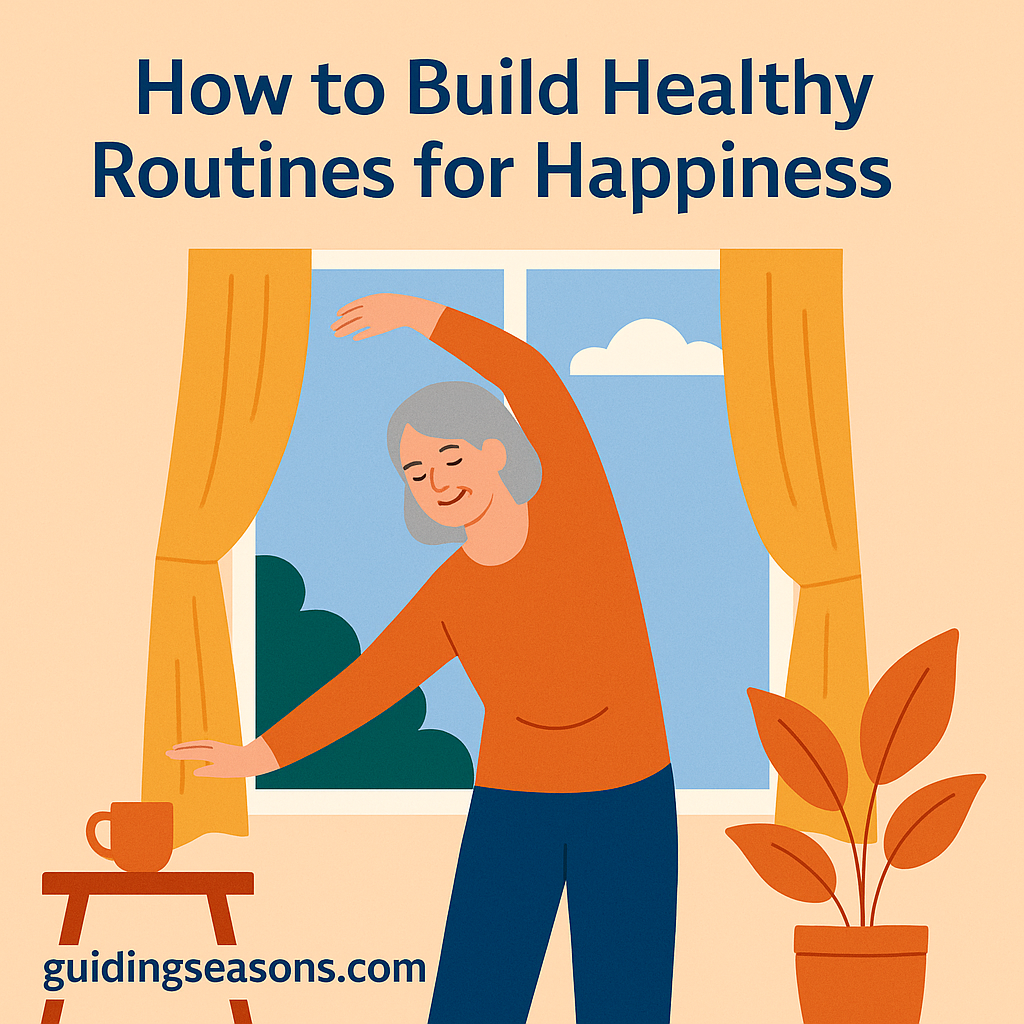
2. Stretch or Move Your Body Gently
Consider starting the morning with:
- Light stretching
- Breathing exercises
- A short walk
- Chair yoga
- Simple balance or flexibility exercises
Choose activities that are appropriate for your health and mobility level. Even a short period of movement can provide a pleasant transition into the day.
3. Enjoy a Calm, Mindful Moment
Set aside five or ten minutes to slow down before the day’s activities begin.
You might:
- Sit quietly
- Practice gratitude
- Sip your morning coffee or tea without distractions
- Listen to music
- Enjoy the sunrise or quiet of your home
You don’t need a formal meditation practice. The idea is simply to create a few peaceful minutes before becoming occupied with errands, appointments, news, or household tasks.
4. Eat a Nourishing Breakfast
If breakfast is part of your normal eating routine, choose foods that provide satisfying nutrition and energy. Depending on your dietary needs, this might include protein, fruit, vegetables, or whole grains.
If you have specific nutritional requirements or medical conditions, follow the advice of your health care professional.
Create a Daily Rhythm You Look Forward To
Your daily routine doesn’t need to be rigid. Instead, think about creating a few dependable “anchors” throughout the day.
A Daily Activity Block
Set aside time for something you genuinely enjoy, such as:
- Reading
- Gardening
- Woodworking
- Cooking
- Working on a puzzle
- Calling a friend
- Practicing a favorite hobby
The activity itself matters less than having something enjoyable to anticipate.
A Movement Block
Walking, stretching, balance exercises, or another form of appropriate physical activity can become a regular part of the day.
For older adults looking for structured options, the National Council on Aging (NCOA) provides information about programs designed to help people incorporate physical activity into everyday life.
A Learning Block
Retirement can provide an excellent opportunity to explore subjects you never had enough time for while working.
Try:
- Online classes
- Documentaries
- Language-learning apps
- Podcasts
- Arts and crafts
- Local workshops
- Library programs
Learning doesn’t have to lead to a degree or certification. Curiosity itself can make your days more interesting.
A Relaxation Block
Rest deserves a place in your routine too.
Wind down with:
- Soft music
- Coloring or drawing
- Meditation
- Warm tea
- Journaling
- Reading
- Sitting outside
These small anchors can create a daily rhythm that feels comfortable without making every hour feel scheduled.
Add Weekly Routines for Structure and Joy
Not everything needs to happen every day. Weekly routines can provide structure while giving each day a slightly different character.
Ideas for Weekly Routines
- A standing lunch date with a friend
- A weekly family call
- Volunteer hours
- A weekly movie or game night
- Religious or spiritual activities
- A craft or hobby day
- A trip to the library
- A special Saturday or Sunday breakfast
These traditions also create moments to anticipate.
For example, you might reserve Tuesday mornings for a 30-minute walk with a neighbor and Friday afternoons for a hobby or volunteer activity. Those two simple appointments create dependable anchors without turning retirement into another full-time schedule.
Keep Your Routines Flexible and Enjoyable
Healthy routines aren’t about following a perfect schedule. They should make life easier, not become another source of pressure.
To keep routines enjoyable:
- Start small
- Choose activities you genuinely enjoy
- Leave room for spontaneity
- Adjust when your needs change
- Drop habits that no longer serve you
- Avoid trying to change everything at once
If friends invite you to lunch on the afternoon you normally garden, go to lunch. Your routine should support your life—not control it.
Consistency is useful, but perfection isn’t necessary.
Build Healthy Habits That Support Happiness
Certain everyday habits can contribute to mental, emotional, and physical well-being throughout retirement.
1. Stay Connected With Others
Social connection deserves a regular place in your schedule.
Consider making time to:
- Call or text a friend
- Meet someone for coffee
- Attend social events
- Join clubs or groups
- Participate in community classes
- Volunteer
- Spend time with family
Connection can be especially valuable after retirement changes the amount of everyday interaction you once received through work.
A 2024 AARP survey of adults age 50 and older found that 74% identified in-person socializing as a contributor to their happiness. You can read more about the findings through AARP’s research on happiness and social interaction.
You don’t necessarily need a packed social calendar. A few meaningful and consistent relationships may be more satisfying than filling every day with activities.
2. Practice Gratitude Daily
Consider spending a few minutes reflecting on:
- Three things you’re grateful for
- A positive moment from the day
- Someone who helped you
- Something you accomplished
- Something you’re looking forward to tomorrow
Keeping a small notebook beside your bed can make this habit easy to maintain.
3. Keep Your Home Calm and Organized
A comfortable environment can make everyday routines easier.
Instead of attempting a major cleaning project, consider a simple habit such as spending 10 minutes putting things away each evening.
Small efforts repeated regularly can prevent household tasks from becoming overwhelming.
4. Spend Time Outdoors
Try incorporating outdoor time into activities you already enjoy.
You might:
- Walk around the neighborhood
- Garden
- Drink your morning coffee outside
- Visit a local park
- Sit on the patio and read
- Meet a friend for an outdoor lunch
Even a brief change of scenery can help break up the day and encourage you to stay engaged with your surroundings.
5. Prioritize Sleep
Sleep is an important part of physical and emotional well-being.
Try to maintain reasonably consistent sleep and wake times and create a relaxing evening routine. This could include dimming the lights, reading, listening to quiet music, or limiting activities that make it difficult for you to wind down.
If persistent sleep problems interfere with your daily life, consider discussing them with your health care provider.
Create a Purpose-Driven Routine
A satisfying retirement isn’t only about staying busy. It can also be about spending more time on things that feel meaningful.
Ask yourself:
- What activities leave me feeling fulfilled?
- What gives me a sense of contribution?
- Who do I want to spend more time with?
- What have I always wanted to learn?
- What do I want this chapter of my life to represent?
Purpose can come from many places:
- Helping others
- Learning new skills
- Creating something
- Spending time with family
- Caring for pets
- Nurturing hobbies
- Volunteering
- Mentoring younger people
- Faith or spirituality
There is no single definition of a meaningful retirement.
For one person, purpose might mean volunteering several hours each week. For another, it could mean helping care for grandchildren, restoring an old car, growing vegetables, learning photography, or simply becoming a more present friend and family member.
When your routine reflects what you value, everyday activities can feel more rewarding.
Use Tools and Reminders to Stay Consistent
You don’t have to keep your entire routine in your head.
Helpful tools include:
- A weekly planner
- Wall calendar
- Sticky notes
- Phone reminders
- A small whiteboard
- A daily checklist
- Calendar or wellness apps
Keep the system simple.
For example, instead of creating a checklist with 15 daily tasks, start with three anchors:
Morning: 10-minute walk
Afternoon: hobby or social activity
Evening: read for 20 minutes
Once those activities feel natural, you can decide whether you want to add anything else.
Celebrate Small Wins Along the Way
Progress doesn’t have to be dramatic to matter.
If you walked three times this week when you previously weren’t walking at all, that’s progress. If you called an old friend, attended your first community class, finished a book, or maintained a new routine for a week, acknowledge the effort.
You might celebrate by:
- Taking a relaxing break
- Enjoying a favorite activity
- Sharing your progress with someone
- Writing the accomplishment in a journal
- Treating yourself to something small
Recognizing progress can make it easier to continue.
Review Your Routine Every Few Months
Retirement can change over time. Your interests, energy level, relationships, responsibilities, and health may all evolve.
Every few months, ask yourself:
What am I enjoying?
What feels like an obligation?
What would I like more of?
What could I stop doing?
A routine that worked last year doesn’t have to be the routine you follow today.
Giving yourself permission to make adjustments helps keep your schedule aligned with the life you actually want to live.
Final Thoughts
Healthy routines can provide a strong foundation for happiness during retirement. By combining simple daily habits, meaningful relationships, enjoyable activities, movement, learning, and adequate rest, you can create days that have structure without feeling restrictive.
You don’t need to redesign your entire life at once.
Start with one or two habits that feel realistic. Perhaps it’s a morning walk, a weekly lunch with a friend, or 20 minutes devoted to a hobby each afternoon. Give those habits time to become familiar before adding more.
Over time, those seemingly small choices can become the framework for a retirement filled with greater connection, purpose, enjoyment, and calm.