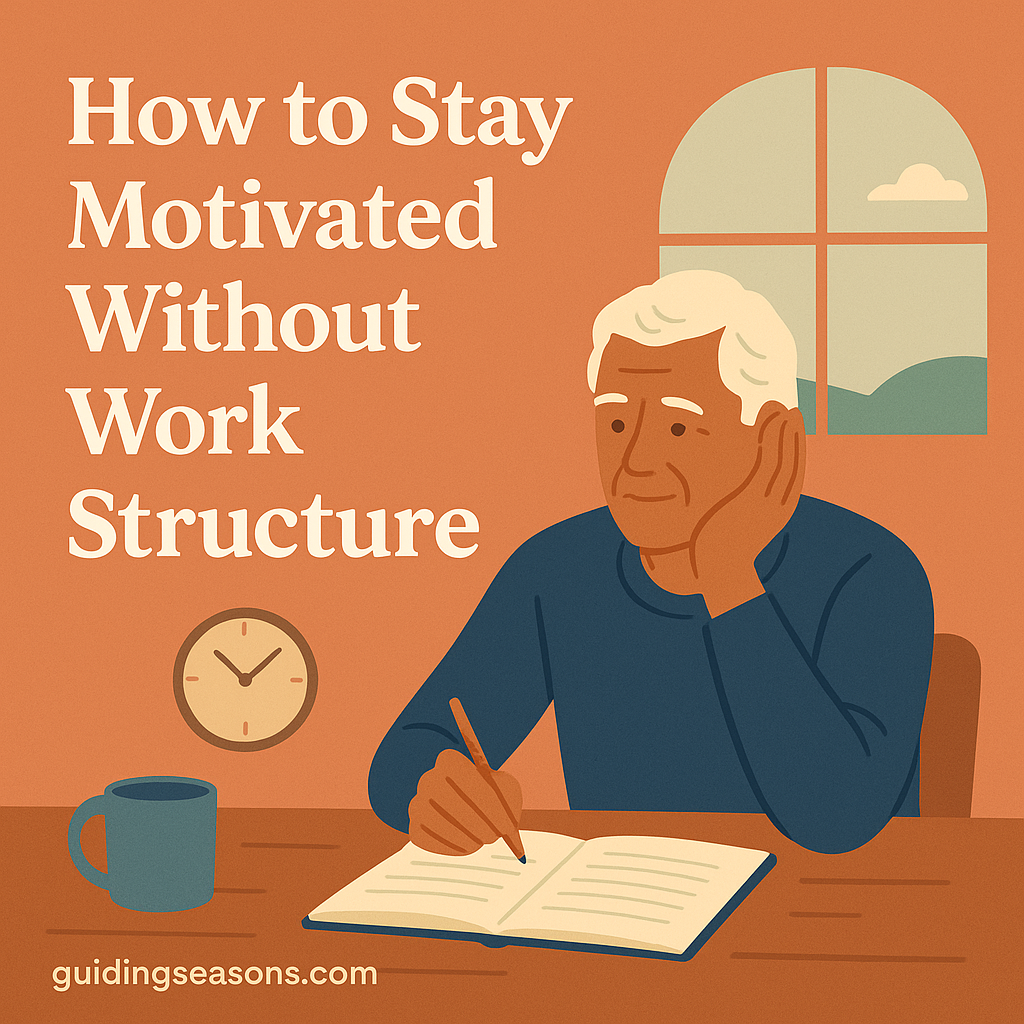
Whether you’re newly retired, transitioning out of a long career, or simply adjusting to a lifestyle with more free time, losing the built-in structure of work can feel surprisingly disorienting.
For decades, much of your day may have been decided for you. You knew when to wake up, where you needed to be, what needed to get done, and when the workday was over. Even if you occasionally dreamed about having an empty calendar, that structure provided something important: direction.
Retirement changes that.
Many people enjoy their newfound freedom but also notice periods of lower motivation, boredom, reduced social interaction, or uncertainty about how to spend their time.
You might wake up and think, What do I actually need to do today?
The answer may be: nothing.
At first, that can feel wonderful. After a while, however, completely unstructured days can begin to feel repetitive.
The solution isn’t necessarily to make yourself busy again or recreate your old work schedule. Instead, you can develop a flexible rhythm that gives your days enough structure to feel purposeful while preserving the freedom you’ve earned.
Here’s how to stay motivated when a traditional workday is no longer organizing your life.
Why Structure Matters More Than You Think
Work provides much more than income.
Think about what a typical workday once provided:
- A reason to get up at a particular time
- Tasks that needed to be completed
- Deadlines
- Social interaction
- Problems to solve
- Opportunities to contribute
- Feedback and recognition
- A clear distinction between work and leisure
When you retire, several of those things may disappear at the same time.
Suddenly, Tuesday can feel almost identical to Saturday.
Without a built-in schedule, you may feel:
- Less productive
- Less connected
- Mentally scattered
- Unsure how to spend your time
- Unmotivated
- Bored
- Less useful than you once felt
That doesn’t necessarily mean anything is wrong.
It may simply mean that the external structure provided by work needs to be replaced with a structure you create for yourself.
The National Council on Aging (NCOA) offers guidance for preparing for life after work, including the importance of staying socially connected and finding activities that provide engagement and meaning.
The difference is that now you get to decide what belongs in your schedule.
1. Create a Light Daily Routine You Actually Enjoy
You don’t need to turn retirement into another job.
Instead of scheduling every hour, create a few dependable anchors that give your day shape.
Your routine might include:
- A reasonably consistent wake-up time
- Morning coffee or breakfast
- A short walk
- Household tasks
- Time for a hobby
- Lunch
- Reading or learning
- Social time
- A relaxing evening routine
Think of this as soft structure.
Soft structure tells you generally what happens during the day without requiring you to follow a strict timetable.
For example:
Morning: breakfast, walk, household tasks
Afternoon: hobby, errands, learning, or social activity
Evening: dinner, relaxation, reading, or family time
If a friend invites you to lunch, change the schedule.
If the weather is beautiful, spend the afternoon outside.
Your routine should support your freedom, not eliminate it.
2. Give Yourself a Reason to Start the Day
Motivation often becomes easier when something is waiting for you.
During your working years, that reason may have been your job.
Now you can create your own.
It doesn’t have to be significant.
You might wake up knowing that you’re going to:
- Walk with a neighbor
- Work in the garden
- Meet someone for coffee
- Finish a woodworking project
- Attend a class
- Visit your grandchildren
- Try a new recipe
- Read another chapter of a book
Try planning one meaningful activity for tomorrow before going to bed tonight.
When morning arrives, you already have a starting point.
That one activity may naturally lead to others.
3. Set Mini Goals Instead of Huge Ones
Without workplace deadlines, personal goals can easily remain unfinished.
You might tell yourself:
I want to get in shape.
I should organize the house.
I want to learn Spanish.
Those are worthwhile goals, but they’re also vague.
Make them smaller.
Instead of:
Get in shape
Try:
Walk for 20 minutes Monday, Wednesday, and Friday.
Instead of:
Organize the house
Try:
Organize one kitchen drawer today.
Instead of:
Learn Spanish
Try:
Learn five new words this week.
Other mini goals could include:
- Finish one chapter of a book
- Call one friend
- Practice an instrument for 10 minutes
- Sort 20 photographs
- Plant two vegetables
- Watch one educational lesson
- Write one page of a family story
Small goals give you something concrete to finish.
Completion creates momentum, and momentum can make the next action easier.
4. Rebuild a Sense of Purpose
Work can provide a strong sense of usefulness.
People depend on you.
Problems need your attention.
Your skills have an obvious place.
When work ends, you may need to find new ways to experience contribution.
Purpose after retirement might come through:
- Volunteering
- Mentoring
- Caring for grandchildren
- Supporting family members
- Helping neighbors
- Faith or spiritual involvement
- Creative pursuits
- Community organizations
- Learning
- Caring for animals
- Sharing skills you’ve developed over a lifetime
Purpose doesn’t require a title or paycheck.
A retired accountant who spends two hours each month helping a small community organization understand its budget is still using valuable skills.
A former carpenter teaching a grandchild how to build a bookshelf is contributing.
So is someone who regularly checks on an older neighbor.
Ask yourself:
What gives me energy?
Where do I feel useful?
What knowledge or experience could I share?
Who or what matters enough for me to consistently show up?
Your answers may point toward new sources of purpose.
5. Stay Social—Connection Can Create Structure
One thing people sometimes underestimate about retirement is how much everyday social interaction work provided.
Coworkers might not have been your closest friends, but you probably talked with people throughout the day.
Retirement can dramatically reduce those casual interactions.
Social activities can restore both connection and structure.
Try:
- Community or senior centers
- Exercise classes
- Walking groups
- Book clubs
- Faith communities
- Hobby groups
- Volunteer organizations
- Weekly coffee meetups
- Regular family dinners
- Video calls with distant relatives
AARP provides resources on strengthening social connections, an important consideration as routines and relationships change later in life.
Don’t wait until you’re lonely to maintain relationships.
Put connection on the calendar.
A standing Wednesday coffee with a friend can become one of the anchors around which the rest of your week naturally develops.
6. Create Accountability Without Creating Pressure
Work naturally provides accountability.
If something is due Friday, someone notices if you don’t finish it.
Personal goals rarely come with that external pressure.
You can recreate some accountability without making your life stressful.
Try:
- Walking with a friend
- Attending a weekly class
- Joining a group hobby
- Volunteering on a regular schedule
- Tracking progress on a calendar
- Sharing a goal with someone
- Scheduling recurring activities
Suppose you want to walk more often.
Saying, “I’ll walk whenever I feel motivated,” leaves the decision open every day.
Instead, arrange to meet a friend at the park every Tuesday and Thursday morning.
Now the activity has a time, place, and social commitment.
You aren’t waiting for motivation.
You’ve created a routine that helps generate it.
7. Limit Large Blocks of Unstructured Time
Free time isn’t bad.
One of the benefits of retirement is having more of it.
But if every day consists of one enormous block of unscheduled time, deciding what to do can become surprisingly difficult.
Instead, divide your day into broad sections.
For example:
Morning: movement and practical tasks
Midday: errands, appointments, learning, or social activities
Afternoon: hobbies, projects, or relaxation
Evening: dinner, connection, entertainment, and rest
You don’t need specific times unless they’re useful to you.
This approach simply gives each portion of the day a general purpose.
8. Reintroduce “Work-Like” Projects—On Your Terms
Some people genuinely enjoy projects.
They like having something to plan, improve, build, organize, or complete.
Retirement doesn’t mean giving that up.
The difference is that now you can choose projects based on your interests.
Consider:
- Building something
- Improving part of your home
- Creating a garden
- Sorting and digitizing family photographs
- Writing your memoir
- Researching family history
- Learning new technology
- Restoring furniture
- Starting a small website
- Creating a recipe collection
- Organizing a family reunion
Give your project a beginning and an end.
For example:
Project: Digitize family photographs
Goal: Scan 200 photos
Schedule: 20 photos every Tuesday
Completion: Approximately 10 weeks
Suddenly, a vague idea becomes a manageable project.
The goal isn’t to become productive for productivity’s sake.
It’s to enjoy the satisfaction of making progress toward something you care about.
9. Try the 3–2–1 Weekly Motivation Framework
If you’re struggling to create structure, try this simple framework.
Each week, schedule:
3 Things for Your Body
Examples:
- Walk
- Stretch
- Swim
- Attend an exercise class
- Garden
2 Things for Connection
Examples:
- Have lunch with a friend
- Call a family member
- Attend a community event
- Volunteer
- Participate in a group
1 Thing for Growth
Examples:
- Learn something
- Work on a creative project
- Attend a lecture
- Practice a new skill
- Explore somewhere unfamiliar
That’s only six intentional activities across seven days.
Everything else can remain flexible.
The framework gives your week enough structure to create momentum without turning retirement into another packed schedule.
10. Protect Your Mornings From Automatic Habits
The first hour of an unstructured day can easily become three hours.
You wake up, check your phone, turn on the television, read the news, scroll through social media—and suddenly much of the morning is gone.
There’s nothing wrong with entertainment.
The question is whether you’re choosing it intentionally.
Try completing one meaningful activity before settling into passive entertainment.
That could mean:
- Taking a shower and getting dressed
- Walking for 15 minutes
- Eating breakfast
- Watering the garden
- Making your bed
- Reading
- Completing one household task
Starting with action can give the rest of your day momentum.
11. Celebrate Small Progress
Work provides built-in markers of progress.
Projects are completed.
Deadlines are met.
Performance is reviewed.
Retirement often doesn’t provide those markers, so create your own.
Try:
- Crossing completed activities off a calendar
- Keeping a short journal
- Taking before-and-after photographs of projects
- Tracking walks or exercise
- Sharing progress with family
- Writing down one accomplishment each evening
Your accomplishment doesn’t need to be impressive.
Maybe you walked when you didn’t feel like it.
Perhaps you finally organized a drawer.
Maybe you attended a class even though you were nervous about going alone.
Recognizing progress helps reinforce the behaviors you want to continue.
12. Schedule Rest Without Feeling Guilty
Motivation doesn’t mean constantly doing something.
You retired for a reason.
There should be room for:
- Watching television
- Taking naps
- Sitting outside
- Reading
- Listening to music
- Doing absolutely nothing for a while
The difference between satisfying rest and frustrating inactivity is often intention.
An afternoon deliberately spent reading on the patio may feel restorative.
An afternoon spent scrolling because you couldn’t decide what else to do may leave you feeling dissatisfied.
Rest is part of a healthy rhythm.
It doesn’t need to be earned through productivity.
13. Give Yourself Grace During the Transition
Adjusting to retirement can take time.
After decades of having your schedule determined largely by work and responsibilities, you may not immediately know what you want your new routine to look like.
Experiment.
Try a class and decide you don’t like it.
Volunteer somewhere and discover it isn’t a good fit.
Start a hobby and abandon it.
Change your morning routine.
Spend a month traveling.
Then come home and decide you prefer quieter weeks.
You’re learning how you want to spend a stage of life you’ve never experienced before.
There is no requirement to get it right immediately.
Pay Attention When Low Motivation Becomes Persistent
Some days you simply won’t feel motivated.
That’s normal.
But persistent loss of motivation can sometimes be connected with depression, grief, sleep problems, medication effects, health conditions, loneliness, or other concerns.
Pay attention if lack of motivation occurs alongside:
- Persistent sadness or hopelessness
- Withdrawal from friends and family
- Loss of interest in activities you once enjoyed
- Significant changes in sleep
- Significant appetite changes
- Difficulty taking care of everyday responsibilities
- Persistent fatigue
- Feelings of worthlessness
Those symptoms aren’t necessarily something you should try to solve with a better calendar.
Consider discussing persistent changes with your health care provider or a qualified mental health professional.
Build a Week You Want to Wake Up To
Instead of asking yourself how to become more productive, ask a different question:
What would make this a good week?
Maybe it’s:
One walk with a friend.
One afternoon working in the garden.
One family dinner.
One morning spent learning photography.
One completely unscheduled afternoon.
That’s enough.
Your retirement doesn’t need to look impressive from the outside.
It needs to work for you.
Create enough structure to give your days direction and enough freedom to enjoy them.
Final Thoughts
Without the structure of work, staying motivated becomes more personal.
No boss is setting your priorities.
No meeting is forcing you out of bed.
No performance review is measuring your progress.
That freedom can initially feel strange—but it also gives you an opportunity you may not have had for decades.
You can decide what deserves your time.
Build routines you enjoy. Set small goals. Stay connected with other people. Give yourself projects worth completing. Continue learning. Make room for purpose, movement, relationships, and rest.
And don’t try to fill every hour.
Start with a few anchors.
If you aren’t sure where to begin, use the 3–2–1 framework: three activities for your body, two for connection, and one for personal growth each week.
Then build from there.
You don’t need a job to have direction, accomplishment, or purpose.
You simply need a rhythm that gives you reasons to engage with the day while leaving enough freedom to enjoy this new season of life.