How to Explore National Parks Safely

Older woman holding a map while exploring a national park, with icons representing safety tips such as a map, sun protection, hydration, and nature awareness.
Illustration of a senior woman exploring a national park with helpful safety icons surrounding her.

National parks offer some of the most beautiful and memorable travel experiences in the country. From mountain overlooks and peaceful forests to desert landscapes, waterfalls, wildlife, and historic sites, there are countless opportunities to enjoy nature at your own pace.

For seniors, national parks can be particularly appealing because you don’t necessarily need to hike for miles to have a rewarding experience. Scenic drives, paved walking paths, visitor centers, ranger programs, accessible viewpoints, and short nature trails make it possible to explore many parks without taking on strenuous adventures.

However, national parks are still wild environments. Weather can change quickly, cell service may be limited, wildlife is unpredictable, and even a seemingly easy walk can become tiring in heat or at higher elevations.

The best approach is simple: prepare ahead of time, choose activities that match your abilities, and don’t feel pressured to see everything in one visit.

Here are practical ways to explore national parks safely, comfortably, and confidently.

Continue reading “How to Explore National Parks Safely”
How to Prepare for Long Flights as a Senior

Older man standing with a suitcase, neck pillow, and travel-related icons like an airplane and water bottle, illustrating how seniors can prepare for long flights.
Older man with travel essentials and airplane icons, representing preparation tips for long flights as a senior.

Long flights can open the door to wonderful experiences, whether you’re visiting family, taking a long-awaited vacation, or traveling somewhere you have always wanted to see. But spending eight, ten, or even twelve hours on an airplane can also be tiring, particularly as we get older.

Limited legroom, long periods of sitting, changing cabin temperatures, disrupted sleep, and navigating a busy airport can all add to the strain. Fortunately, much of that discomfort can be reduced with a little preparation.

The goal isn’t simply to get through the flight. It’s to arrive at your destination feeling as comfortable, rested, and confident as possible.

Here’s how seniors can prepare for a long flight and make the entire travel day easier.

Continue reading “How to Prepare for Long Flights as a Senior”

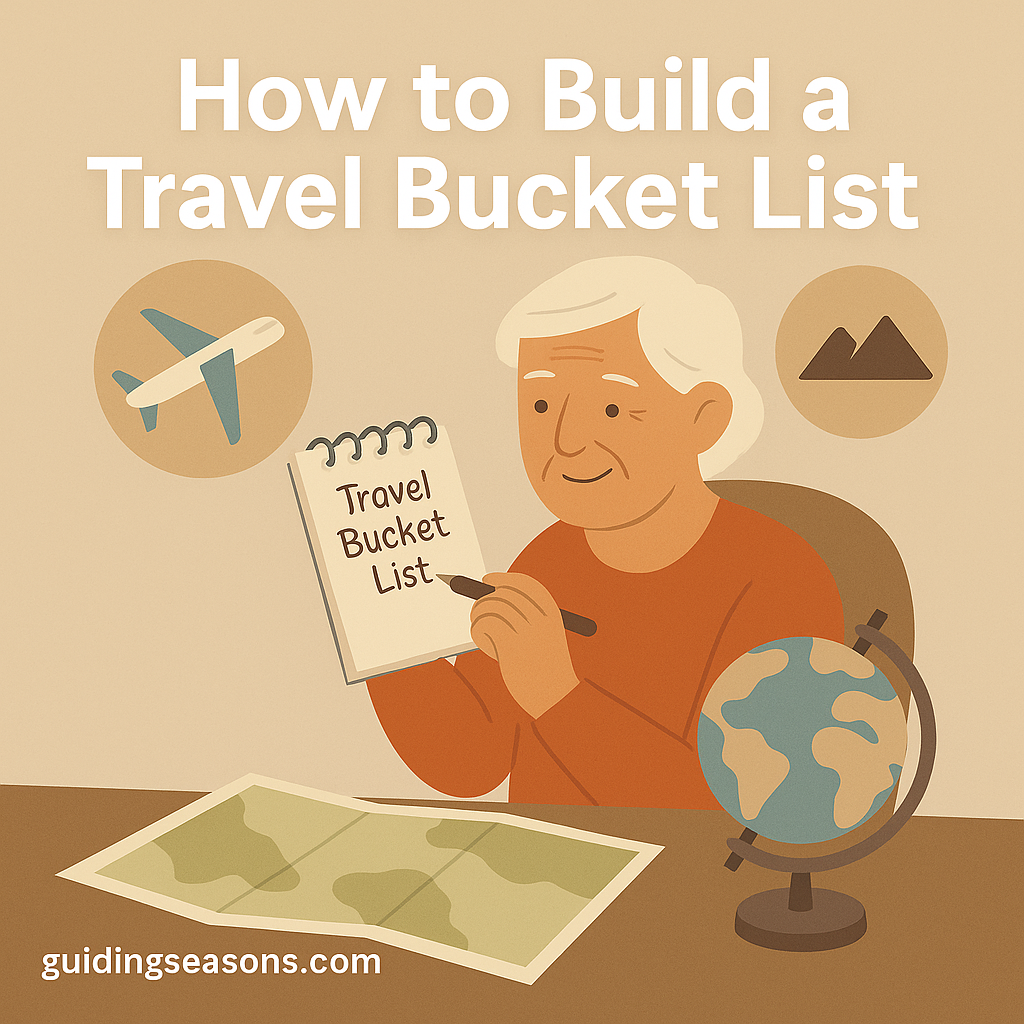
How to Build a Travel Bucket List

Older woman writing a travel bucket list in a notebook with a map, globe, and travel icons around her.
Older woman creating a travel bucket list with a map and globe for inspiration.

A travel bucket list is more than a collection of famous places you hope to visit someday.

At its best, it is a personal roadmap for experiences that matter to you.

Your list might include seeing the Grand Canyon at sunrise, taking a scenic train ride through the mountains, spending a quiet week near the ocean, visiting the town where your grandparents grew up, exploring a famous museum, or taking your grandchildren somewhere special.

There is no correct travel bucket list.

Some people dream about international adventures. Others would rather explore national parks, small towns, coastal roads, gardens, historical sites, or destinations within a few hours of home.

The important thing is that the list reflects your interests, abilities, budget, and priorities rather than someone else’s idea of what travel should look like.

And a good bucket list should eventually lead to action.

Here is how to create one that inspires you while still helping you turn those ideas into real trips.

Continue reading “How to Build a Travel Bucket List”

How to Choose the Best Travel Insurance

Older man holding a passport and a travel insurance clipboard with travel icons like a suitcase, airplane, and calendar around him.
Older man reviewing travel insurance options with travel-themed icons in the background.

Travel insurance can feel like one more expense added to an already expensive trip, but the right policy can protect you from costs that are far larger than the price of the premium.

For older travelers, this can be especially important.

A missed connection, sudden illness, hospitalization abroad, canceled cruise, or emergency evacuation can disrupt an entire trip and create significant unexpected expenses. Travel insurance cannot prevent those events, but it can reduce the financial impact when something covered goes wrong.

The challenge is that travel insurance policies vary considerably.

One plan may provide excellent medical coverage but weak baggage protection. Another may reimburse a large portion of a canceled trip but offer limited evacuation benefits. Pre-existing condition rules, deductibles, exclusions, reimbursement percentages, and claim procedures can also differ.

That means choosing the best travel insurance is not about finding the cheapest policy.

It is about finding the policy that fits your health coverage, destination, trip cost, activities, and tolerance for financial risk.

Here is how to compare travel insurance more carefully and choose coverage that makes sense for your trip.

Continue reading “How to Choose the Best Travel Insurance”

How to Travel With Medication Safely

Older man organizing prescription bottles and pill packs while preparing to travel with his suitcase nearby.
Older man preparing his medications safely before traveling.

Traveling with prescription medications requires a little more preparation than simply packing clothes and toiletries, but it does not need to make a trip stressful.

Whether you are flying across the country, taking a cruise, driving to visit family, or traveling internationally, the goal is simple: keep your medications safe, accessible, clearly identified, and available for the entire trip.

This is particularly important for travelers who take several medications each day or rely on medicines that must be taken at specific times or stored under particular conditions.

A few thoughtful steps before departure can prevent many common problems, including lost medication, missed doses, airport delays, temperature damage, and difficulty obtaining replacements.

Here is how to travel with medication more safely and confidently.

Continue reading “How to Travel With Medication Safely”

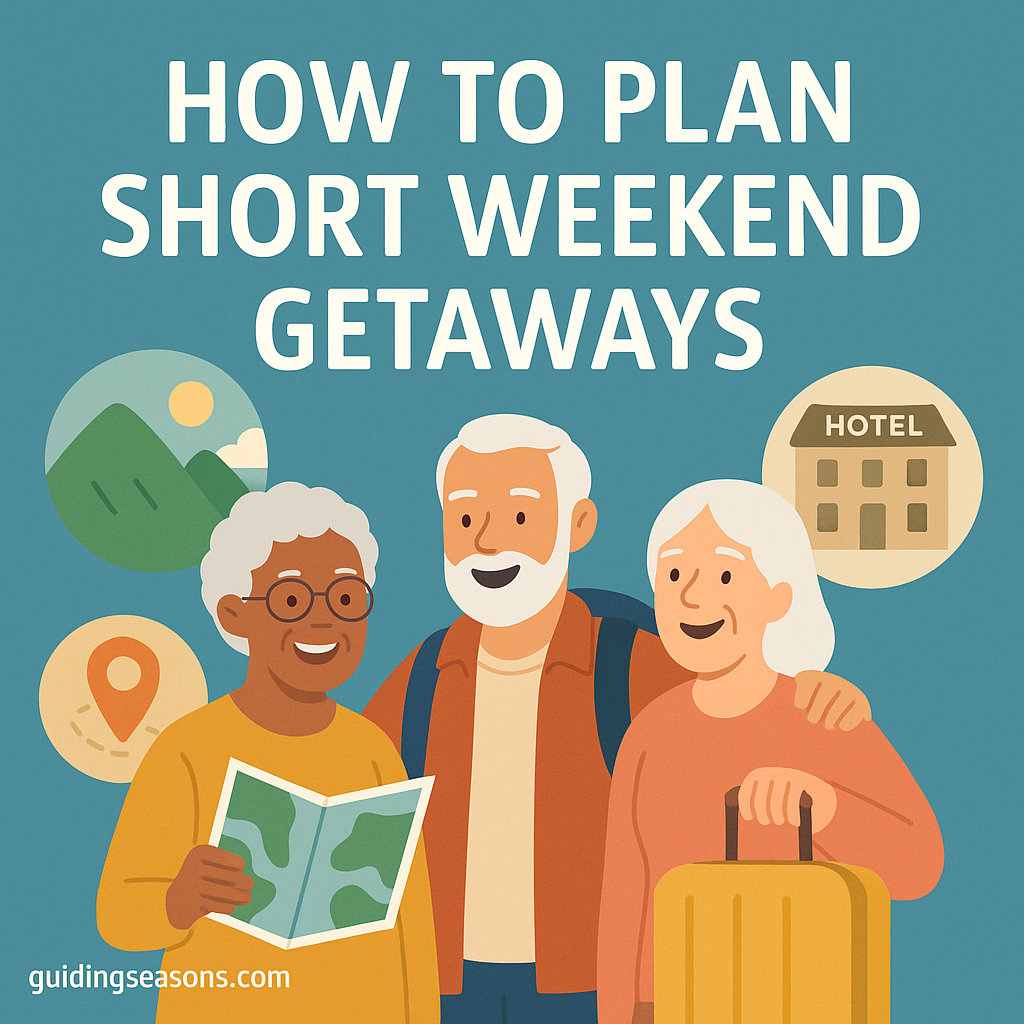
How to Plan Short Weekend Getaways

Group of seniors planning an easy and enjoyable short weekend getaway.
Group of older adults smiling and preparing for a short weekend getaway with a map, suitcase, and travel icons.

Short weekend getaways are one of the easiest ways to enjoy travel without the expense, complicated planning, or physical demands that can come with a long vacation. For retirees and older adults, a two- or three-day trip can provide just enough time for a refreshing change of scenery while still allowing you to maintain your normal routine at home.

You don’t need to fly across the country or create a packed itinerary to have a memorable experience. A quiet coastal town, scenic mountain community, historic district, nearby lake, or state park may be only a couple of hours away.

The key is to design the trip around your interests, energy level, budget, and comfort. Instead of trying to see everything, focus on enjoying a few experiences at a relaxed pace.

Here’s how to plan a simple, comfortable weekend getaway that leaves you feeling refreshed rather than exhausted.

Continue reading “How to Plan Short Weekend Getaways”

How to Stay Healthy While Traveling

Older woman wearing a sun hat holding a water bottle and travel documents next to her suitcase while traveling.
Older woman preparing for a healthy and comfortable travel experience.

Traveling can be one of the most rewarding parts of retirement. Whether you’re taking a weekend road trip, visiting family across the country, exploring a national park, or finally taking an international vacation you’ve dreamed about for years, travel provides opportunities to experience new places and break away from everyday routines.

But those changes in routine can also affect your health.

Long travel days may mean hours of sitting. Restaurant meals can replace your usual diet. Different time zones may interfere with sleep, and sightseeing can involve considerably more walking than you normally do at home. Add unfamiliar weather, crowded transportation, and changes to your medication schedule, and it’s easy to understand why travelers sometimes return home more exhausted than when they left.

For seniors, staying healthy while traveling isn’t about avoiding adventure. It’s about preparing well enough that health problems are less likely to interfere with the experience.

A few practical habits can help you maintain your energy, stay comfortable, and enjoy your trip from beginning to end.

Continue reading “How to Stay Healthy While Traveling”

Cruise Options Seniors Love

Senior couple enjoying a cruise ship deck at sunset.
Senior couple enjoying a peaceful sunset on a cruise ship deck.

Cruising has become one of the most appealing ways for older adults to travel. Comfortable accommodations, transportation between destinations, dining, entertainment, and organized excursions are all brought together in one trip. Instead of repeatedly packing and unpacking or arranging transportation between cities, you can settle into your cabin and let the ship take you from one destination to the next.

Cruising is especially popular among older travelers. According to AARP’s 2026 Travel Trends research, interest in international cruising increases with age: international cruise trips account for about 28% of planned international trips among travelers age 70 and older, compared with 15% among travelers ages 50 to 59.

With so many cruise lines, ship sizes, destinations, and travel styles available, however, choosing the right cruise can feel overwhelming.

The best choice depends on what you want from the experience. Some travelers enjoy large ships filled with restaurants and entertainment, while others prefer quiet river cruises, intimate small ships, cultural experiences, or luxury service.

Here’s a closer look at cruise options seniors often enjoy and what to consider before booking.

Continue reading “Cruise Options Seniors Love”

How to Choose Senior-Friendly Hotels

Older couple entering a bright, comfortable hotel room with luggage, smiling as they look around the accessible space, with the title “How to Choose Senior-Friendly Hotels” displayed at the top
An older couple arrives in a welcoming hotel room, illustrating what to look for when choosing senior-friendly accommodations.

Choosing the right hotel can make a major difference in how comfortable and enjoyable a trip feels.

For older travelers, the best hotel is not necessarily the most luxurious property or the one with the largest swimming pool. A truly senior-friendly hotel is easy to navigate, comfortable to rest in, conveniently located, and equipped with features that reduce unnecessary physical effort.

This can matter even if you do not normally use a cane, walker, wheelchair, or other mobility aid.

Travel itself can be tiring. Airports involve long walks, sightseeing often means spending hours on your feet, and unfamiliar hotel layouts can add more physical effort than expected. Small conveniences—such as an elevator close to your room, a walk-in shower, good lighting, or a restaurant downstairs—can make a vacation considerably easier.

The key is to think beyond price and star ratings.

Here is how to choose a hotel that supports comfort, safety, accessibility, and a more relaxing travel experience.

Continue reading “How to Choose Senior-Friendly Hotels”

Budget-Friendly Travel Ideas for Seniors

Older couple walking together on a sunny beach during an affordable getaway, with the title “Budget-Friendly Travel Ideas for Seniors” above
An older couple enjoys a peaceful beach walk, illustrating simple and budget-friendly travel ideas for seniors.

Travel does not have to be expensive to be meaningful.

For older adults, some of the best trips are not necessarily the ones with luxury hotels, long-haul flights, or elaborate itineraries. A scenic train ride, a few days in a historic town, an off-season coastal getaway, or a national park visit can be just as memorable while costing far less.

The key is to think about the entire trip budget rather than focusing on one advertised price.

A cheap flight can become expensive once you add baggage fees, airport transportation, meals, and lodging. Likewise, a slightly more expensive hotel in a convenient location may actually save money if it reduces the need for taxis or a rental car.

Budget-friendly senior travel is really about making smart tradeoffs.

Here are practical ways to enjoy more travel without putting unnecessary pressure on your finances.

Continue reading “Budget-Friendly Travel Ideas for Seniors”