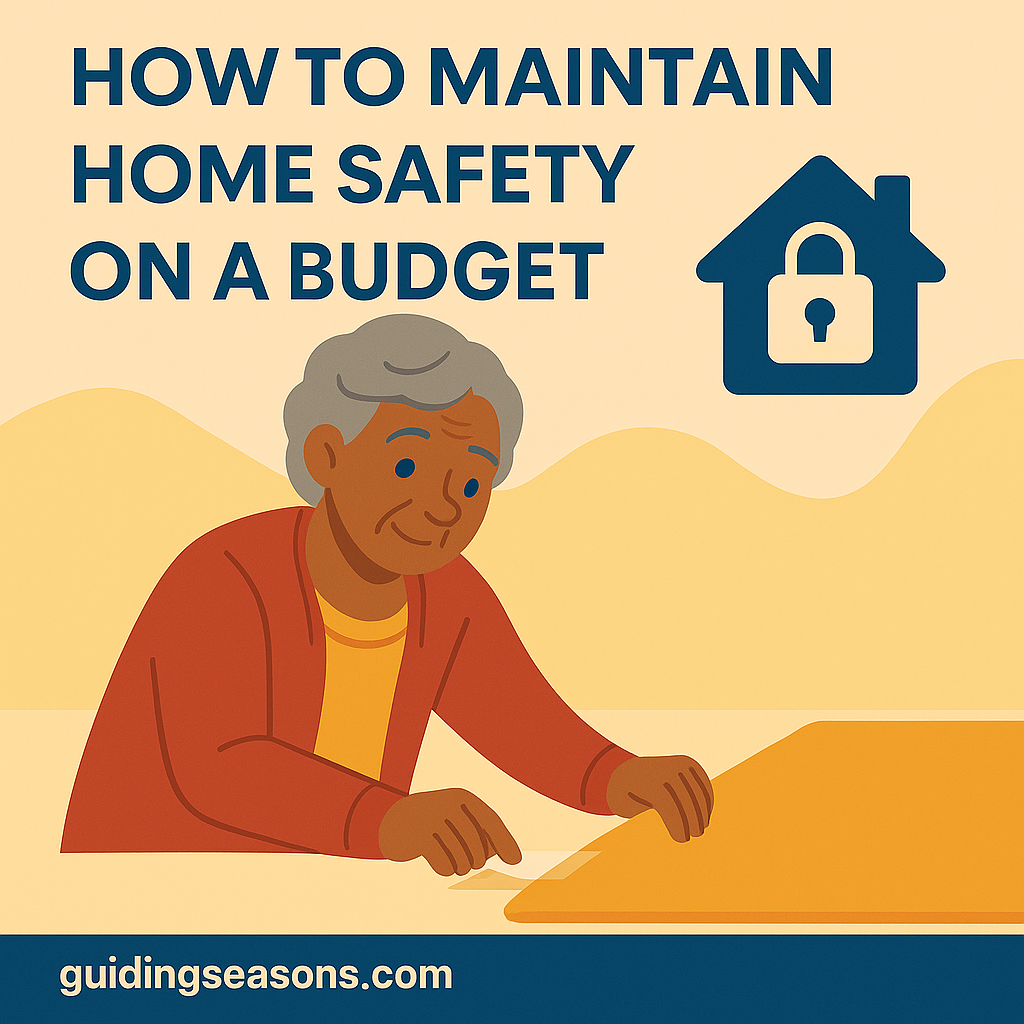
How to Maintain Home Safety on a Budget

Illustration of a senior woman securing a rug to the floor to improve home safety, with a house-and-lock safety icon beside her, created for the article “How to Maintain Home Safety on a Budget,” with a small guidingseasons.com watermark at the bottom.
Senior woman securing a rug to improve home safety on a budget.

Keeping your home safe doesn’t have to be expensive. In fact, many effective safety improvements for older adults are simple, low-cost changes that make everyday life easier and more secure. Whether you’re living alone, with a partner, or supporting an older family member, you can create a safer, more comfortable home environment without stretching your budget.

This guide walks you through practical, affordable ways to maintain home safety so you can feel more confident and comfortable every day.

Continue reading “How to Maintain Home Safety on a Budget”
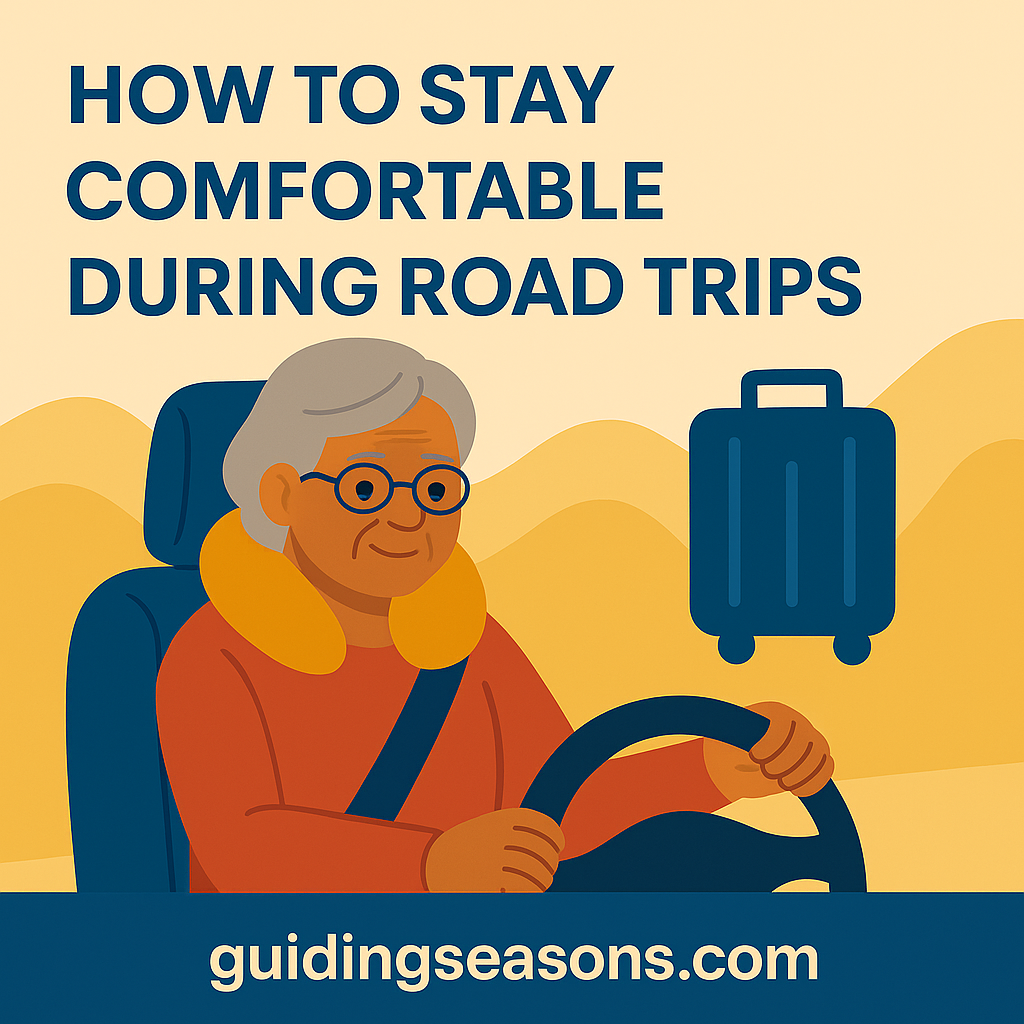
How to Stay Comfortable During Road Trips

Illustration of a senior woman driving comfortably with a neck pillow and luggage icon beside her, created for the article “How to Stay Comfortable During Road Trips,” with guidingseasons.com displayed at the bottom.
Senior woman driving comfortably with a neck pillow and travel icon.

Road trips offer something that air travel often cannot: freedom. You can choose when to leave, where to stop, what scenery to enjoy, and how quickly you want to reach your destination.

For older adults, that flexibility can make driving an especially appealing way to travel. But spending several hours in a vehicle can also bring challenges. Sitting in one position for too long may cause stiffness, driving requires sustained concentration, and an ambitious schedule can turn an enjoyable journey into an exhausting one.

The solution isn’t necessarily to drive less or give up road trips. Instead, it helps to approach them differently.

Comfortable road travel is largely about pacing, preparation, posture, hydration, and recognizing when it’s time for a break. A few adjustments can make a long drive significantly easier and help you arrive with enough energy to actually enjoy your destination.

Here’s how seniors can make road trips safer, more comfortable, and less tiring.

Continue reading “How to Stay Comfortable During Road Trips”

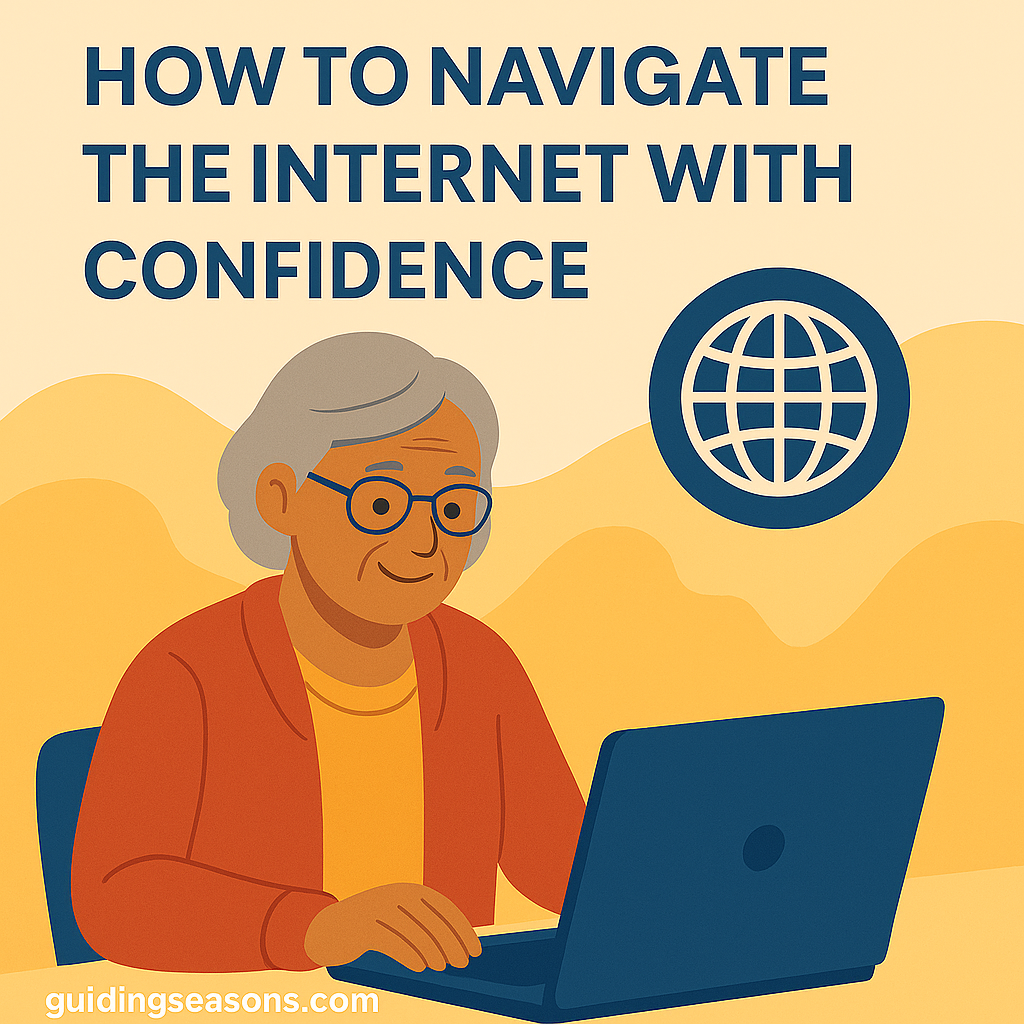
How to Navigate the Internet With Confidence

Illustration of a senior woman using a laptop with a globe internet icon beside her, created for the article “How to Navigate the Internet With Confidence,” with guidingseasons.com shown at the bottom.
Senior woman confidently using a laptop with an internet icon nearby.

The internet is an incredible tool that can help you stay informed, connected, and independent. Whether you’re reading the news, video chatting with family, shopping online, or exploring new hobbies, the digital world opens up countless possibilities. But it’s normal to feel unsure or overwhelmed if you didn’t grow up using this technology.

The good news? You can learn to navigate the internet confidently—with simple steps, smart habits, and a little practice. This guide will help you feel more comfortable and secure every time you go online.

Continue reading “How to Navigate the Internet With Confidence”

How to Maintain Independence While Staying Connected

Illustration of two seniors having a warm, positive conversation with icons representing home and connection, created for the article “How to Maintain Independence While Staying Connected,” with guidingseasons.com displayed at the bottom.
Two seniors discussing how to stay independent while maintaining meaningful connections.

As you move through retirement, independence can become more important than ever. You want to make your own choices, stay active, manage your daily life, and continue feeling capable and confident. At the same time, staying connected with family, friends, neighbors, and your community can provide companionship, practical support, and a sense of belonging.

Both independence and connection matter, and you don’t have to choose between them. In fact, the right relationships can help you remain independent by providing support when you actually need it.

This guide shares practical ways to stay connected without giving up control over how you live your life.

Continue reading “How to Maintain Independence While Staying Connected”

How to Start a Creative Writing Habit

Illustration of a senior woman writing in a journal at a table with a lightbulb inspiration icon beside her, created for the article “How to Start a Creative Writing Habit,” with guidingseasons.com shown at the bottom.
Senior woman writing in a journal with an inspiration icon nearby.

Creative writing is one of the most enjoyable and meaningful hobbies you can begin at any age—especially in your senior years, when a lifetime of experiences, memories, and perspectives can provide plenty of inspiration.

Whether you want to write short stories, poetry, memoirs, or personal reflections, creative writing can offer a rewarding way to explore your thoughts, preserve memories, and express yourself.

The best part? You don’t need to be a professional author to start. You simply need curiosity, a pen or keyboard, and a little time to practice.

This guide walks you through simple, senior-friendly steps to help you start and maintain a creative writing habit.

Continue reading “How to Start a Creative Writing Habit”

How to Strengthen Memory Through Daily Habits

Illustration of a senior woman working on a crossword puzzle at a table with a brain icon beside her, created for the article “How to Strengthen Memory Through Daily Habits,” with guidingseasons.com at the bottom.
Senior woman working on a crossword puzzle to support daily memory habits.

As you age, you may notice small changes in memory—forgetting a word, misplacing an item, or needing more time to recall a name. Some changes in memory and thinking can occur with normal aging, but significant or worsening memory problems should be discussed with a healthcare professional.

The encouraging news is that healthy daily habits can support brain health as you age. Memory isn’t simply something you’re born with—many of the habits that support your overall health can also help support attention, learning, and memory.

This guide offers simple, senior-friendly habits that can support a healthier brain and stronger memory, one day at a time.

Continue reading “How to Strengthen Memory Through Daily Habits”

How to Simplify Your Finances Before Retirement

Illustration of a senior man sitting at a table reviewing financial documents with a calculator and notebook, created for the article “How to Simplify Your Finances Before Retirement,” with guidingseasons.com shown at the bottom.
Senior man reviewing financial documents with a calculator and notebook.

As retirement approaches, your financial life should ideally become easier to manage—not more complicated. Yet many people reach their 50s and 60s with multiple bank accounts, old workplace retirement plans, several credit cards, insurance policies, subscriptions, investment accounts, and years of financial paperwork.

Keeping track of everything can become a job of its own.

Simplifying your finances before retirement can help reduce that burden. It can make monthly expenses easier to understand, reduce the chance of missed payments, improve financial organization, and make it easier for a trusted family member or representative to step in if you ever need assistance.

The goal isn’t necessarily to have as few accounts as possible. Instead, it is to create a financial system that you understand and can manage without unnecessary complexity.

Here are practical ways to simplify your finances as you prepare for retirement.

Continue reading “How to Simplify Your Finances Before Retirement”

How to Find Trusted Mental Health Resources

Illustration of a senior woman sitting at a table with a candle, framed photo, and journal, reflecting peacefully beneath the title “How to Navigate Grief and Healing,” with guidingseasons.com shown at the bottom.
Senior woman reflecting with a candle, journal, and photo nearby.

Caring for your mental health is just as important as caring for your physical health—especially in your senior years, when life changes, losses, or feelings of loneliness can affect emotional well-being. The challenge is knowing which mental health resources are safe, reliable, and truly helpful.

The good news? Seniors today have more access to mental health support than ever before—from local programs to national hotlines to online counseling services. This guide walks you through simple, trustworthy ways to find mental health support you can rely on.

Continue reading “How to Find Trusted Mental Health Resources”

How to Navigate Grief and Healing

Illustration of a grieving senior woman sitting at a table with a candle, a framed photo, and a journal, created for the article “How to Navigate Grief and Healing,” with guidingseasons.com shown at the bottom left.
Senior woman reflecting during a quiet moment with a candle and photo nearby.

Grief is one of the most difficult experiences we face in life. Whether you’re grieving the loss of a spouse, a family member, a close friend, a pet, or even a life chapter that has changed forever, the emotions can feel heavy, confusing, and unpredictable.

There is no single “right” way to grieve, and there is no specific timeline for healing.

As a senior, grief may come in many forms—losing loved ones, adjusting to health changes, or navigating major life transitions. While grief may remain part of your story, it is possible to gradually find moments of comfort, connection, and meaning again.

This guide offers gentle, supportive steps to help you move through grief with patience and compassion for yourself.

Continue reading “How to Navigate Grief and Healing”

How to Prevent Kitchen Accidents

Illustration of a senior woman cooking safely in a kitchen, stirring a pot with a warning icon nearby, created for the article “How to Prevent Kitchen Accidents,” with guidingseasons.com shown at the bottom.
Senior woman cooking safely in a kitchen with a warning icon nearby.

The kitchen is the heart of the home—where meals, memories, and daily routines happen. But as we age, everyday kitchen features can present additional safety challenges. Slippery floors, sharp tools, hot surfaces, and cluttered counters can increase the risk of burns, cuts, and falls.

The good news is that simple changes can make your kitchen safer. With thoughtful organization, appropriate tools, and a few consistent habits, you can enjoy cooking confidently and comfortably.

This guide walks you through senior-friendly tips to help prevent kitchen accidents and create a safer, easier cooking environment.

Continue reading “How to Prevent Kitchen Accidents”