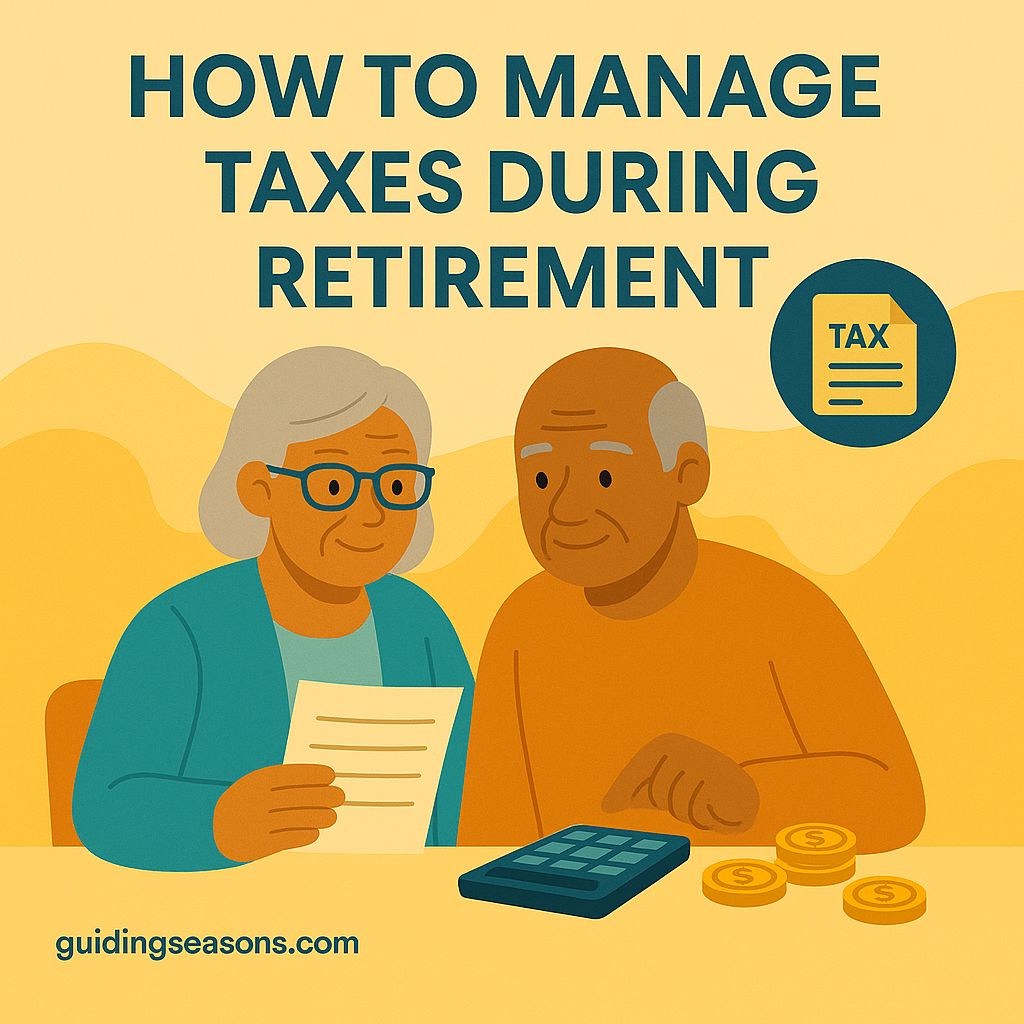
Retirement often brings more freedom, a slower pace, and more time to enjoy life — but it doesn’t mean taxes disappear. In fact, taxes can become more complicated once your income comes from multiple sources, such as Social Security, pensions, investments, retirement accounts, or part-time work.
The good news? With a little knowledge and planning, you can manage your taxes confidently and avoid unpleasant surprises. Understanding how retirement income is taxed can help you keep more of your money and make smarter financial decisions throughout your later years.
Here’s a simple guide to help you navigate taxes during retirement.
Understand Your Different Income Sources
Most retirees receive income from several places, and each source may be taxed differently.
Common retirement income sources include:
- Social Security benefits
- Pension income
- 401(k) and IRA withdrawals
- Roth IRA withdrawals
- Required Minimum Distributions (RMDs)
- Investment income, including dividends and capital gains
- Part-time or freelance work
- Rental income
Knowing where your retirement income comes from — and how each source is taxed — can help you plan ahead and avoid unexpected tax bills.
Learn Whether Your Social Security Is Taxable
Many retirees are surprised to learn that Social Security benefits can be subject to federal income tax.
Your Social Security taxation is based partly on your combined income, which generally includes:
- Adjusted gross income
- Tax-exempt interest
- Half of your Social Security benefits
Depending on your combined income and filing status, up to 85% of your Social Security benefits may be included in your taxable income. This does not mean you pay an 85% tax rate on your benefits — it means that up to 85% of the benefits may be counted as taxable income.
For example, according to the Social Security Administration’s guidance on benefit taxation, an individual filer whose combined income exceeds $25,000 may have a portion of Social Security benefits subject to federal income tax. For a married couple filing jointly, the corresponding threshold begins at $32,000.
Example: Suppose a retiree receives $24,000 per year in Social Security benefits. If other income causes the retiree’s combined income to exceed the applicable thresholds, a portion of that $24,000 may become taxable. That makes it important to consider Social Security alongside IRA withdrawals, pensions, investment income, and other sources rather than looking at each one separately.
Be Aware of Required Minimum Distributions (RMDs)
Once you reach the applicable age set by federal law, you generally must begin withdrawing a minimum amount each year from certain tax-deferred retirement accounts.
Under current rules, RMDs generally begin at age 73, although the applicable age is scheduled to rise to 75 for certain younger individuals in the future. Traditional IRAs, SEP IRAs, SIMPLE IRAs, 401(k)s, 403(b)s, and certain other retirement plans can be subject to these rules.
To stay prepared:
- Mark your RMD deadlines on your calendar
- Ask your financial institution to help calculate your RMD
- Consider setting up automatic withdrawals
- Review your expected RMD before the end of each year
Failing to take the required amount can result in an additional tax, so this is one retirement deadline worth paying close attention to.
Roth IRAs generally do not require RMDs for the original account owner during their lifetime. You can review the current rules through the IRS Required Minimum Distributions guide.
Consider a Roth Conversion (If It Makes Sense)
A Roth conversion allows you to move money from a traditional IRA or other eligible tax-deferred retirement account into a Roth IRA.
Potential benefits can include:
- Tax-free qualified withdrawals later
- No lifetime RMDs for the Roth IRA owner
- Reduced taxable retirement-account income in future years
However, the taxable portion of the amount you convert generally becomes income in the year of the conversion. A large conversion could increase your taxable income significantly.
For some retirees, gradually converting portions of an account during lower-income years may be more tax-efficient than making one large conversion. Because the consequences depend heavily on your individual circumstances, consider discussing a conversion strategy with a qualified tax professional.
Plan Your Withdrawals Strategically
The order in which you withdraw money can have a significant impact on your taxes.
One common approach is:
- Use money from taxable accounts
- Withdraw from tax-deferred accounts such as traditional IRAs and 401(k)s
- Preserve Roth assets for later tax-free qualified withdrawals
However, this isn’t automatically the best strategy for everyone. In some cases, taking modest withdrawals from a traditional IRA earlier in retirement could help reduce future RMDs or make better use of lower tax brackets.
The goal is not simply to minimize taxes this year — it’s to manage your tax burden throughout retirement.
Understand How Pensions Are Taxed
Most pension income is subject to federal income tax, although the exact treatment can depend on whether you made after-tax contributions to the plan.
State taxation varies considerably. Some states provide exclusions or exemptions for certain types of retirement income, while others tax a larger portion.
Check:
- Whether your pension automatically withholds federal or state taxes
- Your state’s rules for retirement income
- Whether additional withholding or estimated tax payments may be necessary
Planning ahead can help prevent an unexpected tax bill at the end of the year.
Stay on Top of Estimated Taxes
If enough tax isn’t withheld from your retirement income — particularly investment income, rental income, IRA distributions, or part-time self-employment income — you may need to make quarterly estimated tax payments.
Estimated payments can help you:
- Avoid certain underpayment penalties
- Prevent a large tax bill at filing time
- Spread your tax payments throughout the year
A tax professional or tax-preparation program can help estimate how much you may need to pay.
Look for Senior Tax Credits and Deductions
Older taxpayers may qualify for tax benefits that reduce their overall tax burden.
Depending on your circumstances, these may include:
- An additional standard deduction for taxpayers age 65 and older
- Credit for the Elderly or Disabled for qualifying taxpayers
- Deductions for qualifying medical expenses when applicable requirements are met
- State or local property-tax relief programs
- Homestead exemptions in certain areas
Eligibility and savings vary based on factors such as income, filing status, age, expenses, and where you live.
Watch Out for Tax Bracket Creep
Retirement income from multiple sources can unexpectedly increase your taxable income.
Common causes include:
- Large RMDs
- Large traditional IRA or 401(k) withdrawals
- Selling appreciated investments
- Roth conversions
- Pension income combined with investment income
- Receiving Social Security while earning other taxable income
Before making a large withdrawal or selling a significant investment, consider how the additional income could affect your overall tax situation.
Pay Attention to Health-Related Tax Rules
Healthcare expenses can play a significant role in retirement finances and, in some circumstances, your taxes.
Helpful habits include:
- Track qualifying out-of-pocket medical expenses
- Keep receipts for dental, vision, hearing, and other healthcare expenses
- Maintain records related to eligible long-term care expenses and insurance premiums
- Keep Health Savings Account (HSA) documentation if you have an HSA
Medical-expense deductions are subject to IRS requirements and income thresholds, so keeping accurate records can make it easier to determine what qualifies when you file your return.
Keep Good Records Throughout the Year
Good record-keeping makes tax season easier and reduces the chance of overlooking important information.
Keep track of:
- Medical expenses
- Charitable donations
- Investment purchases and sales
- Tax forms from retirement accounts
- Pension and Social Security statements
- Records of potentially eligible home improvements
- Estimated tax payments
Consider keeping these records in one physical folder or secure digital location so they’re easy to find when tax season arrives.
Stay Updated on Changing Tax Laws
Tax rules affecting retirees can change over time, particularly those involving:
- RMD ages and requirements
- Social Security taxation
- Retirement account contribution limits
- Standard deductions and tax brackets
- Medicare-related income thresholds
- State taxation of retirement income
Reviewing the rules annually — or checking in with a tax professional when your financial situation changes — can help prevent costly surprises.
When in Doubt, Seek Professional Help
Retirement taxes can become complicated, especially when you’re balancing Social Security, retirement-account withdrawals, investments, pensions, and other income.
A qualified tax professional can help with:
- RMD planning
- Roth conversions
- Tax-efficient retirement withdrawals
- Investment tax strategies
- Estimated tax payments
- State-specific retirement tax rules
Professional guidance can be particularly valuable before making a major financial decision, such as a large Roth conversion, investment sale, or retirement-account withdrawal.
Final Thoughts
Managing taxes during retirement doesn’t have to be overwhelming. With a clear understanding of your income sources, awareness of current tax rules, and thoughtful planning, you can reduce surprises, avoid unnecessary penalties, and make more informed decisions about your retirement money.
The key is to think about taxes throughout the year rather than only when it’s time to file your return. A little planning today can help you protect more of your retirement income and enjoy greater financial confidence in the years ahead.
This article is for general educational purposes and should not be considered personalized tax, legal, or financial advice. Tax rules can change, and individual circumstances vary.