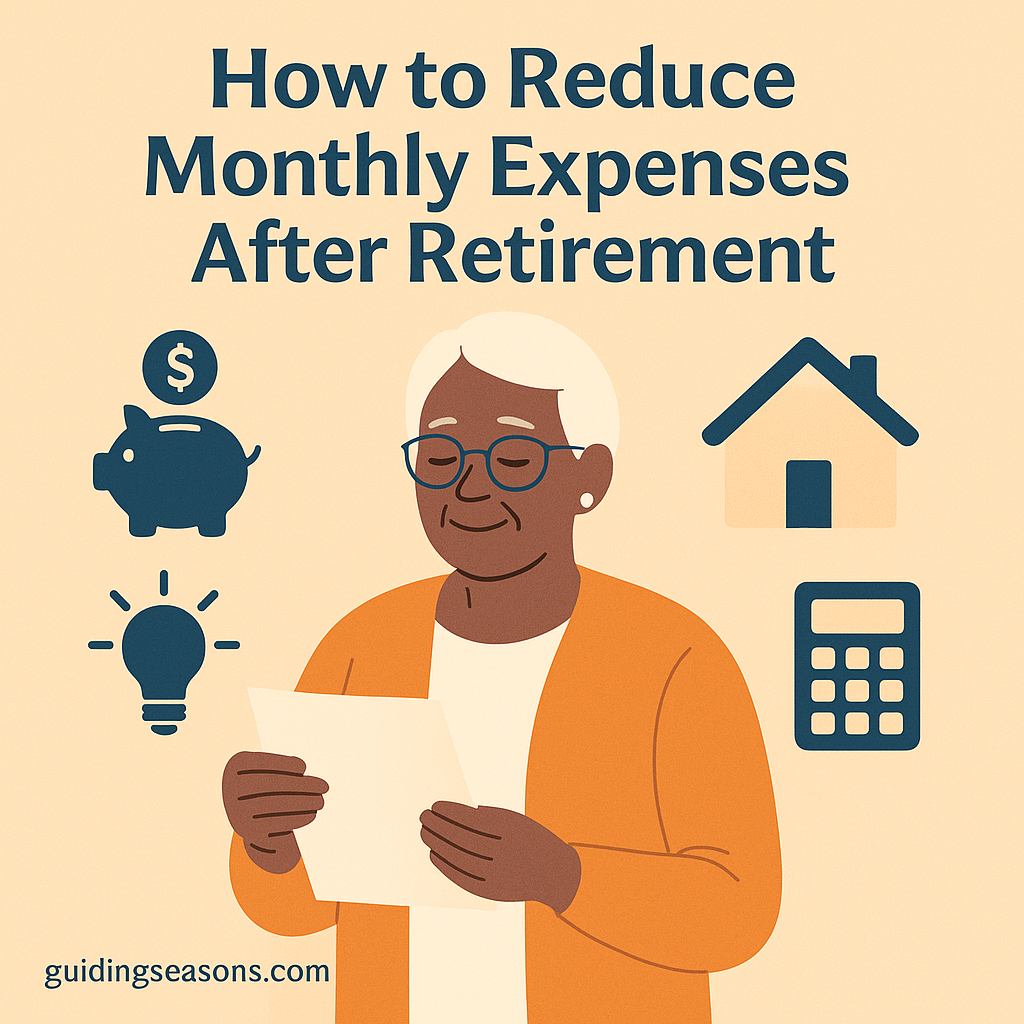
Retirement should feel comfortable and financially secure, but rising costs can sometimes make a monthly budget feel tighter than expected. The good news is that many retirees can reduce recurring expenses with a few practical adjustments.
These changes don’t have to mean giving up comfort or enjoyment. Instead, they can help you stretch retirement income further, protect savings, and create more room for the experiences and priorities that matter most.
Managing expenses after retirement isn’t simply about living with less. It’s about using your money more intentionally.
Why Reducing Monthly Expenses Matters
Even retirees with solid savings can benefit from lowering recurring expenses.
Small monthly savings can add up substantially over time and help protect against unexpected costs.
Reducing expenses may help you:
- Extend retirement savings
- Build a stronger emergency cushion
- Reduce financial stress
- Free up money for hobbies, travel, or family
- Prepare for unexpected medical expenses
- Handle home or vehicle repairs more comfortably
Consider a simple example.
If you reduce your recurring expenses by just $250 per month, that’s $3,000 per year. Over five years, that represents $15,000 that could remain available for other priorities, before considering any investment returns or inflation.
That is why even relatively small adjustments deserve attention.
Review and Refresh Your Monthly Budget
Start by getting a clear picture of where your money goes each month.
Create a list that includes:
- Housing costs
- Utilities
- Groceries
- Insurance premiums
- Healthcare expenses
- Transportation
- Subscriptions
- Entertainment
- Debt payments
- Gifts and charitable giving
- Travel and recreation
Then separate expenses into three categories:
Essential expenses are things you need to pay, such as housing, food, utilities, healthcare, and insurance.
Flexible expenses include spending that can be adjusted, such as restaurants, travel, entertainment, and shopping.
Unnecessary expenses are costs you’re paying without receiving much value in return.
Seeing everything in one place often reveals expenses that have quietly become part of your routine.
Cut Unnecessary Subscriptions and Memberships
Subscriptions are easy to start and easy to forget.
You may be paying monthly for streaming services, magazines, cloud storage, apps, software, fitness memberships, or other services you rarely use.
Review several months of bank and credit card statements and look specifically for recurring charges.
You might:
- Cancel unused subscriptions
- Pause memberships you only use seasonally
- Rotate streaming services instead of paying for all of them at once
- Switch annual plans to less expensive alternatives
- Ask about senior or loyalty discounts
- Remove premium features you no longer need
Suppose you’re paying for four streaming services at $15 each, two apps at $8 each, and a $30 membership you rarely use.
That’s $106 per month.
Cutting only half of those expenses could save more than $600 per year.
The goal isn’t to eliminate entertainment. Keep the services you genuinely enjoy and remove the ones that no longer add much value.
Reduce Grocery Costs With Better Planning
Groceries can represent a significant portion of a retirement budget, especially as food prices rise.
Planning can help reduce waste without sacrificing nutrition.
Useful strategies include:
- Create a weekly meal plan
- Make a shopping list before going to the store
- Compare unit prices instead of package prices
- Buy store brands when quality is comparable
- Use loyalty programs and digital coupons
- Stock up on frequently used products when prices are favorable
- Freeze extra portions instead of throwing food away
- Limit impulse purchases
Cooking at home more often can also make a noticeable difference.
You don’t have to eliminate restaurants. Instead, decide which meals out are genuinely worth the expense.
For example, you might enjoy one restaurant dinner each week rather than buying takeout several times without really thinking about the cost.
Lower Utility Bills With Simple Adjustments
Electricity, gas, water, Internet, and phone bills can quietly increase over time.
Start by reviewing each account rather than automatically paying the bill every month.
Simple ways to lower household costs may include:
- Switching frequently used bulbs to LEDs
- Adjusting thermostat settings slightly
- Washing clothing in cold water when appropriate
- Running full loads in the dishwasher and washing machine
- Fixing leaking faucets
- Improving weather stripping around doors and windows
- Turning off unnecessary lights and electronics
- Reviewing Internet and phone plans for unused features
Also contact your utility providers and ask whether they offer income-qualified discounts, senior programs, budget billing, energy audits, or other assistance.
Program availability varies considerably by location, so it’s better to check directly than assume you’re eligible.
Reevaluate Insurance Policies
Insurance is essential, but policies shouldn’t remain on autopilot for decades.
Retirement can change how much coverage you need.
Review:
- Auto insurance
- Homeowners or renters insurance
- Umbrella coverage
- Life insurance
- Medicare-related coverage
For auto and home policies, ask whether you qualify for:
- Multi-policy discounts
- Low-mileage discounts
- Safe-driver programs
- Higher deductibles in exchange for lower premiums
- Discounts related to safety equipment or home upgrades
Be careful about reducing coverage simply to save money. A lower premium can become expensive if it leaves you significantly underinsured.
The goal is to eliminate unnecessary coverage and obtain competitive pricing while maintaining protection appropriate for your situation.
Review Medicare Coverage Every Year
Healthcare can become one of the largest expenses in retirement, making annual Medicare reviews particularly important.
Plans, premiums, drug formularies, provider networks, and out-of-pocket costs can change from year to year.
Review your coverage during the appropriate enrollment periods rather than assuming your current plan will always remain the best option.
Compare:
- Premiums
- Deductibles
- Prescription coverage
- Copayments
- Provider networks
- Out-of-pocket maximums where applicable
- Your expected healthcare needs
Medicare also offers programs that may help eligible beneficiaries with certain costs. Medicare Savings Programs can help qualifying individuals pay some Medicare premiums and, depending on the program, certain deductibles, coinsurance, and copayments.
If your income has declined in retirement, don’t assume you earn too much to qualify for assistance. Eligibility rules vary, and some states use different income or resource rules.
Look for Help With Prescription Drug Costs
Prescription medications can also place significant pressure on a retirement budget.
Ask your doctor or pharmacist whether:
- A generic version is appropriate
- A lower-cost therapeutic alternative exists
- A 90-day supply would reduce costs
- Your drug plan has a preferred pharmacy
- Mail-order pricing is less expensive
Some Medicare beneficiaries with limited income and resources may qualify for Extra Help, a federal program designed to reduce Medicare prescription drug costs. You can review eligibility information through Medicare’s prescription drug cost assistance resources.
Never stop taking or change a prescription medication simply because it is expensive without speaking with your healthcare provider.
Instead, ask whether there are safe lower-cost options.
Downsize or Simplify Housing if It Fits Your Lifestyle
Housing is often the largest monthly expense in retirement.
Downsizing isn’t right for everyone, but it deserves consideration if maintaining your current home has become expensive or difficult.
Potential options include:
- Moving to a smaller home
- Buying a condo with less maintenance
- Renting instead of owning
- Relocating to a lower-cost area
- Renting an unused room where appropriate
- Moving closer to family or services
A smaller home may reduce more than just the mortgage or rent.
It can also lower:
- Property taxes
- Insurance costs
- Utility bills
- Maintenance expenses
- Landscaping costs
- Repair expenses
However, moving itself can be expensive.
Before downsizing, compare the entire financial picture, including real estate commissions, closing costs, moving expenses, homeowners association fees, taxes, and the cost of the replacement home.
Downsizing should improve your finances and lifestyle, not simply reduce square footage.
Reduce Transportation Costs
Retirement often changes driving habits.
If you’re no longer commuting to work every day, you may be driving significantly fewer miles than before.
That creates opportunities to reconsider transportation costs.
You might:
- Reduce from two vehicles to one
- Ask your insurer about low-mileage discounts
- Combine errands into fewer trips
- Use public transportation when practical
- Take advantage of community senior transportation
- Use rideshare services selectively
- Keep your existing vehicle longer instead of replacing it frequently
Maintaining a vehicle regularly can also prevent small problems from becoming expensive repairs.
Calculate the full cost of ownership rather than considering only your monthly car payment.
Insurance, registration, fuel, maintenance, repairs, depreciation, and parking can make owning an additional vehicle much more expensive than it initially appears.
Create a Debt-Reduction Plan
Debt can be especially difficult in retirement because monthly payments compete with other expenses while income may be relatively fixed.
Start by listing:
- Credit card balances
- Personal loans
- Auto loans
- Home equity loans
- Mortgage balances
- Interest rates
- Minimum payments
High-interest credit card debt often deserves particular attention because interest charges can consume a large portion of each payment.
Possible strategies include:
- Paying more than the minimum when affordable
- Directing extra money toward higher-interest balances
- Avoiding new revolving debt
- Using unexpected income or refunds strategically
- Considering consolidation only when the terms genuinely improve your situation
Be cautious about transferring unsecured debt into a loan secured by your home.
Lower interest rates can be attractive, but converting credit card debt into home-secured debt increases the potential consequences if payments become difficult.
Take Advantage of Discounts
Many businesses and organizations offer discounts based on age, membership, income, veteran status, or other qualifications.
Potential savings may be available through:
- Restaurants
- Museums
- Movie theaters
- Grocery stores
- Pharmacies
- Hotels
- Transportation providers
- Fitness centers
- Phone carriers
- Internet providers
- Local recreation programs
Age requirements vary.
Rather than assuming a discount exists, simply ask:
“Do you offer any senior, loyalty, or other discounts that I may qualify for?”
Even relatively small discounts can add up when applied to expenses you incur regularly.
Be Careful With “Senior Discounts”
A senior discount isn’t automatically the best price.
Always compare the final cost.
A competitor’s standard price, online promotion, loyalty discount, or bundled service may still be cheaper.
For example, a company offering a 10% senior discount on a $100 service still charges $90.
Another provider charging $80 with no senior discount is the better deal.
Focus on the final price rather than the label attached to the discount.
Track Spending With a Simple System
You don’t need complicated financial software to control spending.
The best budgeting system is one you’ll actually use.
Options include:
- A notebook
- A simple spreadsheet
- Your bank’s budgeting tools
- A budgeting app
- A monthly printed expense sheet
Review spending at least once a month.
Look for:
- Unexpected increases
- Duplicate charges
- Forgotten subscriptions
- Unusually high utility bills
- Bank or credit card fees
- Categories where spending gradually increased
This isn’t about examining every dollar obsessively.
It’s about noticing trends before they become problems.
Build a Small “Unexpected Expenses” Category
A budget shouldn’t assume everything will go perfectly.
Cars need repairs. Appliances break. Dental work happens. Insurance deductibles appear.
Instead of treating every unexpected bill like a financial emergency, include a monthly amount specifically for irregular expenses.
For example, setting aside $150 per month creates an $1,800 annual reserve.
You may not spend exactly $150 every month, but having the money available can reduce the need to rely on credit cards when something eventually happens.
Reevaluate Your Lifestyle Needs
Retirement is a good time to ask whether your spending still reflects your priorities.
Some expenses may have made sense while working but no longer provide much value.
Ask yourself:
- Do I still use everything I’m paying for?
- Which expenses genuinely improve my life?
- What am I paying for mainly out of habit?
- Am I maintaining possessions I no longer need?
- Would simplifying something actually make life easier?
Reducing spending can sometimes improve quality of life rather than diminish it.
A smaller home may require less maintenance.
One vehicle may eliminate insurance and repair costs.
Fewer subscriptions may reduce clutter and decision fatigue.
The objective isn’t deprivation.
It’s eliminating costs that no longer contribute enough value to justify keeping them.
Focus on the Biggest Expenses First
Saving $5 here and $10 there can help, but don’t ignore the categories that consume most of your budget.
For many retirees, those are:
- Housing
- Healthcare
- Transportation
- Insurance
- Food
- Debt
Reducing a $150 monthly insurance expense can have a much greater effect than spending hours trying to save a few dollars on groceries.
Start with larger recurring expenses, then work down to smaller ones.
A Simple Monthly Expense Review
Once or twice a year, review your finances using a straightforward checklist.
Ask:
- Have any recurring bills increased?
- Am I using every subscription?
- Is my insurance still competitively priced?
- Does my Medicare coverage still fit my needs?
- Am I paying unnecessary bank or credit card fees?
- Could transportation costs be reduced?
- Have my housing needs changed?
- Am I carrying expensive debt?
- Are there assistance programs I now qualify for?
This kind of review can uncover savings without requiring dramatic lifestyle changes.
Final Thoughts
Lowering monthly expenses after retirement isn’t about sacrificing your quality of life. It’s about protecting it.
A few thoughtful adjustments can create more breathing room in your budget, extend your savings, and make unexpected expenses easier to handle.
Start with the expenses that have the biggest impact: housing, healthcare, insurance, transportation, and debt. Then review subscriptions, utilities, groceries, and discretionary spending.
You don’t need to change everything at once.
Saving $50 in one category, $75 in another, and $125 somewhere else already reduces monthly expenses by $250—or $3,000 per year.
The goal isn’t simply to spend less.
It’s to direct more of your retirement income toward the things you genuinely value while reducing the costs that no longer serve you.
With regular reviews and a few practical changes, you can build a retirement budget that feels more comfortable, flexible, and sustainable for the years ahead.