An organized home doesn’t have to look perfect—it just needs to work well for you. As we age, clutter, misplaced items, and crowded spaces can become stressful and may even create safety concerns. Improving home organization can make daily life easier, reduce frustration, and help you feel more in control of your environment.
You don’t need to reorganize everything at once. Small, thoughtful changes can create a home that feels peaceful, functional, and safe.
Here are simple, practical ways to improve home organization at any age.
Start Small and Build Momentum
Large organizing projects can feel overwhelming, so begin with an area that feels manageable.
Great places to start:
- A single drawer
- A kitchen counter
- A bathroom cabinet
- A nightstand
- A small bookshelf
Instead of trying to organize an entire bedroom, for example, set a goal of spending 15 minutes organizing one drawer or surface. A small project is easier to finish, and seeing the immediate result can provide motivation to continue.
Focus on progress rather than trying to make every space perfect.
Declutter With Purpose
A less cluttered space can be easier to clean, navigate, and maintain.
Ask yourself:
- Do I use this regularly?
- Does it make my life easier or harder?
- Is this item still serving a purpose?
- Do I have duplicates?
- Would someone else benefit from it more than I do?
Consider separating unwanted items into simple categories such as donate, recycle, discard, or give to family.
There’s no need to get rid of belongings simply for the sake of having fewer things. The goal is to make your home easier to use while keeping the possessions that are useful or meaningful to you.
Keep Pathways Clear for Safety
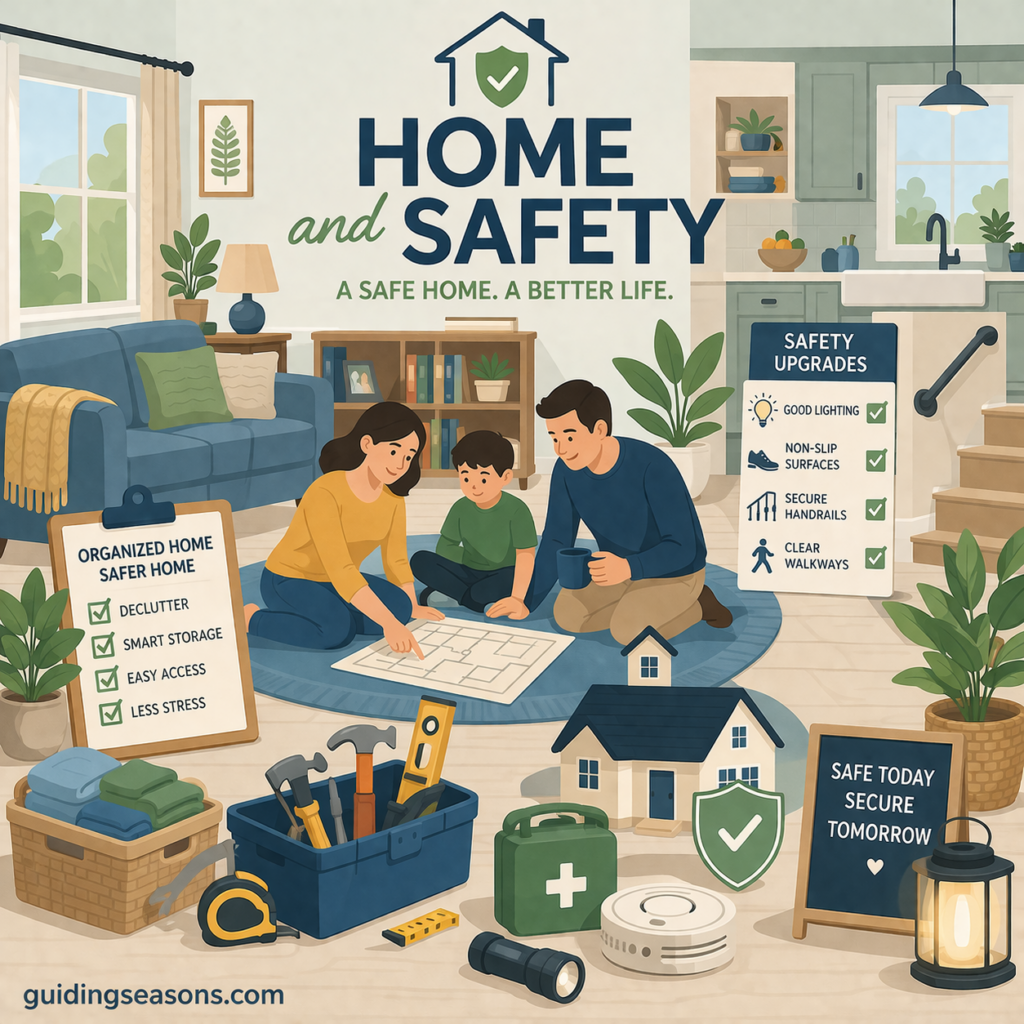
One of the most important aspects of home organization is maintaining clear walking areas.
Focus on:
- Removing unnecessary furniture from busy pathways
- Keeping frequently traveled routes clear
- Making sure cords don’t stretch across floors
- Removing or properly securing rugs that can move or bunch
- Keeping shoes, bags, boxes, and other objects off walking paths
The National Council on Aging’s falls prevention resources provide additional guidance on reducing common fall risks and creating safer living environments for older adults.
Good organization isn’t only about appearance. Clear pathways can make moving through the home easier and safer.
Use Storage Solutions That Make Life Easier
You don’t need expensive organizers—just systems that work for your lifestyle.
Helpful options include:
- Clear bins for visibility
- Large, easy-to-read labels
- Baskets for loose items
- Drawer dividers
- Rolling carts where appropriate
- Hooks for keys, bags, and everyday items
Before buying new storage containers, organize what you already have. You may discover that removing unused items creates enough space without purchasing anything.
The best storage system is one that is simple enough to maintain.
Keep Everyday Essentials Within Reach
Organizing isn’t just about appearance—it’s also about accessibility.
Keep frequently used essentials:
- Within a comfortable reaching range
- Near the areas where you use them
- In clearly identified containers or drawers
- Away from locations that require unnecessary climbing or bending
Reserve harder-to-reach storage for lightweight or rarely used items.
For example, everyday dishes might belong on an easily accessible kitchen shelf, while holiday serving dishes can be stored somewhere less convenient.
The AARP HomeFit Guide offers additional ideas for making storage, kitchens, bathrooms, entrances, and other areas of the home easier to use as needs change.
Organize Paperwork With a Simple System
Paper clutter can build up quickly, so create a system that’s easy to understand and maintain.
Try a three-folder method:
- To Do – Bills, forms, or documents requiring action
- To File – Papers that need to be stored
- To Keep – Important documents you need to retain or reference
Choose one location for incoming mail rather than allowing papers to accumulate throughout the house.
Set aside time regularly to process the folders so that “To Do” doesn’t simply become another permanent pile.
Sensitive documents containing financial, medical, or personal information should also be stored securely and disposed of appropriately when no longer needed.
Simplify Your Closets
An organized closet can save time and make clothing easier to find.
Try:
- Donating clothing you no longer wear or want
- Sorting items by category
- Keeping frequently worn clothing within comfortable reach
- Placing seasonal items in labeled containers
- Moving rarely used items away from prime storage areas
Matching hangers can create a cleaner appearance, but they aren’t necessary for an organized closet. Function and accessibility are more important than making the space look perfect.
Make the Kitchen More Functional
The kitchen is a common place for clutter to accumulate, but a few organizational changes can make everyday tasks easier.
Improve organization by:
- Grouping similar items, such as baking supplies, spices, or snacks
- Using drawer inserts for utensils
- Storing heavy items where they can be lifted comfortably
- Keeping frequently used cookware near where it is used
- Using lazy Susans or pull-out shelves where helpful
- Keeping countertops relatively clear
Think about your regular kitchen routine and organize around it.
If you make coffee every morning, for example, keeping the coffee, filters, mugs, and other supplies together creates a simple activity zone and reduces unnecessary movement around the kitchen.
Create a System for Medications and Health Items
Health-related items should be easy to identify while also being stored according to their individual requirements.
Consider:
- Separate areas for medications, first-aid supplies, and other health items
- Clear labels
- An up-to-date medication list
- A pill organizer when appropriate
- Regular checks for expired or unused products
Don’t automatically combine medications into bins or pill organizers. Some medicines need to remain in their original containers or have specific requirements involving temperature, light, or moisture.
Follow the medication label and ask your pharmacist if you’re unsure about proper storage.
Use Lighting to Support Organization and Safety
Good lighting makes it easier to find what you need and notice objects that might otherwise become tripping hazards.
Consider adding:
- Adequate lighting in workspaces
- Stick-on lights inside dark closets or cabinets
- Motion-sensor night-lights
- Lamps in poorly illuminated areas
- Lighting near stairs and entrances
Also make sure storage labels and frequently used controls are easy to read under the available lighting.
A well-lit home can feel more comfortable while making everyday tasks easier.
Establish Easy Cleaning and Maintenance Routines
Maintaining organization is often easier when small tasks become part of your regular routine.
Try:
- A 5-minute daily tidy
- A weekly review of frequently used surfaces
- A monthly declutter of one small area
- A seasonal review of closets, cabinets, or storage areas
Choose a schedule that fits your energy level and lifestyle. There’s no need to follow an elaborate cleaning routine if a simpler system works better for you.
Consistency is usually more useful than trying to complete everything at once.
Give Important Items a Consistent Home
Frequently misplaced items can create unnecessary frustration.
Choose a consistent location for things such as:
- Keys
- Wallets or purses
- Eyeglasses
- Phones and chargers
- Important mail
- Remote controls
- Frequently used household supplies
For example, placing a small tray near the entrance for keys and a charging station in one consistent location can eliminate repeated searches for everyday essentials.
The easier an item’s designated location is to use, the more likely you are to return it there.
Recognize When to Ask for Help
Some organizing tasks involve lifting, climbing, or moving heavy objects and are safer with assistance.
Consider asking for help with:
- Moving furniture
- Lifting heavy boxes
- Reaching high storage areas
- Organizing garages, basements, or attics
- Moving large storage containers
- Sorting large collections of belongings
Family, friends, or professional organizers can help with larger projects.
Avoid climbing on chairs or unstable furniture to reach storage areas. If something is difficult to retrieve safely, consider relocating it or asking for assistance.
Create a Home That Supports Your Lifestyle
Ultimately, home organization should make your life smoother rather than create another set of rules to follow.
Your space should:
- Support your daily routines
- Feel comfortable and welcoming
- Be easy to navigate
- Keep frequently used items accessible
- Reduce unnecessary searching and frustration
- Adapt as your needs change
What works for someone else may not work for you. Choose organizational systems based on how you actually use your home rather than how an organized home is supposed to look.
Final Thoughts
Improving home organization isn’t about achieving perfection—it’s about creating a living space that feels safe, functional, and aligned with your daily life.
Start small. Clear an important pathway, organize one drawer, move frequently used items within easier reach, or create a permanent place for something you regularly misplace. Once those systems are working, you can gradually move on to other areas.
With simple, consistent changes, your home can become easier to navigate, easier to maintain, and more supportive of your comfort and independence for years to come.