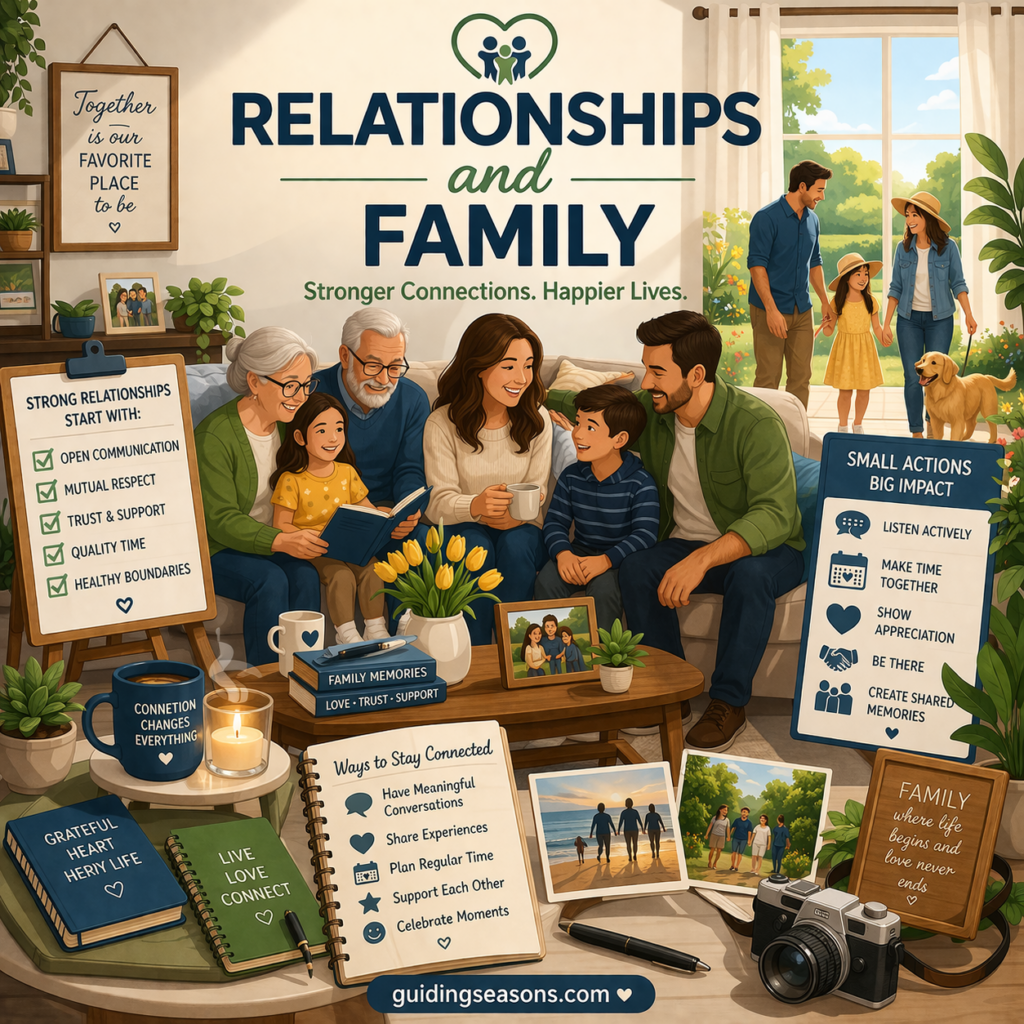
Relationships are one of the most important parts of a fulfilling life. The people around us can provide companionship, encouragement, practical help, laughter, perspective, and a sense of belonging.
As we move through different stages of life, however, relationships rarely stay exactly the same. Children grow up and build lives of their own. Friendships change. Couples may spend more time together after retirement. Family members may move away. Health challenges can alter responsibilities, and new relationships may become increasingly important.
These changes don’t necessarily weaken relationships. In many cases, they create opportunities to build deeper and more meaningful connections.
Strong relationships are usually not the result of one dramatic gesture. They develop through communication, trust, patience, shared experiences, healthy boundaries, and the willingness to continue showing up for one another.
This guide explores practical ways to strengthen family relationships, marriages, friendships, and other important connections throughout later life.
What Healthy Relationships Really Mean
A healthy relationship does not have to be perfect.
People disagree. Priorities change. Misunderstandings happen. Even people who care deeply about each other can occasionally become frustrated or disconnected.
What matters is the overall foundation of the relationship.
Healthy relationships generally include:
- Mutual respect
- Honest communication
- Trust
- Emotional support
- Reliability
- Healthy boundaries
- The ability to disagree respectfully
- Appreciation for one another
- A willingness to listen
- Space for individual interests and independence
These qualities develop gradually.
Trust, for example, is often built through many small moments: keeping promises, listening when someone needs support, respecting privacy, being dependable, and acknowledging mistakes.
If trust has become strained, rebuilding it usually requires patience and consistency. Our guide on how to build trust in family relationships explores this process in greater detail.
Why Relationships Change as We Get Older
Relationships naturally evolve because life itself changes.
Retirement is a good example.
A couple who previously spent most weekdays apart may suddenly be together much more often. Parents may find that their relationships with adult children become less about parenting and more about friendship, mutual support, and companionship.
Other changes might include:
- Retirement
- Relocation
- Becoming a grandparent
- Children leaving home
- Losing a spouse or close friend
- Changes in physical ability
- New caregiving responsibilities
- Financial changes
- Developing new interests
- Friends or relatives moving away
These transitions can temporarily disrupt familiar routines.
Understanding how to navigate changing family dynamics can make these transitions easier for everyone involved.
Instead of expecting relationships to remain exactly as they were, it can be healthier to allow them to evolve.
Communication Is the Foundation of Strong Relationships
Many relationship problems begin with communication.
People make assumptions about what someone else wants, avoid uncomfortable conversations, interrupt each other, or allow small frustrations to accumulate.
Good communication doesn’t mean talking constantly. It means creating an environment where people feel comfortable expressing themselves.
Helpful communication habits include:
- Listening without immediately interrupting
- Asking questions when something isn’t clear
- Expressing concerns calmly
- Avoiding unnecessary criticism
- Acknowledging another person’s perspective
- Being honest about your needs
- Choosing an appropriate time for difficult conversations
Our guide to healthy communication tips for seniors offers additional strategies for communicating clearly while maintaining respect.
Listening deserves particular attention.
It is easy to listen while simultaneously preparing your own response. Genuine listening requires paying attention to what the other person is actually saying.
You can develop this skill further with these strategies for improving listening skills as a senior.
Create More Meaningful Conversations
Not every conversation needs to be deep.
Talking about dinner, errands, television, sports, grandchildren, or everyday events is part of normal life.
But relationships can become stronger when there is occasionally room for deeper conversation.
You might talk about:
- Favorite memories
- Future plans
- Family history
- Personal goals
- Lessons learned through life
- Places you’d like to visit
- Things you’re grateful for
- Challenges you’re currently facing
Ask questions that invite more than a yes-or-no answer.
Instead of asking, “Did you have a good week?” you might ask, “What was the best part of your week?”
Small changes like this can encourage more interesting conversations.
For additional ideas, read how to create meaningful conversations.
Make Time for the People Who Matter
Relationships need attention.
It is surprisingly easy to assume you’ll call someone tomorrow, visit next month, or arrange something “when things slow down.”
Weeks can quickly become months.
Staying connected doesn’t necessarily require large amounts of time. Small interactions can be equally valuable.
Consider:
- A weekly phone call
- Morning coffee together
- A monthly lunch
- A walk around the neighborhood
- Video calls with distant relatives
- Sharing photographs
- Cooking a meal together
- Attending a community event
- Working on a hobby together
Consistency often matters more than duration.
A regular 15-minute conversation can sometimes maintain a relationship better than waiting months for the perfect opportunity to spend an entire day together.
Strengthening Marriage During Retirement
Retirement can be one of the biggest transitions a couple experiences.
For decades, work may have provided separate routines, responsibilities, social circles, and time apart. Retirement changes that structure.
Couples may suddenly need to negotiate:
- How they spend their days
- Household responsibilities
- Financial priorities
- Travel plans
- Social activities
- Personal hobbies
- Time together versus time apart
This adjustment can take time.
Maintaining individual interests while intentionally creating shared experiences can help couples develop a new rhythm.
Our complete guide on how to strengthen your marriage in retirement covers ways couples can navigate this transition together.
Maintain Independence While Staying Connected
Healthy relationships do not require people to spend every moment together.
Independence can actually strengthen relationships.
Having your own hobbies, friendships, routines, and interests gives you experiences to bring back into your relationships.
A healthy balance might include:
- Shared activities
- Individual hobbies
- Time with friends
- Personal quiet time
- Joint family responsibilities
- Independent goals
The appropriate balance will be different for everyone.
If this becomes difficult after retirement or another major life transition, explore how to maintain independence while staying connected.
Connecting With Adult Children
Relationships between parents and children change considerably once children become adults.
Adult children may have:
- Careers
- Partners or spouses
- Children of their own
- Financial responsibilities
- Busy schedules
- Different lifestyles
- Different opinions or priorities
Maintaining a close relationship often means adapting to this new reality.
Try to respect their independence while remaining available and interested in their lives.
Regular contact can help, but communication doesn’t have to happen every day to be meaningful.
Our guide on how to connect with adult children explores ways to maintain closeness while respecting everyone’s independence.
Building Relationships With Grandchildren
Grandparents can play a unique role in family life.
You may be able to share family history, traditions, stories, skills, hobbies, and perspectives that grandchildren wouldn’t experience elsewhere.
Connection doesn’t always require elaborate outings.
You could:
- Read together
- Cook family recipes
- Work on crafts
- Garden
- Play games
- Attend school activities
- Share old photographs
- Teach a hobby
- Take walks
- Have regular video calls if you live far apart
The activity itself is often less important than your presence and attention.
For more ideas, see how to connect with grandchildren.
Keep Family Traditions Alive
Traditions create continuity between generations.
They can be elaborate holiday celebrations, but they don’t have to be.
A tradition might simply be:
- Sunday dinner
- An annual family picnic
- Birthday breakfasts
- Holiday baking
- Family reunions
- Watching a favorite movie together
- Visiting a meaningful location
- Preparing a family recipe
- Taking an annual photograph
Traditions help preserve family stories and create experiences that people can anticipate and remember.
Learn more about how to keep family traditions alive.
Strengthen Family Bonds Through Shared Experiences
Families often become closer when they regularly do things together.
Shared experiences don’t have to be expensive.
Consider:
- Cooking
- Walking
- Gardening
- Playing cards or board games
- Watching movies
- Attending community events
- Taking short day trips
- Volunteering
- Working on home projects
- Celebrating birthdays and milestones
Creating an inviting environment can also make gatherings easier. Simple improvements to shared spaces may encourage people to spend more time together.
Our guide on how to improve home organization offers practical ideas for creating a more comfortable and functional home.
You can also explore how to strengthen family bonds in retirement for additional ideas.
Rebuilding Family Connections
Some family relationships become distant over time.
The reason might be conflict, geography, busy schedules, misunderstandings, or simply years of limited communication.
Reconnecting can feel uncomfortable at first.
You don’t necessarily have to solve every past disagreement before reaching out.
Sometimes rebuilding a relationship begins with something simple:
- Sending a message
- Making a phone call
- Sharing a photograph
- Remembering a birthday
- Inviting someone for coffee
- Acknowledging past mistakes
- Expressing a desire to reconnect
Not every relationship can or should return to what it once was, but many can improve through patience and realistic expectations.
Read how to rebuild family connections for a more detailed approach.
Handling Conflict With Loved Ones
Conflict is normal.
The goal isn’t to eliminate disagreement completely. It is to prevent disagreements from unnecessarily damaging the relationship.
During conflict, try to focus on the specific issue rather than attacking someone’s personality or bringing up every previous disagreement.
Helpful strategies include:
- Staying focused on the current issue
- Avoiding insults
- Listening before responding
- Taking time to cool down when necessary
- Acknowledging your own mistakes
- Looking for compromise
- Knowing when an issue isn’t worth escalating
Sometimes the most productive decision is to return to the conversation after everyone has had time to think.
Our guide on how to navigate conflict with loved ones provides additional strategies.
Set Healthy Boundaries With Family
Being close to someone doesn’t mean you have to agree to everything they ask.
Healthy boundaries protect relationships by making expectations clearer.
Boundaries might involve:
- Personal time
- Privacy
- Money
- Unannounced visits
- Caregiving responsibilities
- Family disagreements
- Personal decisions
- How frequently you communicate
A boundary doesn’t have to be aggressive.
It can simply be a clear explanation of what you’re comfortable with and what you’re not.
For practical examples, see how to maintain healthy boundaries with family.
Supporting Loved Ones During Difficult Times
One of the greatest strengths of close relationships is having people to rely on when life becomes difficult.
But providing support doesn’t always mean solving someone’s problem.
Often, people need someone who will listen, acknowledge what they’re experiencing, and remain present.
Support can include:
- Listening
- Preparing meals
- Helping with errands
- Offering transportation
- Checking in regularly
- Accompanying someone to appointments
- Helping with practical responsibilities
- Simply spending time together
Our guide on how to support loved ones with grace explores how to help without becoming overbearing.
Supporting a Spouse Through Health Changes
Health changes can significantly affect a marriage or long-term partnership.
One partner may begin taking on responsibilities that were previously shared. Daily routines may change, and both people may experience frustration, uncertainty, or worry.
During these periods, communication becomes especially important.
Try to preserve the relationship beyond the practical responsibilities involved in managing health.
Continue finding opportunities for companionship, humor, affection, conversation, and shared experiences whenever possible.
For more guidance, read how to support a spouse through health changes.
Don’t Forget Emotional Health
Relationships and emotional well-being influence each other.
Supportive relationships and social connection can support overall health and well-being, while stress or emotional exhaustion can make communication more difficult.
Pay attention to patterns such as:
- Frequently withdrawing from others
- Becoming unusually irritable
- Avoiding conversations
- Feeling consistently disconnected
- Losing interest in social activities
Maintaining emotional health can make it easier to communicate, establish boundaries, resolve disagreements, and remain connected.
Explore how to improve emotional health in relationships for additional strategies.
Friendships Matter Too
Family relationships are important, but they shouldn’t necessarily be your only source of connection.
Friendships provide a different kind of companionship.
Friends can introduce you to new activities, provide different perspectives, share hobbies, and create opportunities to remain socially active.
Later in life, however, friendships sometimes require more intentional effort.
People retire, relocate, experience health changes, or simply fall out of regular contact.
You can maintain friendships by:
- Reaching out first
- Scheduling regular activities
- Joining clubs or groups
- Reconnecting with old friends
- Meeting neighbors
- Volunteering
- Participating in classes or community activities
If you’d like to expand your social circle, read how to build strong friendships later in life.
Build a Strong Support Network
A support network is broader than family.
It may include:
- Friends
- Neighbors
- Former coworkers
- Community members
- Religious or spiritual communities
- Volunteer organizations
- Clubs
- Healthcare professionals
- Local organizations
Having several sources of connection can provide greater stability than depending entirely on one person.
This becomes particularly valuable during major life transitions.
Our guide on how to build a support network after retirement explains how to gradually develop a dependable circle of support.
Get Involved in Your Community
Community involvement is one of the easiest ways to combine social connection with meaningful activity.
Depending on where you live, opportunities may include:
- Senior centers
- Libraries
- Recreation programs
- Volunteer organizations
- Walking groups
- Gardening clubs
- Hobby groups
- Educational programs
- Community events
- Local charities
Participating regularly gives relationships time to develop naturally.
You don’t need to become highly involved immediately. Start with one activity that genuinely interests you.
Our guide to participating in community programs can help you get started.
Address Loneliness Before It Becomes Isolation
Feeling lonely occasionally is normal.
Persistent loneliness, however, can make it tempting to withdraw even further, creating a cycle that becomes increasingly difficult to break.
Small steps can help restore regular connection.
You might:
- Call someone you haven’t spoken with recently
- Join a weekly activity
- Volunteer
- Attend a community event
- Invite someone for coffee
- Spend more time in shared public spaces
- Reconnect with an old friend
The National Institute on Aging recommends several similar strategies for staying connected and reducing social isolation, including participating in activities, staying in touch with family and friends, learning something new, and volunteering.
The objective isn’t necessarily to have a huge social circle.
A few dependable, meaningful relationships can provide substantial connection.
If loneliness has become a recurring concern, read how to overcome loneliness as a senior for practical ways to reconnect.
Show Appreciation More Often
People sometimes assume those closest to them already know they’re appreciated.
They probably do—but hearing it still matters.
Simple expressions of appreciation include:
- Saying thank you
- Giving a sincere compliment
- Sending a thoughtful message
- Remembering important dates
- Acknowledging someone’s effort
- Offering help without being asked
- Spending uninterrupted time together
These gestures may seem small, but repeated over time they reinforce connection.
Discover more ideas in how to show appreciation to loved ones.
Small Habits That Strengthen Relationships
Strong relationships are usually built through ordinary behaviors repeated over many years.
Try making these habits part of everyday life:
- Check in regularly. Don’t always wait for the other person to initiate contact.
- Listen carefully. Give people your attention instead of immediately offering advice.
- Keep your commitments. Reliability is one of the simplest ways to build trust.
- Express appreciation. Tell people when their actions matter to you.
- Respect boundaries. Closeness doesn’t eliminate someone’s need for privacy or independence.
- Address problems early. Small misunderstandings are often easier to resolve before resentment develops.
- Create shared experiences. Give yourselves new memories instead of relying entirely on old ones.
- Allow relationships to change. A relationship can remain strong even when its structure evolves.
Common Relationship Mistakes to Avoid
Even strong relationships can gradually weaken when certain patterns become routine.
Watch for:
- Taking loved ones for granted
- Rarely initiating contact
- Constantly interrupting
- Avoiding every difficult conversation
- Expecting others to know what you’re thinking
- Giving unwanted advice
- Ignoring someone’s boundaries
- Holding onto minor grievances
- Allowing pride to prevent an apology
- Expecting one person to meet every emotional or social need
Awareness is important because these patterns often develop slowly.
Correcting them early can prevent unnecessary distance.
A Simple Relationship Check-In
Every few months, consider your important relationships.
Ask yourself:
Who haven’t I spoken with recently?
There may be a friend or relative you’ve unintentionally lost contact with.
Am I listening as much as I’m talking?
Good relationships require both.
Have I expressed appreciation lately?
Don’t assume people automatically know how you feel.
Are there unresolved disagreements I should address?
Some problems become more difficult the longer they’re ignored.
Do I have enough social connection outside my immediate family?
Friendships and community relationships can broaden your support network.
Am I respecting other people’s independence?
Closeness and independence can exist together.
These simple questions can reveal where a little additional effort might make a meaningful difference.
How Strong Relationships Can Improve Everyday Life
Relationships influence much more than our social calendars.
Meaningful connections can provide:
- Companionship
- Emotional support
- Practical assistance
- Motivation
- Shared experiences
- A stronger sense of belonging
- Opportunities to help others
- Greater enjoyment of everyday life
Relationships also give us opportunities to contribute.
Supporting a friend, teaching a grandchild something new, helping a neighbor, or simply listening to someone can create a sense of purpose.
Healthy relationships are therefore not only about receiving support.
They’re also about having people whose lives you can positively influence.
Explore More Relationships and Family Guides
If you’d like to strengthen a specific area of your relationships, continue with these Guiding Seasons resources:
- Healthy Communication Tips for Seniors
- How to Strengthen Your Marriage in Retirement
- How to Build a Support Network After Retirement
- How to Maintain Independence While Staying Connected
- How to Rebuild Family Connections
- How to Support Loved Ones With Grace
- How to Keep Family Traditions Alive
- How to Show Appreciation to Loved Ones
- How to Maintain Healthy Boundaries With Family
- How to Connect With Adult Children
- How to Support a Spouse Through Health Changes
- How to Navigate Changing Family Dynamics
- How to Strengthen Family Bonds in Retirement
- How to Overcome Loneliness as a Senior
- How to Build Strong Friendships Later in Life
- How to Create Meaningful Conversations
- How to Connect With Grandchildren
- How to Navigate Conflict With Loved Ones
- How to Improve Emotional Health in Relationships
- How to Improve Listening Skills as a Senior
- How to Build Trust in Family Relationships
- How to Participate in Community Programs
Final Thoughts
Strong relationships don’t happen automatically.
They develop through hundreds of small interactions: listening when someone needs to talk, calling a friend, respecting a boundary, apologizing when you’re wrong, sharing a meal, remembering a birthday, helping during a difficult period, or simply spending time together.
As life changes, relationships will change too.
The goal isn’t to preserve every relationship exactly as it once was. It’s to continue creating connections that are supportive, respectful, and meaningful for the stage of life you’re in now.
Focus on communication, consistency, appreciation, healthy boundaries, shared experiences, and genuine interest in the people around you.
Over time, those simple habits can create something extremely valuable: a dependable circle of family, friends, and loved ones with whom you can continue sharing life’s experiences.